Quick answer: for most couples visiting Da Nang, the sensible default is to mix modes — rely on public transport, rideshares, or taxis for inner-city sightseeing and airport transfers, and consider a short-term car rental only if you plan frequent day trips beyond the city or want total flexibility. Driving gives privacy and a tailor-made schedule, but it also brings navigation, parking, and local traffic considerations. Public transport is cheaper and easier for couples who want to relax and enjoy cafes, beaches, and the city’s riverside areas without the responsibility of driving. Below you’ll find concrete tradeoffs, decision criteria to weigh for your dates and itinerary, and a checklist of what to verify before booking a vehicle or planning routes.
See current options before you compare the details
Availability and final conditions change. Open Trip.com now or keep reading for the practical comparison.
Practical decision factors: when driving makes sense
Choose a rental car when your planned days include several excursions outside Da Nang where public transport is infrequent or slow. Couples who want early-morning or late-night departures for photos, sunrise beaches, or remote viewpoints will appreciate the independence a car provides. Driving can also be better if either partner prefers having a private space to store beach gear, camera equipment, or cooling drinks without hauling them onto buses or multiple transfers. Consider how your personalities handle navigation and split driving duties; if both enjoy exploring behind the wheel, that shared control can make drives part of the experience.
Also weigh the number of travel days you’ll actually use the car. A single long day trip may justify a one- or two-day rental without renting for the whole stay. If your accommodation has easy, secure parking and you plan flexible day trips that stop at viewpoints, local markets, or rural restaurants, a rental brings tangible time savings. Finally, consider alternatives like hiring a private driver for a day—this delivers most of the flexibility of a rental without you dealing with parking or unfamiliar roads.
Practical decision factors: when public transport or taxis are better
Public transport and taxis usually suit couples whose plans focus on nearby beaches, riverside walks, and cafés. Buses, local minibuses, and app-based taxis or rideshares reduce the hassle of finding parking and let you relax together rather than managing a route. For short stays centered on the city, transit saves money and eliminates worries about unfamiliar traffic rules, vehicle condition, or accidental damage. It’s also handy if one partner prefers not to drive in dense traffic or on unfamiliar roads.
Public options can be less predictable on rural or late-night routes, and language or route knowledge can complicate connections. Yet for many couples the tradeoff is worth it: cheaper fares, not having to park, and fewer pre-trip logistics. If you prefer to keep moving without dedicated driving, combine transit for city days with a single day hire or guided tour for farther destinations so you get both convenience and occasional independent exploration.
| Approach | Best for | Tradeoff to check |
|---|---|---|
| Rent a car | Couples doing multiple day trips or wanting flexible, private schedules | Higher logistics burden: navigation, parking, insurance checks, and fuel |
| Public buses and minibuses | Budget-minded couples staying mainly in the city and nearby beaches | Slower connections and less flexibility for remote or late-night plans |
| Taxis and rideshare apps | Couples seeking convenience without driving responsibilities | Costs can add up for frequent or long-distance trips compared with a longer rental |
| Private driver or guided day tours | Couples wanting flexibility with none of the driving stress | Less privacy and set itineraries compared with self-driving; variable cost structures |
Ready to check the option that fits your plan?
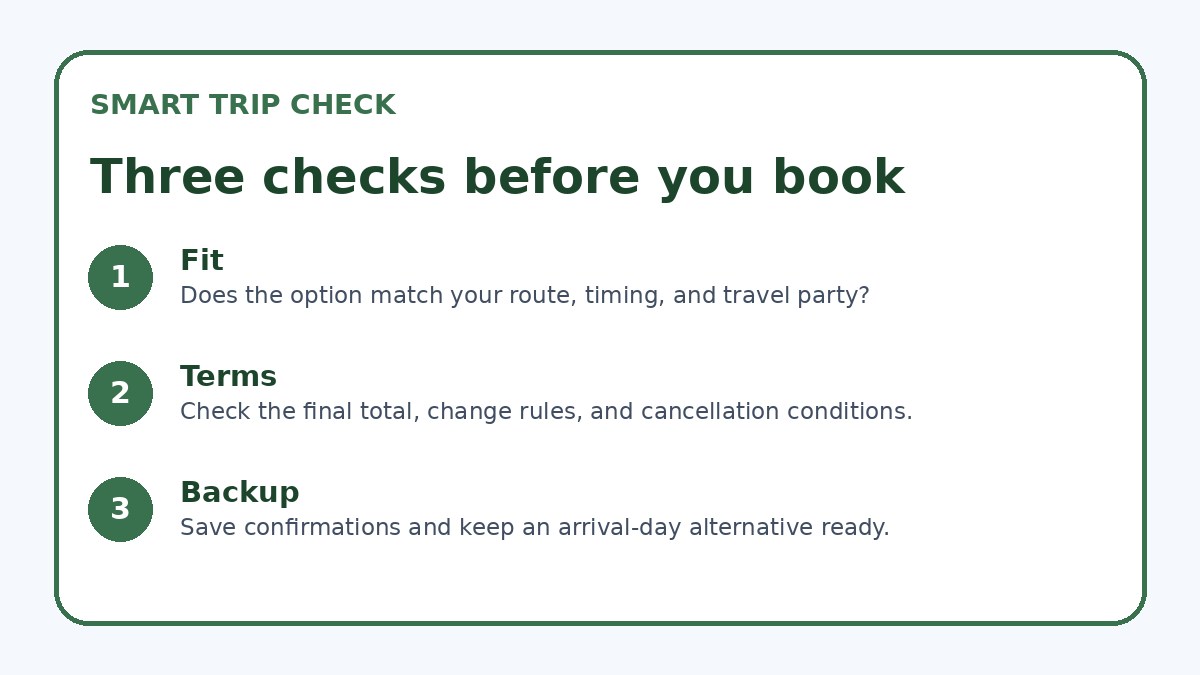
Use your exact dates and traveler details so the provider page can show the current total and conditions.
How to compare costs, convenience and safety
When comparing the monetary and time costs, list the number of days you’d use a rental, estimate travel distances, and sketch where you’ll park overnight. Don’t forget extras typically linked to rental decisions: fuel, optional insurance upgrades, parking charges at hotels or attractions, and any one-way fees. For couples, also account for the non-monetary cost of stress—if navigating and city congestion will detract from the trip, that’s a real cost even if driving appears cheaper on paper.
Safety and comfort are equally important. If either partner is uncomfortable driving in unfamiliar traffic or on winding rural roads, that should weigh heavily toward public transport or hiring a driver. Conversely, if you’re comfortable with motorcycling or compact cars and both partners are confident sharing navigation, a rental can be an efficient, pleasant way to see more. Verify vehicle insurance, roadside assistance options, and what the rental contract requires for cross-province travel before you book.
Before you book
- List your planned day trips and mark which require intercity travel beyond frequent bus routes.
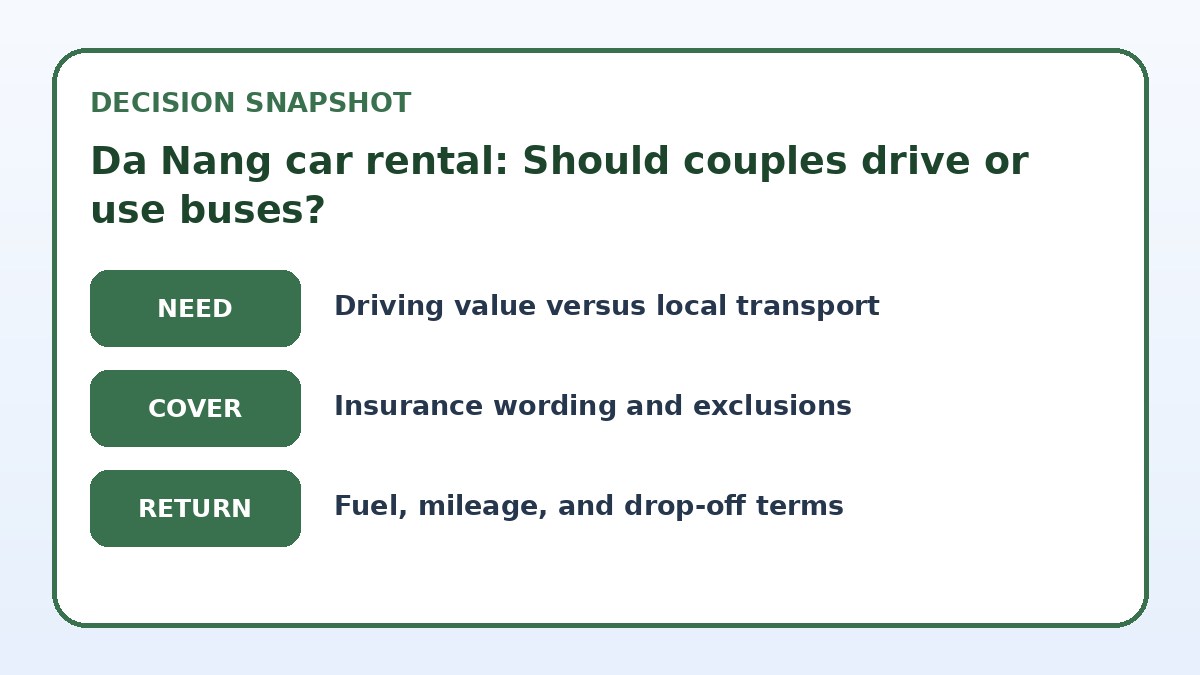
- Verify what your rental contract actually covers: liability, collision damage waiver, and roadside assistance.
- Confirm parking options at your accommodation and at the main attractions you expect to visit.
- Compare estimated door-to-door time and cost between renting, taxis, and public buses for each day.
- Check driving license requirements and whether your domestic license or an international permit is needed.
- Download offline maps and save your hotel address in both local script and Roman letters for drivers.
Practical booking checks and on-the-ground tips
Before reserving a car, inspect the rental contract carefully: confirm what the base insurance covers versus optional protection, whether roadside assistance is included, and what documentation the provider requires at pickup. If you plan to use rideshare apps or taxis instead, check app coverage in Da Nang and look at approximate wait times near your hotel. Trip.com can be used to compare current vehicle availability and basic booking conditions, but always read the final supplier page for the precise terms and any age or license restrictions.
On the ground, factor in parking convenience at your chosen accommodation and at key attractions. If you rent, take time during pickup to note existing dings and ask about emergency contacts. If you rely on public transport, download local transit maps and a reliable navigation app, and save your hotel’s address in both the local script and Roman letters to show drivers. Keeping one paper and one digital copy of important contacts and reservations helps both options run more smoothly.
Frequently asked questions
Is driving in and around Da Nang difficult for visitors?
Driving difficulty depends on your experience with dense urban traffic and narrow roads. Visitors used to busy Southeast Asian cities or comfortable with scooters and compact cars will adapt more quickly. If you or your partner dislike negotiating multiple-lane traffic, motorbike lanes, or unclear signage, consider public transport or hiring a driver. Always check local driving license rules, confirm what the rental covers for foreign drivers, and be honest about whether night driving on rural roads is comfortable for you.
Can couples rely on rideshare apps instead of renting a car in Da Nang?
Rideshare apps and taxis are practical for most in-city travel, airport transfers, and short trips to nearby beaches. They remove parking and navigation concerns while still offering private transport on demand. However, for frequent long day trips or multi-stop routes outside the city, costs can grow and waiting times may increase. Compare estimated fares for the specific days you plan long drives to decide whether a short-term rental or a private driver is more cost-effective for those excursions.
What should couples check on the rental supplier’s final booking page?
On the supplier’s final booking page, verify exactly what insurance is included, what extras are optional (GPS, child seats, additional driver fees), and any fuel or mileage policies. Confirm pick-up and drop-off locations and whether there are one-way fees, and read the cancellation and deposit terms. If you plan to cross provincial borders or return the car after business hours, ensure the contract explicitly allows those actions. If anything is unclear, contact the supplier to get written confirmation before completing payment.
Final planning note
For many couples, a mixed approach—using public transport, taxis or rideshares for city days and renting a car or hiring a driver for specific day trips—delivers the best balance of convenience, relaxation, and flexibility. Driving is attractive when you want privacy, spontaneous stops, and control over timing, but it brings responsibilities like navigation, parking, and insurance decisions. Public transport and taxis reduce stress and let you focus on shared experiences without worrying about the vehicle. Before booking, map your days, compare likely costs and travel times, and verify rental terms and driver requirements so your choice supports a relaxed, enjoyable trip together.
Continue planning
Check current options and final conditions
Use the provider page to confirm live availability, the final total, cancellation terms, and every condition that matters to your trip.
This evergreen planning guide was created with AI-assisted drafting and a structured quality review. It does not display live prices, schedules, availability, visa guidance, or provider rankings. Verify current details before booking. Some links are affiliate links; we may earn a commission at no additional cost to you.