If you need to travel from Vancouver to Seattle for business, start by picking the transportation option that matches your priorities—speed, predictability, or cost—then reverse-engineer your schedule around border time and meeting needs. The practical choice on the day depends on how much buffer you want for customs, how much productive time you need en route, and whether you want a single-seat trip or are comfortable with connections. Gather the documents you’ll present at customs, plan transit to the departure point, and decide what work you can do offline. This article focuses on the travel day: realistic checklists, tradeoffs between faster but less flexible options and slower but more predictable ones, and the key checks to make with providers before you finalize bookings. Use these steps to reduce stress and arrive ready for the meeting.
See current options before you compare the details
Availability and final conditions change. Open Trip.com now or keep reading for the practical comparison.
Choose the right transport approach for your priorities
For business travelers the primary decision is often speed versus reliability. A faster modal choice may shave off travel time but introduce uncertainty if it involves tight connections or multiple transfers. If arriving rested and ready is the goal, prioritize options that give you a single continuous seat and fewer handoffs. If cost or flexibility matters more, a cheaper option with one transfer can work—just build extra time between segments and confirm connection details.
Compare options by creating a simple timetable: departure window, estimated border time (allow variance), and arrival window. Factor in how much uninterrupted work time you need, whether you require Wi‑Fi or power, and how important a predictable arrival time is for meetings. When providers list journey details, verify transfer points, luggage handling, and any facility limitations that could affect productivity on the move.
Prepare documents and border procedures before you leave
Border crossings require the correct travel documents and sometimes advance enrollment in trusted-traveler programs. Check passport validity and any card or visa requirements that apply to your nationality; verify with official government sites or your employer’s travel desk. Have both digital and printed copies of required identification, and place them where you can quickly access them on the travel day. If you’re using a printed itinerary or e‑ticket, ensure it includes confirmation numbers and clear departure/arrival locations.
On the day, keep all documents accessible and organized in a travel folder or a dedicated section of your bag. Expect to present identification and answer routine questions about travel purpose; rehearsing concise, consistent responses for a business trip is helpful. If you’re part of a group or company travel program, know the emergency contact and have the provider’s booking page open to confirm any last-minute instructions listed by the carrier.
| Approach | Best for | Tradeoff to check |
|---|---|---|
| Single-seat direct travel (one continuous leg) | Travelers who want fewer handoffs and predictable onboard productivity | May be less flexible on departure times and sometimes more expensive |
| Flexible multi-segment travel with extra connection buffer | Travelers prioritizing schedule options or lower fares | Requires careful timing and increases the chance of missed connections |
| Early departure to build generous border buffer | High-priority meetings where lateness is unacceptable | Means longer waiting time at the destination before meetings |
| Later departure with backup remote-meeting plan | Travelers who can convert in-person meetings to virtual if delayed | Risks missing face-to-face opportunities if cancellations occur |
Ready to check the option that fits your plan?
Use your exact dates and traveler details so the provider page can show the current total and conditions.
Pack and set up for productivity and comfort en route
Decide what you must do during travel and pack accordingly. Bring portable chargers, a compact laptop stand if you need to work, noise-cancelling headphones, and offline copies of documents you may need. Keep essential cables and adapters in a small pouch so you can set up quickly. If you rely on Wi‑Fi, prepare fallback options such as a mobile hotspot or an offline plan to continue working if connectivity fails.
Also plan for personal comfort: a light jacket, bottled water, and snacks will keep you steady through delays or long inspections. Choose a carry-on arrangement that lets you access devices and documents without unpacking. If you expect to take calls, test your headset and microphone in the hotel room or departure lounge before you leave so you aren’t troubleshooting during the trip.
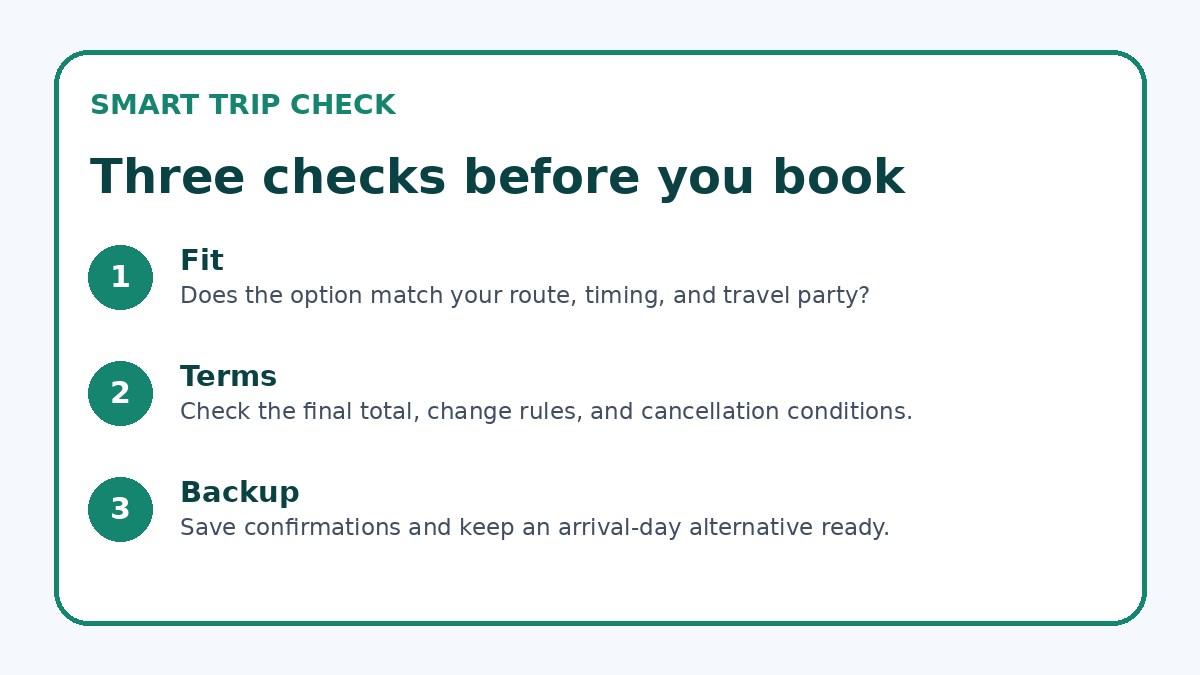
Before you book
- Verify passport and any required ID/card for entry are valid and accessible both digitally and in print.
- Check the carrier’s booking page for exact departure terminal/station and any provider-specific boarding or baggage rules.
- Schedule arrival with at least a 60–90 minute buffer for border processing, adjusting upward for peak travel periods.
- Pack a working mobile hotspot or confirm roaming data to ensure connectivity if carrier Wi‑Fi is unreliable.
- Prebook last-mile transport at both ends or save reliable ride-service contacts for quick changes.
- Inform meeting contacts of a backup virtual option and share realistic arrival windows in advance.
Confirm logistics and have contingency plans
On the travel day double-check departure and arrival locations, terminal names, or station platforms on the provider’s booking page—these details change more often than schedules. Confirm last-mile transport options at both ends and save contact numbers for taxis or ride services. If you have an important meeting shortly after arrival, book a meeting-ready room or workspace in case you need time to freshen up or join a call with reliable internet.
Have at least two contingency plans: one if you’re delayed before departure and another if you run into significant wait times at the border. For example, move an in-person meeting to a later slot or switch to a virtual call on short notice. Communicate potential delays to colleagues and clients early and provide them with realistic arrival estimates; a short, transparent update keeps expectations aligned and reduces pressure on your travel day.
Frequently asked questions
How much extra time should I build in for the Canada–US border on a business travel day?
Border processing time varies with day, time, and season; for business travel, plan a generous buffer rather than a minimal one. Building at least 60–90 minutes into your schedule for the crossing gives you breathing room for routine checks and small delays. If you’re traveling during known peak windows—weekday mornings or holiday periods—increase the buffer. Also allow time for getting to the departure point and potential security screening before boarding to avoid last‑minute stress.
What documents and preparations ease crossing as a business traveler between Vancouver and Seattle?
Bring a valid passport or any accepted travel card for your nationality, plus clear proof of your business purpose if you expect detailed questioning. Carry printed and digital copies of your itinerary, meeting confirmation, or company letter if you regularly cross for work. Enroll in a trusted-traveler program if eligible, but always verify provider-specific requirements on the booking page before you travel. Keep your documents organized and accessible so you can present them quickly during inspection.
How can I stay productive while traveling and still handle border uncertainties?
Prioritize tasks that tolerate interruptions: emails, reading, or prep that can be paused and resumed. Download critical files and set devices to airplane mode with offline copies available in case connectivity is lost through the border. Use travel time for focused, small blocks of work and schedule calls for times when you know connectivity and privacy are available, such as in a departure lounge or after arrival. Have a concise plan for switching to a virtual meeting if you encounter significant travel delays.
Final planning note
A smooth Vancouver to Seattle transport day for business travelers comes from anticipating the border, choosing an approach that matches your priorities, and building practical contingencies. Decide whether uninterrupted productive time or a faster arrival matters more, verify documents and provider details on the booking page, and pack for both work and comfort. Confirm last-mile transport, communicate backup plans to meeting contacts, and allow extra time for the border and potential delays. With a clear timetable, accessible documents, and a contingency plan, you’ll reduce travel anxiety and arrive ready to focus on business.
Continue planning
Check current options and final conditions
Use the provider page to confirm live availability, the final total, cancellation terms, and every condition that matters to your trip.
This evergreen planning guide was created with AI-assisted drafting and a structured quality review. It does not display live prices, schedules, availability, visa guidance, or provider rankings. Verify current details before booking. Some links are affiliate links; we may earn a commission at no additional cost to you.