
If you’re visiting Barcelona for the first time, cancellation flexibility can turn a stressful change into a minor inconvenience — or it can cost you a lot. The practical answer: prioritize fully refundable or flex-rate options for flights and hotels if your plans are uncertain, and buy flexible tickets for key local experiences like airport transfers. Opt for refundable accommodations or those with free cancellation until close to arrival, and choose tours or activities that explicitly state a refund or free-change window. Always read the provider’s booking terms on the final checkout page: look for exact deadlines, fees, processing times, and whether refunds are returned to your original payment method or as vouchers. Below you’ll find the tradeoffs, decision criteria, and a checklist to help first-time travelers weigh flexibility against price and convenience when browsing Barcelona travel deals.
See current options before you compare the details
Availability and final conditions change. Open Trip.com now or keep reading for the practical comparison.
How cancellation rules differ for flights, hotels and activities
Airlines, hotels and tour operators use different models for cancellation flexibility. Airlines typically offer a mix of nonrefundable basic fares and higher-priced refundable or changeable tickets: refundable tickets usually allow returns for the original payment method, while changeable fares may impose a reissue or fare-difference fee. Hotels commonly list rooms as prepaid nonrefundable, flexible with a free cancellation deadline, or refundable with penalties for late cancellations. Activities and tours often have separate windows — some offer free cancellation up to 24 or 48 hours before, others are strictly nonrefundable, and a few allow date changes without penalty but not refunds.
When comparing Barcelona travel deals, focus on the concrete mechanics rather than labels like “flexible.” Verify whether the refund arrives as cash, a credit to your card, or a voucher, and whether the provider deducts service or transaction fees. Pay attention to how long refunds take to process; a provider might allow refunds but only after several weeks. For first-time visitors, that timing matters if you’re coordinating onward travel or reimbursing travel companions. Finally, note that third-party booking sites and direct bookings can have different rules, so confirm terms on the final checkout or confirmation email.
Practical tradeoffs: flexibility versus price and peace of mind
Choosing refundable or changeable bookings buys peace of mind but usually costs more. That extra cost is a premium you pay for uncertainty. For some travelers, especially new visitors who haven’t locked down dates, the premium is worth avoiding the scramble if plans change. For others, a cheaper nonrefundable fare plus travel insurance that covers specific cancellation reasons can be a better value. Weigh how likely your plans are to change, the absolute value at risk (for example, an expensive long-haul flight versus a cheap domestic connection), and whether you can comfortably absorb a change fee or the loss of prepaid costs.
There’s also an operational tradeoff: highly flexible bookings sometimes have blackout dates, limited inventory, or fewer perks like preferred room types or seat selection. Some flexible rates can’t be combined with promotional codes or loyalty benefits. Conversely, taking a nonrefundable promotional deal may force you to be rigid, but it can free budget for experiences in Barcelona. The right approach balances financial exposure with convenience—protect what would be costly or difficult to replace, and accept stricter terms on low-stakes items.
| Approach | Best for | Tradeoff to check |
|---|---|---|
| Fully refundable bookings (flights/hotels) | Travelers who need maximum peace of mind or have high-cost, inflexible commitments. | Higher upfront cost and sometimes fewer promotional benefits or loyalty perks. |
| Nonrefundable bargains with insurance backstop | Budget-conscious travelers willing to accept some risk and buy targeted insurance. | Potential loss of fare if insurance doesn’t cover the cancellation reason or has exclusions. |
| Flexible-change fares (fees possible) | Those who expect minor schedule tweaks and want lower cost than full refunds. | Change fees or fare differences can still be substantial; policies vary by carrier or hotel chain. |
| Book-now-monitor-and-swap approach | Agile planners who track prices and switch before cancellation deadlines. | Requires active monitoring and the risk that cheaper options disappear before you change. |
Ready to check the option that fits your plan?
Use your exact dates and traveler details so the provider page can show the current total and conditions.
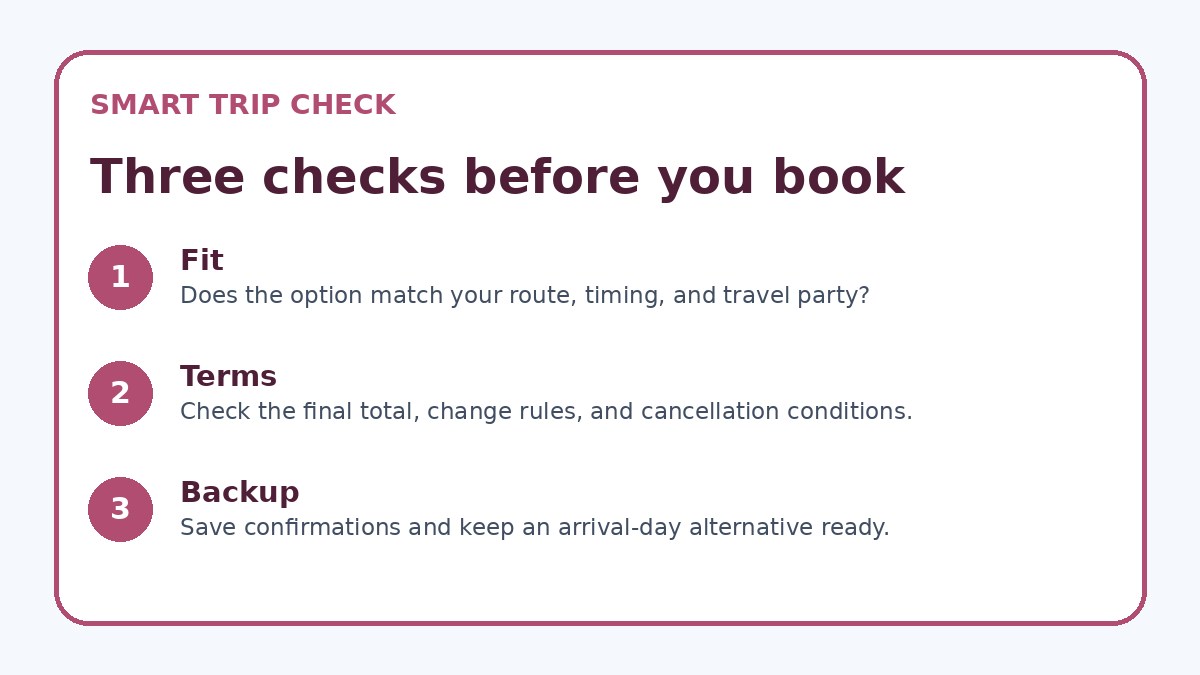
What to verify on the booking page before you commit
Never rely on summary language alone; always open the full cancellation and refund policy before you pay. Key items to check: exact deadline for free cancellation (date and time, and the time zone used), the amount deducted for cancellations or changes, whether taxes and third-party fees are refundable, and the refund method (original payment, voucher, or credit). Also verify whether name changes are allowed on flights or tours, and whether rebooking uses current rates or waives fare differences. If a policy references insurance or a third-party supplier, read those separate terms too.
For flights, check baggage and seat-change rules tied to fare classes and whether voluntary changes are processed immediately or require contacting customer service. For hotels, confirm the room type or rate plan covered by the policy and whether pre-authorization holds on cards will be released after cancellation. For activities and transfers, look for language about weather-related cancellations and how long refunds might take. If anything is unclear, use the provider’s chat or phone support to get an exact written statement and save a screenshot or email of that confirmation.
Before you book
- Open the full cancellation and refund policy on the final booking page and save a screenshot or PDF of the text and any confirmation screens.
- Confirm the exact free-cancellation deadline including time zone, and put a reminder in your calendar at least 48 hours earlier.
- Note how refunds are issued (original payment, voucher, or credit) and the estimated processing timeline stated by the provider.
- For flights, record the fare class code and baggage/change rules; ask for a written statement if the page wording is ambiguous.
- For tours and transfers, verify the operator’s emergency contact and their weather or force-majeure cancellation rules.
- If using third-party sites, also open the supplier’s direct terms and ensure you understand whether you must contact the platform or the supplier for changes.
Strategies to maximize flexibility without overspending
Mix refundable and nonrefundable choices strategically. Protect the big-ticket items — long-haul flights, expensive multi-night stays, and private transfers — with refundable or flexible fares. For short, inexpensive bookings like a single museum ticket or a short hop train, accept nonrefundable terms and buy those only when your dates are confirmed. Consider refundable rates that allow free cancellation until a specified date close to arrival; you can often lock in a room now and re-evaluate closer to your trip. Another useful tactic is booking refundable options while you plan, then monitoring rates: if a significantly cheaper, nonrefundable deal appears and you’re confident, you can switch before the cancellation deadline.
Travel insurance or a flexible-payment product can be a middle ground. A policy that covers cancellations for specific reasons—illness, travel provider insolvency, or schedule changes—can reduce the need to buy the highest-priced flexible fare. Read insurance exclusions carefully: standard policies often don’t cover changes of mind. Finally, use clear calendars and reminders for free-cancellation deadlines, and record the exact terms and contact details in one place so you can act quickly if you need to cancel or change any element of your Barcelona travel deals.
Frequently asked questions
Should I always book refundable rates for my first trip to Barcelona?
Not always. Refundable rates are useful if your dates are uncertain or your trip involves high-cost items that would be hard to replace. If your schedule is firm, nonrefundable deals can save money but increase risk. A balanced approach is to buy flexibility for the most expensive bookings (international flights, long hotel stays) and accept stricter terms on lower-cost items. Consider travel insurance for specific risks and verify refund methods and deadlines on the provider’s final booking page before you commit.
Can I rely on travel insurance instead of flexible booking options?
Travel insurance can complement or substitute flexible fares, but it depends on the policy’s coverage. Many policies cover cancellations for illness, injury, or carrier insolvency, but they often exclude changes of mind or common schedule conflicts. Read the policy exclusions carefully and confirm claim procedures and documentation requirements. Insurance also typically won’t reimburse nonrefundable items immediately, so consider cashflow needs and whether you prefer direct refundable bookings for faster returns.
How should I handle third-party booking platforms when checking cancellation rules?
Treat third-party listings as informative but always open the supplier’s direct cancellation policy too. Platforms sometimes add their own service terms, and responsibility for refunds can differ between the platform and the supplier. On the final checkout page, confirm who will process refunds, what deadlines apply, and whether you must contact the platform or the supplier. If anything is unclear, ask the platform for written confirmation and save that message along with your booking confirmation.
Final planning note
For first-time visitors, thinking about cancellation flexibility is part of good trip planning rather than an afterthought. Protect big-ticket items with refundable or clearly changeable options, verify exact deadlines and refund methods on the final booking page, and use a mix of strategies to control cost exposure. Keep records of the full policy text, set calendar reminders for free-cancellation cutoffs, and consider targeted insurance for risks that flexible fares don’t cover. With these steps you can compare Barcelona travel deals confidently: balance peace of mind and budget so you can focus on enjoying the city once your plans are final.
Continue planning
Check current options and final conditions
Use the provider page to confirm live availability, the final total, cancellation terms, and every condition that matters to your trip.
This evergreen planning guide was created with AI-assisted drafting and a structured quality review. It does not display live prices, schedules, availability, visa guidance, or provider rankings. Verify current details before booking. Some links are affiliate links; we may earn a commission at no additional cost to you.