
If you’re traveling to Dubai with extra luggage, the practical move is to use price alerts but only act when three conditions align: the alert meets your minimum acceptable fare, the carrier’s baggage rules fit your needs, and you’ve compared the bundled versus add-on baggage costs. Create alerts that reflect the full landed cost—not just the headline fare—by adding expected baggage fees and seat-selection costs to your target price. That prevents impulse purchases that look cheap until add-ons are included. Use alerts as signals, not triggers: treat them like potential opportunities to investigate options, then pause to compare refundable rules, baggage allowances, and timelines for free or low-cost baggage upgrades before you commit.
See current options before you compare the details
Availability and final conditions change. Open Trip.com now or keep reading for the practical comparison.
How to set price alerts for travelers who need extra baggage
Start by calculating your total expected baggage cost: count checked bags, possible overweight charges, and any seat or priority boarding you value. Convert that into an additional fixed amount and add it to the fare you consider acceptable. When creating alerts on aggregator sites or airline apps, set the alert threshold to that combined figure. If the alert tool allows tags or notes, label it with the baggage assumptions so you remember why that threshold exists.
Create multiple alerts with different time horizons: one long-range alert for broad price movements, and a short-range alert for last-minute dips. Stagger alert sensitivity so you avoid notification fatigue and reduce impulse responses. Use rules like “only consider fares with carry‑on plus one checked bag” if the tool supports it; otherwise treat alerts as starting points, not final offers. Before booking, always open the airline’s final booking page to verify the baggage inclusion and fees because those details can change between the aggregator and provider.
Deciding between bundled fares and add-on baggage
Bundled fares that include one or more checked bags can look pricier upfront but often remove uncertainty and can save money if your luggage needs are consistent. Add-on baggage pricing varies by fare class, route, and purchase timing: buying baggage during initial booking is sometimes cheaper than adding it at the airport, but that’s not guaranteed. The tradeoff is flexibility—an unbundled fare with add-ons may be cheaper if you end up travelling light or can rebook without penalty.
To compare, prepare a quick table: headline fare, included baggage, cost to add your expected baggage at booking, cost to add baggage at check-in, and change/refund rules. If you value predictability—no surprises at the airport—favor bundled options. If you’re flexible and can travel with fewer bags in one direction, the unbundled route with a conservative alert threshold may win. Always confirm baggage rules and final prices on the actual checkout page before you buy.
| Approach | Best for | Tradeoff to check |
|---|---|---|
| Set high-threshold alerts (include baggage in target price) | Travellers prioritizing predictability and avoiding surprises at check-in | May miss very low headline fares that only look cheap before add-ons |
| Low-threshold alerts (headline fare only) | Flexible travellers willing to re-evaluate add-on costs and travel lighter | Higher risk of impulse booking and unexpected baggage expenses |
| Bundled-fare focus (alerts for fares that include baggage) | Those who want a simple, all-in cost and less pre-trip hassle | Potentially higher upfront price if you can travel with less luggage |
| Unbundled strategy with deliberate comparison | Cost-conscious travellers who will calculate add-on and change fees before buying | Requires more time and discipline to compare final landed costs |
Ready to check the option that fits your plan?
Use your exact dates and traveler details so the provider page can show the current total and conditions.
Avoiding impulse booking when alerts trigger
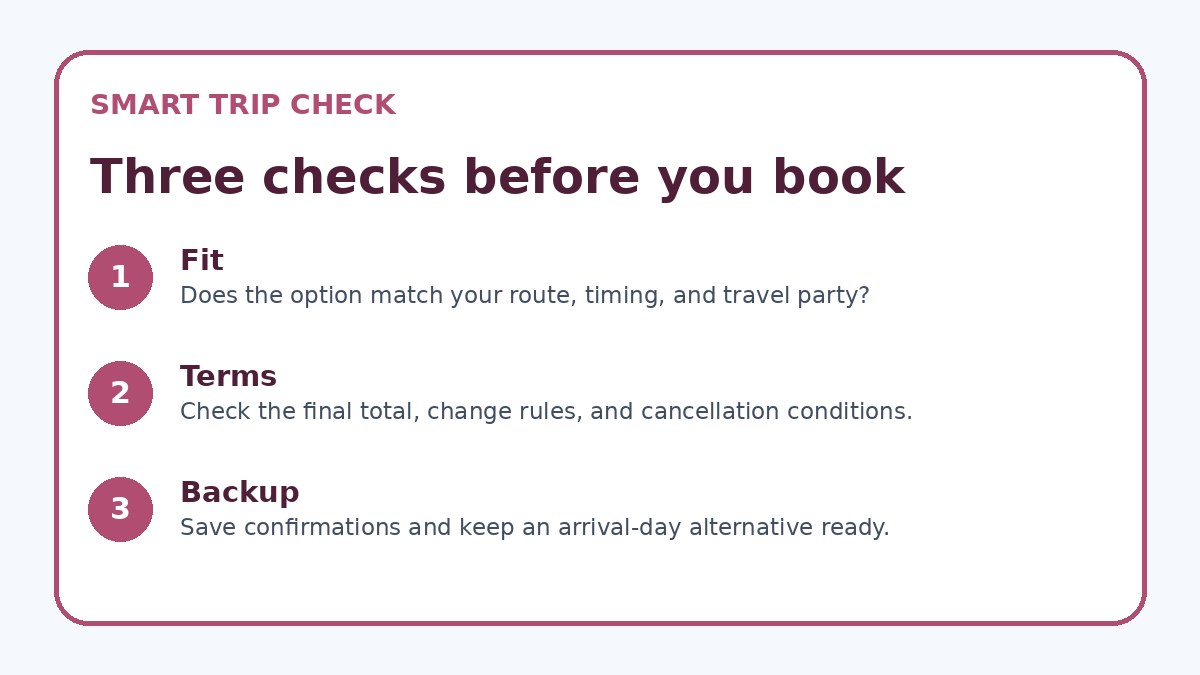
When an alert sends a tempting fare, resist immediate booking by following a short checklist: verify the fare class and baggage allowance on the carrier’s booking page, calculate the true landed price including baggage, and check change or cancellation penalties. Give yourself a cooling-off window—24 to 48 hours depending on how soon you travel—so you can compare other carriers and routes. If the saving after including baggage and fees still meets your pre-set threshold, proceed; otherwise, ignore the alert.
Use automation wisely: batch notifications into digest emails or a single daily summary so you don’t act out of FOMO. If you must act quickly for schedule reasons, prioritize offers that clearly disclose baggage and change rules on the final booking screen. And when booking through third parties, verify those same specifics directly with the airline; third-party pages sometimes show incomplete baggage terms. If you want, check current availability and conditions on a site like Trip.com, but confirm details with the provider before purchase.
Before you book
- Calculate your expected total baggage cost (checked bags, overweight fees, and preferred extras) and add it to your fare target before creating alerts.
- Create at least two alert types—long-range and short-range—and label them with your baggage assumptions for clarity.
- When an alert fires, open the airline’s official booking page to verify baggage inclusions and the final price before making any purchase.
- Compare bundled fares versus add-on baggage costs at booking time and at check-in to identify the true lowest landed cost.
- Set a personal cooling-off rule (for example, 24 hours) after an alert before you commit, unless your travel window requires immediate action.
- Document the change and cancellation terms shown on the provider’s final checkout page; confirm those terms in writing or a screenshot if they are important.
Timing, flexibility and other traveler decisions
Timing your purchase depends on your flexibility. If your travel dates are fixed, you’ll likely accept smaller savings and prefer predictable baggage-included fares. If your dates are flexible, you can watch alerts longer and wait for a bundled fare that matches your baggage needs. Also consider peak travel seasons and special events in Dubai, which can influence demand; alerts help spot patterns but won’t predict final availability, so always verify seat and baggage availability on the airline’s booking page.
Factor in change policies and travel insurance: if your itinerary might change, a slightly higher fare with more flexible change terms or a refundable baggage option can be the cheaper choice in the long run. Consider carrying essentials in a carry-on to reduce checked baggage needs, or ship items ahead if weight and volume justify the cost. Ultimately, your decision should balance price, convenience, and the predictability you need for handling extra luggage.
Frequently asked questions
Can I rely on price alerts to find the cheapest way to include extra baggage?
Price alerts are useful signals but not definitive answers for travelers with extra baggage. Alerts typically track headline fares and may not account for add-on baggage fees or seat charges. To make alerts reliable for your needs, set your alert target to the fare plus your expected baggage cost. When an alert arrives, always check the airline’s final booking page to confirm baggage rules, upgrade prices, and change policies—those live details determine whether an alert actually yields the best total outcome.
Should I book a bundled fare that includes checked bags or add baggage later?
There’s no one-size-fits-all answer. Choose bundled fares if predictability, a straightforward checkout, and fewer pre-trip decisions matter most. Opt for adding baggage later if you expect to travel lighter or want to gamble on price movement—but only if you’re disciplined about checking add-on prices at booking and at check-in. Whichever route you take, verify the exact baggage allowance, overweight thresholds, and the cost to change baggage on the provider’s final booking screen before purchase.
How do I avoid impulse buying when an alert shows a good fare to Dubai?
Treat alerts like prompts to investigate, not automatic triggers. Establish a pre-set rule: only book when the total landed cost (fare plus baggage and likely extras) hits your threshold. Use a short cooling-off period—12 to 48 hours depending on travel urgency—to compare other carriers, routes, and bundled options. Always confirm the fare class, baggage inclusions, and change/cancellation policy on the airline’s checkout page before clicking pay. This discipline prevents impulsive purchases that look cheap but become expensive after fees.
Final planning note
For travelers heading to Dubai with extra luggage, price alerts are powerful if you train them to reflect your real costs. Don't chase headline fares—build alerts around the landed price that includes baggage, and use alerts to narrow options rather than to force instant decisions. Compare bundled fares and add-on scenarios, verify final baggage rules on the provider’s booking page, and adopt a cooling-off habit so you don’t buy on emotion. With a clear threshold and a disciplined checking routine, alerts become tools that save money and reduce stress rather than triggers for costly impulse buys.
Continue planning
Check current options and final conditions
Use the provider page to confirm live availability, the final total, cancellation terms, and every condition that matters to your trip.
This evergreen planning guide was created with AI-assisted drafting and a structured quality review. It does not display live prices, schedules, availability, visa guidance, or provider rankings. Verify current details before booking. Some links are affiliate links; we may earn a commission at no additional cost to you.