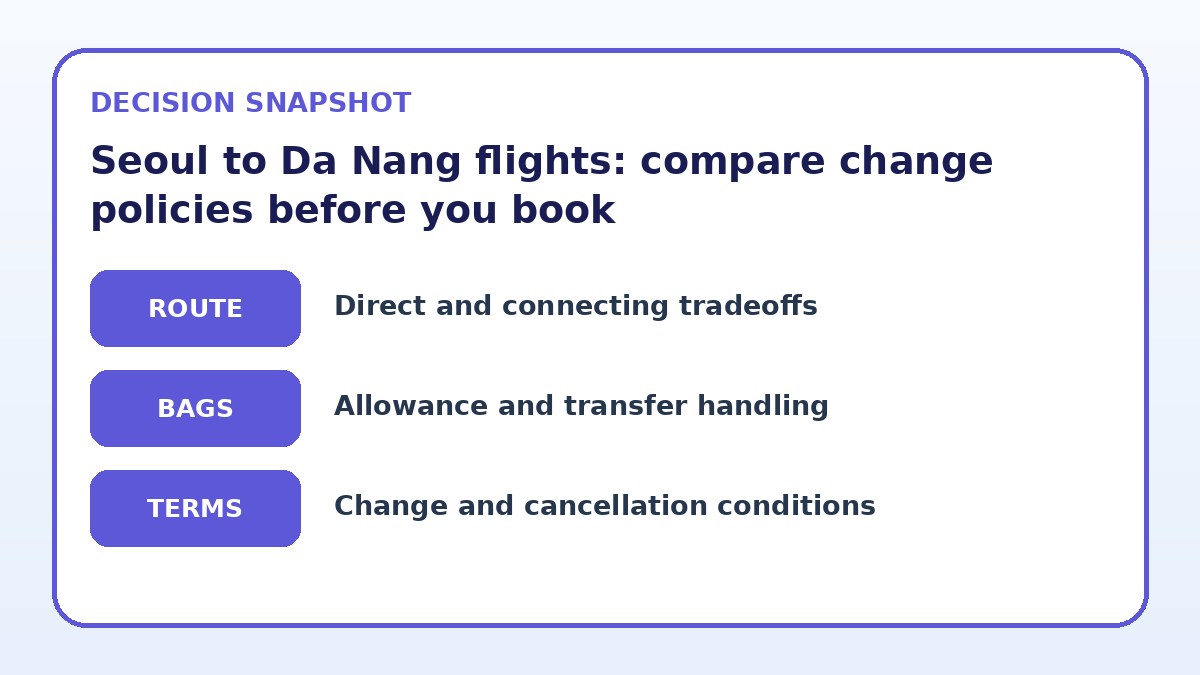
If you're traveling solo from Seoul to Da Nang, the single most useful thing you can do before booking is compare change and cancellation rules across the fares you are considering. Flexible tickets are more convenient but cost more upfront; non‑refundable fares can be fine if your plans are fixed. Look at the provider’s full fare conditions on the final booking page — that is the legally binding text for fees, waiver conditions, and how to request changes. For connections, check change and cancellation rules for each carrier and each segment, not just the itinerary total. This guide walks you through the practical tradeoffs, how to read policy language, and the specific checks to make so your solo trip stays manageable if plans shift.
See current options before you compare the details
Availability and final conditions change. Open Trip.com now or keep reading for the practical comparison.
Understand the basic policy types
Airlines and online sellers typically offer three broad policy types: refundable fares, changeable fares with fees, and non‑refundable fares with limited or no changes allowed. A refundable fare means you can cancel and receive a refund to your original form of payment, subject to any administrative timelines the carrier sets. Changeable fares permit a date or routing change but usually charge a fee plus any fare difference. Non‑refundable tickets often issue travel credit instead of cash refunds and can come with steep penalties for name changes or involuntary reissues.
When you compare options for Seoul to Da Nang flights, focus on the exact remedy offered for the event you most fear: cancellation, flight delay that forces cancellation, or a voluntary date change. Many carriers publish standard change fees in their fare rules but reserve the right to apply different procedures for operational disruptions. For work flexibility or uncertain schedules, refundable or low‑fee changeable fares are practical; if your dates are locked down, a cheaper non‑refundable ticket may be acceptable but demands stricter planning.
How to read the fine print effectively
Start by finding the fare rules, usually linked as a PDF or an expandable section before payment on the airline or booking site. Look for key phrases: "change fee", "refundable", "credit voucher", "no-show", and "schedule change". Note the deadlines for free changes (for example, some fares permit same‑day rebooking or free changes within 24 hours of purchase) and whether changes require reissuing the ticket. If a fare mentions "fare difference applies", that means you will pay any higher fare on the new date in addition to any change fee.
For multimodal or multi‑carrier itineraries, verify each segment's rules. A connection operated by another carrier may carry a distinct penalty structure; the most restrictive rules often govern the entire itinerary if the ticket is issued as a single reservation. Also check the refund processing method: airlines sometimes issue credit vouchers instead of money and set expiration windows. If the wording is unclear, use the booking agent’s contact channel to request the specific clause text and retain copies of the responses before you finalize payment.
| Approach | Best for | Tradeoff to check |
|---|---|---|
| Buy refundable fare | Travelers wanting maximum flexibility and simple refunds | Higher upfront fare compared with non‑refundable options |
| Buy changeable fare with lower fee | Those balancing cost and moderate schedule uncertainty | You may still pay fare differences and administrative charges |
| Choose cheapest non‑refundable fare | Fixed plans and travelers confident they won't change dates | Limited or voucher-only refunds and potentially high penalties |
| Book cheapest fare plus travel insurance | Budget-conscious travelers wanting protection for covered events | Insurance covers specific reasons only and involves claim processes |
Ready to check the option that fits your plan?
Use your exact dates and traveler details so the provider page can show the current total and conditions.
Decision criteria for solo travelers
Solo travelers should weigh three practical criteria when prioritizing change and cancellation coverage: schedule certainty, budget for potential change fees, and the need for simplicity at the airport. If your travel dates are driven by fixed commitments (work, event, or visa appointment), lean towards refundable or low‑fee changeable fares. If your schedule is flexible and you're comfortable managing credits or rebooking, a lower‑cost non‑refundable fare with a reasonable credit policy may suffice. Also consider how comfortable you are handling customer service alone if an itinerary needs rewriting—some solo travelers prefer the safety net of easier refund routes.
Another criterion is the nature of the trip: if this is a short city visit with tight connections on either end, schedule changes can cascade into missed plans. For longer stays where you can absorb a day or two of shifts, accepting stricter cancellation rules could save money. Finally, think about your personal risk tolerance: do you prefer paying more now for peace of mind, or saving money and managing the administrative work later? Your answer should drive whether you prioritize refundable fares, change-fee waivers, or the cheapest options.
Before you book
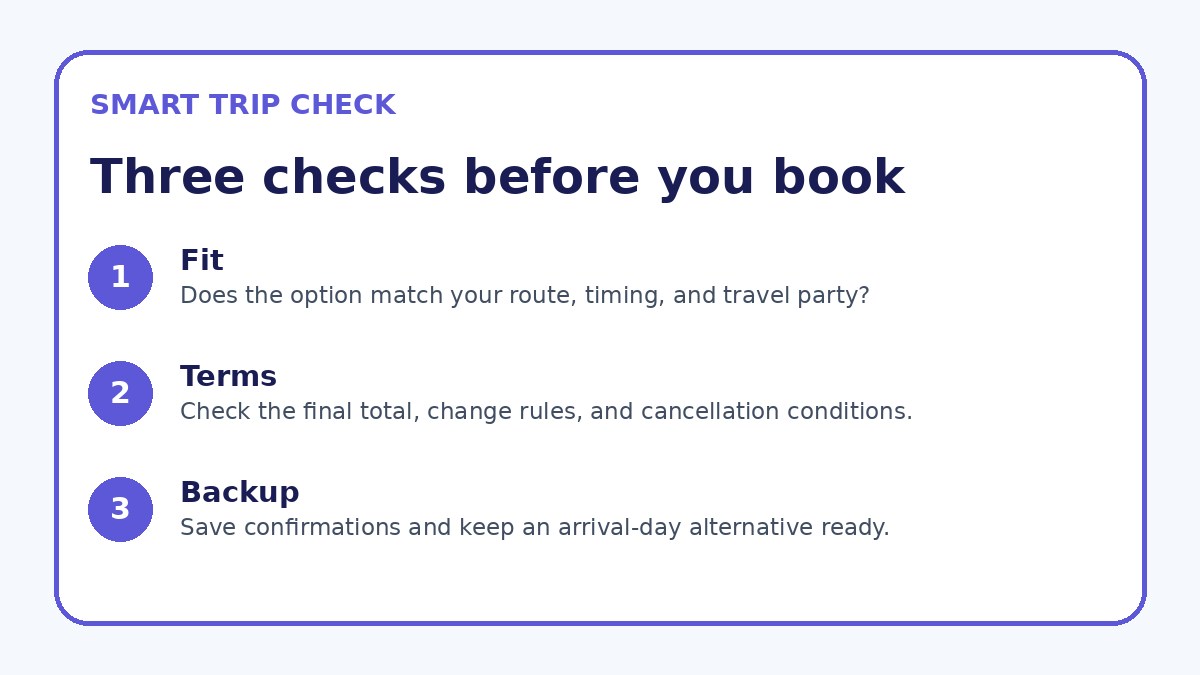
- Save or screenshot the full fare rules from the final booking page before payment.
- Verify who operates each flight segment and check that carrier’s change policy separately.
- Confirm what constitutes an airline 'schedule change' and what remedies are offered.
- Check whether refunds are issued to your original payment method or as travel credit and note expiration dates.
- If using a third‑party seller, read their refund and service‑fee policies on the final checkout screen.
- Document all communications (email, chat, call reference numbers) if you request a change or refund.
Practical steps before and after booking
Before you hit purchase, screenshot or save the full fare rules and the final booking confirmation page that lists change and cancellation terms. Check whether the booking page explicitly states what happens if the airline cancels or significantly delays your flight; the carrier’s operational policy may allow free rebooking even for non‑refundable tickets. If you plan to buy travel insurance or use a credit card with travel protections, verify the insurer’s language about cancellations and covered reasons. When comparing sellers, note that some third‑party platforms add their own fees or have different refund handling procedures, so check the seller's cancellation flow closely.
After booking, register for the airline’s mobile alerts and keep the booking reference handy. If you need to change or cancel, act early: many change fees rise or availability falls as the departure date approaches. Keep written records of any calls or chat interactions and request confirmation numbers for voluntary or involuntary changes. If you accept a credit voucher, note its expiration and any blackout dates. For solo travelers, having these habits reduces stress and improves the chance you’ll get a favorable outcome during an unexpected disruption.
Frequently asked questions
Can I change a Seoul to Da Nang ticket at the airport rather than online?
You can often request changes at the airport ticket counter, but procedures vary by carrier and can cost more or take longer than online options. At the counter you may get immediate rebooking help for operational disruptions, which can be helpful if you’re already at the airport and facing a tight connection or missed flight. For voluntary changes, airlines usually prefer online or phone channels and may apply the same fees and fare differences as for counter changes. Before relying on an airport counter, check the fare rules and consider calling the airline’s service line to compare turnaround time and potential fees.
If my connecting flight is delayed, who is responsible for rebooking or refunds?
Responsibility depends on how your itinerary was booked and who operates each segment. If your entire Seoul to Da Nang trip is on a single ticket issued by one airline, that airline generally has responsibility to rebook you or provide a refund if they miss a connection due to their delay. If segments were booked separately, each carrier treats its own leg independently, which can leave you responsible for missed connections and rebooking costs. Always confirm on the booking confirmation who issued the ticket and ask the airline what protections apply to missed connections before travel.
Should I buy travel insurance or a flexible fare for protection?
Both have roles: a flexible or refundable fare gives immediate remedies from the carrier, while travel insurance can reimburse nonrefundable costs for covered reasons like medical emergencies or certain travel disruptions. If you choose insurance, read the policy exclusions, claim deadlines, and documentation requirements carefully to ensure your likely risks are covered. For frequent last‑minute changes or high‑value trips, a refundable fare might simplify the process, whereas budget travelers who accept some claims paperwork may prefer cheaper fares plus insurance.
Final planning note
For solo travelers planning Seoul to Da Nang flights, the practical choice comes down to how much flexibility you value versus how much you want to save upfront. Read the fare rules on the final booking page and confirm who operates each segment; those two checks answer most questions about change fees and refund options. Use refundable or low‑fee changeable fares if you need peace of mind, or accept a non‑refundable ticket if you have fixed dates and strong plans to avoid changes. Consider travel insurance for specific covered risks and keep copies of all communications. If you want a quick comparison of current availability and policy wording, you can check providers on sites like Trip.com, but always verify the carrier’s own fare rules before finalizing payment.
Continue planning
Check current options and final conditions
Use the provider page to confirm live availability, the final total, cancellation terms, and every condition that matters to your trip.
This evergreen planning guide was created with AI-assisted drafting and a structured quality review. It does not display live prices, schedules, availability, visa guidance, or provider rankings. Verify current details before booking. Some links are affiliate links; we may earn a commission at no additional cost to you.