For families traveling Sydney to Melbourne, the practical choice is to prioritize flight timing, seat configuration, and a simple contingency plan over chasing tiny savings. Decide first whether you want a direct hop that minimizes transitions or a connecting itinerary that allows a daytime break and more legroom options. Think about the family’s youngest traveller: nap schedules, stroller handling, and whether you’ll need a bassinet or extra carry-on capacity. Balance comfort against complexity—adding a connection can mean more space or lower per-leg travel time, but it also introduces risk of missed connections and more logistics at transfer airports. Below you’ll find a clear checklist and comparison criteria to weigh direct versus connecting routes, choose seats and ancillary services, and prepare realistic plans for delays, transfers, and airport facilities so the trip runs as smoothly as possible.
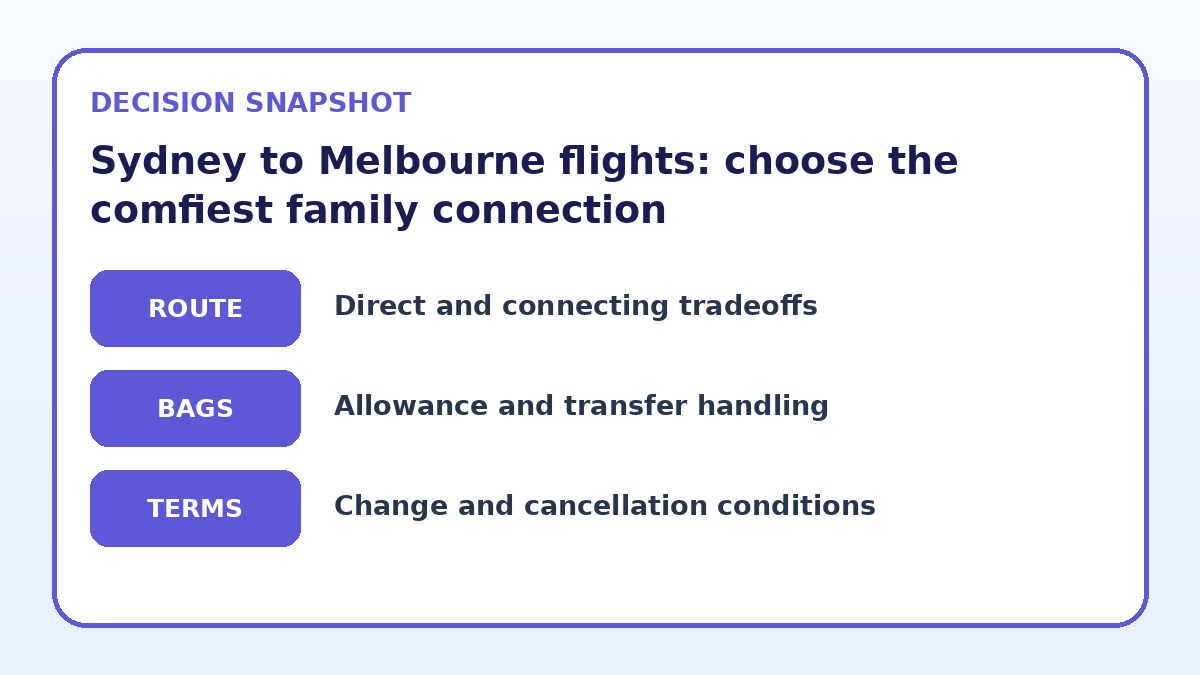
See current options before you compare the details
Availability and final conditions change. Open Trip.com now or keep reading for the practical comparison.
Direct vs connecting: which to choose for family comfort
Direct flights cut out the stress of transferring baggage, re-clearing security, and wrangling kids between gates. For many families the biggest benefit is predictability: one takeoff, one landing, and fewer opportunities for missed connections or lost strollers. A direct hop is usually the fastest door-to-door option and reduces the amount of time children need to be restrained or kept seated. If your family has very young infants, limited tolerance for change, or simple stroller logistics, a direct service is often the most comfortable choice despite the potential for less legroom on some short-haul aircraft.
Connecting itineraries can be attractive when they trade a single long cabin period for two shorter segments or when the connection airport offers family-friendly facilities such as play spaces and quiet rooms. A daytime connection may let a child nap off the aircraft or give parents a chance to stretch and rehydrate between flights. However, connections add points of failure: you must plan for transfer time, rechecking baggage if needed, and the stress of coordinating boarding passes and seats across two carriers. When considering a connection, check minimum connection times, whether you need to switch terminals, and what contingency options the airline provides if a missed connection occurs.
Seat selection, carry-on strategy and in-flight routines
Seats make or break a family flight. Bulkhead seats or rows with additional legroom give children space to spread toys and let parents swap positions without blocking an aisle. If your airline offers specific family seating or pre-assigned seats when booking, weigh the fee against the value of sitting together. For infants requiring a bassinet, confirm eligibility and request it during booking. Bring familiar items for comfort — a blanket, a favourite small toy, or a consistent bedtime routine — to increase the chances of in-flight sleep. Also plan simple in-seat activities that don’t require an internet connection: sticker books, crayons, or laminated picture cards are quiet and low-mess.
Carry-on planning should focus on easy access to essentials: a compact toiletry kit, spare outfits for kids, nappies, medication and a change of clothes for adults if needed. Use a single well-organised family bag with labelled compartments so gate agents and security checks are quicker. If you expect a transfer, pack everything you need for the next four to six hours in a personal item that stays with you; avoid checking items you’ll want during a layover. Remember to check the airline’s carry-on policy and any child-specific allowances on the booking page so you don’t get surprised at the gate.
| Approach | Best for | Tradeoff to check |
|---|---|---|
| Direct flight | Families prioritising predictability, minimal transfers, and shorter door-to-door time | May offer less overall stretch time and fewer aircraft layout choices for extra legroom |
| Single short daytime connection | Families who prefer to split cabin time and use airport facilities for naps or walks | Adds transfer complexity and risk of missed connections or terminal changes |
| Late-night connection | Families hoping children will sleep across segments to reduce awake time on planes | Can be tiring if delayed; airport overnight facilities vary and may be limited |
| Booking flexible fares with seat selection | Parents who value guaranteed seats together and ability to rebook if plans change | Higher upfront cost compared with basic fares; verify refund and rebooking rules |
Ready to check the option that fits your plan?
Use your exact dates and traveler details so the provider page can show the current total and conditions.
Managing airport transfers and layovers with kids
Plan transfer time realistically: more time reduces stress, but too long a layover can exhaust small children. Identify child-friendly facilities at the transfer airport before you go—play areas, nursing rooms, family toilets and quiet spaces can transform a dull wait into a restful break. If you need to switch terminals, check whether shuttle services or internal trains are required and how long security re-clearance will take. When selecting a connection, prefer the one with straightforward navigation and fewer terminal changes even if it isn’t the shortest possible layover.
If you face a long layover, break it into manageable activities: a stroller nap, a snack and a short walk. Bring portable snacks and a refillable water bottle so hunger and dehydration don’t force an expensive shop run. Consider booking a lounge day pass if your budget allows—many lounges have play-friendly corners and quieter spaces where children can rest. If an unexpected delay occurs, know where to find airline help desks and what documentation you’ll need for rebooking or special assistance; verify these options on the carrier’s final booking and support pages.
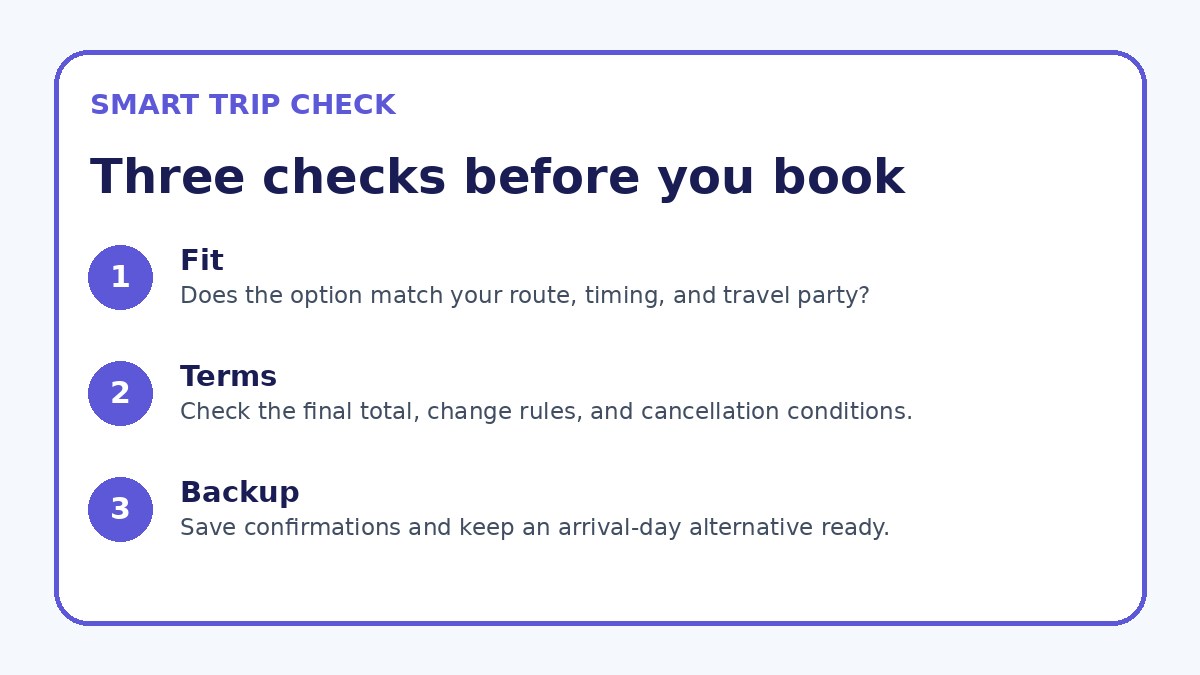
Before you book
- Decide whether direct or connecting flights suit your family’s nap and mobility needs and note preferred transfer airports.
- Reserve seats together at booking; request bulkhead, extra-legroom, or bassinet options and confirm them on the airline’s final page.
- Pack a dedicated in-flight family bag with snacks, spare clothes, nappies, medicines and quiet activities for each child.
- Confirm carry-on and checked baggage allowances for children and infant equipment on the airline’s booking and support pages.
- Plan connection time with buffer; map gates, terminal transfers and family facilities at any transfer airport before travel day.
- Register for early boarding or special assistance at check-in and keep travel documents and emergency contact info in one easy-to-reach wallet.
What to verify on booking pages and at the airport
Before you hit purchase, confirm crucial, changeable facts on the airline’s final booking page: baggage allowances for children, the availability and cost of assigned family seating, bassinet eligibility and how infant fares are handled. Don’t rely on third-party summaries for these details—policies change and fees may apply for seats and services. If you’re mixing carriers on a single itinerary, check whether baggage transfers are guaranteed and what the airline’s re-accommodation policy is in case of a missed connection. Also verify the minimum connection time and whether you must collect and recheck bags, which affects how much carry-on you’ll need.
At the airport, arrive early enough to manage check-in with children, stroller drop-off, and any special assistance requests. Ask for early boarding if available so you can settle children and store carry-on items while there’s room. Keep important documents—passports, child IDs, and any required health paperwork—in a single travel wallet that one adult always keeps. Finally, check the airport information screens and the airline’s app for real-time gate and boarding changes; if you prefer an aggregated look at options, you can compare availability and conditions on Trip.com but confirm all specifics on the airline’s booking and support pages.
Frequently asked questions
Are direct Sydney to Melbourne flights always faster for families?
Direct flights are typically faster in terms of fewer segments and less time spent on the ground between planes, which reduces the number of transitions the family must manage. That said, a connecting itinerary can sometimes be more comfortable if it substitutes one long cabin period with two shorter flights that align better with a child’s sleep schedule, or if the aircraft types on a connecting route offer more space. Evaluate total door-to-door time, the hassle of transfers, and your child’s temperament before choosing; verify actual schedules and aircraft types on the airline’s booking page.
How much connection time should I allow when travelling with young children?
Allow extra buffer beyond the airline’s minimum connection time to account for stroller returns, restroom breaks, and slow-moving family logistics. A practical rule is to add at least 30–60 minutes to any published minimum connection for domestic routes, more if you must change terminals or re-clear security. If you plan to collect baggage or need special assistance, add further time. Check terminal maps and transfer procedures ahead of time and confirm requirements and minimum connection policies on the airline’s official site before booking.
What should I pack in a family carry-on to handle a potential delay?
Pack essentials that keep children fed, clean and entertained: non-perishable snacks, a refillable water bottle, nappies or spare underwear, a change of clothes, basic medications, and small quiet activities. Include wet wipes and disposable bags for messes, a lightweight blanket and a comfort toy. Keep printed copies of booking references and a charged phone with chargers or a battery pack. If you’re connecting, place everything you might need during a layover in a personal item that stays with you rather than checked luggage; confirm carry-on allowances on the airline’s booking page.
Final planning note
Planning a comfortable Sydney to Melbourne journey for your family begins with a clear decision on whether to prioritise simplicity or segmented comfort. Direct flights reduce handling and unknowns, while carefully chosen connections can break up cabin time and use airport facilities to your advantage. Seat selection, sensible packing, and confirming child-specific policies on the airline’s booking pages are the small investments that save stress on travel day. Build buffers into your schedule, identify family facilities at any transfer airport, and keep essentials to hand so minor hiccups don’t upset the whole trip. With those elements organised, you’ll increase the odds of a smoother, more relaxed family transfer.
Continue planning
Check current options and final conditions
Use the provider page to confirm live availability, the final total, cancellation terms, and every condition that matters to your trip.
This evergreen planning guide was created with AI-assisted drafting and a structured quality review. It does not display live prices, schedules, availability, visa guidance, or provider rankings. Verify current details before booking. Some links are affiliate links; we may earn a commission at no additional cost to you.