
If you need to travel from Seoul to Gangneung with business luggage, the practical choice is to prioritize solutions that balance door-to-door convenience, luggage handling, and reliable arrival times. For most business travelers that means starting by comparing the KTX/high-speed train and express intercity buses for scheduled, luggage-friendly service, then weighing private transfers or renting a car when door-to-door pickup or flexible timing matters more than cost. Packable carry items and a secondary checked bag will change which option is easiest. Before you book, confirm luggage rules, size limits, and available storage directly on each operator’s booking page; Trip.com can be a quick comparison tool but check the provider’s own terms and final confirmation details.
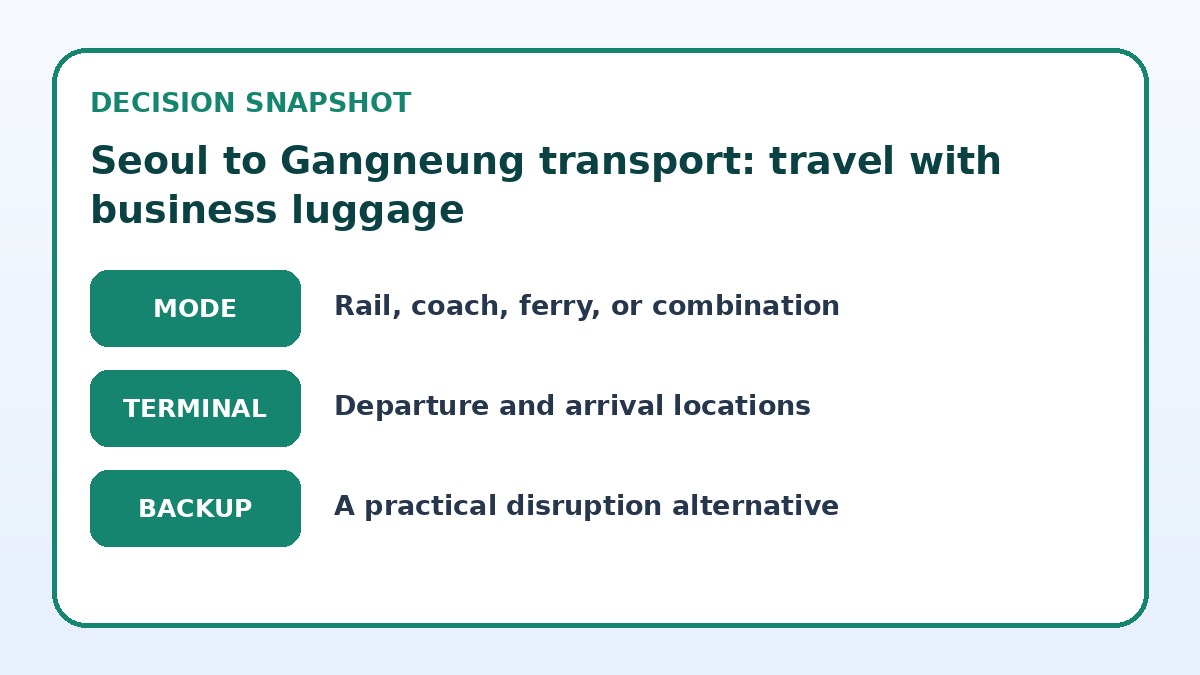
See current options before you compare the details
Availability and final conditions change. Open Trip.com now or keep reading for the practical comparison.
Compare the main transport types for luggage
Start by deciding which tradeoffs matter most: hands-on handling, predictability, and speed versus cost and flexibility. Trains usually offer steady travel times and designated luggage areas; buses provide generous hold space for large suitcases and are often simpler to buy last-minute; private cars solve the door-to-door problem at a premium; rental cars give maximum freedom but put luggage management and driving on you.
When comparing options, list your luggage items and note which pieces must stay with you (laptop bag, briefcase) versus checked bags that can be stowed. Measure or estimate dimensions and weight if you carry oversized gear—operators commonly have size or quantity limits. Wherever provider rules could affect your trip, verify luggage allowances, transfer handling, and platform or curbside pickup details on the operator’s final booking page.
Trains: what to check when booking with bags
If you choose a train, confirm which station in Seoul you’ll depart from and where you’ll arrive in Gangneung, and whether you need to transfer between lines. Check the train operator’s luggage policy for permitted sizes, overhead and dedicated storage, and whether booking a specific seat changes your luggage options. Consider reserving an aisle seat near the car vestibule for easier loading and unloading of suitcases, and plan extra time at stations with stairs or limited elevator access.
Also factor how you will move between your city lodging and the station. If you’re carrying multiple heavy suitcases, a short taxi to the station can reduce effort and save time. Confirm whether ticket offices or platforms provide luggage assistance or porters if you anticipate needing help — these services vary. Look at local station maps and elevator locations on provider pages to avoid surprises when moving bulky items.
| Approach | Best for | Tradeoff to check |
|---|---|---|
| High-speed train (KTX or similar) | Business travelers valuing speed, punctuality, and steady onboard storage | May have stricter size rules and limited checked-hold options compared with buses |
| Express intercity bus | Travelers with bulky or multiple suitcases who want simple checked handling | Longer journey time and greater exposure to road delays |
| Private transfer or taxi | Door-to-door service when time is tight or you need driver luggage handling | Higher cost and requires precise pickup coordination and confirmation |
| Rental car | Travelers needing flexible local mobility and control over luggage stowage | You handle driving, parking, and luggage loading; city traffic and parking can be a hassle |
Ready to check the option that fits your plan?
Use your exact dates and traveler details so the provider page can show the current total and conditions.
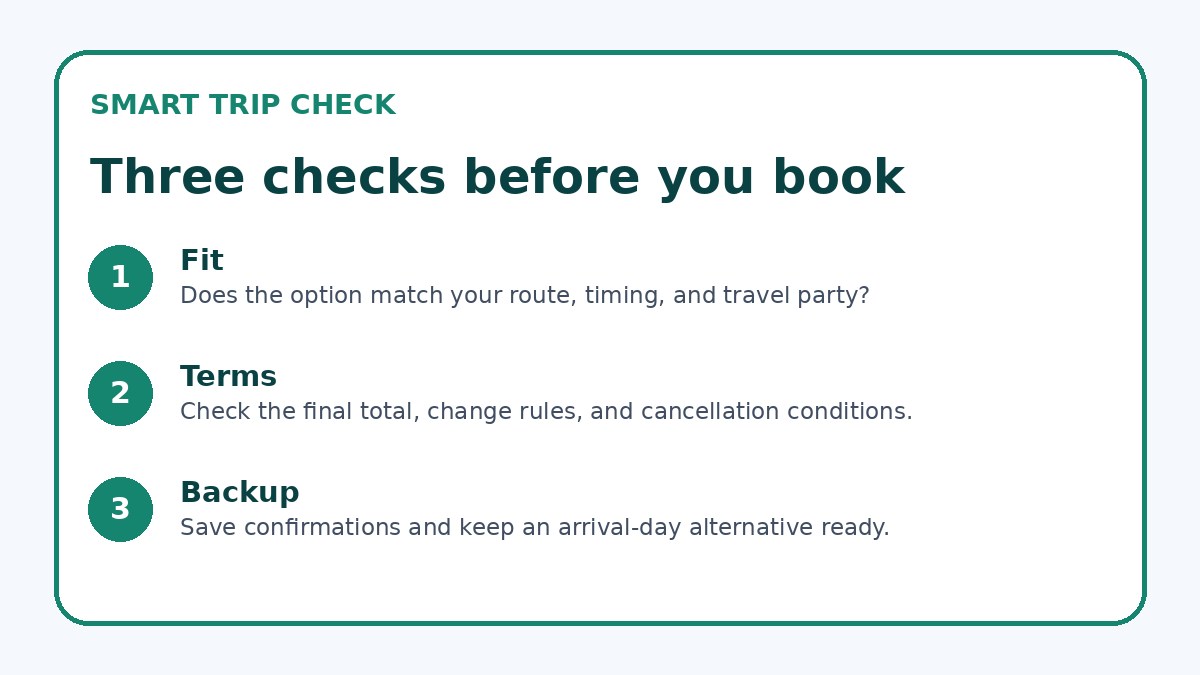
Buses and private transfers: baggage handling and convenience
Express intercity buses often have large underfloor holds and simple checked-luggage processes that can be easier for bulky items. If you have a single large case or multiple golf bags or boxes, buses may accept them more readily than trains, but you should check the operator’s terms for item limits and claims procedures. For business travelers on a schedule, choose a departure that gives extra buffer time for loading and unloading rather than the closest possible connection.
Private transfers and taxis remove the public-handling step because drivers load and unload for you, and door-to-door service minimizes walking between stops. For transfers, verify vehicle size and confirm how many suitcases will fit alongside passengers. Ask about waiting time policies and where drivers will meet you at arrivals and station exits. Always get the final booking confirmation from the transfer provider and check cancellation or change policies before you commit.
Before you book
- Measure and photograph every checked bag; record dimensions and approximate weight to compare with operator policies before booking.
- Check the final booking page for each operator to confirm luggage size limits, allowance counts, and any extra-gear rules.
- Reserve a seat or vehicle large enough for your luggage, and request aisle or vestibule seating on trains for easier handling.
- Arrange a short taxi or porter service at origin or destination if you have more than two heavy cases.
- Save contact details and pickup instructions from the provider’s confirmation email and screenshot the booking reference.
- Allow at least 45–90 minutes buffer for transfers and luggage handling when planning arrival times for meetings.
Packing, timing, and contingency planning
Pack with the route in mind: keep essential documents, electronics, chargers, and a clean shirt in a carry bag so you can disembark and meet a client or head to a meeting immediately. Use luggage straps and labels to speed identification in crowded baggage holds. Bring small, soft bags for briefcase or garment protection because some holds are tight; rigid suitcases sometimes need to be positioned by hand.
Schedule buffer time into your itinerary for traffic, platform transfer, or luggage checks—especially when traveling during peak commuting windows or holidays. Identify a backup plan ahead of time: the nearest taxi rank, a later train or bus, and a list of local contacts who can help if luggage is delayed. Confirm on the operator’s booking page whether they offer delayed-luggage claims or handling assistance and save emergency contact numbers in your phone.
Frequently asked questions
Can I keep a carry-on bag with me on trains and buses between Seoul and Gangneung?
Yes, typically you can keep a small carry-on with essentials and valuables with you onboard trains and buses. Keep important documents, electronics, and a change of clothes in that bag. Larger suitcases are usually stored in overhead racks on trains or underfloor holds on buses. Confirm exact size and quantity allowances on the operator’s booking page so you know whether an item must be checked or can remain in the passenger area.
What should I do if my luggage is too large for the train or bus allowance?
If luggage exceeds an operator’s limits, options include booking a private transfer, shipping the item separately via a courier or luggage delivery service, or renting a vehicle for the trip. Check the operator’s rules before you travel so you can arrange an alternative in advance. When using a courier or luggage forwarding service, verify pickup and delivery windows, insurance options, and tracking, and keep proofs of value and photographs for claims if needed.
How much buffer time should a business traveler leave for luggage handling and possible delays?
Plan conservative buffers: add at least 45 minutes to one hour for luggage handling at origin and destination when using public transport, and more if you must transfer between stations or connect to meetings. For road-based travel, schedule extra time for traffic peaks and weather. When meeting clients shortly after arrival, aim to arrive earlier than strictly necessary so you have time to retrieve luggage, freshen up, and reach your meeting without rushing.
Final planning note
Choosing the right Seoul to Gangneung transport when you travel with business luggage comes down to three questions: how much luggage you have, how hands-on you want to be with it, and how critical arrival time is. For predictable schedules and reasonable luggage, trains offer fast, comfortable travel with onboard storage; buses take the headache out of oversized items; private transfers solve first-mile and last-mile handling; and rental cars give full control. Before you book, compare luggage allowances, seat or vehicle size, and pickup details on each provider’s final booking page. Using those checks you can pick the option that keeps your luggage secure and your schedule intact.
Continue planning
Check current options and final conditions
Use the provider page to confirm live availability, the final total, cancellation terms, and every condition that matters to your trip.
This evergreen planning guide was created with AI-assisted drafting and a structured quality review. It does not display live prices, schedules, availability, visa guidance, or provider rankings. Verify current details before booking. Some links are affiliate links; we may earn a commission at no additional cost to you.