
If you and your partner are deciding how to travel from New York City to Toronto, the practical answer is to match your priorities: choose convenience when you want fewer hassles and more time in the city, or choose schedule flexibility when flight times, daytrips, or changing plans are more likely. For many couples that means deciding between a simple itinerary—fewer connections, airport proximity, and predictable transfer times—and an adjustable plan that uses refundable or changeable fares, multi-airport options, or later return windows. Before you book, list the nonnegotiables for your trip: do you need an evening arrival for a dinner reservation, or are you comfortable arriving late if it saves money? Also check baggage rules, change fees, and how each airport’s ground transport fits your schedule. Use that checklist to compare fares, then verify final details on the airline’s booking page and on comparison sites like Trip.com if you want a quick snapshot of current options.
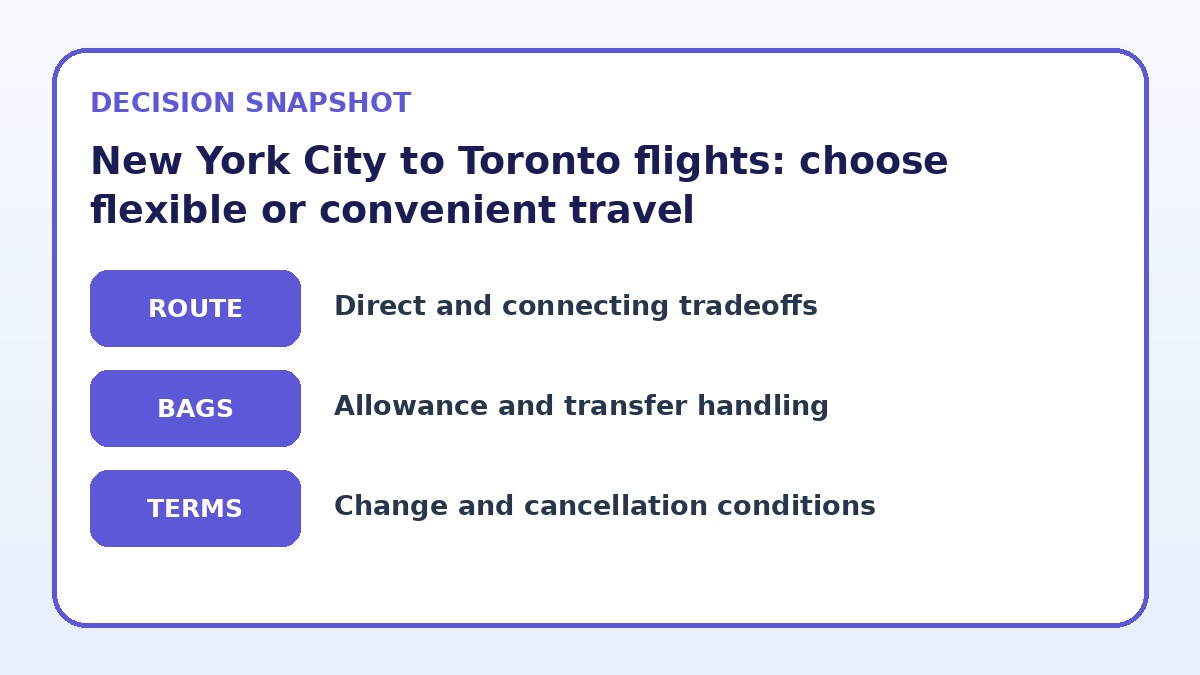
See current options before you compare the details
Availability and final conditions change. Open Trip.com now or keep reading for the practical comparison.
Decide what matters most to your couple
Start the conversation by ranking what each partner values: sleep and relaxed arrival, maximizing time on the ground, avoiding stress, or saving money. For example, one partner may want to land early to nap before an evening out, while the other cares more about having a flexible return to accommodate work. Write down absolute constraints such as fixed event times, and then mark flexible preferences like which airport you’d prefer to use. This prioritization makes it easier to filter flight options and prevents bargain hunting from undermining the trip mood.
Once priorities are visible, translate them into measurable booking criteria: acceptable departure windows, maximum acceptable number of connections, minimum transfer time, and maximum ticket-change cost. If convenience ranks highest, prefer fewer connections, closer airports, and departure times that match your planned activities. If flexibility is key, extend your acceptable departure window, consider refundable or changeable fares, and allow for routing through additional airports if that reduces restrictions. Using concrete criteria keeps the decision practical and couples aligned.
Compare convenience elements across airports
Convenience isn’t just flight duration. For New York City to Toronto travel, evaluate each airport’s proximity to your lodging, predictable ground transportation, and how late or early flights land. A short flight with a long transfer to and from airports can erase time saved in the air. Look at total door-to-door time, including time to clear security, potential immigration procedures on arrival, and how easy it is to get a taxi, rideshare, or transit. Consider which airport best fits your arrival and departure activities in both cities.
Also assess airport amenities that matter to couples: quieter lounges for a pre-flight cocktail, reliable baggage handling to avoid stressful waits, and direct ground connections. Check which airports typically have more nonstop or one-stop options for your dates; more options usually mean less compromise if plans change. When you see a preferred itinerary on a search engine or Trip.com, always confirm the detailed transfer options and arrival procedures on the airline’s official booking page before choosing convenience over flexibility.
| Approach | Best for | Tradeoff to check |
|---|---|---|
| Choose the most convenient nonstop or single-connection itinerary | Couples with fixed plans who prioritize fewer transfers and predictable timing | Less flexibility to change dates without paying fees or rebooking at higher fares |
| Pick a flexible fare or refundable ticket | Couples who may need to change travel dates or want peace-of-mind rebooking | Higher upfront cost compared with restrictive fares or promotional tickets |
| Mix convenience outbound and flexibility on the return | Couples who want a reliable arrival time but an open return for changing plans | Requires careful multi-leg planning and comparing different fare rules for each leg |
| Use wider search windows and multiple airports | Couples seeking bargain flexibility and more routing options | Potentially longer transfers and more logistical complexity during travel |
Ready to check the option that fits your plan?
Use your exact dates and traveler details so the provider page can show the current total and conditions.

Weigh fare flexibility and change policies
Ticket rules can determine whether an itinerary is truly flexible. Cheaper fares often come with strict change or cancellation penalties, while flexible fares or bundled options may allow free changes or refunds. As a couple, decide how likely you are to change travel dates: a work emergency, a late-night flight that might be missed, or an extended stay in Toronto would all favor more forgiving ticket terms. When comparing options, look past the headline fare and add any change fee, the cost difference for resale or upgrade, and fare difference rules for rebooking.
When provider-specific facts could change—like a carrier’s change fee policy or baggage allowance—check the airline’s final booking page for the exact fare conditions at the time of purchase. If you want the option to cancel or change with minimal penalty, compare refundable tickets, flexible fare classes, or travel insurance that covers specific disruptions. Balance the peace of mind such choices provide against the extra cost; for many couples, modestly higher upfront flexibility is worthwhile for less stress during the trip.
Before you book
- List nonnegotiable travel times or events and align flight search windows to those constraints before filtering fares.
- Check both total door-to-door travel time and individual segments (security, immigration, transfer) when comparing itineraries.
- Read the airline’s final fare rules on its booking page to confirm change fees, refundability, and baggage allowances.
- Decide whether to buy refundable seats, flexible fares, or travel insurance based on how likely you are to change dates.
- Compare airport ground transport options and estimated transfer times to and from each airport to avoid surprises.
- Set up fare alerts or flexible-date searches for your preferred window to capture options that match your priorities.
Practical tactics to blend flexibility and convenience
Hybrid approaches let couples have both convenience and some flexibility: choose a convenient nonstop or one-stop outbound time that aligns with must-do activities, then book a more flexible return window that can be changed if needed. Alternatively, pick a slightly more central airport for arrival when you care about convenience, and a more flexible routing for the return. Keep in mind that connections or multi-airport itineraries often increase flexibility but add complexity; plan realistic buffers and be comfortable managing transfers together.
Other practical tactics include using fare alerts for your preferred windows, booking refundable seats only for the partner traveling with uncertain commitments, or reserving separate one-way fares so you can change one leg without touching the other. If you plan day trips from Toronto, allow for later returns by prioritizing flexible return policies. Always verify baggage fees, seat assignment rules, and any cross-border requirements on the airline’s booking page before purchase; these details influence both convenience and flexibility once you’re on the move.
Frequently asked questions
Should couples prefer nonstop flights between New York City and Toronto for convenience?
Nonstop flights typically reduce the risk of missed connections and shorten door-to-door time, which is great for a stress-free arrival. For couples with a tight schedule—dinner reservations, theatre tickets, or same-day plans—nonstops often offer the most predictable timing. However, nonstop options might be less flexible or more expensive depending on demand and fare rules. If your dates are uncertain, compare flexible one-stop itineraries that allow changes with lower penalties or buy refundable seats to combine convenience with adaptability.
How can couples keep both flexibility and convenience without overspending?
A practical middle path is to prioritize convenience for the leg when timing matters most—usually the outbound flight—and choose a flexible return that can be changed if plans shift. You can also book one-way tickets with different restrictions to avoid paying full-price flexible round-trips. Use fare alerts to watch for better flexible options and consider travel insurance targeted at date changes rather than blanket cancellation coverage. Always add up the expected total cost—including change fees and transfers—before deciding which compromise is truly economical.
What should we verify on the airline’s booking page before paying for New York City to Toronto flights?
Before completing a booking, confirm the exact fare rules: what changes cost, whether refunds are available, and the timeline for free changes. Check included baggage allowances, seat selection policies, and any minimum connection times if your itinerary has transfers. Also verify airport codes, departure/arrival terminals, and how to handle cross-border procedures on arrival in Toronto. If you use a comparison site like Trip.com to find options, use the airline’s booking page to confirm these details because provider terms and fees shown on third-party sites can change.
Final planning note
Balancing schedule flexibility and convenience for New York City to Toronto flights comes down to honest priorities and clear comparisons. Couples who value predictability should aim for fewer connections and airports that minimize transfer time, while those who expect changes should pay attention to refundable fares, change rules, and wider search windows. Hybrid strategies—convenient outbound, flexible return, or mixing one-way tickets—often deliver the best of both worlds. Whatever approach you choose, verify fare rules and transfer details on the airline’s booking page before paying, and use practical checks to keep the trip simple and enjoyable for both partners.
Continue planning
Check current options and final conditions
Use the provider page to confirm live availability, the final total, cancellation terms, and every condition that matters to your trip.
This evergreen planning guide was created with AI-assisted drafting and a structured quality review. It does not display live prices, schedules, availability, visa guidance, or provider rankings. Verify current details before booking. Some links are affiliate links; we may earn a commission at no additional cost to you.