For most couples planning Florence to Milan transport, the practical choice is whichever option matches your priorities: time, comfort, convenience, cost control and how much of the journey you want to spend together. If you value simplicity and want to arrive in city centers without extra transfers, train options often dominate for intercity travel in Italy. If you need more flexibility with schedules or are combining this leg with onward flights, planes or driving could make sense. This article helps you decide by laying out tradeoffs, questions to ask before booking, and what to verify on providers’ final pages so you leave with a plan that suits both partners.
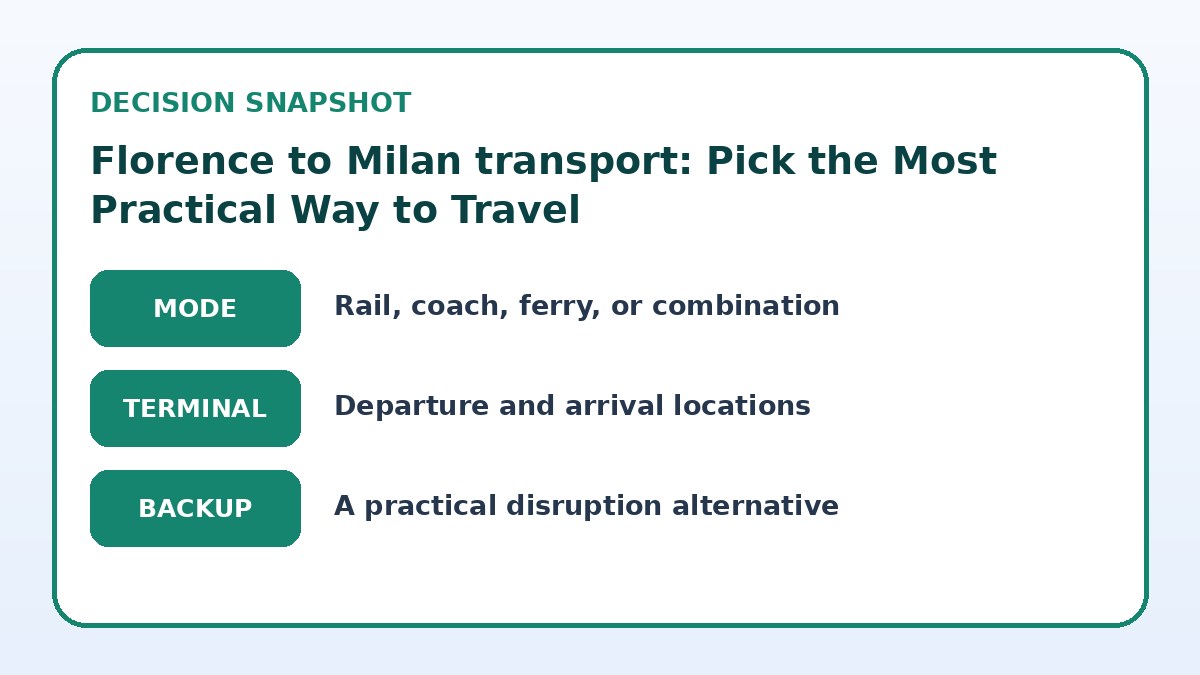
See current options before you compare the details
Availability and final conditions change. Open Trip.com now or keep reading for the practical comparison.
How to frame your decision as a couple
Start by discussing priorities openly: do you prefer to maximize sightseeing time, minimize transfers, or keep costs predictable? Practical choices come down to how you value door-to-door time versus in-vehicle comfort. For example, a seemingly faster flight can become slower once you add airport check-in, security, and transfers to city centers. Make a shared list of deal-breakers—such as avoiding overnight travel, needing space for luggage, or wanting on-board amenities—and rank them to help compare options objectively.
Also consider emotional and physical comfort. If one partner gets anxious about tight connections or driving in unfamiliar places, that should weigh in the decision. Couples travelling for leisure often prioritize a calm start over shaving off minutes, while those on tight schedules might accept inconvenience for speed. Use your shared priorities to filter options: once you agree on what matters most, comparing trains, flights, buses and driving becomes a task of matching features to your ranked needs rather than picking by habit.
Trains: what to check and why they’re often practical
Trains usually deliver station-to-station convenience, keeping you both inside urban cores which saves on transfer planning. When comparing rail options, focus on whether the service is direct or requires a change, seat classes and luggage allowances, and the exact arrival and departure stations—some trains use smaller stations that add a local transfer. For practicality, verify total door-to-door time by adding the time it takes to reach and leave each station, and check the provider’s cancellation and seat selection rules on the booking page.
If comfort and the ability to sit together matter, choose fares that include reservations or flexible seating so you can ensure adjacent seats. Also think about carrying capacity—if you have large suitcases or gear, confirm size limits and whether space for bicycles or strollers is available. Finally, assess the frequency of services on your intended travel day; more frequent departures give you flexibility if your schedule shifts or you want to travel later without rebooking.
| Approach | Best for | Tradeoff to check |
|---|---|---|
| Direct train | Couples wanting city-center arrivals with minimal transfers | May have less schedule flexibility and requires seat reservations for guaranteed together seating |
| Flight (including connections) | Those linking to international flights or needing specific departure times | Adds airport transfers and security time that can negate flight speed advantages |
| Driving a rental car | Couples who prioritize privacy, scenic stops, and a flexible itinerary | Adds responsibility for navigation, parking, local rules and possible extra fees |
| Long-distance bus | Budget-minded couples who accept longer journeys for lower outlays | Often slower with fewer comforts and possible out-of-center stops to factor in |
Ready to check the option that fits your plan?
Use your exact dates and traveler details so the provider page can show the current total and conditions.
Flights and buses: where they fit the plan
Short flights can be useful when you need a particular schedule or are connecting with international travel, but factor in the extra steps airports add. Compare total travel time including early arrival recommendations, security, and transfers to and from airports rather than just flight duration. Also confirm whether flights are direct or involve a connection; if connections are possible, ensure you’re comfortable with the transfer time and the provider’s rebooking policies in case of delays. Check the airline’s baggage rules and how strict they are on carry-on and checked items.
Buses can be the most economical option for couples on a tight budget and often have simple luggage policies, but they vary widely in comfort and travel time. If considering a bus, compare amenities like seat pitch, onboard toilets, Wi-Fi and whether the route stops between cities. Remember that bus departure and arrival locations may be outside city centers, so add transfer time to your calculations. For either flights or buses, verify final terms, seat assignment, and any extra fees on the booking page before purchasing.
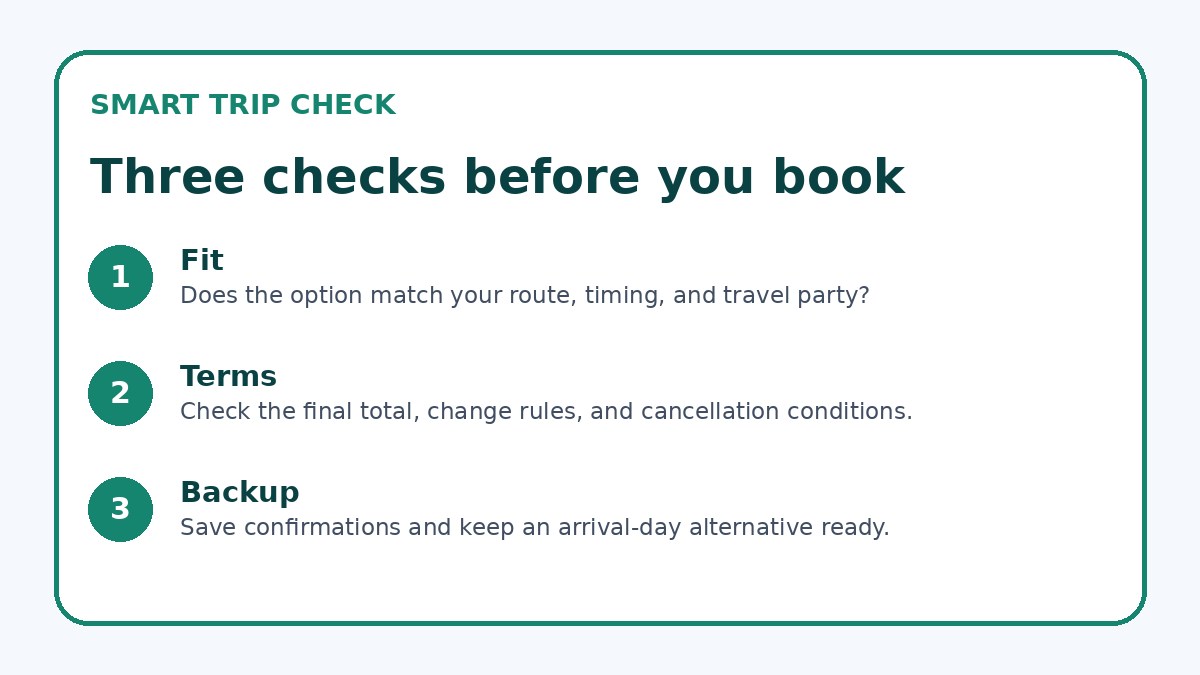
Before you book
- Agree on what you value most (time, cost, comfort, flexibility) and write that priority list before comparing options.
- Compare complete door-to-door travel time for each option, adding transfers, local transit and time to reach stations or airports.
- Verify baggage rules, seat selection, and cancellation or change policies on the provider’s final booking page before paying.
- If choosing a train, confirm whether reservations are required for adjacent seats and check the station locations for both cities.
- If renting a car, confirm rental cross-city rules, insurance coverage, low-emission zone restrictions and where you’ll park at both ends.
- For flights or buses, check exact arrival/departure points, transfer options to central locations, and any additional fees on booking pages.
Driving: flexibility versus practical friction
Driving gives couples total control over timetable and the freedom to stop en route for photos, meals or detours. However, that flexibility comes with responsibilities: local traffic rules, parking availability in both cities, potential low-emission zone access, and the need to navigate unfamiliar roads. If parking stress would irritate either partner, factor in time and cost for searching or reserving parking in both Florence and Milan. Check rental car policies for cross-city travel, fuel rules, mileage limits and what insurance covers on the provider’s booking pages.
Consider the practicalities of who will drive and for how long, especially if you plan back-to-back driving days. Shared driving reduces fatigue, but if neither of you prefers long highway stretches, it might defeat the purpose of a relaxed trip. Also weigh whether driving will save time once you add urban congestion and parking to your schedule; in many cases, city-center-to-city-center train travel can be less stressful and similarly timed after all factors are included.
Frequently asked questions
Is taking the train between Florence and Milan the most convenient option for couples?
Trains often offer straightforward city-center to city-center travel that reduces transfer planning, making them convenient for couples. Convenience depends on whether the service is direct, seat reservation rules, and how easy station access is from your accommodation. Check each train’s route and whether a change is required, plus luggage allowances and seat options on the carrier’s booking page. If you value fewer moving parts and want to relax en route together, trains commonly match that need—but verify details before booking to ensure it fits your specific schedule and luggage.
Should couples drive instead of taking public transport between Florence and Milan?
Driving is best if you want complete control over itinerary and plan to stop en route for scenic detours or private moments. It introduces tasks—navigation, parking, low-emission zone compliance and fuel management—that can add stress if neither partner enjoys driving in unfamiliar conditions. Compare the time you’ll lose to urban traffic and parking against the train’s door-to-door convenience. If you decide to rent, read the rental company’s rules and insurance specifics on the final booking page and plan where you’ll park in both cities.
How do we compare total travel time when options include transfers or connections?
Calculate door-to-door time rather than just vehicle time: start from when you leave your accommodation, include transfers, check-in or security recommendations, and end when you arrive at your destination address. For flights, account for recommended early arrival at the airport and time to reach the city center afterward. For trains and buses, include time to reach the station and any walks or local transit after arrival. Use realistic buffers for traffic or delays and compare the totals side by side to see which option actually saves or costs you time as a couple.
Final planning note
Choosing the most practical Florence to Milan transport for couples comes down to matching the method to your shared priorities. If minimal fuss and city-center arrivals matter most, trains often offer the best balance of convenience and comfort; if schedule constraints or connecting flights dictate timing, flights may fit better despite extra transfers. Driving works when private flexibility and scenic stops are a core part of your plan, while buses remain an option for tighter budgets. Before you book, compare total door-to-door times, verify luggage and seating rules, and read cancellation and change policies on the provider’s booking page. For up-to-date availability you can also compare providers on platforms such as Trip.com, then book directly with the carrier when you’re satisfied with the terms.
Continue planning
Check current options and final conditions
Use the provider page to confirm live availability, the final total, cancellation terms, and every condition that matters to your trip.
This evergreen planning guide was created with AI-assisted drafting and a structured quality review. It does not display live prices, schedules, availability, visa guidance, or provider rankings. Verify current details before booking. Some links are affiliate links; we may earn a commission at no additional cost to you.