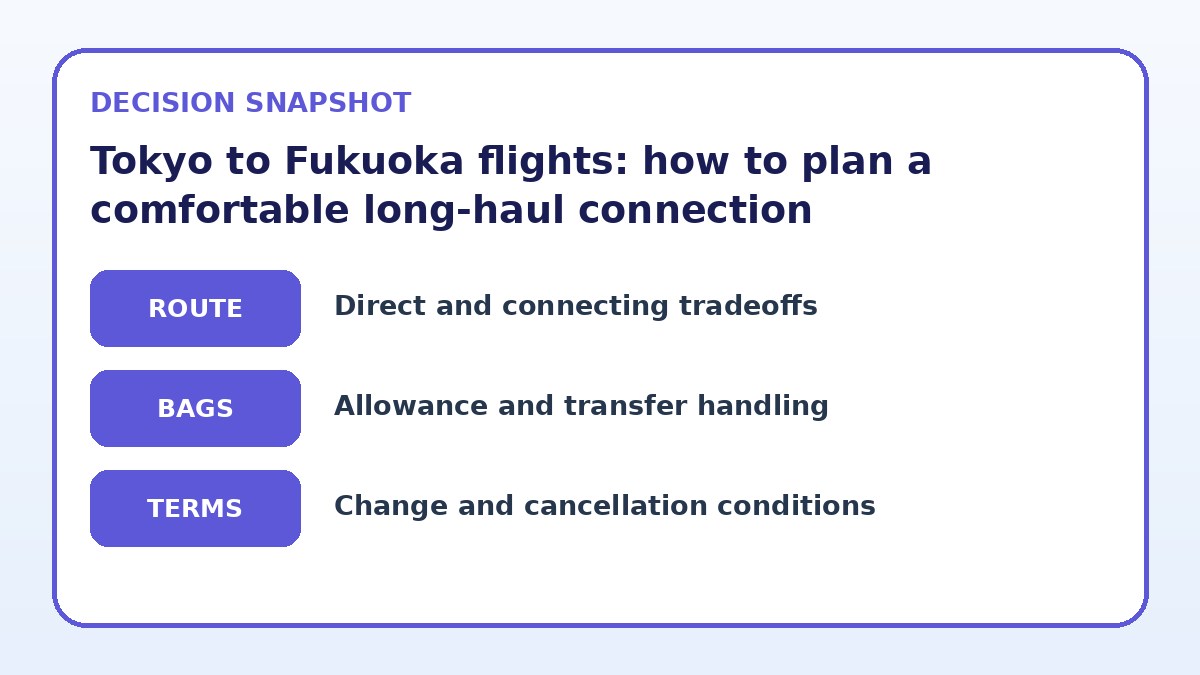
If you’re planning Tokyo to Fukuoka flights and expect a long‑haul connection on the way, focus first on three choices: direct vs connecting routing, the airport transfer logistics, and seat/overnight comfort. For many first‑time visitors the priority is minimizing stress—choose a connection with generous transfer time at a single airport, pick a seat type or fare that guarantees a holdable carry option, and consider an overnight stay if the layover falls during normal sleep hours. Balance cost against sleep quality and risk: longer layovers add cushion but raise accommodation and transit costs. Read provider pages for baggage, transfer rules, and minimum connection time—those details change often, so verify them on the airline or booking site’s final page. Below you’ll find a decision framework, tradeoffs to weigh, and specific steps to build a comfortable connection between Tokyo and Fukuoka.
See current options before you compare the details
Availability and final conditions change. Open Trip.com now or keep reading for the practical comparison.
Decide whether to accept a connecting itinerary
First assess your tolerance for connections. A direct flight is simpler but may not be available from your departure city or may be scheduled at inconvenient times. A connecting itinerary can open more schedule choices and potentially lower fares, yet it requires planning: you’ll need to manage transfers, possible re‑clearance through security or immigration, and the risk that a late incoming flight affects your onward leg. Think about how much spare time you want between flights to eat, rest, or recover from delays. For first‑time visitors, choosing a connection with at least the airline’s recommended minimum transfer time plus an extra cushion is a practical approach.
Compare options by total journey convenience rather than just flight hours. Look at airport layouts—some connections move you between nearby gates, others force you to change terminals or re‑check baggage. Also check whether a single ticket protects the connection: itineraries on one reservation often include rebooking support from the carrier if the inbound flight is delayed. When the itinerary requires separate tickets, allow significantly more time and plan contingencies like travel insurance or flexible accommodation so you won’t be stranded if a connection is missed.
Choose the most comfortable transfer strategy
Comfort depends on time of day, layover length, and available airport facilities. If your long‑haul connection crosses a night, a short overnight at an airport hotel or an airport lounge access can be worth the expense for sleep and personal space. Daytime layovers benefit from lounges, quiet seating zones, and access to food; verify what lounge access is included with your fare or credit cards. Also consider seat selection on the long‑haul leg—if economy feels too tight for an extended journey, look into premium economy or exit‑row options for more legroom, balancing comfort against cost.
Don’t forget mobility and baggage needs: if you have heavy luggage or limited mobility, prioritize itineraries minimizing terminal changes and include checked‑through baggage. When booking, confirm baggage transfer rules on the carrier’s or booking site’s final page—those policies determine whether you must collect and recheck bags during the connection. Finally, plan basic comforts: noise‑cancelling headphones, an inflatable travel pillow, and an easily accessible power bank will make a long connection more bearable even when facilities are limited.
| Approach | Best for | Tradeoff to check |
|---|---|---|
| Single reservation with a connection | Travelers who want rebooking protection and simpler baggage handling | Less control over schedule choices; fares may be higher than mixing separate tickets |
| Separate tickets for each leg | Flexible travelers seeking lower fares or bespoke routing | Higher risk if a delay causes missed connections; you may need to collect and recheck baggage |
| Add an overnight airport hotel | Passengers prioritizing sleep and low‑stress transfers during long layovers | Extra cost and extra ground transfers; adds total trip time |
| Book premium seating or lounge access | Those who value space, quiet, and built‑in amenities during long waits | Higher ticket or access cost; may not change transfer logistics |
Ready to check the option that fits your plan?
Use your exact dates and traveler details so the provider page can show the current total and conditions.
Map your airport transfer and ground logistics
Plan how you’ll move between terminals, airports, or into town if you choose to leave the airport during a long layover. Major airports serving Tokyo and Fukuoka have multiple terminals and linked transport; map walking routes, shuttle schedules, and the availability of immigration checkpoints that could extend transfer time. If your connection requires moving between airports, research rail, bus, or taxi options and add a healthy buffer for traffic. For overnight stays off‑site, pick a hotel with a straightforward taxi or shuttle connection to the terminal to prevent early‑morning rush problems.
Account for check‑in and security time both before departure and after any terminal change. Some travelers find it helpful to schedule an airport arrival time that includes an extra hour beyond the airline’s recommended check‑in window when connections involve new security or immigration. Keep all documents and small essentials in a carry item for fast access, and store digital copies of your itinerary and boarding passes. If you use public transportation, verify the schedules for the time of day you’re traveling, since night services can be limited.
Before you book
- Confirm whether your itinerary is on one reservation or multiple tickets and note the implications for rebooking support.
- Read the final booking page for exact baggage transfer rules, including whether checked bags are checked through to Fukuoka.
- Choose a layover time that adds buffer beyond the airline’s minimum connection time for security, passport control, and possible delays.
- Reserve seat assignments or a premium class if you need extra legroom or guaranteed reclining for long legs of travel.
- If planning an overnight, book an airport‑adjacent hotel with late check‑in and confirm shuttle or taxi options in advance.
- Save digital and printed copies of itineraries and contact numbers for the airlines and your accommodation before departure.
What to verify before you click “book”
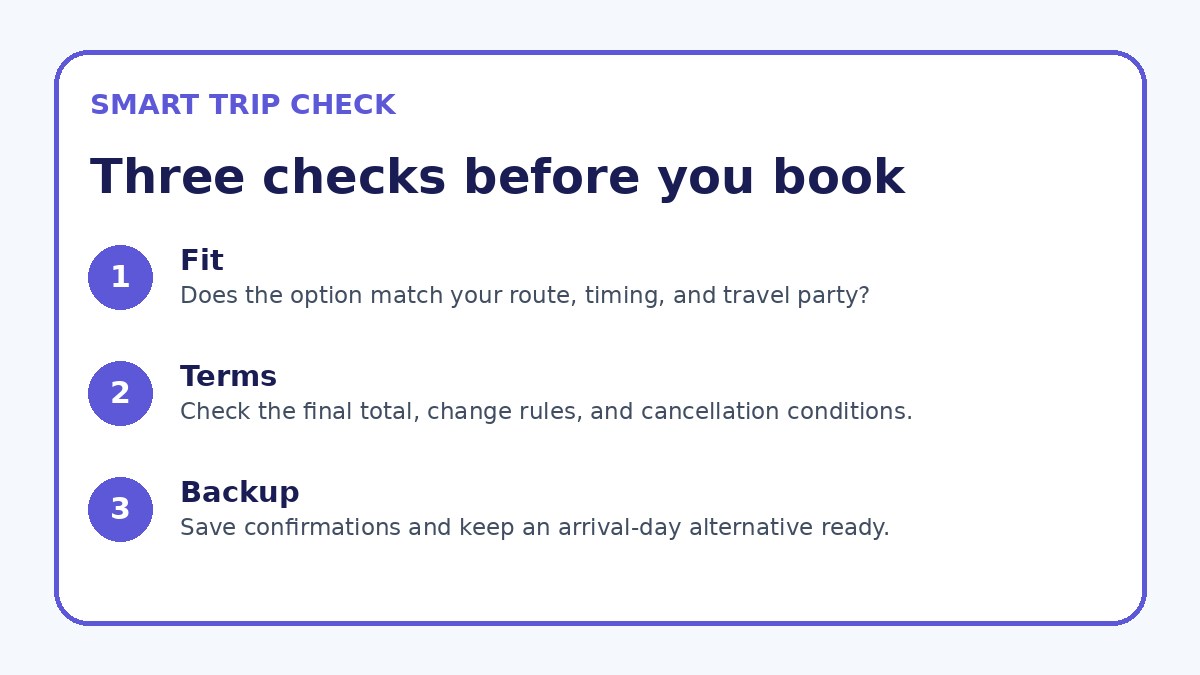
Before finalizing, confirm three categories of provider facts that change often: baggage transfer rules, minimum connection time policies, and the support available for missed connections. Always review the airline or booking site’s final booking page for the exact baggage allowance, whether checked bags are checked through, and any fees that apply. If you’re using separate tickets for legs on different carriers, check whether the second carrier accepts delayed arrivals without penalty or whether you must claim and re‑check luggage.
Also check refund and rebooking terms for disruptions; the level of protection varies widely by fare and carrier. If a connection is tight, consider upgrades that include flexibility or select fares that offer easier changes. Finally, confirm transport options to and from airports or terminals, lounge access policies, and whether the carrier offers special assistance if you travel with mobility needs, because those on‑the‑ground details influence how comfortable your long‑haul connection will actually feel.
Frequently asked questions
Is it better to fly direct or connect when traveling from Tokyo to Fukuoka?
Direct flights remove transfer uncertainties and simplify baggage handling, which is ideal if schedules match your needs. However, direct options may be limited by departure city and timing. Connecting itineraries expand schedule flexibility and can let you depart at a more convenient hour or use a preferred airline’s network. For first‑time visitors focused on comfort, weigh the stress of transfers against potential time savings. If you choose a connection, prefer one reservation that includes both legs to gain the carrier’s assistance if delays occur; verify protection and baggage rules on the booking page before you finalize.
How much layover time should I allow for a comfortable connection?
There’s no single ideal layover: it depends on whether you need to change terminals, pass immigration, collect baggage, or transfer between airports. For simple in‑terminal connections, a cushion above the airline’s minimum connection time reduces stress. If you must change terminals, re‑check luggage, or travel between airports, add substantial extra time to cover transit and potential traffic or security queues. Travelers wanting to rest should schedule enough time for a short hotel stay—factor in hotel check‑in and transport to and from the terminal. Always verify recommended minimums and airport maps on the airline or airport site before booking.
What documents and preparations make a long‑haul connection smoother?
Carry printed and digital copies of your full itinerary, boarding passes, passport, and any required entry documents for Japan. Pack essentials—medication, chargers, a change of clothes—in your carry item in case checked baggage is delayed or must be rebooked. Check the airline’s final booking page for baggage allowance and transfer instructions, and download relevant airline apps for boarding passes and notifications. If you have mobility needs or special requests, arrange assistance with the airline ahead of time and confirm meeting points at the airports involved to avoid confusion during a tight transfer.
Final planning note
Planning a comfortable long‑haul connection between Tokyo and Fukuoka is about choices and buffers: decide whether a direct flight or a connection better matches your priorities, then protect that choice with a sensible layover, clear baggage arrangements, and small comfort investments such as seat selection or a short airport hotel stay. Verify all provider‑specific details—baggage handling, minimum connection times, and change policies—on the carrier or booking page before you pay. If you’d like to compare current schedules and conditions while you plan, you can check providers like Trip.com as one of several sources, but always confirm the final terms on the airline’s page. With a little preparation you can make the long‑haul element of your route restful rather than rushed.
Continue planning
Check current options and final conditions
Use the provider page to confirm live availability, the final total, cancellation terms, and every condition that matters to your trip.
This evergreen planning guide was created with AI-assisted drafting and a structured quality review. It does not display live prices, schedules, availability, visa guidance, or provider rankings. Verify current details before booking. Some links are affiliate links; we may earn a commission at no additional cost to you.