
If you're a solo traveler moving between Ho Chi Minh City and Da Nang with suitcases or bulky gear, focus first on which transport option makes luggage handling easiest. Direct flights, overnight trains, and private car transfers are the main choices, and each has clear pros and cons for carrying, storing, and moving bags at stations or airports. Decide whether you prioritize speed, comfort while sleeping or working, or low handling hassle; that decision will shape how much you're willing to lift, pay for add-on services, or accept connections. Read the provider’s baggage rules, check station layouts and transfer distances, and confirm pick-up/drop-off points on the final booking page—Trip.com is one place to compare current options but always verify details directly with the carrier.
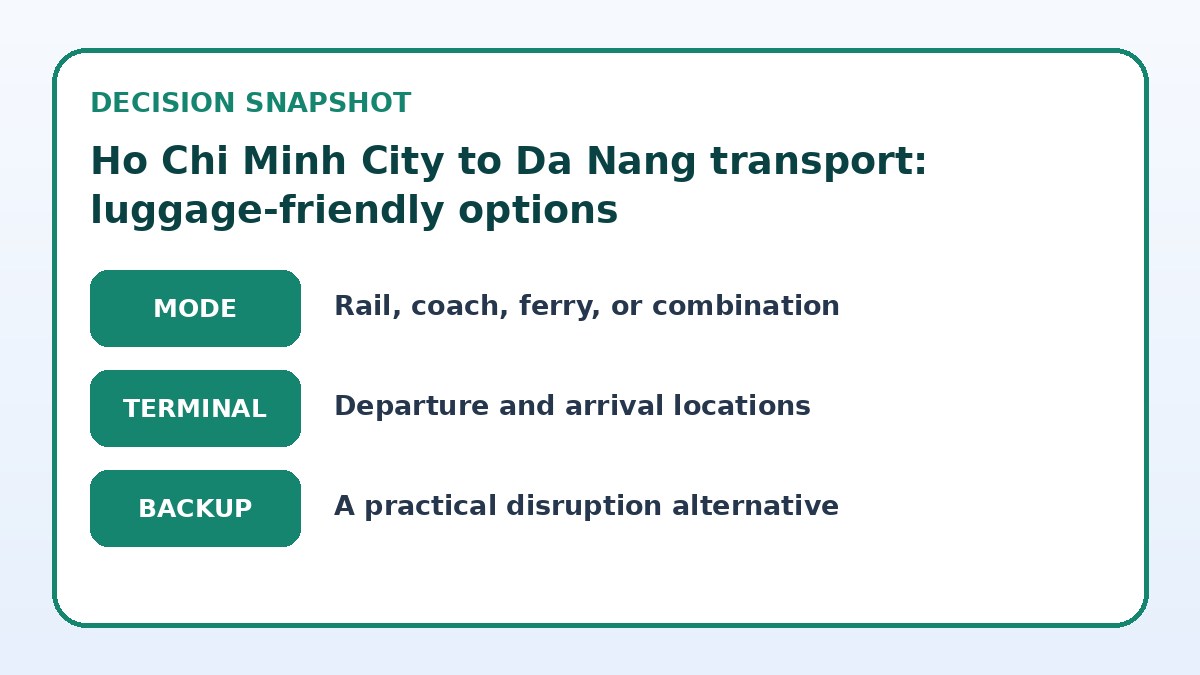
See current options before you compare the details
Availability and final conditions change. Open Trip.com now or keep reading for the practical comparison.
Compare the main transport types and luggage realities
Direct flights between Ho Chi Minh City and Da Nang are often the fastest option for solo travelers who want to spend minimal time en route. Airport transfers usually require hauling baggage through check-in, security and possibly a short walk or shuttle between terminals; consider whether you can manage lift-and-carry steps and whether an airline’s checked-bag allowance fits your packing. If you need help at airports, look for assistance services or roadside meet-and-greet add-ons offered at booking, and always confirm where curbside drop-off and pick-up occur at both airports on the carrier’s final page.
Trains can be luggage-friendly because carriages have open vestibules, overhead racks, and areas to store larger suitcases near berths. However, platform heights, carriage steps and the distance from station entrance to platform vary—plan for the physical effort of lifting bags up steps or onto racks. Consider reserving a lower berth or cabin that leaves your luggage close by overnight, and check whether the train operator allows bulky items in cabins or requires separate luggage carriage; verify current rules on the operator’s booking page before you finalize.
Packing and luggage choices that simplify solo travel
Choose luggage that balances capacity and manageability: a sturdy wheeled suitcase with decent wheels plus a carryable daypack lets you combine rolling with lifting when surfaces are uneven. Use compressible packing cubes to reduce volume and keep fragile items cushioned. For longer legs like an overnight train, a soft duffel or collapsible bag can fit in tighter storage spots; for flights, a rigid case may better protect electronics. Decide how much you can lift alone—test the packed weight at home and leave excess behind if you anticipate stairs or long walks.
Label everything clearly with your name and a local contact number, and secure valuables in a small lockable daypack you keep with you at all times. Consider a luggage strap and a lightweight cable lock for extra security on trains or when leaving baggage in public storage. If you have specialized gear—bikes, surfboards, or photography cases—contact carriers ahead to confirm whether they accept oversized items and what packaging they require. Always have essential documents and electronics in your carry-on to avoid being stuck without them if checked baggage is delayed.
| Approach | Best for | Tradeoff to check |
|---|---|---|
| Direct flight with checked bag | Solo travelers prioritizing speed and fewer transfers | You must manage airport security, check-in queues and possible long walks with baggage at terminals |
| Overnight train with reserved berth | Those who want to sleep en route and keep luggage close by | Platform steps and carriage access can require lifting bags; storage space size varies |
| Private car or shuttle | Door-to-door convenience and minimal bag transfers | Vehicle size limits and narrow street access may restrict large suitcases |
| Mixed mode (flight + local transfer, or train + taxi) | Travelers balancing cost, speed, and final-mile flexibility | More handoffs increase handling and require clear timing for connections |
Ready to check the option that fits your plan?
Use your exact dates and traveler details so the provider page can show the current total and conditions.
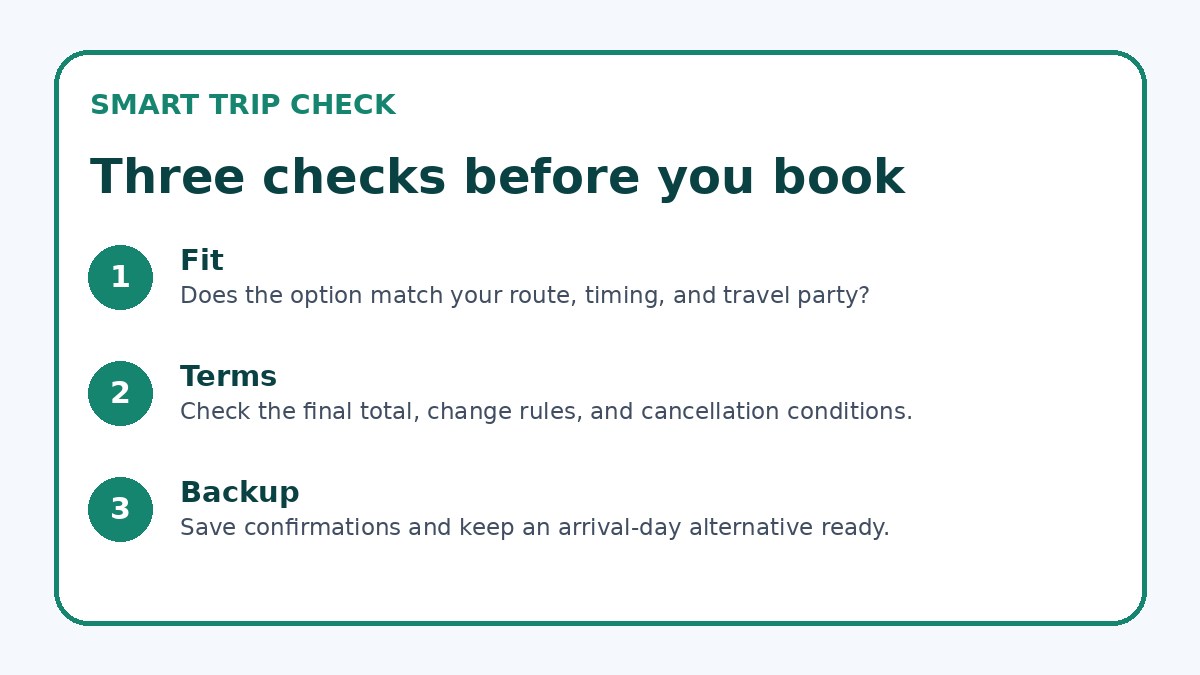
Booking decisions and practical checks before you buy
When comparing options, list the things you can’t compromise on—door-to-door convenience, minimal bag transfers, or guaranteed sleeping space. For flights check what counts as carry-on and checked baggage, how much you can carry without extra fees, and what the airline’s assistance policy is for solo travelers with heavy bags. For trains, review carriage types and berth assignments, and confirm luggage allowances and any reservations you must make for larger items. Always re-check policies on the provider’s final booking page since allowances and requirements change.
If you plan a private car or shuttle, confirm vehicle size, door-to-door pickup points, and whether drivers can help lift luggage into trunks or up steps. For all options, map the transfer distance at each end—how far from arrival to taxi ranks, metro entrances, or your hotel—and whether sidewalks and curbs are navigable with wheeled bags. Where possible, choose accommodation with easy street access or request porter help in advance. Use Trip.com or similar sites to compare current availability, but verify baggage specifics with the carrier before booking.
Before you book
- Weigh and test-ride your packed luggage at home to confirm you can lift it into a vehicle or onto platforms alone.
- Read and save the carrier’s baggage rules and allowed dimensions on the final booking page before you complete purchase.
- Photograph all luggage, tags and booking confirmations and store copies offline and in your email.
- Book assistance or meet-and-greet services for airports or stations if you expect mobility or lifting difficulties.
- Reserve lower berths or specify carriage placement on trains when possible to keep suitcases close through the journey.
- Confirm your final pickup/drop-off points and map the walking distance from those locations to your accommodation.
On travel day: handling, timing, and safety tips
Allow extra time for baggage handling, especially if you must move between terminals, negotiate stairs, or catch a connection. Solo travelers benefit from arriving earlier to secure assistance, queue for check-in where staff can tag oversized bags, and avoid the rush when platforms and boarding zones become crowded. Keep your baggage receipts, labels and any special-item tags with you. If using public transport for last-mile connections, plan for peak-hour crowds and whether your bags will be comfortable to carry on and off buses or metro trains.
Protect your belongings with a mix of vigilance and practical measures: use locks, keep valuables in your person, and don’t leave bags unattended while you buy tickets or use restrooms. Photograph your luggage and its tags before you board so you can describe items quickly if something goes missing. If your plans include night travel, make noise-reducing small adjustments—wrap fragile items, use a simple strap to keep zippers closed, and store essentials like chargers and medication in your daypack for immediate access.
Frequently asked questions
Can I take large suitcases on trains between Ho Chi Minh City and Da Nang?
Yes, many trains allow large suitcases, but storage space, carriage layouts and platform access differ by service. If you have an oversized bag, check the train operator’s luggage allowance and whether you need to reserve space or buy a special ticket for bulky items. Consider how you will carry the suitcase onto the platform and into the carriage—stair heights and the presence of ramps vary. Always verify the most current luggage policy and any size limits on the operator's official booking page before you travel.
Is it easier to travel by flight or by train with heavy bags?
Flights can be faster and mean fewer ground transfers, but you will still handle bags through check-in, security and baggage reclaim; airlines also set weight and piece limits. Trains may let you keep bags close overnight and offer more space to spread items out, which some solo travelers prefer for bulky gear. The best choice depends on how much walking and lifting you can do, whether you need a quick transfer, and whether you want to sleep on board. Check both carrier baggage rules and station layouts before deciding.
How can I minimize the risk of luggage loss or damage on this route?
Take simple preventative steps: use a sturdy, lockable bag, label it clearly with contact details, and keep valuables in a daypack you carry. Photograph your baggage and tags before boarding; that helps with claims if an item is lost. If your luggage is particularly valuable or fragile, consider extra padding, a hard-shell case or purchasing transport-specific insurance. For any claims or limits, read the carrier’s liability and lost-luggage procedures on their booking page and keep all receipts and baggage receipts issued at check-in.
Final planning note
Choosing how to travel from Ho Chi Minh City to Da Nang with luggage comes down to a few practical questions: how much you can carry alone, whether you need speed or a relaxed overnight option, and how many times you’re willing to move bags between vehicles. Test your packed luggage, read and save carrier-specific baggage rules on the booking page, and pick transport that matches your physical capacity and tolerance for handling. Door-to-door private transfers minimize lifting but can be constrained by vehicle size; flights save time yet still involve airport handling; trains offer space but require platform logistics. Preparing in advance—clear labeling, photographing tags, and arranging assistance when needed—keeps solo travel smoother and less stressful.
Continue planning
Check current options and final conditions
Use the provider page to confirm live availability, the final total, cancellation terms, and every condition that matters to your trip.
This evergreen planning guide was created with AI-assisted drafting and a structured quality review. It does not display live prices, schedules, availability, visa guidance, or provider rankings. Verify current details before booking. Some links are affiliate links; we may earn a commission at no additional cost to you.