Practical answer first: for most first-time visitors, a direct flight between Sydney and Melbourne is the simplest choice—faster door-to-door travel, fewer transfer risks, and less planning stress. Consider a connecting route only if it meaningfully lowers your total cost, unlocks better arrival times that fit a fixed schedule, or is part of a multi-leg itinerary where you must use a specific carrier or fare class. Connecting options can also be useful if you want to stop briefly in another city or if direct seats are sold out on your preferred dates. Before booking, compare total door-to-door time, transfer windows, baggage rules, and the provider’s change/cancellation policy. Verify any carrier-specific conditions on the airline’s final booking page and check live availability on a comparison site such as Trip.com if you want a quick snapshot of current schedules.
What direct flights offer first-time visitors
Direct flights between Sydney and Melbourne mean you board once and disembark at your final city without intermediate stops or additional boarding. For first-time visitors unfamiliar with domestic transfer procedures, that simplicity reduces planning friction: you don’t need to navigate a second gate, worry about a tight connection, or recheck bags if the carrier operates the whole journey on one ticket. Direct flights typically have predictable schedules with frequent services on this popular corridor, which makes same-day outbound or return trips easier to arrange. This is especially convenient if you are on a short business trip, arriving late in the day, or want to maximise sightseeing time without the uncertainty of a multi-leg journey.
That said, ‘direct’ can mean non-stop or may include an intermediate stop without requiring a plane change—always confirm the routing on the booking page. Direct flights tend to be preferred by travellers who value simplicity over marginal savings. If you have mobility needs, heavy luggage, or tight onward connections once you land, a direct routing minimises handling and transit time. Still, check whether the fare class for a direct flight includes the seat selection, baggage allowance, and change flexibility you need; sometimes a slightly more expensive direct ticket provides better overall convenience and lower total trip hassle.
Why you might consider a connecting route
Connecting flights can be appealing when they open up cheaper headline fares, better departure or arrival windows, or an opportunity to break up travel with a stopover. For first-time visitors who plan to visit multiple cities in a single itinerary, a connecting ticket can be a practical way to combine legs with one booking and potentially apply through-checked baggage and protected connections. If you are flexible with time and want to save money, or if direct seats are unavailable on your preferred dates, connecting options broaden your choices. They can also be useful when loyalty program rules or award availability constrain direct flight options.
However, connecting travel adds complexity: you must allow enough time for transfers, understand whether your bags transfer automatically, and be prepared for possible delays on each segment. Layovers at an unfamiliar airport require acquainting yourself with terminal layouts, security re-entry rules, and whether you need to change terminals—small things that can be stressful on the first trip. When comparing connecting options, estimate total elapsed travel time (including layovers), confirm minimum connection times with the airline, and read the booking page for transfer baggage instructions and whether you’ll need to clear security again during the connection.
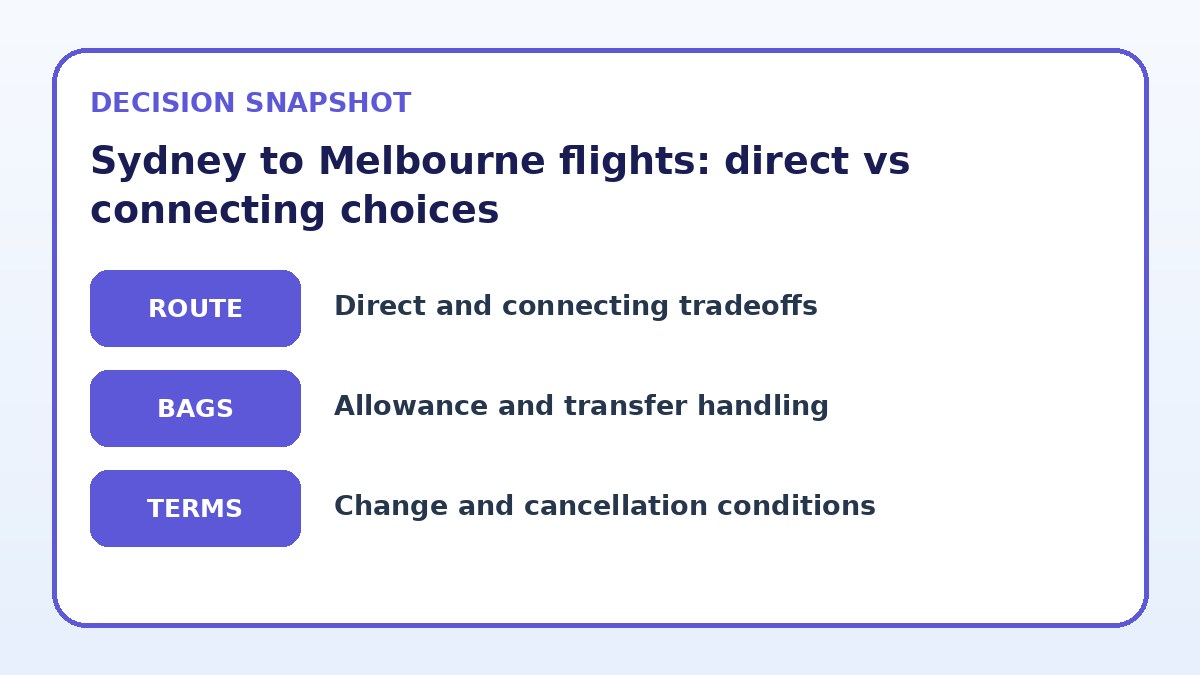
| Approach | Best for | Tradeoff to check |
|---|---|---|
| Direct flights | Visitors prioritising speed, simplicity, and lower transfer risk. | May have higher headline fares and fewer scheduling options at odd times. |
| Connecting flights with single ticket | Those seeking lower fares or specific departure/arrival times with protection between legs. | Longer total travel time and dependence on tight connection windows. |
| Self-transfer connections (separate tickets) | Budget travellers willing to manage luggage and allow generous layovers. | No protection for missed connections and potential recheck fees. |
| Multi-city or intentional stopover routing | Visitors wanting to visit another city en route or split a long trip. | Adds planning complexity and may increase total travel time. |
How to compare total travel time and convenience
Total travel time is more than airborne minutes: include travel to and from airports, check-in and security, potential waiting times, and layovers. For most travellers between Sydney and Melbourne, airport-to-airport flying time is relatively short, so ground transfers and how early you must arrive at the airport often determine overall trip length. When comparing flights, add typical transit times from your accommodation to the departure terminal and from the arrival terminal to your destination. If you’re travelling during peak traffic periods, an earlier direct flight may be faster overall than a later connecting option despite a longer airborne time.
Also weigh convenience factors such as overnight options, flight frequency, and the need for early arrivals at meetings or tours. If you have a tight schedule on either end, prioritise shorter layovers with comfortable buffer times rather than the absolute fastest headline flight that leaves little margin for delay. Look at terminal transfer requirements when connections are involved: changing terminals can add taxi or airport transfer time. Finally, verify baggage transfer rules and minimum connection times on the airline’s final booking page so you know whether the itinerary is coded as a single protected booking or a self-transfer requiring separate check-ins.
Before you book
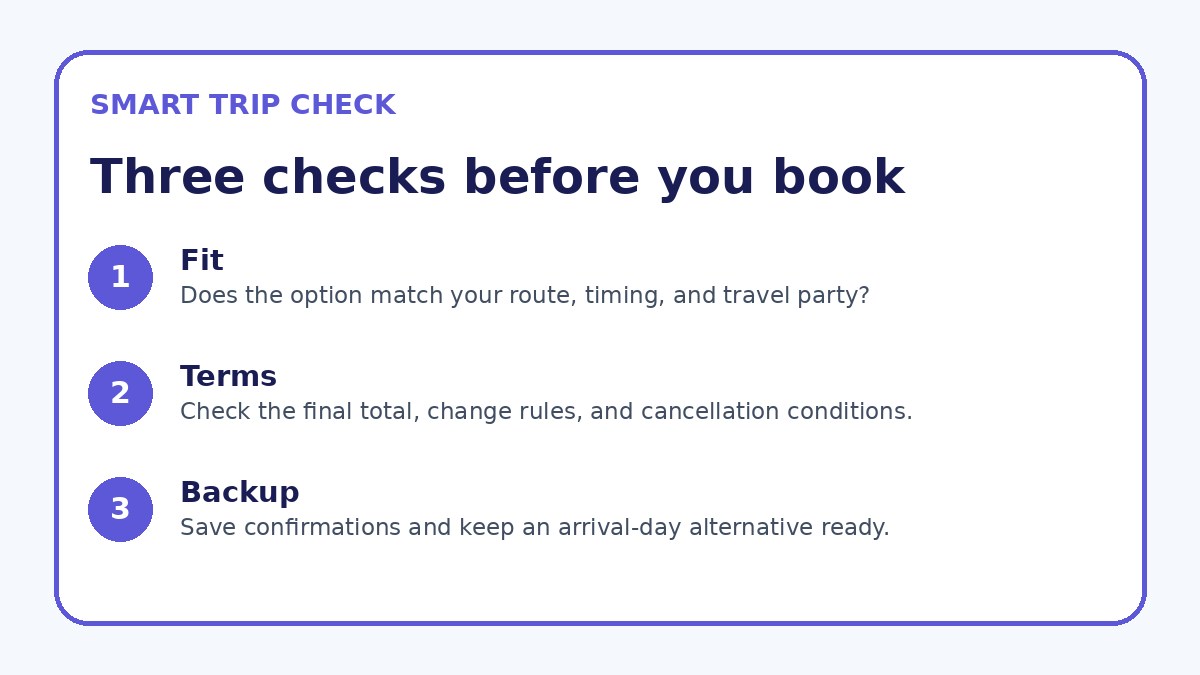
- Compare total door-to-door time (including airport transfers and security waits) for each itinerary option.
- Confirm baggage allowance and whether checked bags are transferred automatically on connecting tickets.
- Verify minimum connection times and terminal transfer requirements on the airline’s booking page.
- Add travel insurance or choose refundable/flexible fares if your schedule might change.
- Check ground transport options at arrival (train, bus, rideshare) and the terminal they serve.
- Use a comparison site like Trip.com for schedules, then confirm final fare rules and routing on the airline’s site.
Cost trade-offs, flexibility, and what to check before booking
A lower fare on a connecting itinerary can look attractive until you tally extras: bag fees, seat selection, meals, and possible transport between terminals. Always compare the total price including checked baggage and any extras you require, and factor in the value of your time. Also consider the fare rules for changes or cancellations—flexible tickets may cost more but can save you stress if your plans shift. When price is the primary driver, inspect the carrier’s final booking page for baggage allowances, change fees, and whether the connection is protected; if a short connection is not protected, a delay on the first leg could leave you stranded without recourse.
Before you confirm any booking, check passport control and health entry requirements if they apply to your broader itinerary, especially if your connecting routing briefly crosses international terminals (less common on domestic routes but possible in some multi-leg itineraries). Confirm airport terminal information for both departure and arrival, especially if you plan to use public transport or rideshares—different terminals have different access points. Use comparison sites like Trip.com to review current schedule options, then verify the final fare rules and exact routing on the airline’s official booking page before payment.
Frequently asked questions
Is it much faster to fly direct between Sydney and Melbourne than to take a connecting flight?
On the surface, direct flights are usually faster because you avoid layovers and additional boarding. But total travel time depends on how early you must arrive before a flight, ground transfers at both ends, and the length of any connecting layover. If a connecting option has a short total elapsed time and convenient transfer, it can approach the same door‑to‑door duration as a direct flight. Always add your expected commute to the airport and possible traffic delays when comparing itineraries rather than comparing airborne times alone.
Can my checked baggage be delayed on a connecting itinerary, and how do I avoid that?
Yes, baggage can be delayed during transfers, especially if the connection is tight or you must change airlines without interline baggage agreements. To reduce the risk, book connecting segments on the same ticket where baggage is coded through to your final destination, and leave a comfortable layover window. When using separate tickets, assume you will need to collect and recheck luggage. Check each airline’s baggage policy on the booking page so you know allowances and transfer procedures before you travel.
What should I prioritise if I have an important meeting upon arrival in Melbourne?
If timely arrival is critical, prioritise a direct flight with a reliable on-time record and a buffer for ground travel from Melbourne Airport to your destination. Choose an earlier flight that gives you contingency time for unexpected delays. Avoid itineraries with short connections or self-transfers that could leave you exposed to missed segments. Also check baggage delivery expectations and consider travel insurance or flexible fares that allow you to change plans if a delay occurs.
Final planning note
For first-time visitors deciding between direct and connecting Sydney–Melbourne flights, start by prioritising what matters most: speed and simplicity or savings and flexibility. Direct flights are the straightforward choice for most travellers—less to coordinate and fewer points of failure—while connecting options make sense when they provide meaningful schedule or price advantages or when they form part of a longer multi-city plan. Whatever you choose, compare total door-to-door travel time, baggage handling, and fare rules, and always confirm final routing and conditions on the airline’s booking page before paying. A quick comparison on a site such as Trip.com can show current options, but treat the carrier’s final page as the definitive source for fare terms and baggage details.
Continue planning
Check current options and final conditions
Use the provider page to confirm live availability, the final total, cancellation terms, and every condition that matters to your trip.
This evergreen planning guide was created with AI-assisted drafting and a structured quality review. It does not display live prices, schedules, availability, visa guidance, or provider rankings. Verify current details before booking. Some links are affiliate links; we may earn a commission at no additional cost to you.