If you and your partner want a comfortable Seoul to Jeju flight experience, the practical choice is simple: prioritize flight times that give you at least 60–90 minutes between legs (if connecting), pick seats that let you sit together and stretch, and choose airports and transfer options that minimize walking and stress. For many couples a direct flight is the least complicated if available, but when connections are required a few deliberate planning steps turn long-haul travel into a restful transition rather than a scramble. In the sections below I’ll explain tradeoffs — including how to compare shorter total travel time against more comfortable connection windows, when to favor higher-cost flexible fares for peace of mind, and which airport transfer choices reduce friction for two travelers with luggage.
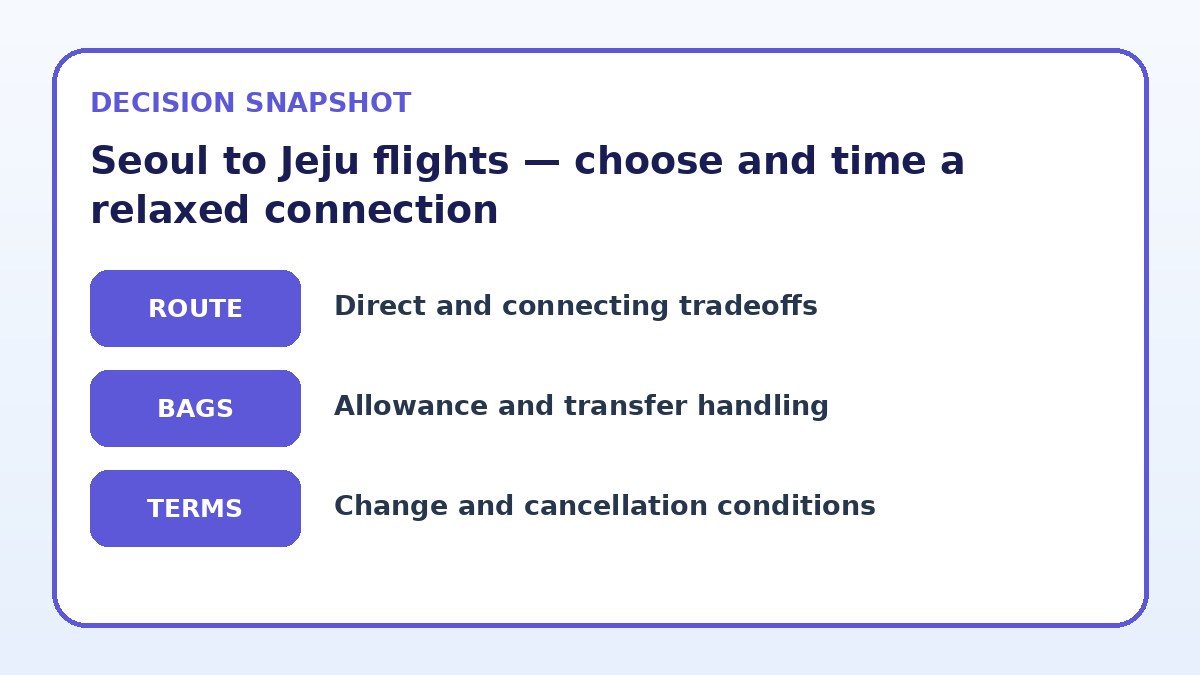
See current options before you compare the details
Availability and final conditions change. Open Trip.com now or keep reading for the practical comparison.
Decide direct vs connecting based on comfort and time
Direct flights between Seoul and Jeju are the simplest option for couples who want to minimize airport stress: fewer transfers, fewer opportunities to be separated, and a clearer timeline for arrival and plans. However, direct service may not line up with preferred departure times or may fill up earlier, so consider how important a single-seat-to-seat journey is versus slightly lower fares or different time slots that require a connection. Think through the non-flying parts—check-in, security, waiting time, and the emotional cost of rushing when schedules are tight. If being together through every step matters, direct is often worth the tradeoff.
Connecting itineraries give more scheduling flexibility and sometimes better timing for evening arrivals or early departures, but they introduce variables that affect comfort: additional security lines, potential terminal transfers, and the need to manage carry-on and checked luggage in two airports. For couples, coordinating restroom breaks, meal needs, and boarding at each stage is easier with a longer connection buffer. If you choose a connection, plan explicit roles—one person watches bags while the other lines up, or share a single carry-on for faster transit—so moving between flights feels coordinated rather than chaotic.
Choose seats and fares that prioritize togetherness
Seat selection is a small investment with a large payoff for comfort. Couples often prefer aisle-and-middle pairs if one of you wants to get up often, but two center or window/aisle seats can feel cozier for shared views and conversation. If stretching matters on a longer connection day, reserve bulkhead rows or extra-legroom seats when available; even if the flight time to Jeju is relatively short, connecting flights or delays can extend time in the cabin. Book seats at the time of purchase rather than relying on last-minute assignments to ensure you sit together.
When deciding on fare types, balance flexibility against cost. Flexible tickets let you alter a connection without heavy penalties if a flight is delayed, which reduces stress for couples on tight itineraries. If you choose a lower-price, nonrefundable fare, make a checklist for contingencies: earlier arrival at the airport, conservative connection windows, and travel insurance that covers missed connections. Always read the fare rules on the airline’s booking page before purchasing so you know baggage allowances, change fees, and rebooking procedures that affect how you’ll handle disruptions together.
| Approach | Best for | Tradeoff to check |
|---|---|---|
| Direct flight | Couples prioritizing simplicity and fewer transfer points | May offer less schedule flexibility and fill earlier for popular times |
| Short connection (60–90 minutes) | Travelers confident with airport layout and checked-bag through-check | Smaller margin for delays; requires efficient transfer and minimal shopping |
| Longer connection (90–180 minutes) | Couples who want relaxed transfers, airport meals, or terminal changes | Longer total travel time and more waiting; plan activities to stay comfortable |
| Flexible fare with seat selection | Couples who value rebooking ease and guaranteed seats together | Higher upfront cost but less stress if plans change |
Ready to check the option that fits your plan?
Use your exact dates and traveler details so the provider page can show the current total and conditions.
Plan airport transfers and luggage to minimize friction
Factor how you’ll get to and from airports into your connection choices. For example, leaving extra time for peak-hour traffic or known congestion around Seoul airports can prevent a missed flight that spoils plans. If you’re carrying checked luggage and must recheck it between flights, add the extra time required; if both flights are on the same ticket, ask the airline how they handle checked bags so you’re not stuck rediscovering luggage logistics mid-journey. For couples, distributing tasks—one handling tickets and the other managing bags—makes transfers faster and less stressful.
If ground transfers are long, consider booking a meet-and-greet or priority transfer service to shorten walking and queue time, particularly if one partner has mobility needs or you’re traveling with bulky equipment such as surfboards or strollers. For domestic routes like Seoul to Jeju, public transport and shuttle options can be efficient, but verify schedules ahead of travel and have a backup plan like a taxi app or private transfer contact. Check the airport layout maps on official pages to decide whether you prefer arrival and departure terminals that reduce inter-terminal distance.
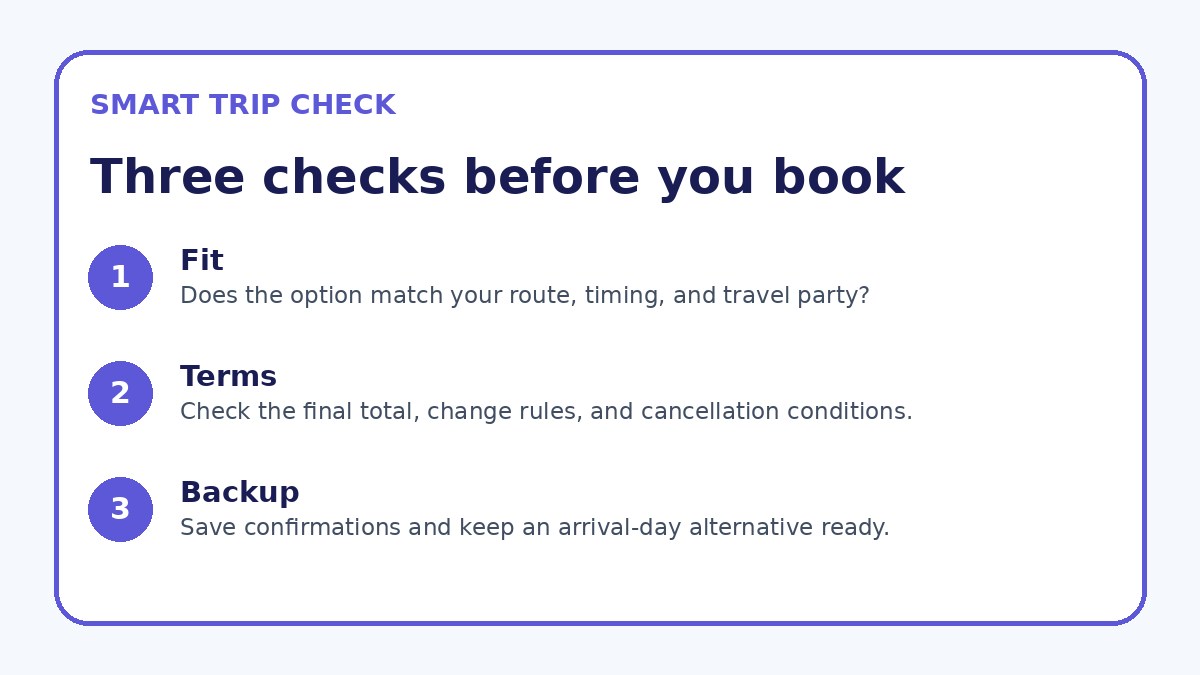
Before you book
- Confirm whether your itinerary is on a single ticket—this affects baggage transfer and recheck requirements.
- Reserve seats together and consider an aisle or extra-legroom option if either traveler needs more mobility.
- Build at least a 60–90 minute connection buffer; choose 90–120 minutes if you must change terminals or recheck bags.
- Download airline apps and save booking references, then set alerts for gate changes or delays on travel day.
- Pack essential comfort items and a small shared snack kit in carry-on for use during layovers and on board.
- Check terminal maps and ground-transfer options ahead of time; have a backup taxi or shuttle contact for missed connections.
Timing, meals, and wellness strategies for a relaxed couple’s trip
Choose connection times that align with your natural rhythms as a couple: if one of you sleeps easily on planes, a red-eye or late-night connection might be restful; if both prefer daytime travel, avoid overly early departures that leave you rushed. Pack small comforts—neck pillows, noise-canceling earbuds, a shared tablet with downloaded media, and easy snacks—to make waiting and in-flight time more pleasant. Hydration and light movement between flights matter: plan brief walks through the terminal together and simple stretches at your gate to reduce stiffness and improve mood.
For meals, plan around your schedule to avoid hunger and crankiness while in transit. Bring or buy easy-to-manage foods you both like, and consider sharing items so you can sample without multiple trays or complicated cutlery. If you have dietary restrictions, pre-order special meals where available or map out restaurants at each airport ahead of time so you don’t end up rushed or stuck with unsuitable options. Small, thoughtful planning around timing and nourishment goes a long way toward preserving quality time as a couple on travel days.
Frequently asked questions
How much connection time should couples leave when flying from Seoul to Jeju?
For most couples a practical minimum connection time is 60–90 minutes when both flights are on the same ticket and checked luggage transfers automatically. If your itinerary requires moving between terminals, collecting and rechecking checked bags, or using different carriers, plan 90–120 minutes to allow for security lines, walking, and a relaxed pace. Choose longer buffers if you prefer time for meals or to avoid rushing; conversely, if both of you travel light with carry-on only and know the airport layout well, shorter connections can work but increase risk.
Should we prioritize direct flights or cheaper connecting options?
Prioritize what reduces stress for your trip. A direct flight minimizes the number of steps and keeps both travelers together, which many couples find worthwhile even if the ticket is modestly more expensive. Cheaper connecting options can save money and offer better departure times, but they add variables—potential delays, transfers, and rechecking luggage—that can spoil plans. If you choose connections, buy a fare that gives you some flexibility or leave extra time to avoid mutually stressful scrambles between flights.
What practical steps keep a connection comfortable for two people?
Divide and conquer: one person manages documents and check-in while the other handles bags or lines; this halves waiting time and reduces mistakes. Reserve adjacent seats and pack a small carry-on with shared essentials (meds, snacks, chargers, travel-sized hygiene items) so you don’t both need to access large bags mid-connection. Use airline apps for real-time updates, arrive at the airport earlier than usual when long connections are likely, and prioritize calm over speed—taking a few extra minutes to eat or stretch often preserves energy and mood for the rest of the trip.
Final planning note
For couples traveling Seoul to Jeju, comfort comes from managing uncertainty and designing your itinerary around calm, predictable steps. Choose direct flights when simplicity and togetherness matter most; opt for connections only when they give meaningful benefits like better timing or lower stress on arrival. Whatever you choose, secure seats together, allow realistic connection buffers, and plan transfers and luggage handling in advance. These small preparations—balanced against how much time and money you’re willing to spend—turn the practical act of getting from Seoul to Jeju into a shared part of your trip rather than a source of friction.
Continue planning
Check current options and final conditions
Use the provider page to confirm live availability, the final total, cancellation terms, and every condition that matters to your trip.
This evergreen planning guide was created with AI-assisted drafting and a structured quality review. It does not display live prices, schedules, availability, visa guidance, or provider rankings. Verify current details before booking. Some links are affiliate links; we may earn a commission at no additional cost to you.