
If you’re moving between Osaka and Kyoto with large suitcases, sports equipment, or several bags, the travel day needs extra planning. The practical answer: decide which transport balances walking, luggage handling, and schedule flexibility; pre-book any luggage services you’ll use; pack to speed boarding and transfers; and build buffer time into your plan. On routes like Osaka to Kyoto you’ll typically choose between trains, private transfer, shared shuttle or driving. Each approach affects how much you carry, where you store bags on board, and how many times you’ll need to lift them. This article gives an actionable checklist and clear decision criteria so you can compare your options and verify the details that matter on provider booking pages before you buy.
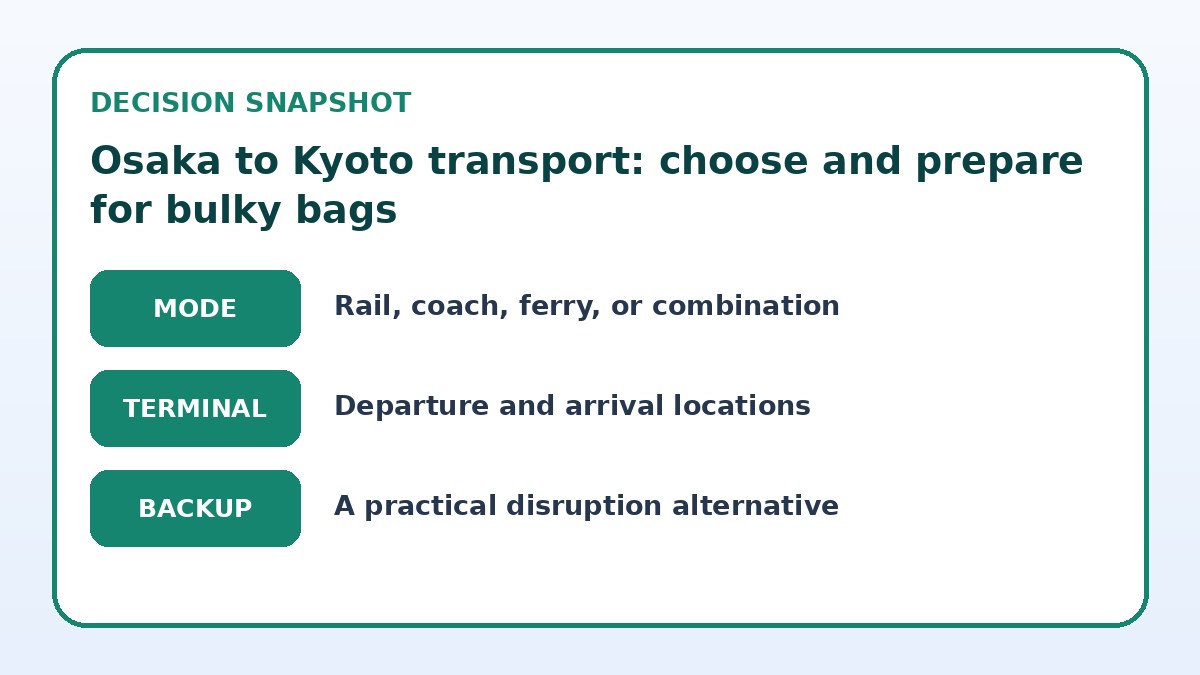
See current options before you compare the details
Availability and final conditions change. Open Trip.com now or keep reading for the practical comparison.
Compare transport approaches for heavier luggage
Start by listing your top priorities: reducing lifts, minimizing walking distance, keeping a fixed schedule, or cutting costs. Direct limited-stop trains often require the least time handling bags between stations, but you may still need to haul luggage up and down station stairs or along crowded platforms. Private car transfers or taxis provide door-to-door convenience and eliminate platform navigation, though you’ll need to check vehicle size and confirm drivers can handle oversized items. Shared shuttles can be economical, but they may involve multiple stops and tight storage space.
When comparing options, think in terms of actions on travel day: how many times you lift each bag, whether you’ll drag or carry them, and how long you’ll be walking between transport and doorway. For train travel, assess station layouts at your specific origin and destination, the distance from platform to exit, and whether elevators or escalators exist along your route. If a luggage delivery service is available, factor its pickup and drop timing into your schedule to avoid waiting at either end.
Packing, organization, and luggage choices that ease the day
Choose luggage you can maneuver: wheels that rotate and comfortable handles cut strain and speed transfers. Use a smaller daypack for essential items so you can keep passports, tickets, medication and valuables with you while the bigger cases are stowed. Arrange bags so the most-used items sit on top or in an accessible pocket to avoid unpacking on platforms or in taxis. Consider using luggage straps and durable name tags that include your phone number and destination to simplify identification during busy transfers.
If you have awkward gear—skis, bikes, or large boxes—pack them in protective cases with clear handling instructions and secure fastenings. Measure and photograph oversized items before the trip so you can confirm fit with the transport provider or rental car. A lightweight collapsible cart or foldable dolly can save energy when you have to move several bags over short distances; check whether elevators, ramps, and doorway widths will accommodate that equipment at your origin and destination.
| Approach | Best for | Tradeoff to check |
|---|---|---|
| Direct limited-stop train | Travelers prioritizing speed with moderate luggage | May still require platform lifts and can be crowded during peak times |
| Private taxi or car transfer | Large groups or oversized items needing door-to-door service | Higher cost and dependent on vehicle size availability |
| Luggage delivery service | Hands-free transit and avoiding station handling | Requires precise timing and you may be without items until delivery |
| Shared shuttle or bus | Budget-conscious travelers with manageable bags | Multiple stops and limited storage space can slow your journey |
Ready to check the option that fits your plan?
Use your exact dates and traveler details so the provider page can show the current total and conditions.
On the travel day: timing, station access, and practical moves
Build extra time into every step: arriving early at the station, allowing for luggage check-ins or delivery windows, and anticipating slow movement through crowds. Aim to be at platforms ahead of boarding to secure space for bags in designated luggage areas or on lower racks. If you’re using elevators, verify their locations before you travel; larger stations can have long detours between elevator banks. When taking a taxi or private car, arrange a pick-up spot that avoids stairs or tight alleys and confirm driver knows the exact entrance you’ll use.
At transfer points, prioritize routes that keep you on the same platform level or within the same concourse. Use station maps and signage to minimize backtracking—download a station map or screenshot it in case of poor mobile signal. If you hand off luggage to a porter or delivery service, get a receipt and a clear drop-off time window and keep the tracking reference handy. When lifting, use knees not your back and team up with fellow travelers or staff for heavy pieces.
Before you book
- Measure and photograph every bag; record dimensions and weight to confirm transport compatibility.
- Verify luggage policies and any special booking requirements on each carrier’s final booking page.
- Pre-book a lift, taxi or private transfer with vehicle size confirmation if you have oversized items.
- Reserve station locker or luggage delivery in advance and note pickup/drop windows and contact numbers.
- Map elevator and accessible-route locations at your origin and destination stations and save screenshots.
- Pack a daypack with documents, essentials, and valuables to avoid opening large luggage during transfers.
What to verify and book before you leave
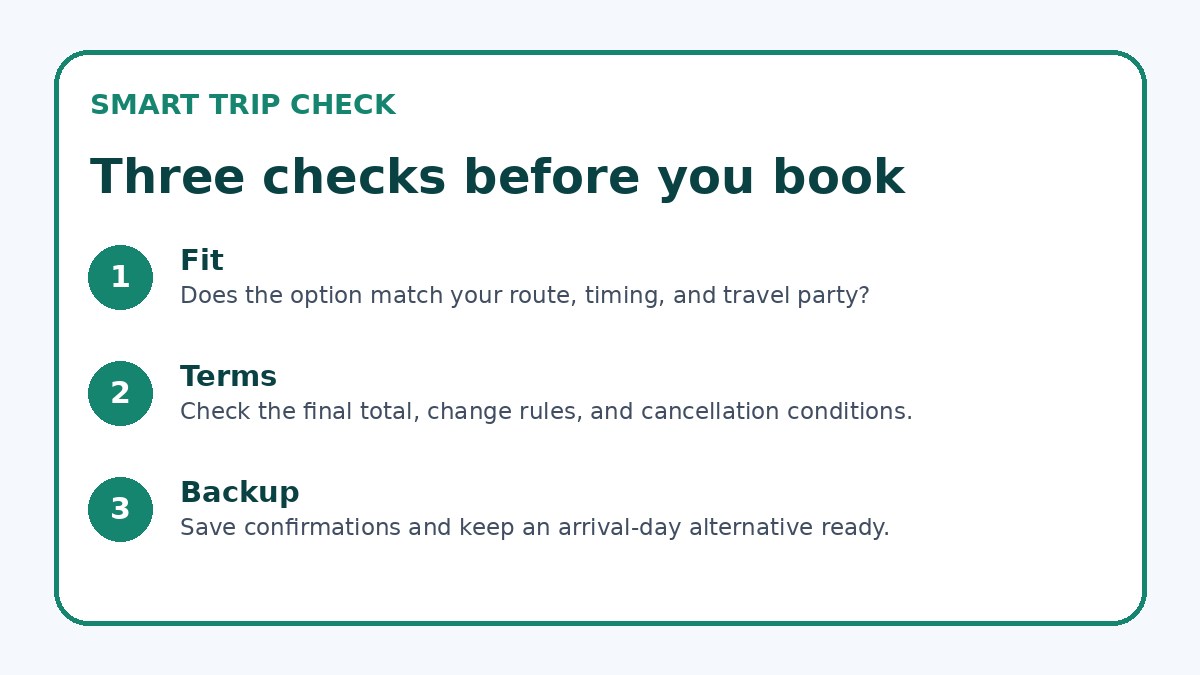
Before you purchase tickets or confirm a car, check the operator’s luggage policy on the final booking page: permitted dimensions, weight limits, and any fees or advance seat reservations needed to store bulky items. If you plan to use luggage delivery, confirm pickup times, drop-off windows, insurance limits, and where a driver or courier will meet you. For taxis and private transfer firms, verify vehicle size and whether they can carry oversized items; ask if drivers will load and unload or if you are expected to handle baggage.
If you plan to use station lockers, confirm availability at the specific station and whether they accept oversize cases, and consider contacting the locker operator in advance. When booking trains, compare direct and connection options by evaluating total door-to-door time, number of transfers, and how many times baggage must be moved between platforms. You can compare current availability and conditions on an aggregator like Trip.com, but always confirm the final luggage and schedule details on the provider’s official booking page before committing.
Frequently asked questions
Is taking the train between Osaka and Kyoto practical with heavy suitcases?
Yes, many travelers use trains between Osaka and Kyoto with heavy suitcases, but practicality depends on station layouts and the specific service you choose. Direct or limited-stop trains reduce the number of platform changes, which lowers the number of times you have to lift your bags. However, even on direct services you may face stairs or crowded platforms at peak times. Before you travel, check maps of your origin and destination stations for elevator locations and platform access, and confirm any luggage limits or required reservations on the carrier’s official booking page.
When should I consider a luggage delivery service instead of carrying bags myself?
Consider luggage delivery if you want to travel hands-free, are making a long stopover, or have items that are awkward to carry. Delivery services can drop bags at hotels or stations, letting you move between Osaka and Kyoto unencumbered. Plan carefully: confirm pickup times, delivery windows, insurance coverage and whether the service covers your exact pickup and drop addresses. Remember to leave a window buffer for delays and verify all details on the delivery provider’s booking page before handing over your bags.
How can I ensure a taxi or private car will fit my oversized luggage?
Contact the taxi company or private transfer operator in advance and provide exact measurements and photos of bulky items so they can confirm vehicle fit. Ask whether the driver will assist with loading and unloading or if you need to provide help. For larger gear, request a van or people-mover rather than a standard sedan. Also confirm pickup and drop-off points that avoid stairs and narrow alleys; get the driver’s contact number and an estimated arrival window to coordinate the handoff smoothly.
Final planning note
Traveling from Osaka to Kyoto with extra luggage is manageable with a little preparation: pick the transport mode that minimizes handling, confirm luggage rules on the carrier’s booking page, and arrange transfers or delivery if you want to travel hands-free. Measure and document your bags, plan routes that use elevators and short walks, and allow buffer time for boarding, pick-ups, and unexpected delays. Use the checklist here to finalize practical details before departure, and if you need to compare options quickly you can check availability on a third-party site like Trip.com—but always verify luggage dimensions, vehicle size and specific pickup or locker arrangements with the provider you’ll actually book.
Continue planning
Check current options and final conditions
Use the provider page to confirm live availability, the final total, cancellation terms, and every condition that matters to your trip.
This evergreen planning guide was created with AI-assisted drafting and a structured quality review. It does not display live prices, schedules, availability, visa guidance, or provider rankings. Verify current details before booking. Some links are affiliate links; we may earn a commission at no additional cost to you.