
If you and your partner want a balance between good choice and manageable cost, aim to book major elements of a New York City trip—flights and hotel—about six to eight weeks before travel for domestic U.S. departures, and about three to five months for international departures. That window keeps options open for room types and seat availability while avoiding the very last-minute premiums that can hit peak weekends or special events. Use that target as a flexible guideline: adjust for travel season, the neighborhood you prefer, and how fixed your dates are. Before you buy, compare refundable versus nonrefundable rules, inspect baggage and change-fee policies, and confirm the exact cancellation and check-in terms on the provider’s final booking page so you understand what’s actually covered.
See current options before you compare the details
Availability and final conditions change. Open Trip.com now or keep reading for the practical comparison.
Decide what you value most: price, choice, or flexibility
Couples planning a New York City break should start by naming the single most important factor: lowest possible fare, a specific hotel or neighborhood, or the freedom to change plans. If price is the priority, you can hunt for targeted fare sales and be prepared to book when a deal appears; this can mean booking further out or snapping a last-minute fare that fits both schedules. If a particular Manhattan neighborhood or a room type with a view matters, that often requires earlier reservations, especially around holidays, fashion weeks, or major events where inventory narrows.
Flexibility is a separate calculation: refundable rates and change-friendly tickets cost more upfront but can save stress and expense if plans shift. Couples with rigid vacation dates can lock nonrefundable options earlier if the savings matter. For those who expect change, look for mid-tier refundable options or credit-based change policies. Always read the provider’s cancellation and change terms closely on the booking page so you can quantify the real cost of flexibility versus potential savings.
How seasonality and events change your booking window
New York City’s demand swings sharply by season and by event. Winters around holiday weeks, spring during school breaks, and late summer for cultural festivals typically tighten supply and push prices up. If your trip overlaps known busy periods—parades, conferences, or arts festivals—you should widen your booking window and reserve as soon as your dates are firm. Conversely, midweek stays in shoulder seasons often give couples more time to wait for a good fare or hotel rate without losing core options.
When checking dates, research the event calendar for Manhattan, Brooklyn, and nearby boroughs; a major convention or sports final can affect neighborhoods beyond the event’s venue. If you’re flexible on exact dates, shifting by a day or two can dramatically change availability and the type of rooms offered. Use that flexibility deliberately: compare identical date ranges with slight shifts to see if earlier or later arrival and departure days yield better matches for your priorities.
| Approach | Best for | Tradeoff to check |
|---|---|---|
| Book early (3–6 months) | Couples needing specific neighborhoods, weekend dates, or particular room types | Higher upfront commitment and less ability to change plans without fees |
| Target window (6–8 weeks domestic, 3–5 months international) | Couples seeking balance between choice and reasonable flexibility | May miss a rare deep sale or very limited room types for peak events |
| Last-minute booking (within 2 weeks) | Flexible couples chasing lower midweek rates or sudden free time | Limited hotel selection and higher risk of weekend price spikes |
| Staggered booking (lock one, wait on the other) | Couples with one partner needing schedule flexibility | Requires careful coordination and tracking of separate cancellation rules |
Ready to check the option that fits your plan?
Use your exact dates and traveler details so the provider page can show the current total and conditions.
Combining flights, hotels, and experiences without over-committing
Couples often feel pressure to bundle flights and hotels at once; bundling can simplify refunds and synchronization but can also create complexity if one element needs to change. If your travel dates are rigid and both of you are confident, book flights and hotels together within your chosen window. If one partner needs flexibility—work commitments or potential family needs—book the more volatile item with a refundable or flexible policy and lock the other in once that’s confirmed. For experiences like Broadway shows or special dining, buy only the elements you can’t easily rebook or that are price-sensitive.
When booking, verify the exact terms that matter on each provider’s final page: luggage rules and seat selection for flights, check-in and cancellation windows for hotels, and voucher or refund policies for tours and performances. If you use a comparison site such as Trip.com, treat the listing as a snapshot; always click through to the supplier’s confirmed terms before paying so you know the provider’s full conditions and any additional fees.
Before you book
- Set your trip priority (price, neighborhood, or flexibility) and agree on acceptable tradeoffs before searching.
- Compare refundable versus nonrefundable prices and calculate the net cost of accepted change fees.
- Use price alerts for flights and save hotel searches; check alternate arrival and departure days for better options.
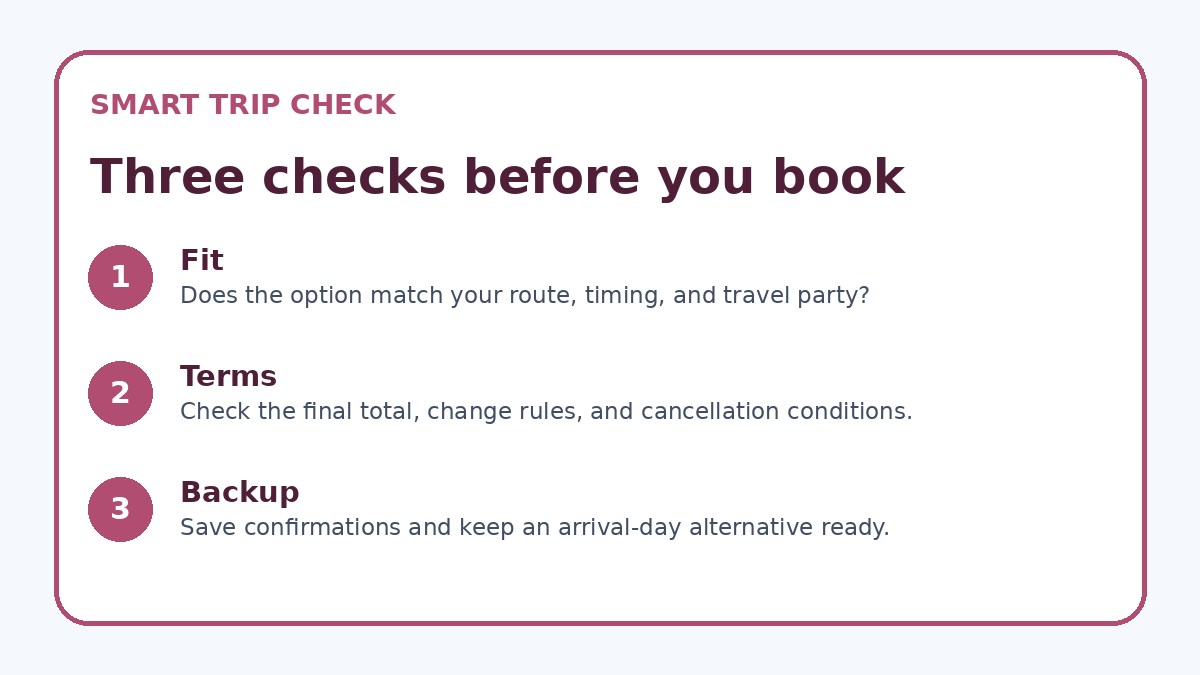
- Read the provider’s final booking page for exact cancellation, change, and baggage rules before paying.
- If booking separately, record deadlines for free cancellation or full refunds in a shared calendar.
- Consider trip insurance for nonrefundable elements and verify what it actually covers for illness or work changes.
Practical tactics for couples: split-risk and maintain communication
A practical tactic for couples is to split risk: one partner secures the nonrefundable hotel room in the neighborhood they prefer while the other books refundable flights or travel credits. That way you lock the most time-sensitive asset without preventing necessary shifts. Discuss acceptable compromise points beforehand—alternate neighborhoods, tolerable travel times, and how much you’re willing to pay for flexibility—so booking decisions don’t become a source of tension when deals appear.
Use tools that help you track options without committing: price alerts for flights, saved hotel searches, and calendar reminders for cancellation deadlines. Communicate about tradeoffs when a specific deal appears so both partners understand the implications of change fees, deposit forfeiture, or limited room types. This shared approach keeps both travelers invested in the decision and helps you hit your chosen booking window with confidence.
Frequently asked questions
How far in advance should couples book New York City hotels to get the room they want?
If you need a specific hotel amenity, room type, or a particular neighborhood—say Midtown near theaters or a Brooklyn location with easy subway access—reserve earlier, typically several months ahead for peak dates. For midweek stays in shoulder seasons, you can often wait closer to your travel date and still find good options. Always check the hotel’s cancellation policy on the booking page so you can quantify how much flexibility you’re buying versus how much you save by choosing a nonrefundable rate.
Are flight prices to New York City generally better if you wait or book early as a couple?
Flight pricing depends on route, season, and how many seats are left at each fare level. Domestic travelers often find a practical sweet spot around six to eight weeks out; international travelers usually need more lead time. If both partners require seat selection or specific connections, book earlier. If one of you is flexible, remaining nimble with alerts can yield savings—but always verify baggage, change fees, and refund rules on the airline’s booking page before committing.
Should couples bundle flight and hotel bookings or book them separately?
Bundling can simplify logistics and sometimes offers convenience, but it can also tie both elements to one cancellation or change policy. Couples that need synchronized schedules and want fewer separate transactions may prefer bundles. If flexibility matters for one element—often the flight—book that separately with a flexible fare and lock the hotel when dates are firm. Before finalizing any bundled offer, click through to review the provider’s full terms so you understand how changes to one component affect the other.
Final planning note
Choosing a realistic booking window for a New York City trip as a couple comes down to balancing three things: your priority (price, place, or flexibility), the season or events that affect demand, and how fixed your dates are. Use the guideline windows—about six to eight weeks for domestic flights, three to five months for international, and earlier when specific neighborhoods or peak events matter—as starting points, then tailor them to your needs. Communicate openly with your partner, track deadlines, and always verify cancellation and change terms on the provider’s booking page before you pay. Thoughtful, coordinated decisions let you secure the experiences that matter without unnecessary stress.
Continue planning
Check current options and final conditions
Use the provider page to confirm live availability, the final total, cancellation terms, and every condition that matters to your trip.
This evergreen planning guide was created with AI-assisted drafting and a structured quality review. It does not display live prices, schedules, availability, visa guidance, or provider rankings. Verify current details before booking. Some links are affiliate links; we may earn a commission at no additional cost to you.