
For a short couple trip to Tokyo, pick a hotel that minimizes transit time and gives you comfortable sleeping space, a pleasant dinner option nearby, and easy evening walks. The practical choice is usually a mid-sized hotel or boutique option in a central neighborhood with one or two major train or subway lines within ten minutes’ walk. That balance keeps travel stress low, because short stays leave little margin for long commutes or complicated transfers. Before booking, decide which activities matter most—dining, nightlife, museums, shopping, or a single day trip—and prioritize the neighborhood and station connections that serve those plans. I’ll explain the tradeoffs between central convenience, quieter residential neighborhoods, and value-minded choices so you can pick a base that fits your couple’s pace and priorities.
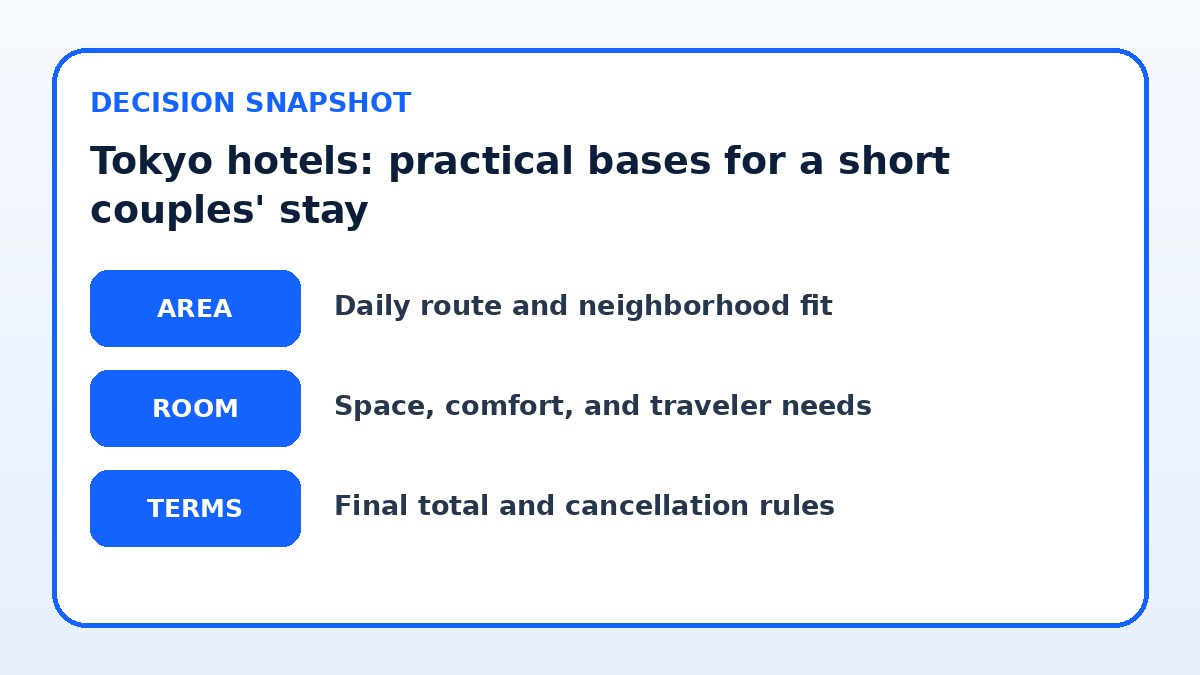
See current options before you compare the details
Availability and final conditions change. Open Trip.com now or keep reading for the practical comparison.
Pick the neighborhood by what you will actually do
Start by listing the couple-focused activities you want: romantic dinners, skyline views, museums, shopping, or a day trip to nearby areas. Central areas like Marunouchi, Ginza, and Tokyo Station put you close to many tourist sites and offer strong rail connections, meaning shorter transfers and more flexible late-night returns. Meanwhile, Shinjuku and Shibuya provide vibrant nightlife, abundant restaurants, and hotel choices at many price points. If museum-heavy plans appeal to you, consider Ueno or Roppongi for proximity to cultural attractions.
If you prefer quieter evenings and a more local feel, neighborhoods such as Meguro, Nakameguro, or Kichijoji give leafy streets and independent cafés but may require an extra transfer to reach major tourist hubs. For couples who want a mix of both, aim for stations where two or more lines intersect—those hubs let you split time easily between nightlife and quieter morning walks without changing hotels. Match the neighborhood mood to how you like to spend evenings together: lively, museum-focused, scenic, or residential.
Balance transit convenience and walking distance
A practical short-stay hotel minimizes the number of transfers you’ll face. Prioritize hotels within a 5–12 minute walk of a major station that serves either an express line to the airport or rapid subway lines. That reduces the friction of returning after dinner and keeps day plans flexible. When viewing listings, check station names and exit numbers so you can judge the real walking time; a hotel listed as "near Station X" might still be an uphill 15-minute walk depending on exits and pedestrian crossings.
Also consider the type of transfers you’ll tolerate. Couples who arrive late or leave early may prefer hotels with good taxi access or near station exits with clear late-night signage. If you plan a single day trip outside Tokyo, check whether your chosen neighborhood offers a direct line or a simple transfer to the regional service you need. Always verify route options and transfer times on a current transit map or the hotel’s recommended directions before booking—transport routes and station renovations can change walking times and convenience.
| Approach | Best for | Tradeoff to check |
|---|---|---|
| Central hub (Tokyo/Ginza/Marunouchi) | Maximum sightseeing range and short transfers. | Higher cost and a more businesslike, less neighborhood feel in the evenings. |
| Nightlife hubs (Shinjuku/Shibuya) | Couples who want lively evenings, variety of dining and late activities. | Noisier streets and possibly later returns to restful rooms. |
| Residential neighborhoods (Meguro/Kichijoji) | Quiet mornings, local cafés, and relaxed strolls. | Longer or more transfers to central tourist destinations. |
| Boutique or romantic hotels | Characterful stays and special-room features for couples. | Smaller rooms and sometimes fewer straightforward transit connections. |
Ready to check the option that fits your plan?
Use your exact dates and traveler details so the provider page can show the current total and conditions.

Room size, amenities and the evening routine
Tokyo hotel rooms range from compact business-style rooms to larger suites—on short trips, prioritize sleep quality and bathroom comfort over extra square meters you won’t use. Look for clear descriptions or photos of bed type and bathroom layout. If you value a private space for a relaxed evening after a full day, choose a room with a seating area or larger bathroom; if you plan to spend most time exploring, a clean, well-reviewed compact room can be the practical choice.
Check whether the hotel offers on-site dining or easy nearby dinner options; for couples who like spontaneous dinners, a neighborhood with a variety of izakayas, small restaurants, and late-night cafés is invaluable. If privacy and quiet are priorities, look for properties that advertise soundproofing or are located on quieter side streets. For many short stays, a small upgrade for a bigger bed or a better view can significantly improve the trip without changing the location tradeoffs.
Before you book
- Confirm the hotel’s nearest station, recommended exit, and walking time using the hotel’s directions or a current transit map.
- Ask the hotel about bed size and bathroom configuration if those details are not clear in the listing photos.
- Verify cancellation and change policies to ensure flexibility for short-trip schedule shifts.
- Check whether breakfast is included or if there are good dining options within a short walk for evening plans.
- Confirm luggage storage availability for arrival or late departures to avoid hauling bags around the city.
- If airport logistics matter, request recommended routes from the hotel and compare taxi versus express train convenience.
Booking considerations and what to verify before you pay
When you’re ready to book, verify the cancellation policy, bed configuration, and whether the rate includes breakfast or other useful perks. Confirm which station exits the hotel recommends, any walking directions, and whether the hotel provides luggage hold or late check-in service. If airport transfers are important, check the hotel’s guidance on reaching the property from the airport and whether they recommend specific lines, luggage-friendly routes, or taxi pickup points. If you see transit or service claims on the booking page, verify them on the hotel’s official site or contact the hotel directly.
Photos can be helpful but sometimes outdated—ask the property for recent images if room layout matters. If accessibility or a quiet room is important, include that in your booking notes and confirm availability. Use an aggregator such as Trip.com only to compare current availability and conditions; always complete the final booking on the provider page you trust and verify check-in times, extra fees, and house rules there. Keeping these checks in mind reduces surprises during a tight, short trip.
Frequently asked questions
How do I pick the single best neighborhood in Tokyo for a short romantic stay?
There isn’t one best neighborhood—pick based on your priorities. If you want easy access to many tourist sites and short transfers, choose a central area like Tokyo Station or Ginza. For lively evenings and many dining choices, Shinjuku or Shibuya suits couples who want nightlife nearby. For quieter, leafy streets and relaxed cafés, neighborhoods such as Meguro or Kichijoji are better but may add transfers. Decide whether minimizing walking and transfers or maximizing neighborhood atmosphere matters more for your few nights.
Are small hotel rooms in Tokyo a deal-breaker for couples on a short trip?
Small rooms are common, but they rarely ruin a short stay if you prioritize bed comfort and a functional bathroom. For a stay of a few nights, a compact but clean room lets you explore the city by day and sleep well. If you plan to spend time in the room—celebrations or prolonged relaxation—opt for a larger room or suite. Always confirm bed size and layout, and consider a modest upgrade for a better view or more space if it improves the experience within your budget.
How should we judge hotel location relative to airport transfer time?
For short trips, cutting transit stress on arrival and departure is worth prioritizing. Pick hotels near stations served by airport express or limited-stop trains, or with straightforward taxi routes from the airport. Check whether the hotel’s recommended route involves multiple transfers with stairs or long walks—those consume energy after a flight. If convenience is crucial, confirm the hotel’s arrival instructions and ask about luggage-friendly routes; compare those suggestions against current transit timetables before booking.
Final planning note
When time is limited, the right Tokyo hotel for couples reduces friction: pick a neighborhood that fits your evening rhythm, prioritize transit connections and a comfortable bed, and verify practical details before you book. Central hubs save travel time but trade neighborhood charm for convenience; nightlife districts keep diners and bars close but can be noisy; residential areas offer quiet mornings with potentially longer routes to attractions. Use the checklist to confirm station access, bed layout, cancellation terms, and luggage services. Comparing these factors will help you choose a base that makes a short Tokyo trip feel relaxed, efficient, and enjoyable.
Continue planning
Check current options and final conditions
Use the provider page to confirm live availability, the final total, cancellation terms, and every condition that matters to your trip.
This evergreen planning guide was created with AI-assisted drafting and a structured quality review. It does not display live prices, schedules, availability, visa guidance, or provider rankings. Verify current details before booking. Some links are affiliate links; we may earn a commission at no additional cost to you.