
If you’re bringing large suitcases, sports gear, or extra bags, the simplest practical decision is this: prioritize a hotel that either offers roomy rooms and luggage services near where you’ll spend most time, or choose a more central, compact room that saves transit time and effort. Both approaches work in Seoul; the right pick depends on how often you’ll move around, whether you can store luggage at a train station or hotel, and whether you value walking distance to sights over in-room space. This article gives clear decision steps, explains tradeoffs, and lists what to verify on booking pages (room dimensions, elevator access, luggage storage policy, and nearest station entrances). Use these criteria to compare options and book the most comfortable, realistic stay given your bulky baggage needs.
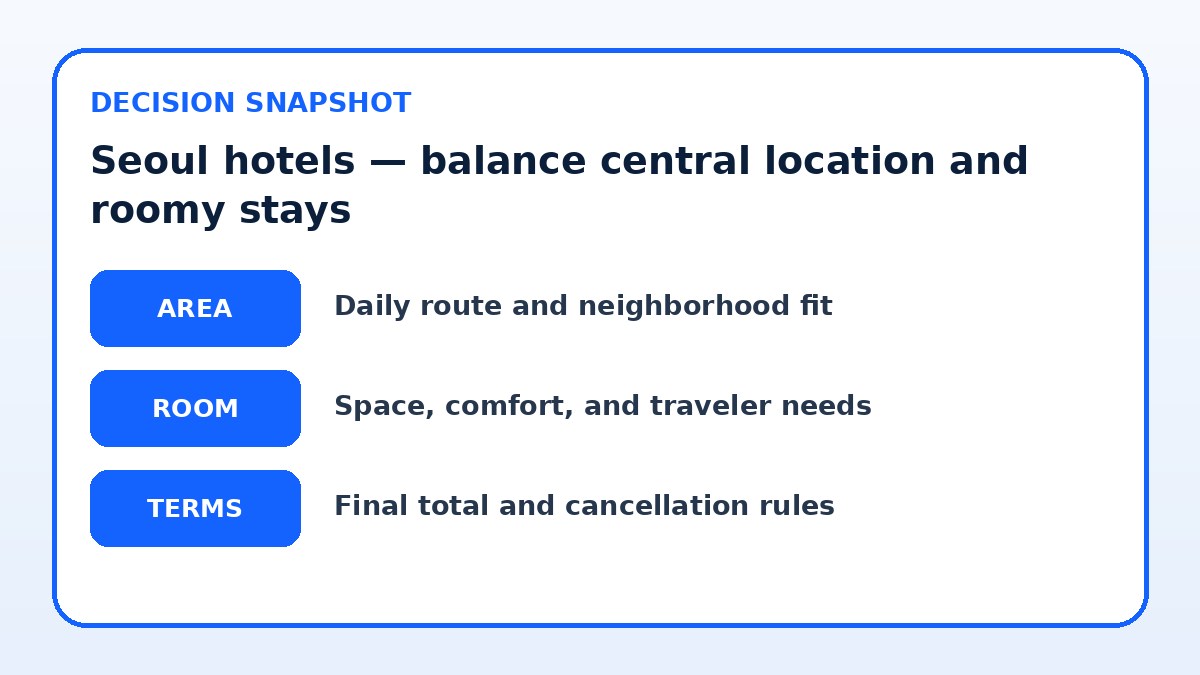
See current options before you compare the details
Availability and final conditions change. Open Trip.com now or keep reading for the practical comparison.
Decide your travel pattern before choosing location or room
Start by mapping how you will spend most days in Seoul. If your itinerary centers on one neighborhood—for example work meetings, a festival venue, or visiting family—choose a hotel slightly farther from the busiest tourist areas if it offers bigger rooms and easier luggage handling. That reduces the daily hassle of dragging heavy suitcases through crowded stations or narrow sidewalks while giving you a more functional base with space to unpack and organize.
Conversely, if you expect to move across the city, use multiple short trips, or rely on taxis and subway transfers, a central location near a major subway intersection can save time and physical effort. The tradeoff is usually smaller rooms and fewer storage-friendly features. Focus on hotels with step-free entries, ground-floor lobbies, and elevators that open directly onto corridors to minimize carrying bags up and down stairs during arrivals and departures.
Assess room features that matter for bulky luggage
Room size is the obvious metric, but layout matters more than square meters. Look for rooms with clear walking zones, visible luggage space beside the bed, and closets that actually fit suitcases upright. Suites or rooms with living areas let you leave suitcases out of circulation and use the extra furniture to stash loose items. If the booking description lacks photos or precise dimensions, request measurements and closet interior photos from the property before committing.
Beyond square footage, check practical details: whether the room has a luggage rack, whether the bathroom layout prevents leaving large bags by the door, and whether housekeeping will move or store luggage on request. For longer stays, rooms with kitchenettes or additional storage cabinets let you redistribute items and reduce clutter. When in doubt, ask the hotel about suitcase dimensions they can reliably accommodate in storage to avoid surprises at check-in.
| Approach | Best for | Tradeoff to check |
|---|---|---|
| Central small room near major stations | Travelers who prioritize short transfers and frequent outings. | Smaller in-room storage and tighter layouts that can complicate luggage management. |
| Peripheral hotel with larger rooms | Visitors staying mostly in one area who need unpacking space. | Longer transit times to city attractions and potential extra taxi costs. |
| Serviced apartment or suite | Long-stay travelers who need kitchen and storage facilities. | Often pricier per night and sometimes located farther from tourist hubs. |
| Split stay: central then roomy base | Travelers who want both convenience and space at different trip stages. | Extra moving day(s) and time spent transferring luggage between properties. |
Ready to check the option that fits your plan?
Use your exact dates and traveler details so the provider page can show the current total and conditions.

Transport and arrival: how location affects luggage handling
Seoul’s subway network is efficient but can be crowded during peak periods; stations sometimes require stairs or long corridors to reach exits. When comparing hotels, plot the actual walking route from the nearest station exit to the front door, and check whether that route includes stairs, escalators, or narrow passageways. If arriving late or with very heavy bags, a hotel closer to a taxi rank or with valet drop-off may be worth a less-central location to avoid the stairs and time pressure.
If you plan to use airport or long-distance train transfers, verify whether the hotel offers airport pick-up, luggage delivery from the airport, or temporary hold for early arrivals and late departures. These services reduce transfer stress but can have restrictions: confirm weight limits, fees, and retrieval policies on the property’s booking page. If a hotel doesn’t provide these services, look into station lockers or courier luggage forwarding services used in Korea as alternatives.
Before you book
- Measure your largest suitcase and compare against hotel room photos or request exact interior dimensions before booking.
- Confirm elevator access, step-free entry, and any stairs between station exits and the hotel entrance.
- Ask the hotel about luggage storage options, fees, weight limits, and retrieval hours for arrivals or late departures.
- Verify whether housekeeping will move or handle luggage and whether in-room luggage racks or closet space are available.
- Check public transport routes from the airport or train station and whether the hotel offers airport pick-up or luggage forwarding.
- If booking multiple properties, plan transfer timing and reserve help (porter or taxi) for moving bags between hotels.
Budget tradeoffs and alternatives to larger hotel rooms
Bigger rooms in prime areas cost more per night; you can balance that by shifting a little farther out or staying in a serviced apartment for long stays. Serviced apartments often include storage and kitchen space, which is useful if you have fragile items or plan to re-pack. Alternatively, a two-room option—such as booking an adjoining room on arrival—can be practical for groups with lots of baggage, though you should confirm the property’s connecting-room availability and cancellation rules before booking.
Consider mixing options: book a centrally located compact room for the most active city days, and schedule a mid-stay transfer to a more spacious place if you need to reorganize or store things long term. This adds logistics but can be a cost-effective way to have both convenience and comfortable storage. Compare current availability and exact policies on the hotel’s booking page and, optionally, check Trip.com for aggregated options, remembering to verify provider details directly before payment.
Frequently asked questions
Can I store my luggage at Seoul train or subway stations?
Many major stations in Seoul provide coin or staffed lockers and temporary baggage services, but availability and size limits vary by station and can change seasonally. Before relying on a station locker, check the specific station’s facilities online or contact station customer service to confirm locker dimensions and payment methods. For oversized items there are sometimes staffed left-luggage counters with separate rules and hours. If you’re traveling with irregularly sized or valuable gear, also check whether your hotel will accept early drop-offs or hold luggage to avoid depending solely on station lockers.
Is it better to take a taxi with heavy luggage instead of the subway?
Taxis reduce the physical strain of stairs and long transfers, and they’re a reasonable choice if you have very heavy or bulky bags, arrive late, or travel with a group. However, traffic, drop-off points, and narrow hotel access can still complicate door-to-door delivery in busy areas. For cost-conscious travelers, compare the total time and convenience: a slightly longer subway walk with elevator access may be preferable to sitting in traffic. Always confirm your hotel’s recommended drop-off point before asking a driver to stop, and consider pre-booked airport transfers if you want a smoother arrival.
How can I make a small hotel room work for bulky luggage?
Use organizational strategies: unpack nonessentials into garment bags or soft cubes, elevate suitcases on available racks or the bed to free floor space, and keep daily items in a smaller daypack. Request a second closet or a luggage rack from the front desk—many hotels can provide extra furniture or arrange temporary storage in back rooms. If you’ll need private sorting space, consider booking an early check-in (confirmed with the hotel) or use a luggage-holding service for arrival day so you can explore unencumbered and return when the room is ready.
Final planning note
Choosing Seoul hotels when you travel with extra luggage is a practical balance: decide whether you want fewer transfers and a central address, or a room that gives you space to unpack and organize. Base your choice on your daily movement patterns, length of stay, and tolerance for carrying bags over short distances. Use the checklist to verify elevator access, storage policies, exact room layout, and transfer services on the hotel’s booking page before paying. If needed, mix approaches—short central stays for busy days and a spacious base for settling in. Thoughtful verification and a small amount of planning will make handling bulky luggage in Seoul far less stressful.
Continue planning
Check current options and final conditions
Use the provider page to confirm live availability, the final total, cancellation terms, and every condition that matters to your trip.
This evergreen planning guide was created with AI-assisted drafting and a structured quality review. It does not display live prices, schedules, availability, visa guidance, or provider rankings. Verify current details before booking. Some links are affiliate links; we may earn a commission at no additional cost to you.