
Practical answer up front: before booking New York City to Los Angeles flights when you have extra luggage, compare total door-to-door cost including checked-bag and oversized fees, airport transfer time and cost, connection complexity, and the airline’s final baggage policy (checked on the carrier’s booking page). Use that comparison to choose between a single direct flight with higher baggage fees or a connecting itinerary that may reduce fare but increases handling risk. Balance convenience, cost, and luggage risk: if avoiding transfers is your priority, favor nonstop options and premium fares that include larger free allowances; if saving money matters more, look for connections with generous baggage rules and factor transfer time to reduce missed-connection risk. Below I explain the main tradeoffs and give a step-by-step pre-booking checklist so you can decide confidently.
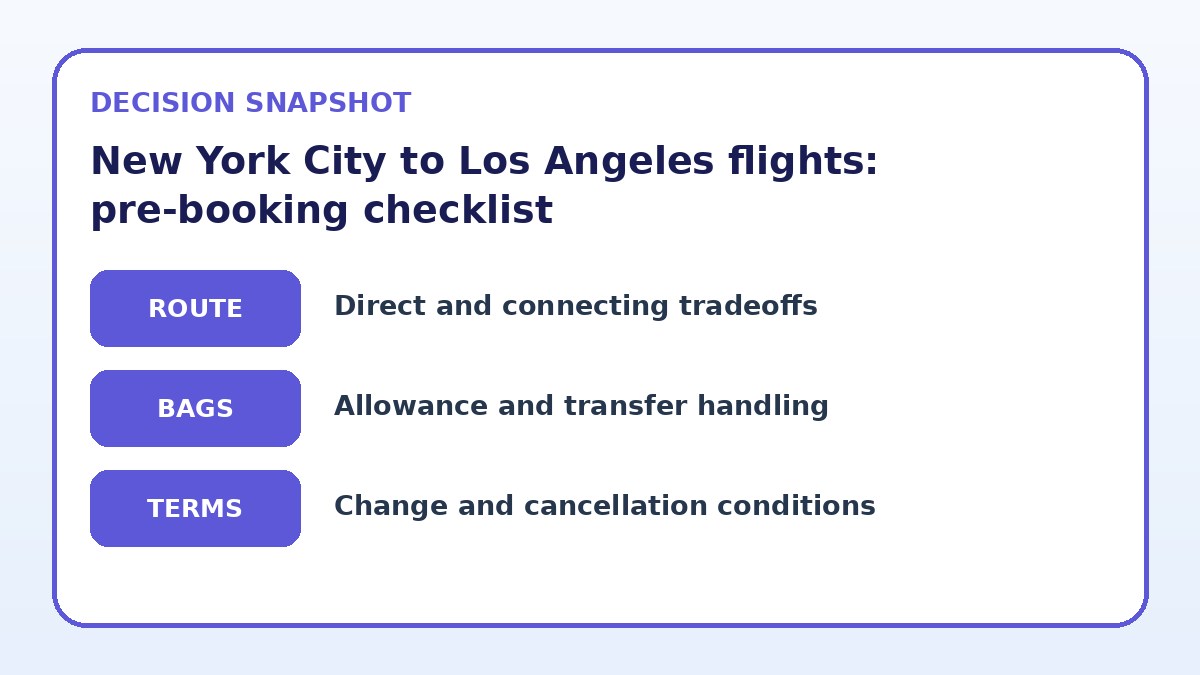
See current options before you compare the details
Availability and final conditions change. Open Trip.com now or keep reading for the practical comparison.
Understand baggage policies and total cost
Airlines vary widely in how they count and charge for bags: per-piece, per-weight, or included in fare class. Start by opening the airline’s official baggage page referenced during booking — do not rely solely on third-party summaries. Compare the base fare plus the exact fees for each additional checked bag, overweight or oversized items, and any sports equipment or musical instruments you plan to carry. Add those fees to the fare when comparing itineraries so you see the true cost, not just the headline ticket price.
Also factor in ancillary costs that affect luggage handling: priority boarding or check-in, expedited baggage delivery options, carry-on fees on some low-cost carriers, and fees for rechecking a bag after a missed connection. If you have heavy items, calculate if a higher fare class that includes more free baggage could be cheaper than buying multiple checked bags a la carte. For clarity, write down or screenshot the fare rules and baggage section from the airline’s booking page before you proceed.
Weigh nonstop versus connecting itineraries
A nonstop from a New York airport to Los Angeles reduces handling: one check-in, one loaded aircraft, one arrival. That simplicity lowers the chance your luggage will be delayed or mishandled, which matters when you travel with many or valuable items. Nonstops may cost more or include smaller free allowances, so compare the fully loaded price (fare plus bag fees) and the schedule convenience. Look at departure and arrival airports on both ends — a nonstop into a less convenient L.A. airport can still add ground transfer time.
Connecting flights can cut ticket cost or allow you to use an airline or alliance with better baggage allowances, but they add transfer steps where bags are sorted and reloaded. If you consider a connection, inspect minimum connection times at the specific airports and typical transfer distances. Favor itineraries that route through an airport where you won’t need to re-clear security or customs between flights, and build in at least an extra 60–90 minutes beyond the published minimum when you’re managing oversized or multiple checked items.
| Approach | Best for | Tradeoff to check |
|---|---|---|
| Nonstop higher-fare ticket | Travelers prioritizing simplicity and lowest handling risk | Higher upfront fare and possibly smaller included baggage allowance |
| Connecting itinerary with better baggage rules | Those wanting lower base fares or larger included allowances via carrier choice | Increased transfer steps, higher risk of delayed or mishandled luggage |
| Higher fare class that includes larger allowance | Travelers who value predictable baggage cost and convenience | Often more expensive but can save when carrying multiple or heavy items |
| Ship bulky items ahead via courier | Those with oversized, fragile, or many items where time isn’t critical | Extra coordination, lead time, and potential customs/handling complexity |
Ready to check the option that fits your plan?
Use your exact dates and traveler details so the provider page can show the current total and conditions.
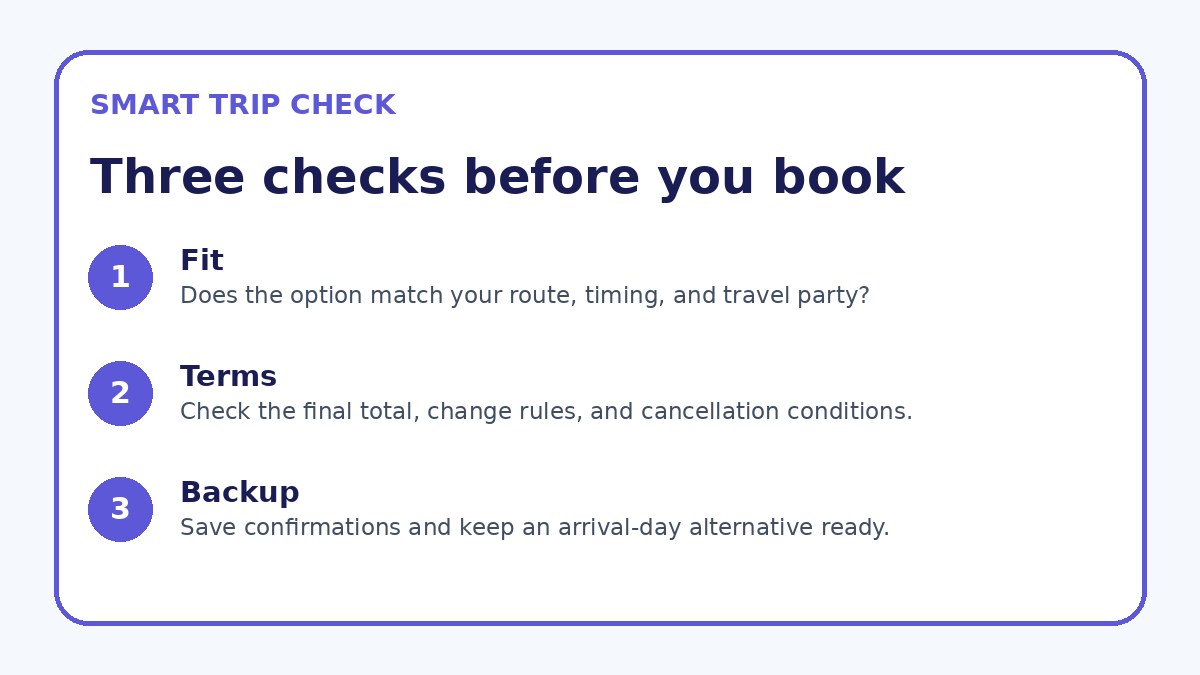
Airport logistics and ground transfers matter
Which New York airport you fly from (for example, JFK, LGA, or EWR) matters for ground access, check-in lines, and luggage handling norms. Similarly, Los Angeles has multiple airports and terminals with different baggage claim layouts and ground-transport options. Before booking, estimate taxi, rideshare, or parking costs and how you'll move heavy suitcases—will you need a larger vehicle, an airport shuttle that accepts bulky bags, or curbside assistance? These practicalities can erode any perceived fare savings.
If you anticipate requiring special handling—fragile items, checked musical instruments, or sporting equipment—contact the airline’s baggage or special assistance desk to confirm procedures and whether you must make arrangements in advance. Check whether you can reserve curbside check-in or priority baggage tags and whether these are paid add-ons on the airline’s booking page. Also verify terminal transfer times within the airport if switching carriers or alliances; some transfers require a shuttle.
Before you book
- Open the airline’s official baggage policy page in a new tab and record exact fees, weight, and dimension limits for every checked bag and carry-on before comparing fares.
- Calculate the total trip cost by adding fare, each bag’s fees, priority or curbside charges, and estimated ground transfer costs between airport and final destination.
- Decide nonstop versus connection by listing expected handling risk, total travel time, and whether the connection requires rechecking baggage or clearing customs.
- Measure and weigh your luggage at home; note any items likely to exceed airline limits and decide which to remove, consolidate, or ship ahead.
- Photograph contents and keep receipts for high-value items; check travel insurance or credit-card coverage specifics for baggage delay and loss limits.
- Confirm terminal and transfer logistics: verify minimum connection times on the carrier’s booking page and reserve any necessary curbside or special-assistance services.
Insurance, documentation, and contingency planning
When you travel with extra luggage, add two protective layers: documentation and insurance. Photograph and inventory packed items, keep receipts for high-value belongings, and store copies in your email or cloud. Check whether your credit card’s travel protections or a purchased travel insurance policy covers delayed or lost baggage and what the claim limits and time windows are. Read the provider’s baggage-delay definitions and reimbursement process before you rely on it.
Plan contingencies for delayed bags: pack a small emergency kit and a change of clothes in your carry-on if allowed, know how to file a missing-baggage report at your arrival airport, and note the airline’s usual baggage-delivery options. If you’re carrying items that require immediate use at destination, consider shipping them ahead using a courier with tracking and insurance and compare that cost against checked-bag fees and risk of misrouting.
Frequently asked questions
How should I compare baggage fees across airlines when booking New York City to Los Angeles flights?
Compare by calculating the full price you will pay, not just the ticket: start with the base fare and add every baggage-related charge shown on the airline’s booking page (first/second checked bag, overweight, oversized, sports equipment, and carry-on fees if applicable). For per-weight carriers, estimate your loaded bag weight and multiply by the carrier’s per-kilogram or per-pound fee. Also factor in optional services that affect baggage handling—priority tagging, expedited delivery, or curbside check-in. Write the totals side-by-side for each itinerary to see which offers genuine savings for your luggage profile.
Is it safer to take a nonstop flight if I have a lot of checked luggage?
Generally, yes: nonstop flights eliminate intermediate transfers where luggage can be misrouted, reloaded, or subject to short connection stress. With one boarding and one unloading, your baggage path is simpler, which reduces delay risk. But safety must be balanced with cost and baggage allowances—some nonstop fares have limited included baggage. If a nonstop charges steep per-bag fees, a connecting itinerary on an airline with more generous included allowances might still be preferable. Always compare the fully loaded cost and your tolerance for potential delays.
When should I consider shipping items instead of checking them on the flight?
Consider shipping when items are oversized, fragile, or numerous enough that checking them would be costly or risky, and when you can plan delivery lead time. Shipping is often sensible for furniture pieces, sports gear, or collections that require insurance and door-to-door tracking. Before deciding, get quotes from couriers, compare insured value limits and pickup/delivery windows, and weigh those against checked-bag fees plus the potential cost of delayed arrival. Remember to verify customs paperwork if shipping across borders, and confirm courier handling procedures for fragile goods.
Final planning note
Booking New York City to Los Angeles flights with extra luggage requires thinking beyond ticket price. Compare the fully loaded cost that includes all checked-bag and ancillary fees, and weigh those costs against convenience and luggage-handling risk. Nonstops reduce handling but can be pricier; connecting itineraries may lower ticket cost but add transfer complexity. Verify every baggage rule and any add-on service on the airline’s final booking page before purchase, and consider shipping bulky items if it’s cheaper or less risky. If you want a quick availability check while comparing options, you can consult Trip.com, then confirm details on the carrier’s site before finalizing.
Continue planning
Check current options and final conditions
Use the provider page to confirm live availability, the final total, cancellation terms, and every condition that matters to your trip.
This evergreen planning guide was created with AI-assisted drafting and a structured quality review. It does not display live prices, schedules, availability, visa guidance, or provider rankings. Verify current details before booking. Some links are affiliate links; we may earn a commission at no additional cost to you.