
If your family wants fewer crowds, more hotel and activity flexibility, and kinder weather than the busiest summer weeks, plan San Francisco travel for the shoulder seasons: spring (March–May) and fall (September–November). Those months give you a pragmatic balance — attractions are easier to book, neighborhoods feel livable with kids, and transit and dining lines tend to be shorter. The practical starting move is to compare midweek vs weekend rates and look for refundable or moderately flexible options when school schedules might shift. Use the opening booking window to prioritize kid-friendly lodging near transit and to reserve top indoor activities in case of fog or wind. Verify final prices, cancellation policies, and operating hours on each provider’s booking page before confirming; Trip.com can be a convenient place to compare live availability, but always follow provider pages for the terms you’ll be bound to.
See current options before you compare the details
Availability and final conditions change. Open Trip.com now or keep reading for the practical comparison.
Why shoulder seasons matter for family trips
Shoulder seasons in San Francisco reduce the pressure families feel when juggling younger children, timed naps, and shorter attention spans. Crowds at outdoor attractions like parks and waterfront promenades tend to be thinner than in peak summer, which makes it easier to maintain a relaxed pace. Logistical tasks — finding a stroller-friendly route, booking a table for an early dinner, or securing a timed-entry museum slot — usually take less frantic planning. The practical benefit is time: you can fit shorter stops between major sights without a cascading schedule of missed reservations.
Weather and services remain a tradeoff, however. Shoulder-season temperatures can be mild, but San Francisco’s microclimates still produce cool, windy mornings and warmer afternoons in sunny neighborhoods. That unpredictability makes layering clothing and planning indoor backups especially valuable. For families, the main win is fewer forced compromises: you’re less likely to spend hours in line, and you’ll have more options for family suites or connecting rooms without relying on limited peak-season inventory.
Choosing when to book flights and lodging
Start your search window earlier if you need specific room arrangements — family suites, cribs, or adjoining rooms — because those options can be limited even off-peak. For flights, compare direct and connecting itineraries: direct flights reduce the hassle with small children but often cost more; connecting flights can be cheaper but add transfer stress. When comparing fares and hotel rates, prioritize refundable or change-friendly fares and room rates if your family’s plans might shift. Confirm baggage rules, seat-assignment options, and the provider’s final cancellation and change policies before purchase.
For lodging location, weigh proximity to transit and kid-focused amenities over staying in the most tourist-heavy corridor. A short ride from a quieter residential neighborhood often means more space, access to nearby parks, and simpler meal logistics. If you plan to use public transit, check walking distances from stops and the availability of elevators for strollers. For hotels or rentals, review the host or property cancellation policy, bed configurations, and whether the property provides travel cribs or a kitchenette — verify all such details on the final booking page.
| Approach | Best for | Tradeoff to check |
|---|---|---|
| Book early in shoulder season (months ahead) | Families needing specific room setups or school-date certainty | Less ability to chase last-minute lower fares or closer-in promos |
| Book closer to travel (weeks ahead) | Flexible families who can adjust dates for better midweek rates | Risk of limited family suites or sold-out timed attractions |
| Choose midweek travel dates | Families wanting quieter streets, more restaurant options, and ease of reservations | May need to align with parents’ work schedules and school policies |
| Prioritize refundable or changeable fares and rooms | Families prone to schedule changes or with young children | Often higher upfront cost compared with strict, nonrefundable rates |
Ready to check the option that fits your plan?
Use your exact dates and traveler details so the provider page can show the current total and conditions.
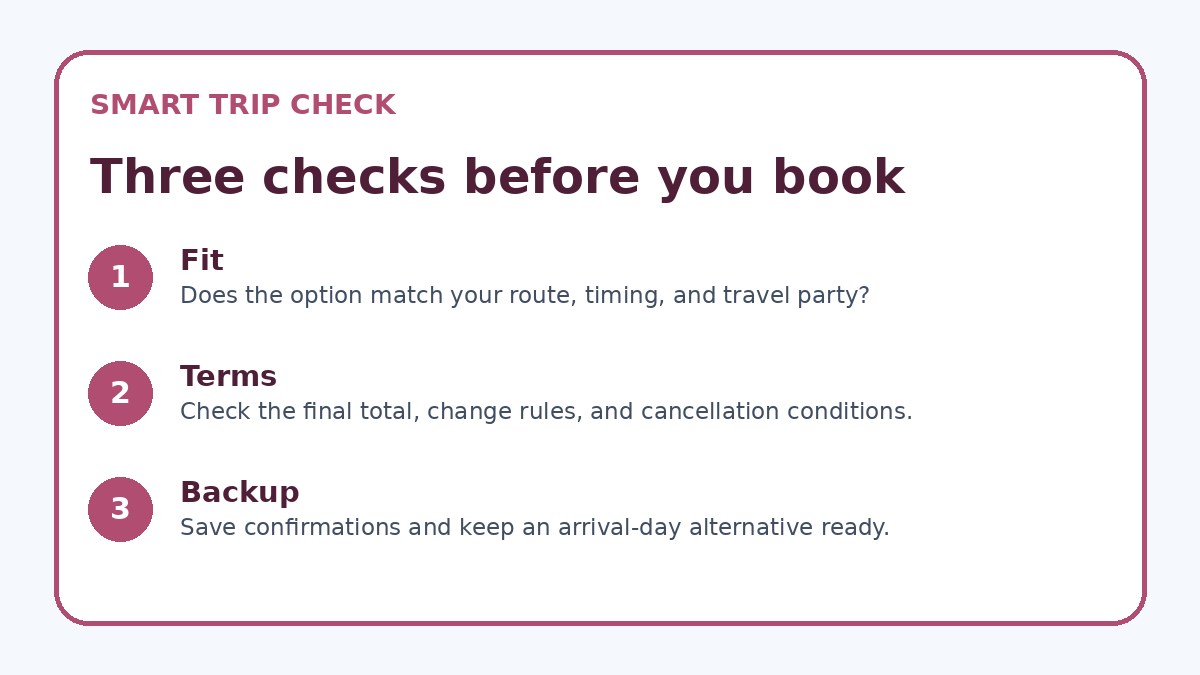
Planning daily plans and backup options
Design each day with a primary outdoor or popular sightseeing goal and two realistic backups that work in cooler or foggier weather. For example, pair an outdoor walk along a waterfront or park with a nearby indoor science center, aquarium, or interactive children’s museum. Book timed-entry attractions when possible, but avoid overloading days with multiple strict reservations; kids need downtime. During shoulder seasons, morning windows often feel warmer and calmer, so schedule outdoor-heavy activities earlier and reserve afternoons for flexible options or neighborhoods with quick indoor diversions.
Transportation flexibility is also part of your backup plan. Carry a foldable stroller and think in short hops: ride-share, cable car segments, or short ferry trips can turn a weather-curtailed day into an adventure. Keep a list of reliable indoor cafés and public spaces with bathrooms as fallback stops. Finally, factor in nap or rest windows explicitly — a well-timed hotel return between activities can keep the whole day more manageable and reduce the temptation to rush from one booked slot to the next.
Before you book
- Confirm school calendars and request time-off approvals before locking travel dates.
- Compare midweek and weekend hotel rates, and note the cancellation and change terms on the booking page.
- Reserve any timed-entry attractions or indoor venues you care about, then save confirmation details offline.
- Choose lodging near reliable transit links and verify elevator/stroller access at the property.
- Pack layered clothing and a compact stroller, and identify two indoor backup activities per day.
- Double-check child pricing, age policies, and luggage/stroller rules with transport and tour providers before paying.
Money, deals, and what to verify before booking
Shoulder-season deals exist but vary by provider and date; instead of hunting for a mythical lowest price, focus on deal attributes that matter for families: free cancellations, flexible change options, breakfast inclusion, or free extra beds. Compare midweek versus weekend rates, and factor in whether the rate includes cleaning fees, resort fees, or taxes that will affect your final bill. If a rate looks attractive, read the booking terms on the provider’s final page to confirm what’s refundable, how changes are handled, and whether family amenities are guaranteed or listed as available on request.
When booking activities, verify age cutoffs for child pricing, whether timed-entry passes are required, and the exact redemption or pick-up process. For ferries, cable cars, or specialty tours, check baggage and stroller policies and the provider’s explicit instructions on family groups. Trip.com can be used as a comparison point for current availability and options, but always cross-check the supplier’s official booking page for the exact terms that will apply to your reservation.
Frequently asked questions
Are shoulder seasons in San Francisco actually better for families than summer?
Shoulder seasons reduce crowd density at many popular spots, which can be less stressful for families managing naps, stroller access, and short attention spans. You’ll often find easier restaurant seating, shorter waits at kid-friendly museums, and more room in parks. However, summer usually offers the most consistently warm weather in inland neighborhoods, so shoulder seasons trade slightly more variable microclimates for calmer logistics. For families who prefer fewer lines and simpler daily pacing, shoulder seasons are usually the better tradeoff, provided you plan indoor backups for cool or foggy periods.
How far in advance should families book hotels and attractions for shoulder-season travel?
If you need specific room configurations (connecting rooms, family suites, cribs) or plan to visit very popular indoor attractions, start researching and tentatively booking several months ahead to secure options. For more flexible families willing to travel midweek, booking a few weeks in advance often uncovers good availability and occasional rate drops. Whatever timing you choose, always verify cancellation and change policies on the provider’s final booking page so you can adjust without unexpected penalties if school schedules or weather force changes.
What are the best neighborhoods to base a family during shoulder seasons?
Look for neighborhoods that combine short transit rides with kid-friendly greenspace and casual dining rather than pure tourist bustle. Areas close to transit nodes offer easier access to museums, parks, and ferries while reducing daily walking distances with children. Consider proximity to a supermarket or small grocery for snacks and quick meals, and assess whether sidewalks and transit stops are stroller-friendly. Before booking, confirm the property’s exact location and access details on its listing and map to ensure it suits your family’s mobility needs.
Final planning note
Planning San Francisco travel deals around shoulder seasons is about tradeoffs: you gain calmer days, easier family logistics, and often more flexible lodging choices, while accepting that weather and microclimates remain unpredictable. Prioritize refundable/adjustable bookings, book kid-focused lodging near transit, and make a daily rhythm that pairs an outdoor morning with indoor or flexible afternoon options. Compare midweek and weekend patterns for better availability, and always verify the final terms, cancellation rules, and family amenity details on the provider’s booking page before committing. With a little advance thinking and backup planning, shoulder-season travel can make a San Francisco trip that much smoother for everyone in the family.
Continue planning
Check current options and final conditions
Use the provider page to confirm live availability, the final total, cancellation terms, and every condition that matters to your trip.
This evergreen planning guide was created with AI-assisted drafting and a structured quality review. It does not display live prices, schedules, availability, visa guidance, or provider rankings. Verify current details before booking. Some links are affiliate links; we may earn a commission at no additional cost to you.