Practical answer first: most first-time visitors to Sydney do fine without a rental car if you plan to stay within the CBD, Eastern Suburbs, North Shore or use public transport for major sights. A rental makes sense if your trip includes day trips to remote beaches, national parks, wine regions, or if you prize flexibility for early-morning or late-night travel outside transport hours. Traffic, parking costs, and one-way airport fees can quickly offset convenience, so weigh whether time saved outweighs those hassles. Read on for the key tradeoffs and decision criteria—what to compare before booking, where a car is a clear advantage, and how to avoid common surprises at pickup and return.
When a rental car is a clear advantage
A car pays off when your plans take you beyond Sydney’s dense public-transport corridors. Think multi-stop day trips along the coast—Royal National Park, the South Coast beaches, the Hawkesbury, or wine regions like the Hunter Valley where public transport is slower or infrequent. If your schedule includes early starts or late finishes that fall outside rail, ferry or frequent bus timetables, driving avoids long waits and gives you the flexibility to pivot your route without being tied to a timetable.
Families, groups traveling with bulky gear, or travelers with limited mobility also find a rental more practical. Door-to-door transfers remove repeated luggage handling and waiting for connections. Additionally, if you plan to base yourself outside the CBD—say in a beach suburb, rural town, or a cluster of vacation rentals—having a car reduces time spent aligning public-transport connections and lets you explore quieter coastal roads or hinterland lookouts at your own pace.
When to skip the car and use Sydney’s transport instead
Skip a rental if you’re focused on the CBD, Circular Quay, Bondi, Darling Harbour, Newtown, and the Inner West. Sydney’s trains, ferries, and buses are frequent across these areas and using an Opal card or contactless payment is straightforward. Ferries, in particular, are pleasant for travel to Manly and across the harbour and can be faster than driving at peak times. Walking and local public transport often get you closer to major attractions without the stress and expense of parking.
Parking can be scarce and expensive in popular neighborhoods, and traffic congestion is common during peak hours. If you plan mostly museum visits, harbour cruises, short city walks, and restaurant hopping, you’ll likely save money and time by relying on public transport, rideshares for occasional late-night trips, and short-distance taxis when needed. Staying near a train or ferry hub amplifies this benefit and reduces wasted time searching for parking.
| Approach | Best for | Tradeoff to check |
|---|---|---|
| Rent and drive yourself | Flexible, multi-stop itineraries or remote day trips outside public transport range. | Higher costs for parking, fuel, tolls and potential airport or one-way fees; traffic and navigation responsibility. |
| Use public transport and occasional rideshare | City-centred itineraries where ferries, trains and buses connect major sights efficiently. | Less flexibility for early/late travel or remote destinations; may require more walking and scheduling. |
| Rent for part of the trip (pick up for a day or two) | Combines city-based public transport with targeted day trips to beaches, parks, or wine regions. | Requires coordinating pickup/return logistics and may incur short-term rental premiums or airport pickup fees. |
| Book a private transfer or guided day trip | Stress-free exploration of specific attractions without driving, ideal for groups or unfamiliar drivers. | Less spontaneous flexibility and often higher per-day cost than self-driving for larger itineraries. |
How to compare rental options and what to check before booking
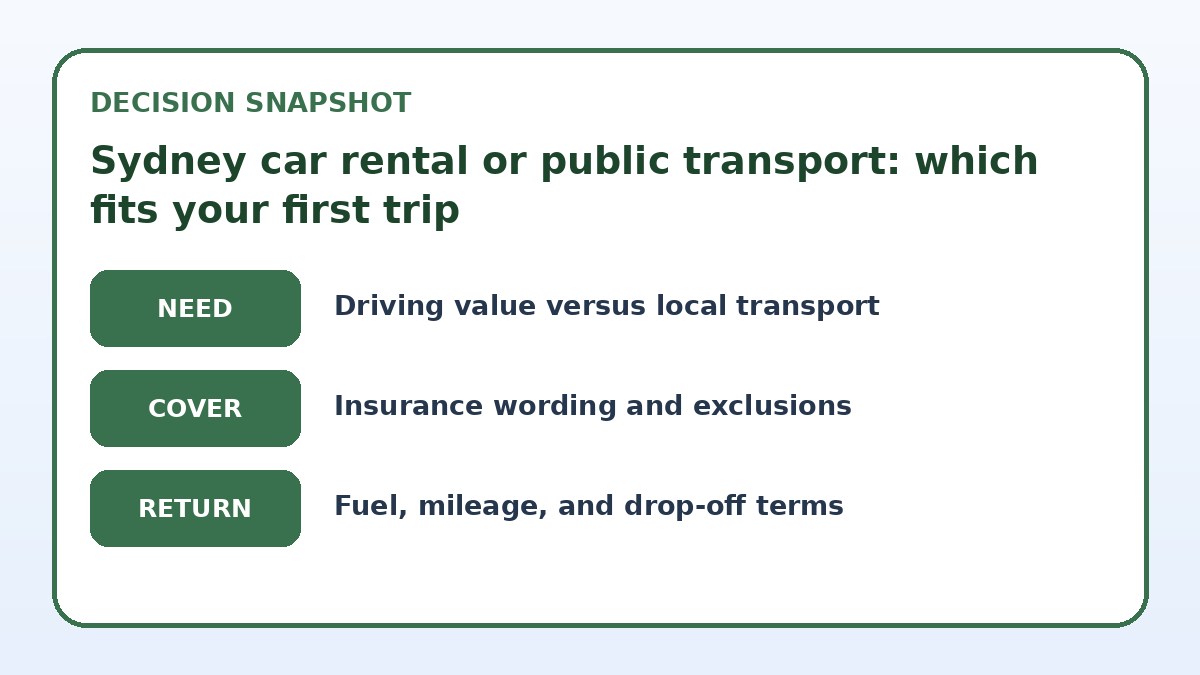
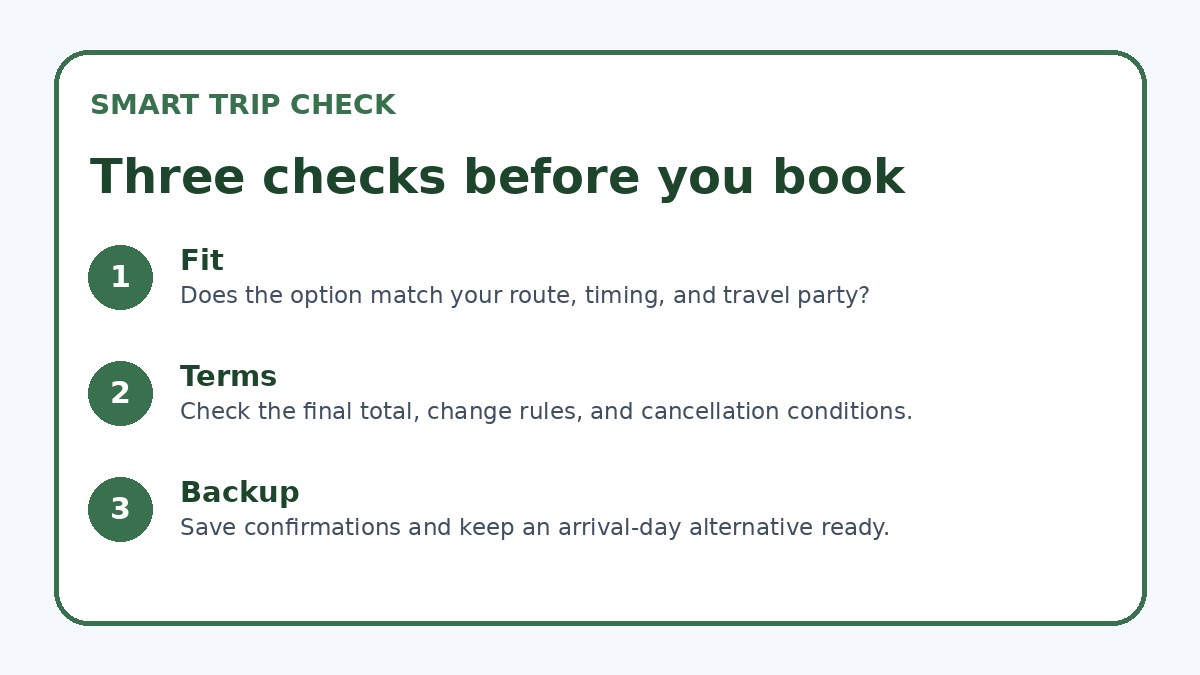
Start by comparing total door-to-door costs, not just the headline daily rate. Add likely charges you’ll face: airport location surcharges, one-way drop fees, insurance excess or waivers, additional driver fees, and parking at your accommodation. Confirm the fuel policy (full-to-full is usually simplest) and check mileage limits if present. If you’ll cross state borders on a longer trip, verify whether the provider allows inter-state travel and whether there are extra fees. Use providers’ final booking pages to confirm these details before committing; policies and fees change, so the rental company’s page is the authoritative source.
Vehicle size and type matter: compact cars are easier to park in the city, while SUVs or wagons suit beach and hinterland roads and larger luggage loads. If you’re uncomfortable with left-side driving, consider renting a vehicle with driver-assist features or a smaller automatic car to ease maneuvers. Check pickup and return locations—airport counters may add convenience but sometimes come with higher fees. For one-way trips, compare charges for dropping the car at a different city or depot.
Before you book
- Confirm whether your accommodation provides secure, on-site parking and any daily parking charges before booking a rental.
- Compare total rental cost by adding airport surcharges, one-way fees, insurance options, toll transponder charges and estimated fuel.
- Choose a compact automatic if you’re unsure about left-side driving or expect tight city parking spaces.
- Photograph the vehicle’s condition at pickup (timestamped images of all sides and interior) and keep the rental agreement.
- Verify tolling arrangements and how toll charges are billed to avoid third-party processing fees.
- Allow buffer time for pickup and return inspections and refuelling to avoid late or cleaning penalties.
Practical tips for pickup, driving and returning the car
At pickup, inspect the car carefully with the agent and take timestamped photos of any scratches or dents, documenting both exterior and interior. Verify the fuel level and confirm whether you need to return it full. Ask the agent to explain tolling systems and whether a transponder is fitted—many Sydney motorways and bridges use electronic tolls; confirm how toll charges are billed and whether third-party fees apply. Make sure the road-side assistance contact is recorded and understand what’s covered under the insurance you choose.
On the road, obey speed limits and give way rules, and be mindful of school zones and clearway signs which can incur fines or towing. Plan routes to avoid peak-times if you can—morning and afternoon peaks increase travel time significantly around motorways and bridges. When returning, allow extra time for cleaning, refueling, and the final inspection to avoid unexpected charges. Keep booking confirmations and the rental agreement until any disputes are resolved.
Frequently asked questions
Can I drive a Sydney car rental to nearby national parks and beaches?
Yes. Most major parks and coastal areas around Sydney are reachable by car and a rental is often the most efficient way to visit multiple remote spots in a day. However, check access conditions for specific beaches and park car parks—some have limited capacity or seasonal restrictions. Also confirm whether the rental agreement allows travel on unsealed roads; many providers restrict off-road driving. If you intend to explore gravel coastal tracks or remote trails, confirm coverage, permitted roads and roadside assistance arrangements on the provider’s booking page before you go.
How do toll roads work with a Sydney rental car?
Sydney uses electronic tolling on certain motorways and bridges and most rental cars come with a toll transponder or a toll-by-plate arrangement. Before you drive, ask the rental company how tolls will be charged and whether a daily or per-transaction admin fee applies. Some companies offer a toll package for the duration of the rental; others pass tolls to your card with processing fees. Always confirm toll billing procedures and keep receipts or statements to reconcile any charges after your trip.
Is it easy to park in central Sydney with a rental?
Parking in central Sydney is available but can be expensive and limited during busy periods. Many hotels and private lots offer paid parking, but spaces may be tight for larger vehicles. Street parking can have time limits, clearway restrictions during peak hours, and resident-only zones—ignore signage and you risk fines or towing. If you plan multiple city days, compare daily parking costs against rental convenience; sometimes using public transport and a single-day rental only for excursions is more economical and less stressful.
Final planning note
Deciding whether to book a Sydney car rental comes down to your itinerary and tolerance for urban driving. If your trip is largely city-focused—museums, harbour walks, beaches with good public transport links, and evenings in established dining neighborhoods—skip the rental and rely on trains, ferries, buses and occasional rideshares. But if you want the freedom to explore coastal drives, national parks, or regional areas on your own schedule, a rental can be the right choice. When you opt to rent, compare total costs, confirm toll and insurance terms on the provider’s final booking page, and pick a vehicle size that suits both parking and the roads you intend to travel.
Continue planning
Check current options and final conditions
Use the provider page to confirm live availability, the final total, cancellation terms, and every condition that matters to your trip.
This evergreen planning guide was created with AI-assisted drafting and a structured quality review. It does not display live prices, schedules, availability, visa guidance, or provider rankings. Verify current details before booking. Some links are affiliate links; we may earn a commission at no additional cost to you.