If you and your partner are deciding between a flexible itinerary and the convenience of a simple, fixed schedule for Seoul to Hong Kong flights, start by naming which tradeoff matters most: time in transit or certainty of timing. For many couples, convenience means shorter total door-to-door time, easier airport transfers, and fewer flight changes; flexibility means the freedom to shift dates, take earlier or later connections, and recover from delays without losing fares. The practical first step is to set your non-negotiables — arrival window, minimum time together before an event, and whether you need luggage flexibility. With those priorities, you can compare direct versus connecting routing, fare rules for changes and refunds, and airport logistics for both Seoul and Hong Kong. The rest of this guide helps you weigh common tradeoffs, make decisions together, and prepare a short checklist you can use at booking time.
See current options before you compare the details
Availability and final conditions change. Open Trip.com now or keep reading for the practical comparison.
Decide your couple priorities before searching
Start by talking through three concrete priorities: timing (do you need to arrive by a specific hour?), activities (are mornings together essential?), and tolerance for uncertainty (how do you feel about potential rebooking?). Couples often trade one priority for another—for example, sacrificing a direct flight to fit a cheaper refundable fare, or accepting a long connection if it opens flexible rebooking. Write down the must-haves and nice-to-haves so you can score options objectively. This prevents one partner from defaulting to an assumption about what matters most and helps you compare fares and routing against the same checklist.
Once priorities are set, assign a weight to each: essential, desirable, or optional. Essential items should eliminate itineraries that don’t match them; desirable items will be tie-breakers; optional items are extras you accept losing for a better core match. For instance, if arriving before dinner for a reunion is essential, eliminate overnight arrival options. If minimizing airport stress is desirable, prioritize single-airport journeys or shorter transfer times, even if the fare is slightly higher. This structured approach keeps the booking focused and reduces regret later.
Compare direct and connecting options carefully
When searching Seoul to Hong Kong flights, list direct and one-stop options separately and note their total door-to-door time, number of transfers, and connection minimums. A direct flight may save time but could leave fewer recovery options if delayed; a connecting itinerary can offer lower fares or more flexible routing but increases the number of things that can go wrong. For couples who value convenience—particularly on short trips or when coordinating with tight ground plans—a direct flight or single-airport transfer is often worth paying extra for. If flexibility is primary, a routing with several schedule alternatives or multiple carriers might be preferable.
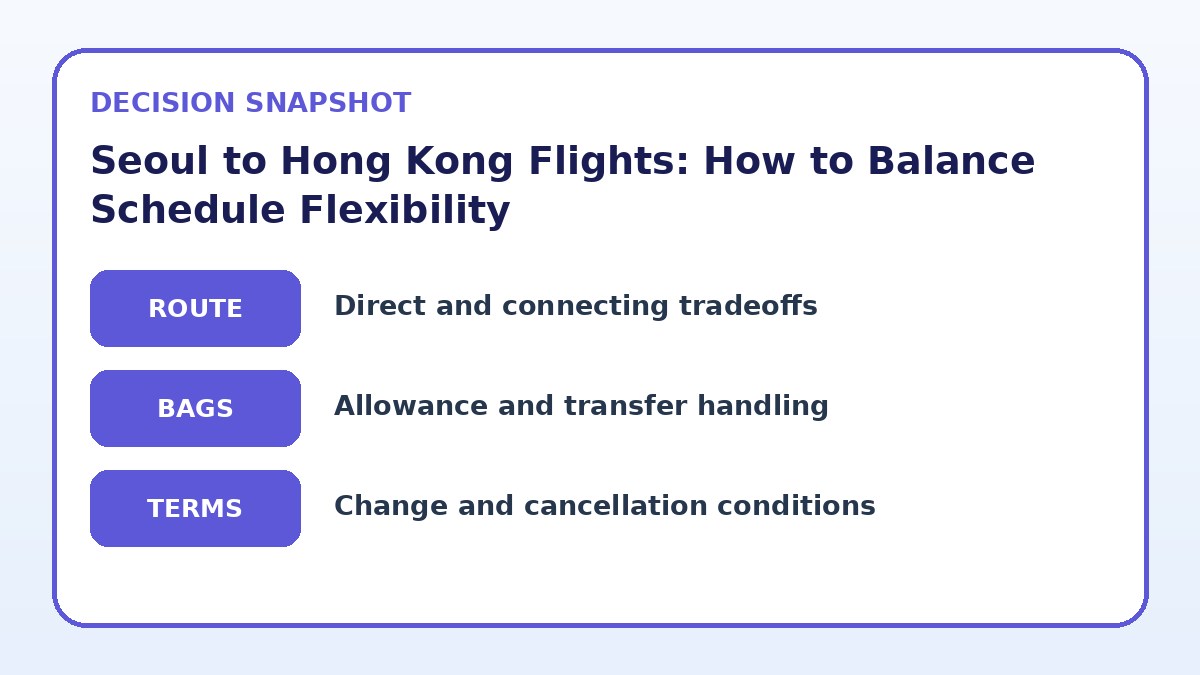
Don’t assume a connecting itinerary is always cheaper or more flexible. Compare fare rules for each option: how many free changes are permitted, whether refunds are available, and how partner airlines handle missed connections. If connections cross terminals or require customs and changes of airport, those add time and stress that undercut the apparent savings. When evaluating connections, factor in realistic minimums for your comfort—longer layovers reduce risk but increase travel time. Balance those considerations against your priorities document to pick the right type of routing for your trip.
| Approach | Best for | Tradeoff to check |
|---|---|---|
| Prioritize convenience (direct/short transfers) | Couples with tight schedules or limited trip days | Higher fares and fewer low-cost or flexible alternatives |
| Prioritize schedule flexibility (change-friendly fares) | Couples who may shift dates or value peace of mind | Potentially longer travel time and less direct routing |
| Mix approach (direct outbound, flexible return) | Couples who want certainty on arrival and flexibility for departure | More complex booking and possibly higher combined cost |
| Use multi-airline itineraries for options | Couples seeking many routing choices and price points | Higher risk with self-managed connections and baggage transfers |
Ready to check the option that fits your plan?
Use your exact dates and traveler details so the provider page can show the current total and conditions.
Understand fare rules and what to verify at booking
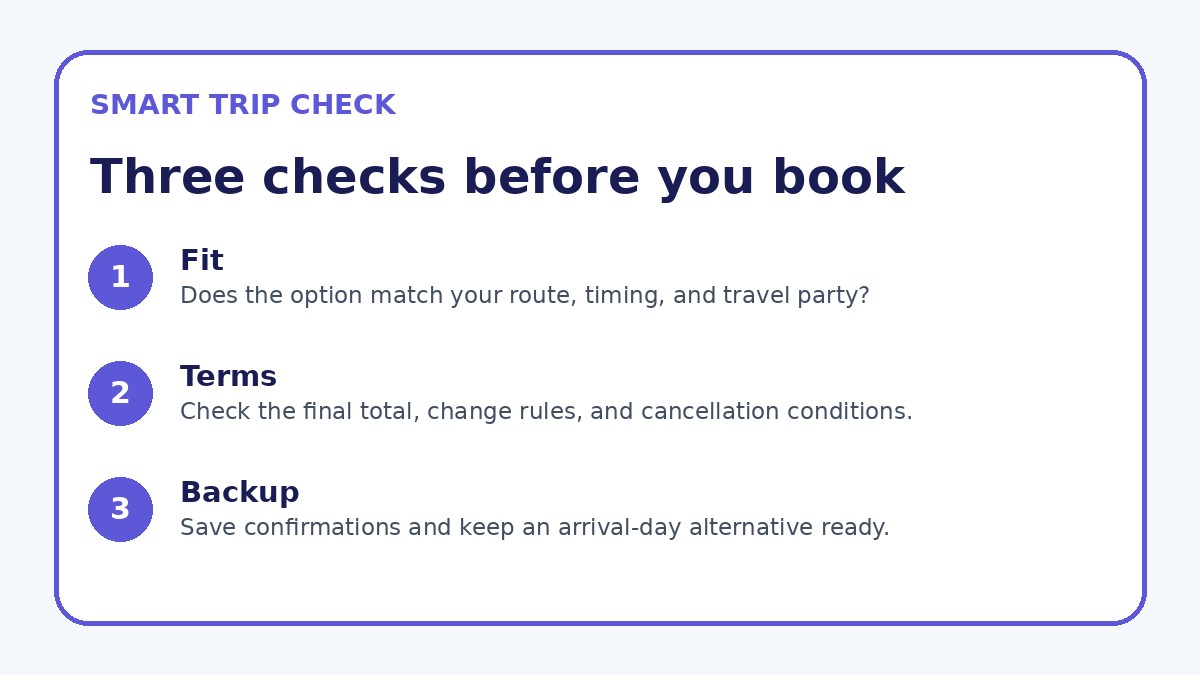
Fare restrictions make or break the flexibility-convenience tradeoff. Before finalizing any booking, inspect the fare conditions on the provider’s final booking page: change fees, permitted free changes, refundability, validity period, and checked-baggage allowance. For couples who want the option to shift dates, refundable or flexible-change fares are safer, even if pricier. If you prefer convenience and lower cost, be comfortable with stricter fare classes but check the specific penalties so you can weigh them against potential savings. Always verify whether changes affect both passengers equally or if each ticket has separate rules.
When providers or aggregators show rules in summary form, click through to the full fare conditions and the carrier’s contract of carriage. Confirm whether a difference in schedule is considered a rerouting that allows a free change, and whether a missed connection due to an initial carrier will be re-accommodated at no extra charge. If traveling with checked luggage, confirm transfer policies on multi-operator tickets because baggage rules can differ. If you use a comparison site such as Trip.com to see availability, cross-check the fare rules on the airline’s official page before paying to ensure no unexpected restrictions.
Before you book
- Confirm your non-negotiable arrival window and mark it clearly before searching flights.
- Compare full fare rules on the airline’s booking page for changes, refunds, and baggage allowances.
- Check door-to-door travel time by adding transit time from each airport to your accommodation.
- Verify whether a booking is protected for missed connections by the operating carrier(s).
- Decide on seat and luggage needs for both travelers and add them at booking if important.
- Save alternate flight options and carriers in case you need to rebook quickly while traveling.
Logistics that affect convenience beyond the flight
Airport choice in both cities can materially affect your trip. Seoul has multiple major airports and Hong Kong’s main airport sits outside the city center; the extra travel time to and from the airport can negate a short flight. Compare transit options, typical transfer time to where you’ll be staying, and the ease of nighttime arrivals. For couples planning romantic dinners or strict meeting times, arriving at an airport with quicker city access may be worth a slightly longer flight. Also consider late-night or early-morning public transport availability or reliable taxi options when choosing arrival slots.
Think about ground-level convenience: luggage handling, lounge access, seat selection, and check-in speed can change the travel experience significantly. For couples wanting smoother days, aim for itineraries with arrival times that match hotel check-in windows or that allow an easy transition to planned activities. If you’ll book experiences or tours upon arrival, line up arrival times to windows those providers accept. Finally, prepare contingency plans: know alternate flights, local emergency contacts, and options for rebooking so you reduce stress if plans change.
Frequently asked questions
Should couples book direct Seoul to Hong Kong flights even if they cost more?
Choosing a direct flight often means less time in transit and fewer moving parts to manage, which can reduce stress for couples who want to maximize time together. However, whether the premium is worth it depends on your priorities: if you have strict appointment times or a short stay, the time saved by direct routing can be decisive. If you value the ability to change plans cheaply, a one-stop itinerary with flexible fare rules might suit you better. Weigh the additional cost against time saved and the importance of timing to your trip’s plans.
How do we balance luggage rules with changing flexibility when booking together?
Luggage allowances and change conditions are separate but both affect your travel comfort. Flexible fares often include more generous change terms but not necessarily extra baggage; conversely, low-cost options may include baggage but restrict changes. Look at both elements for each ticket: the permitted checked-bag weight, carry-on rules, and whether baggage fees apply for changes or reissues. If baggage is essential—for example, shared suitcases or gear—prioritize fares that include sufficient allowance or plan to add baggage at purchase to avoid higher airport fees.
What should we verify on the final booking page before paying?
On the final booking page, confirm total travel time, all flight segments and connection airports, fare conditions for changes and refunds, baggage allowances, seating assignments rules, and the names on tickets. Also check who handles each segment (operating carrier) and whether the fare is part of a single ticket or multi-carrier itinerary that might require separate rebooking. If a third-party site is used for comparison, verify the exact fare conditions and carrier policies on the airline’s official page before completing payment to avoid surprises.
Final planning note
For couples planning Seoul to Hong Kong travel, the central decision is whether you value shorter, simpler journeys or the option to change plans without heavy penalties. Start by agreeing on non-negotiables, then compare direct versus connecting itineraries against full fare rules and realistic door-to-door times. Consider mixing approaches—for example, a convenient arrival and a flexible return—if that suits your itinerary. Before you pay, verify all conditions on the airline’s final booking page and save backup options. Use the checklist at booking time to confirm you’ve covered schedule, baggage, and rebooking needs so the trip starts with less stress and more time together.
Continue planning
Check current options and final conditions
Use the provider page to confirm live availability, the final total, cancellation terms, and every condition that matters to your trip.
This evergreen planning guide was created with AI-assisted drafting and a structured quality review. It does not display live prices, schedules, availability, visa guidance, or provider rankings. Verify current details before booking. Some links are affiliate links; we may earn a commission at no additional cost to you.