If you’re arriving in Bali with extra suitcases, surfboards, or bulky gear, the quickest practical decision is this: choose a private transfer if door-to-door ease, luggage handling, and fixed pickup times matter most; choose public transport only if you want the lowest-friction local experience and can handle moving bags between services. This article helps you decide by weighing the tradeoffs—luggage limits, walking and stairs, waiting time, road access in narrow lanes, and how much help the driver or staff will provide. I’ll show the questions to ask when you book, the trip types that usually favor each option, and what to check on the final booking pages so you don’t get surprised at pickup points, vehicle size, or baggage rules.
See current options before you compare the details
Availability and final conditions change. Open Trip.com now or keep reading for the practical comparison.
What private transfers give you with extra luggage
Private transfers—prebooked cars, vans, or shared private shuttles—are designed around convenience when you have heavy or many bags. They usually meet you at a specified terminal point and load luggage for you, reducing the steps between plane door and accommodation. For travelers carrying surfboards, baby gear, or professional equipment, a private vehicle with confirmed roof or van space avoids juggling multiple bags on public vehicles. Consider the size of the vehicle offered and whether the pickup point is roadside or inside the terminal; both affect how much lifting or walking you’ll need to do.
When booking, read the provider’s details about baggage limits, allowed oversized items, and whether extra handling fees apply. If the property is on a narrow lane or has steps, check if the driver can approach the entrance and whether they’ll help move bags beyond the vehicle. Also confirm where the driver will meet you—meeting inside arrivals or at an external parking area changes the amount of luggage you’ll personally carry. Always verify final pickup instructions and any vehicle-size photos on the provider’s booking page to avoid surprises.
How public transport works for bulky baggage
Public transport in Bali includes airport shuttles, local buses, ride-hailing cars, and metered taxis; each handles luggage differently. Buses and shared shuttles can be economical, but they may require loading bags into external bays or moving them across crowded aisles. Ride-hailing apps and metered taxis are flexible, but not all drivers have larges trunks or will accept oversized items. If you plan to mix public services—bus to a hub then a short taxi ride—factor in transfers and the physical effort to move luggage between vehicles.
Using public transport often means adapting to local pickup points and schedules, which can add waiting time and walking with bags across busy terminals. If you’re on a tight connection or prefer minimal handling, public options are less predictable. Before choosing public transport, check vehicle descriptions, expected pickup locations, and whether luggage stowage is shown. Consider travel times, number of transfers, and whether your accommodation’s access roads are suitable for bus or larger vehicle drop-offs.
| Approach | Best for | Tradeoff to check |
|---|---|---|
| Private transfer | Travelers with multiple or oversized bags who want door-to-door service and minimal handling. | Higher cost and less immersion in local transport; must confirm vehicle size and pickup details in advance. |
| Ride-hailing or metered taxi | Solo travelers or small groups with moderate luggage needing flexible, point-to-point rides. | Variable trunk space and driver willingness to accept large items; may require multiple bookings for bigger loads. |
| Shared airport shuttles | Budget-conscious travelers with manageable luggage who can accept scheduled stops and simple handling. | Longer door-to-door time and possible additional handling when transferring between shuttle and bus storage. |
| Local bus or public transit | Very light packers wanting the lowest-cost option and a local travel experience. | Frequent transfers, stairs and walking with bags, and limited space for oversized items or surfboards. |
Ready to check the option that fits your plan?
Use your exact dates and traveler details so the provider page can show the current total and conditions.
Decision criteria: how to choose for your trip
Make the decision by answering practical questions: how many and how large are your bags, how far is your accommodation from the airport, and will the driver be able to approach the property? If you have more than two large suitcases or awkward items, private transport typically reduces carrying and coordination. If your hotel is centrally located with wide roads and you’re comfortable moving luggage short distances, public or app-based rides can fit. Time of arrival matters too—late-night arrivals may narrow public transport choices.
Also weigh comfort versus cost and flexibility. Private transfers lock in a pickup time and point, which is useful after a long flight. Public options can be more flexible on short notice but require active management of baggage during transfers. Regardless of choice, check the final booking page for vehicle dimensions, passenger and luggage counts allowed, pickup instructions, and cancellation or change policies. You can consult comparison platforms—Trip.com is one example—to view current availability, then confirm details with the provider before booking.
Before you book
- Count and measure every bag and irregular item; note dimensions and weight to compare with vehicle specs.
- Ask the provider explicitly if oversized items (surfboards, instruments) are permitted and whether that requires a larger vehicle.
- Confirm the exact arrival terminal pickup point, meeting procedure, and how the driver identifies you.
- Verify vehicle type, passenger limit, and trunk or cargo photos on the final booking page before paying.
- Check cancellation and change terms in case your flight is delayed or you need to reschedule the pickup.
- Save the operator’s contact details and your booking confirmation for quick reference at arrivals.
Practical tips and what to confirm before booking
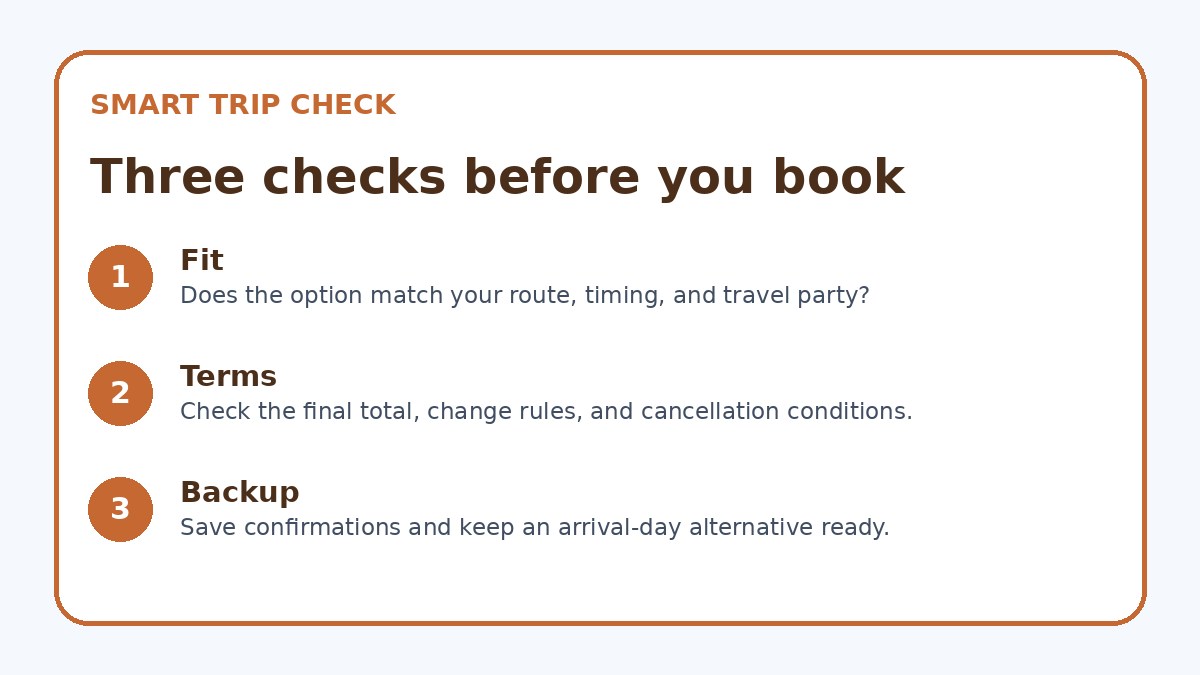
Before you press confirm, verify three things on the provider’s final page: the exact pickup location and meeting procedure at Bali’s arrivals area, the permitted baggage allowance and whether oversized items are accepted, and the vehicle type or photos so you can judge trunk space. If your itinerary includes late flights, connecting flights, or multi-stop travel, check whether the booking covers flight delays and how the driver will find you. For properties on private lanes or with limited parking, ask explicitly whether the driver will assist with final delivery of bags.
If you have special items—musical instruments, sports gear, or pet crates—communicate specifics including dimensions and whether they require roof racks. Ask about assistance: some private drivers will help carry bags to room door for an added fee, while public services rarely do. Finally, keep timestamped reservation confirmations and the driver or operator’s contact on hand; the provider’s live booking page will often give the most current pickup instructions and any last-minute notices affecting where you meet your driver.
Frequently asked questions
Can I take a surfboard or oversized sports equipment from Bali airport?
Many operators accept surfboards and oversized gear, but policies vary widely by vehicle and provider. Before booking, contact the operator with exact dimensions and ask whether a roof rack, van, or specially equipped vehicle will be provided. If the booking page does not list dimensions or photos, request written confirmation that the item fits and whether an additional fee or prearranged vehicle change is required.
Is it better to book a private transfer in advance or arrange transport on arrival?
Booking a private transfer in advance secures a guaranteed vehicle size and pickup plan, which is valuable with lots of luggage or unusual arrival times. Arranging on arrival can work if you travel light and want to compare options in person, but it risks unsuitable vehicles or longer waits while staff find a larger car. If timing and luggage handling are priorities, prebooking and verifying pickup details gives predictability.
How do I handle accommodations on narrow lanes or stairs when I have many bags?
If your accommodation sits down a narrow lane or has steps, confirm whether the driver can approach the property and if porter or delivery help is available. Some drivers will load luggage to a short drop point but cannot go further; in that case, ask if the property offers luggage assistance or whether the operator can arrange a smaller vehicle that can access tighter spaces. Getting clear instructions ahead of time avoids heavy carrying at the last leg.
Final planning note
For most travelers with extra luggage arriving in Bali, the right choice balances convenience, access, and cost. Private transfers generally minimize handling, reduce walking with bags, and work best for oversized items or properties with limited access. Public options and ride-hailing can be economical and flexible for smaller loads but require more active luggage management and transfer time. The practical step is to measure and list your items, confirm vehicle size and pickup details on the provider’s final booking page, and keep operator contact information handy. That way you’ll avoid surprises at arrivals and reach your accommodation with minimal strain.
Continue planning
Check current options and final conditions
Use the provider page to confirm live availability, the final total, cancellation terms, and every condition that matters to your trip.
This evergreen planning guide was created with AI-assisted drafting and a structured quality review. It does not display live prices, schedules, availability, visa guidance, or provider rankings. Verify current details before booking. Some links are affiliate links; we may earn a commission at no additional cost to you.