If you’re travelling from Sydney to Melbourne with more than the usual carry-on, the practical priorities for the travel day are simple: choose a transfer method that suits the size and number of bags, confirm luggage allowances and handling rules with your provider, and plan where and when to offset the physical work of moving baggage. That means weighing direct trains and flights against driving and coach services, booking a luggage-friendly seat or vehicle, and lining up helpers—ride apps, porters, station staff, or a pick-up person—well before departure. This article gives immediate, usable steps for the day you travel, then breaks down tradeoffs so you can decide which approach fits your energy, budget, and tolerance for transfers.
See current options before you compare the details
Availability and final conditions change. Open Trip.com now or keep reading for the practical comparison.
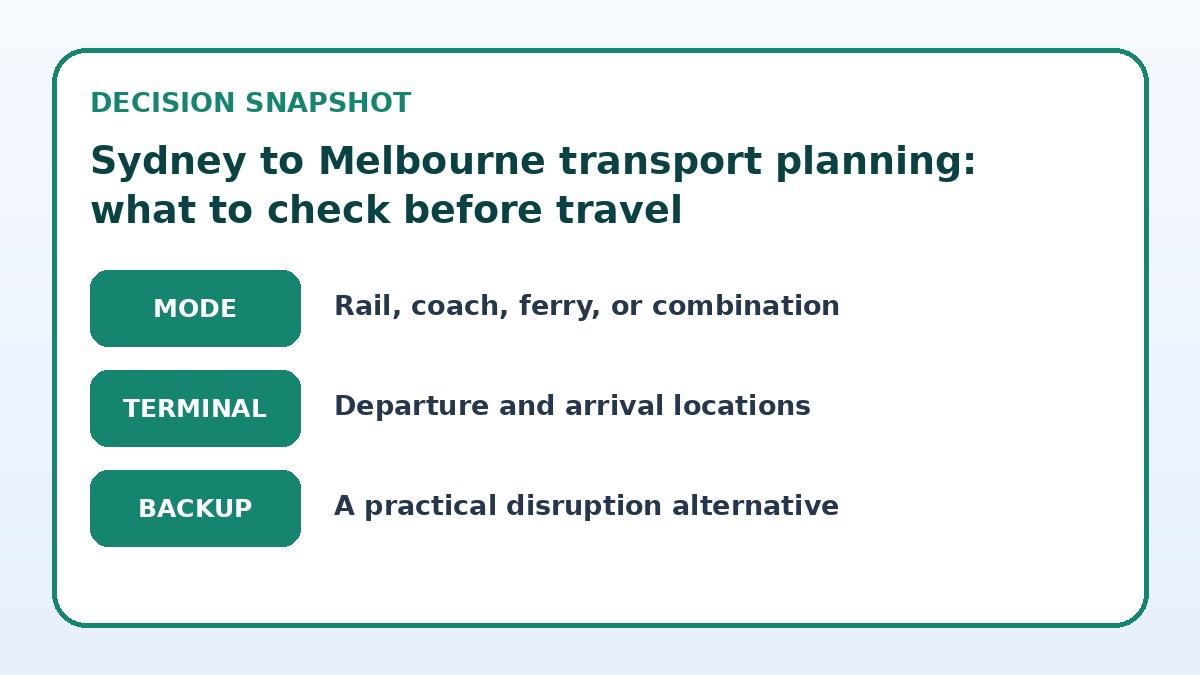
Choose your transport mode by luggage profile
Start by categorising your baggage: a couple of suitcases, several medium bags, or oversized items like bikes or surfboards. If everything fits within standard checked baggage dimensions and you prefer speed, air travel may make sense, but you must confirm how many checked items are accepted, if oversize fees apply, and how airport transfers will handle them. Train travel can be more forgiving for awkward or multiple pieces—many services allow bulky items in dedicated luggage areas—but trains may limit staff assistance for heavy lifts. Driving yourself offers the most control over loading and unloading but adds responsibility for parking and fuel.
When weighing options, write down the maximum single-item weight you can comfortably lift and whether you can manage stairs or tight platforms. If you expect needing help, look for services that explicitly offer porters or curbside assistance; otherwise a friend or paid local help will be necessary. Consider the door-to-door time and how much of the journey you will carry bags: a slightly longer route with better luggage handling can be less stressful than a faster option that leaves you struggling with transfers. Use this practical checklist to match luggage needs to a transport mode before booking.
Plan the travel day logistics and time buffers
On travel day, planning the sequence of movements reduces physical strain and missed connections. Schedule arrival at departure points earlier than usual: extra baggage often means slower check-in, longer security lines, and more time to store items on trains or buses. Identify elevators, ramps and luggage storage locations at stations and airports in advance, and map a route from your accommodation that avoids stairs if needed. If you’re transferring between modes, allow extra connection time between services; give yourself room for traffic, vehicle unloading, or waiting for staff assistance.
Arrange people and equipment to reduce manual handling: a trolley, strap or luggage cover can make repeated lifts quicker and cleaner. If hiring a ride, request a vehicle with ample boot space and notify the driver of your luggage volume so they can bring a larger car. When using public transport, select seats close to doors or dedicated luggage racks and board early to secure space. Keep essential items—documents, medications, a change of clothes—in an accessible bag you carry onboard, so you don’t need to dig through large suitcases during the journey.
| Approach | Best for | Tradeoff to check |
|---|---|---|
| Fly (airport-to-airport) | Travellers needing the fastest door-to-door time and whose baggage fits airline policies | Airport transfers and check-in make the day more complex for multiple or oversized items |
| Train (station-to-station) | Multiple or awkward items that are bulky but not oversized, with fewer strict weight checks | Limited official assistance for heavy lifts and possible space constraints during busy services |
| Drive yourself or rent a vehicle | Full control over loading and timing, and transporting many or unusually sized items | You handle all loading/unloading, plus parking and fuel; longer single-driver journeys can be tiring |
| Coach or shuttle services | Budget-conscious travellers with moderate amounts of luggage who accept longer travel times | Strict size limits for luggage compartments and multiple stops can complicate handling |
Ready to check the option that fits your plan?
Use your exact dates and traveler details so the provider page can show the current total and conditions.
Verify provider rules, add-ons, and service details
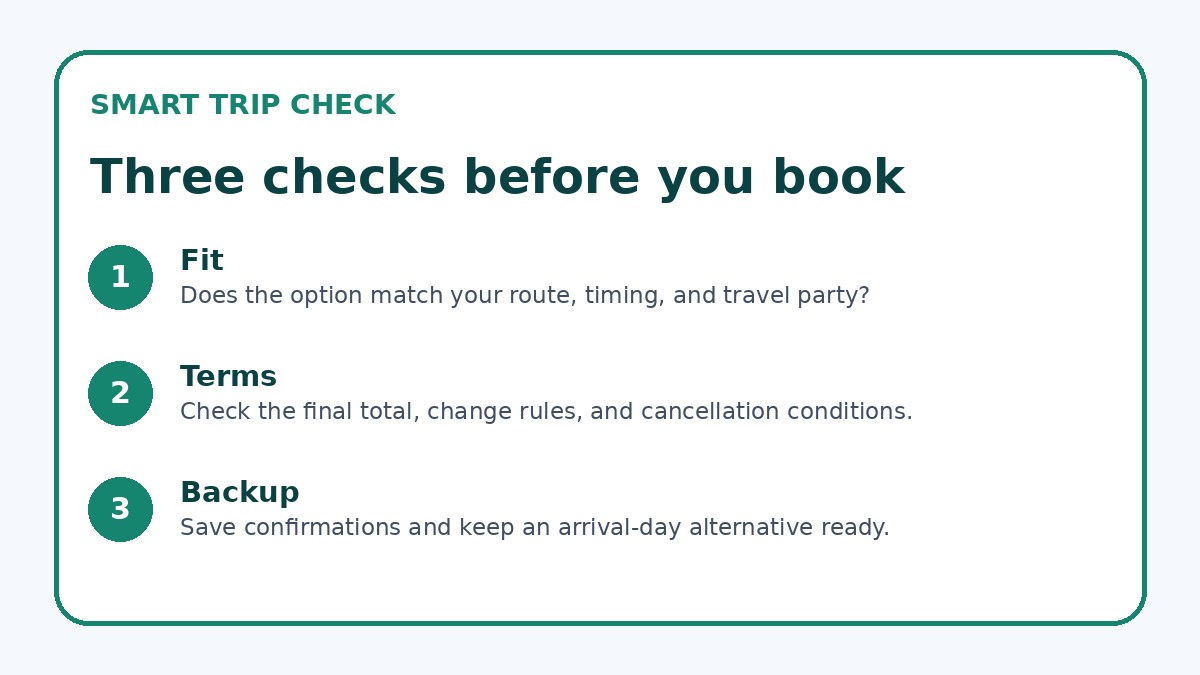
Before you commit, confirm luggage rules and add-ons directly on the provider’s final booking page or customer support channels. Providers differ on what counts as a checked bag, size and weight limits, charges for extra pieces, and whether oversized items require advance notice or a special booking class. If you plan to use a rail service, check whether reservations for certain carriages or special luggage compartments are available. For flights, verify both carry-on and checked allowances, and whether airport-to-airport service includes assistance for oversized pieces at either end.
When a provider’s site is ambiguous, call customer service to request written confirmation or screenshots you can reference on travel day. If you rely on third-party comparison tools, including Trip.com, use them to compare availability and then verify final terms with the carrier before paying. Also check the refund and change policies for your selected fare or ticket: the flexibility to switch to a later service may be crucial if loading delays or equipment problems make the original departure time impractical.
Before you book
- Measure and weigh each bag; compare dimensions and weights with the exact rules on your booked provider’s final booking page.
- Reserve or request space: book seats, luggage compartments, a larger ride or porter service in advance and get confirmation.
- Pack a separate accessible carry bag with documents, medications, chargers and an outfit for immediate access during the journey.
- Map elevator and ramp locations at departure and arrival points and save them offline in case of poor mobile signal.
- Label every bag clearly and attach a bright identifier; photograph contents and serial numbers for insurance or recovery.
- Allocate at least one reliable extra hour beyond normal transfer times to load, secure and double-check all luggage.
Minimise friction with packing, equipment and helpers
Pack smart to make single-person handling easier: consolidate items into fewer strong bags, use wheels and sturdy handles, and avoid fragile packing that requires separate handling. Tag every bag with clear contact information and a bright identifier. Consider protective covers for wet or dirty items and place essentials in an easily reached daypack. If you have a bulky item that can be dismantled—bikes, strollers—prepare tools and lightweight carry cases to reduce dimensions and simplify storage on trains or in vehicles.
Line up helpers in advance: arrange for porters where available, book a rideshare with a larger vehicle option, or schedule a pickup that meets you at curbside to avoid long walks. If you’re staying in a hotel, ask the front desk whether staff can assist with check-out loading or call for a luggage transfer service. On the travel day, communicate clearly with anyone helping you about pickup time and the exact meeting point; miscommunication is a leading source of delay when many bags are involved.
Frequently asked questions
Can I take oversized items like a bike from Sydney to Melbourne, and how should I arrange it?
Oversized items are handled differently by carriers. For trains you may need to reserve space or use a dedicated baggage service; for flights you typically must book oversize baggage and declare it in advance. Dismantling and packing a bike in a bike bag reduces dimensions and makes carriage simpler. Before travel day, contact the carrier’s customer service and request written confirmation of their oversize item process and any additional charges or lead times. If using a third-party booking site like Trip.com, use it to compare options but verify the final terms directly with the transport provider before purchase.
What’s the best way to get bulky luggage between a suburban address and a Sydney or Melbourne station?
A large rideshare or private transfer booked to the curbside pickup point is often the least stressful option because it minimizes handling and walking. Tell the driver how many and what size bags you have so they bring an appropriate vehicle. If you prefer public transport, plan for lifts at stations with ramps or elevators and travel during off-peak times to avoid crowded platforms. For heavier single items, arrange a porter or local moving helper to save time and reduce injury risk; verify that they’re insured and confirm the meeting spot and time in writing.
How much extra time should I allow at the station or airport when travelling with several large bags?
Allow substantially more time than you would with carry-on only: typically plan for an additional 30 to 60 minutes for check-in, security, and loading when you have several large bags. If you require porter assistance, reserve it and arrive 45 minutes earlier to allow staff to handle your items. For train travel, boarding early secures space in luggage areas and reduces frantic lifting during last-minute boarding. Always build local contingencies—traffic, elevator outages, or platform changes—into your schedule so you aren’t rushed on the travel day.
Final planning note
Travelling Sydney to Melbourne with extra luggage is mostly a matter of choices and preparation: pick the transport mode that matches your luggage profile, verify handling and allowance rules on the carrier’s booking page, and plan the day with time buffers and helpers to reduce physical strain. Small upfront actions—measuring bags, reserving space, booking an appropriately sized vehicle, and confirming assistance—pay off on the day itself. Use the comparison points and checklist above to make a clear plan, and if you need to compare current options quickly, Trip.com can be one place to look—just confirm final terms with the carrier before you complete a booking.
Continue planning
Check current options and final conditions
Use the provider page to confirm live availability, the final total, cancellation terms, and every condition that matters to your trip.
This evergreen planning guide was created with AI-assisted drafting and a structured quality review. It does not display live prices, schedules, availability, visa guidance, or provider rankings. Verify current details before booking. Some links are affiliate links; we may earn a commission at no additional cost to you.