If you’re traveling solo in Prague, a short answer will save time: prioritize a hotel within easy walking distance of your top interests if you’ll be out most days; choose a quieter, better-appointed room if you expect longer mornings, remote work, or late nights in. Prague’s compact center makes central stays tempting, but noise, tourist crowds, and smaller rooms are common. Conversely, neighborhoods slightly further out offer larger rooms, lower noise, and a more local feel, at the cost of longer commutes to major sights. This article helps you weigh the practical tradeoffs—safety, transit convenience, room size and amenities, evening comfort—and gives clear steps to compare options before you book. Use the decision checkpoints to match your nightlife plans, daily walking tolerance, and desire for a calm retreat after sightseeing.
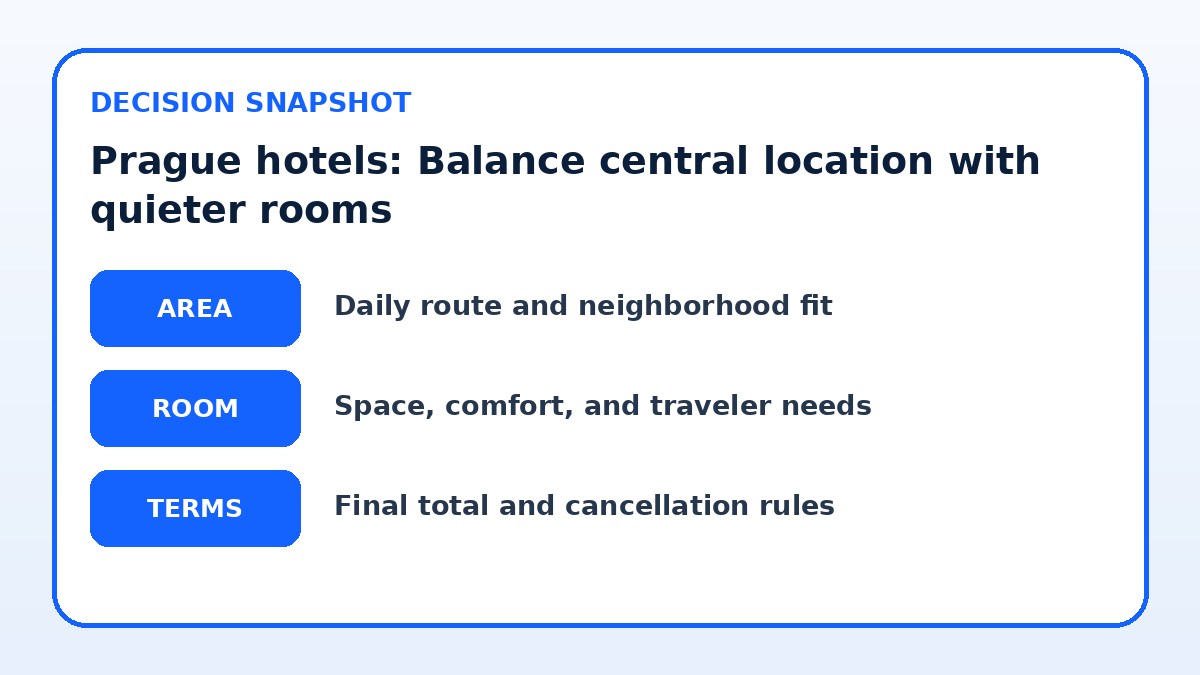
See current options before you compare the details
Availability and final conditions change. Open Trip.com now or keep reading for the practical comparison.
Decide how you’ll use your days
Start by mapping your daily rhythm. If you plan to be out at dawn for museums and return late from concerts or bars, location matters more: less time commuting means more activities. Central Prague neighborhoods—Old Town (Staré Město), New Town (Nové Město), Lesser Town (Malá Strana), and near the Castle—put you within walking distance of most iconic sites, but those areas are busy, often louder, and have smaller rooms. Weigh whether shaving 20–40 minutes round-trip from transit is worth smaller sleeping quarters and potential noise.
If your trip includes work hours, long mornings, or a relaxed pace, prioritize room comfort. Neighborhoods like Vinohrady, Žižkov, and parts of Holešovice offer larger rooms, quieter streets, and a local cafe culture while keeping you a single tram or metro ride from the center. That short commute frequently yields a better night’s sleep and more space to spread out—important for solo travelers who want privacy, an evening in, or reliable Wi‑Fi for remote work.
Safety, convenience, and single-traveler needs
Prague is generally safe for solo travelers, but the experience changes with location and time of day. Central tourist areas are well-policed and brightly lit but can attract pickpockets and late-night crowds. Outer districts feel more residential and calmer at night, but you should check how well-lit the walk from the tram or metro stop to your hotel is. Look for hotels that offer 24-hour reception, key-card access, and clear instructions for late check-in—these features add convenience and confidence when arriving or returning late alone.
Consider amenities that matter to solo travelers: secure luggage storage, in-room safes, laundry options, and reliable Wi‑Fi. Confirm exactly what’s available on the booking page—photos and descriptions can be outdated—especially for items like airport transfer, early check-in, or toiletries. If you value social contact, a small hotel or guesthouse with communal areas can be a good middle ground; if privacy and quiet count most, favor properties advertising soundproof rooms or courtyard-facing accommodations.
| Approach | Best for | Tradeoff to check |
|---|---|---|
| Central small-room hotel | Solo days filled with sightseeing and nightlife | Less space and more street noise; faster access to major attractions |
| Outer quieter hotel | Longer stays, remote work, and restful nights | Longer commute to central sights but typically better value and larger rooms |
| Boutique guesthouse in residential area | Meeting locals and a relaxed neighborhood feel | Fewer on-site services and variable check-in hours |
| Chain hotel near public transport hub | Reliable amenities and easy onward travel | May lack local character and sometimes pricier near major stations |
Ready to check the option that fits your plan?
Use your exact dates and traveler details so the provider page can show the current total and conditions.

Transit and walkability—what to check
Don’t rely on neighborhood names alone—measure real routes. Use a map to check walking distance and elevation (Prague has hills, especially toward the Castle and Petřín). Note which tram or metro lines serve the area and whether the nearest stop is a short walk or involves stairs and cobblestones. Compare total door-to-door time to the places you’ll visit most; a 12-minute tram with frequent service can be faster and more convenient than a 25-minute walk, especially in poor weather or after a long day.
When you examine booking pages, verify transit details the hotel lists—how far the nearest tram or metro stop is, whether there’s an elevator at the station, and if there are late-night services. Don’t assume every tram runs late; check current Prague public-transport schedules on official sources. If you expect to rely on taxis or ride-hailing at night, ask the hotel about typical wait times and recommended apps or local taxi numbers.
Before you book
- Map your top five daily activities and measure door-to-door travel time from each hotel option.
- Confirm on the booking page whether your room faces the street or courtyard and whether windows are described as soundproof or double-glazed.
- Verify the hotel’s exact check-in and late-arrival procedures, and note 24-hour reception if you expect late returns.
- Check which tram or metro stop serves the hotel, whether it has elevators, and the typical frequency of service during your hours of travel.
- Ask the provider (or read recent guest comments) about Wi‑Fi reliability and whether the room category includes a dedicated desk or workspace.
- Confirm luggage storage policy and the hotel’s cancellation/change terms directly on the booking page before paying.
Room features that matter for solo comfort
Size, bed type, and storage matter more when you’re traveling alone and staying multiple nights. Single travelers often need a desk or table for planning and devices, good lighting, and enough wardrobe space. Look for rooms that specifically state a proper desk or workspace, reliable Wi‑Fi, and a comfortable chair if you’ll work or write. Confirm whether the listed photos are of the specific room category you’re booking; sometimes the site shows a ‘model’ room that’s larger than standard units.
Noise control is another practical factor—ask whether available rooms face a courtyard rather than the main street, and whether windows are double-glazed. If you have light sensitivities or sleep irregular hours, prioritize blackout curtains. Check the provider’s cancellation and modification terms on the final booking page so you can change plans if the location proves less convenient than expected; always verify these policies directly with the hotel or booking platform before finalizing.
Frequently asked questions
Is it safe for a solo traveler to stay in central Prague at night?
Central Prague is generally safe and well-lit, with many tourists and regular police patrols. However, crowded tourist areas can attract pickpockets, and late-night noise can make some streets feel less comfortable. As a solo traveler, prefer hotels with 24-hour reception, clear late-check-in instructions, and good lighting on the route from the tram or metro. Carry minimal valuables when out at night, use a cross-body bag or money belt, and check recent reviews on the provider’s booking page for any specific safety concerns about the exact address.
How much walking is reasonable from a hotel to main attractions in Prague?
Prague’s core is compact; many attractions are walkable if you stay within Old Town, New Town, or Lesser Town—expect 5–20 minute walks between major sights. If your chosen hotel is in a neighborhood like Vinohrady or Žižkov, plan for a 15–35 minute walk or a short tram/metro ride. Consider your own pace, foot fitness, and luggage: cobbled streets and occasional hills can slow you down. Compare real routes on a map and factor in time of day, weather, and how often you’ll be hauling bags or returning mid-day.
Should I prioritize price or room size for a solo trip to Prague?
Price and room size both matter, but prioritize what affects your experience most. If you’ll be out most days and only sleep at the hotel, a smaller central room may be more economical and convenient. If you want privacy, longer morning routines, room to work, or to avoid noise, invest in a larger room or a quieter neighborhood and accept a slightly longer commute. Always compare the actual room photos and descriptions, and read the hotel’s booking page to confirm bed size, desk availability, and cancellation terms before deciding.
Final planning note
Balancing location and room comfort in Prague comes down to honest priorities: maximize sightseeing time by staying central, or maximize rest and space by choosing a quieter neighborhood with efficient transit links. For solo travelers, safety features, 24-hour reception, and clear transport connections are often as important as bed size. Use the checklist to verify room orientation, transit options, and provider policies on the hotel’s final booking page. If you need a quick comparison of current availability and conditions, you can check a site like Trip.com, but always confirm details directly with the hotel before you book. With a clear plan, you’ll pick the right compromise for your pace, energy, and style of travel.
Continue planning
Check current options and final conditions
Use the provider page to confirm live availability, the final total, cancellation terms, and every condition that matters to your trip.
This evergreen planning guide was created with AI-assisted drafting and a structured quality review. It does not display live prices, schedules, availability, visa guidance, or provider rankings. Verify current details before booking. Some links are affiliate links; we may earn a commission at no additional cost to you.