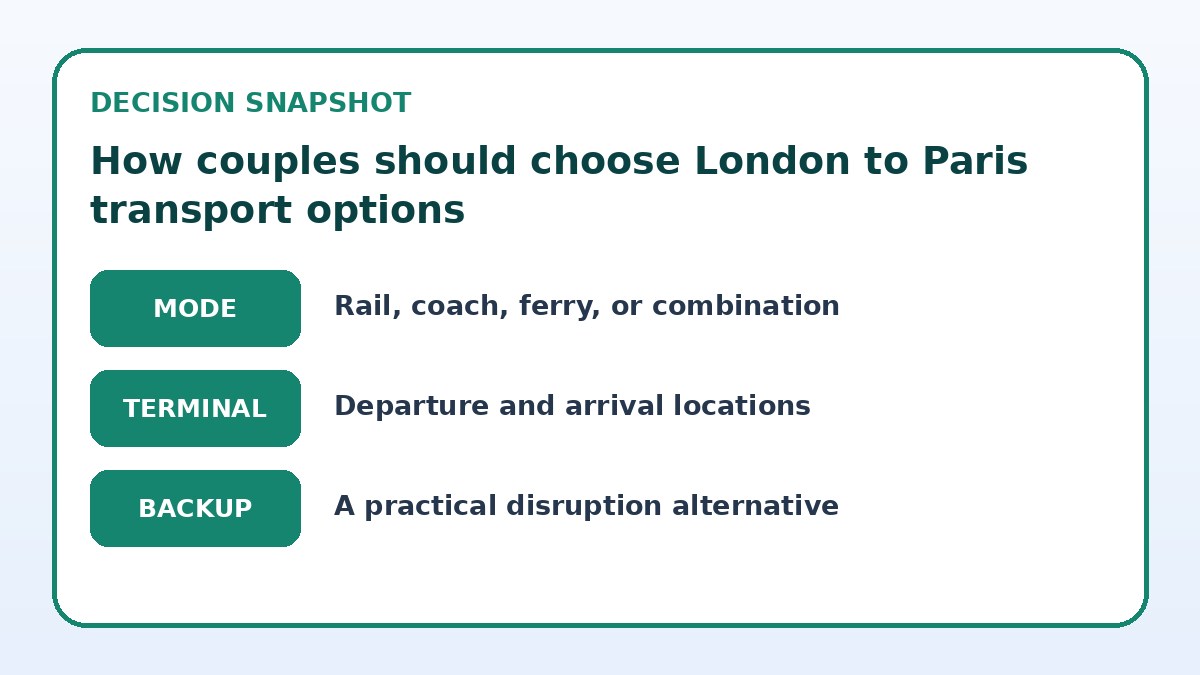
For most couples who value comfort, ease, and time together, taking the direct high-speed train between London and Paris is the most practical option: it puts you in city-centre stations, avoids airport transfers, and offers private seating or quiet space without the stress of security lines. If your priorities tilt toward absolute speed from specific airports, or if you’re combining the trip with a regional flight or a scenic drive, flying or driving each make sense in particular circumstances. This article helps couples match priorities—cost flexibility, luggage needs, mobility, romance, or desire for a scenic route—with the right intercity choice. Read the quick comparison and the decision checklist to finish your booking with confidence. Later sections explain tradeoffs in comfort, logistics, and what to verify on the provider’s booking page before you buy.
See current options before you compare the details
Availability and final conditions change. Open Trip.com now or keep reading for the practical comparison.
Why the train is often the practical first choice
Trains remove much of the friction couples dislike when traveling between major European cities: no long drives to distant airports, shorter boarding procedures, and the ability to sit together in a private row or a pair of facing seats. For people traveling with a single suitcase or a shared carry-on, trains usually make luggage handling simpler and less stressful. The journey itself can be part of the date—share coffee, read together, or plan your arrival without the cramped stress of airport security lines or tight flight seat configurations.
Practicality also means predictability for couples: city-centre arrival cuts taxi or rail transfer time and makes hotel check-in smoother. If you need accessibility features, families-style seating, or space to stretch, trains often offer these options when compared with short-haul flights. Finally, buying refundable or flexible rail fares can be simpler than flight changes; however, always verify fare rules, seat selection, and luggage policies on the operator’s final booking page before you purchase.
When flying makes sense for couples
Flying becomes practical when a couple’s schedule or departure location makes an airport-origin option significantly faster or cheaper after transfers are included. If one partner needs to depart from or return to a regional airport far from the central railway hub, or if onward connections make a flight the only realistic choice, air travel can win. Also consider loyalty benefits: if you accrue miles with an airline and seat comfort on the carrier meets both your needs, that can tip the balance in favor of flying.
That said, couples must budget time for airport security, potential queueing, and transfers to central Paris—these factors can erode any raw flight-time advantage. Check baggage allowances and how family or couple seat assignments are handled on the airline’s booking page. If you pick a flight, compare door-to-door time including taxi or rail to the station at your origin and destination before you commit.
| Approach | Best for | Tradeoff to check |
|---|---|---|
| Direct high-speed train | Couples wanting simple city-centre travel and relaxed onboard time together. | Less flexible with last-minute routing, and seat classes vary—check seating layout and fare rules. |
| Short-haul flight | Couples prioritizing airport-to-airport speed when near airports or with tight onward connections. | Security and transfers can erase time savings; verify baggage and transfer times before booking. |
| Driving with ferry or tunnel crossing | Couples who value route flexibility, scenic stops, and carrying bulky gear. | Adds parking, tolls, and cross-border paperwork; city-centre driving can be slow and costly. |
| Combined multimodal (train plus rental) | Couples who want rapid city-to-city transit and local driving at the destination. | Requires coordination of arrival times and separate bookings; check connection buffers and rental terms. |
Ready to check the option that fits your plan?
Use your exact dates and traveler details so the provider page can show the current total and conditions.
Driving and ferries: control versus convenience
Driving gives couples maximum control over schedule, stops, and luggage—useful if you are carrying bicycles, large bags, or want to visit small towns en route. A driving trip can be romantic and flexible: pull over for scenic stops, adjust the route on the fly, and split driving responsibilities. But rental terms, cross-border insurance, tolls, congestion charges, and parking availability in central London and Paris all add time and stress. For couples who enjoy road trips, these are familiar tradeoffs; for those who prefer minimal logistics, they can outweigh the benefits.
If you plan to combine driving with a ferry or shuttle crossing, check connector schedules and vehicle booking requirements well in advance. Driving also requires familiarity with local driving rules and parking arrangements at your destination; some couples prefer to leave a rental outside the city and use local transport once in Paris to avoid costly or confusing urban driving.
Before you book
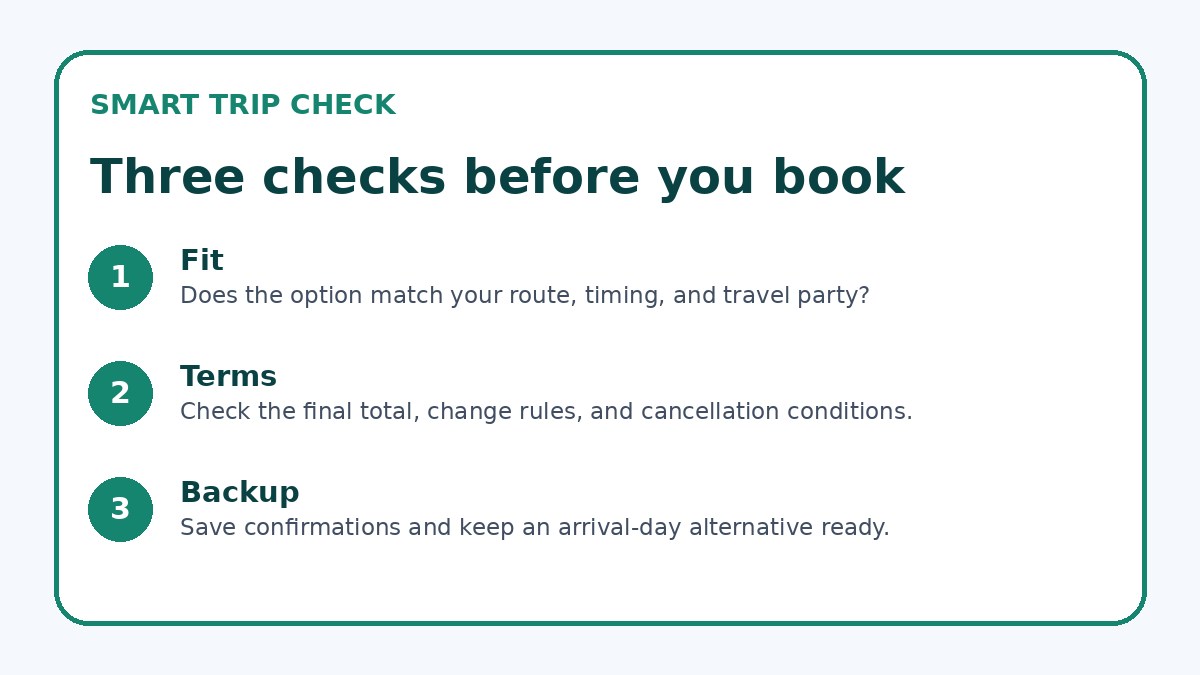
- Confirm departure and arrival station or airport locations relative to your hotel and add realistic transfer time to each leg.
- Compare total door-to-door travel time for each option, including security, check-in, transfers, and local transit.
- Read the provider’s baggage and seat-assignment policies on the official booking page before you finalize payment.
- If driving, verify rental cross-border rules, insurance coverage, and where you can park in central Paris.
- Decide whether flexible or refundable fares matter to you and select a fare class that matches your risk tolerance.
- Book seats together or ensure paired seating at the time of reservation; verify seating details on the confirmation.
Comparing comfort, cost predictability, and convenience
Comfort is more than seat width: consider seating arrangements, the ability to walk and stretch, onboard toilets, and space for shared items. Cost predictability matters most when your travel budget is fixed—train fares often come with clearer change and refund policies, while low-cost flights may add fees for bags and seat selection. Convenience includes how close the departure and arrival points are to your accommodations and whether the journey allows uninterrupted time together without repeated security processes.
When deciding, list your must-haves: do you need door-to-door speed, lowest technical fare, maximum privacy, or the freedom to carry bulky items? Use that list to compare options head-to-head. Always verify the final total price, baggage rules, seat selection, and any transfer or parking costs shown on the provider’s official booking page before confirming. You can also use Trip.com as one place to compare current availability and conditions, but confirm details with the operator.
Frequently asked questions
Is the train more romantic than flying between London and Paris?
Many couples find the train more romantic because it avoids airport stress and keeps you together in a relaxed cabin where you can talk, share snacks, and enjoy scenery. Trains also typically drop you into central stations close to hotels and restaurants, which makes the arrival feel more seamless and intimate. That said, romance depends on your priorities: if you prefer to maximize sightseeing time by saving minutes on travel, a carefully planned flight might suit your schedule better. Think about whether you want the journey to be part of the experience or a quick transfer.
What should couples check about luggage and seats before they book?
Before booking, confirm the number and size of bags allowed, whether carry-on and checked baggage are included, and if seat selection is free or paid. For trains, check if there are seat pairs, table seats, or quiet coaches and how to reserve them; for flights, ensure you can reserve adjacent seats and understand overhead bin policies. Always verify these details on the operator’s final booking page—look for baggage weight rules, additional fees, and any instructions on how to reserve or guarantee paired seating.
How do I choose between a direct trip and a connection?
Evaluate total journey time, the complexity of the connection, and your tolerance for transfer risk. A direct option typically reduces transfer hassle and the chance of missed connections, which is helpful for couples with tight schedules or limited mobility. Connecting routes can open more timing or price choices but require careful buffer planning and coordination between carriers. When considering a connection, check minimum connection times recommended by each operator and verify whether separate tickets mean separate responsibilities for delays.
Final planning note
For most couples prioritizing comfort, predictability, and time in the city, a direct high-speed train is the practical choice between London and Paris: it minimizes transfers and creates a relaxed start to your shared trip. Flying or driving each make sense when specific circumstances—airport proximity, bulky luggage, or a scenic road itinerary—change your priorities. The right decision comes down to what you value together: time in central locations, control over the schedule, or the lowest immediate ticket cost once extras are included. Use the checklist to confirm transfer times, baggage rules, and seat arrangements on the provider’s booking page before you finalize anything. That final verification avoids surprises and keeps your trip feeling like a joint plan rather than logistics work.
Continue planning
Check current options and final conditions
Use the provider page to confirm live availability, the final total, cancellation terms, and every condition that matters to your trip.
This evergreen planning guide was created with AI-assisted drafting and a structured quality review. It does not display live prices, schedules, availability, visa guidance, or provider rankings. Verify current details before booking. Some links are affiliate links; we may earn a commission at no additional cost to you.