
If you’re booking Abu Dhabi travel deals for the first time, the practical bottom line is this: prioritize refundable or change-friendly hotel and flight options when your plans are uncertain, and buy trip insurance that covers cancellations for reasons you care about. That gets you the flexibility to change dates or cancel with less financial risk. After you secure a flexible option, compare the fine print: what triggers a refund, how long before travel you can cancel, and whether third-party booking platforms or the provider’s own site handle refunds differently. Use flexibility tradeoffs to decide whether a lower non-refundable fare is worth the risk or a slightly higher refundable rate gives needed peace of mind.
See current options before you compare the details
Availability and final conditions change. Open Trip.com now or keep reading for the practical comparison.
Why cancellation flexibility matters for first-time Abu Dhabi visitors
First-time travelers often face more uncertainty: visa timing, work approvals, or simply wanting to adjust sightseeing plans after learning more. Flexible cancellation terms let you lock in a deal without committing your entire budget to a trip that might change. That matters especially when travel involves long flights from Oceania or coordinating multiple travelers with different schedules. If a non-refundable fare saves a bit now but risks losing the whole fare later, the apparent savings can evaporate quickly.
Flexible booking options also affect how you plan day-to-day in Abu Dhabi. If you have refundable hotel nights, you can arrive with a short core stay planned and extend or shorten on the fly depending on weather, events, or fatigue. Conversely, strict policies can force you to stick to an inflexible schedule, potentially increasing stress and limiting spontaneous decisions. Knowing your tolerance for change should guide whether you pay more for flexibility or accept tighter terms for lower upfront cost.
What to check on provider pages before booking
Always inspect the provider’s final booking page and the confirmation email for the exact cancellation language. Look for specific deadlines (for example, cancel by 14:00 local time two days before arrival), whether a partial refund or a voucher is issued, and whether fees apply. If a fare says “free cancellation” check if it’s conditional on booking within a return window or if taxes and charges are non-refundable. When a platform like Trip.com lists a deal, verify those same terms on the airline or hotel’s official site because policies can differ by channel.
Also confirm who you must contact to cancel: the booking platform, the hotel, or the airline. Processing times matter; some providers take weeks to issue refunds to the original payment method. Note whether changes or cancellations are allowed by phone only or must go through an online account. Finally, check whether refunds will be full cash back, credit toward future bookings, or subject to administrative fees—these differences determine real flexibility.
| Approach | Best for | Tradeoff to check |
|---|---|---|
| Fully refundable bookings | Travelers who expect date changes or need peace of mind | Higher upfront cost but straightforward refunds to original payment method |
| Non-refundable, low-cost deals | Fixed-date travelers seeking lower prices | Lowest upfront cost but risk losing full payment if plans change |
| Non-refundable plus travel insurance | Budget-conscious travelers wanting targeted protection | Cheaper than refundable fares but claims depend on policy exclusions and proof |
| Non-refundable with purchased change waiver | Those expecting a single change who want cheaper protection | Lower fee than full flexibility but may limit number of changes or convert refunds to credit |
Ready to check the option that fits your plan?
Use your exact dates and traveler details so the provider page can show the current total and conditions.
Tradeoffs: refundable fares, non-refundable savings, and add-ons
Refundable fares and flexible hotel rates typically cost more up front. That premium buys convenience and lower risk when plans shift, but if your dates are locked and you’re traveling in peak season, non-refundable options can save money. Consider the probability your travel will change—if it’s high (work uncertainty, variable visa timing) absorbing the higher refundable rate makes sense. If your dates are fixed and you’re comfortable with risk, a non-refundable fare paired with travel insurance might be the better financial choice.
Add-ons like “change waiver” or flexible cancellation for a small fee can bridge the gap: they often cost less than fully refundable fares but provide specific protections. Read these add-on terms closely—some only allow one date change, others convert refunds to travel credit. Evaluate whether those restrictions suit your needs. For group bookings, one traveler changing plans can affect everyone, so consider booking flexible options for the most uncertain travelers and stricter bookings for those with fixed plans.
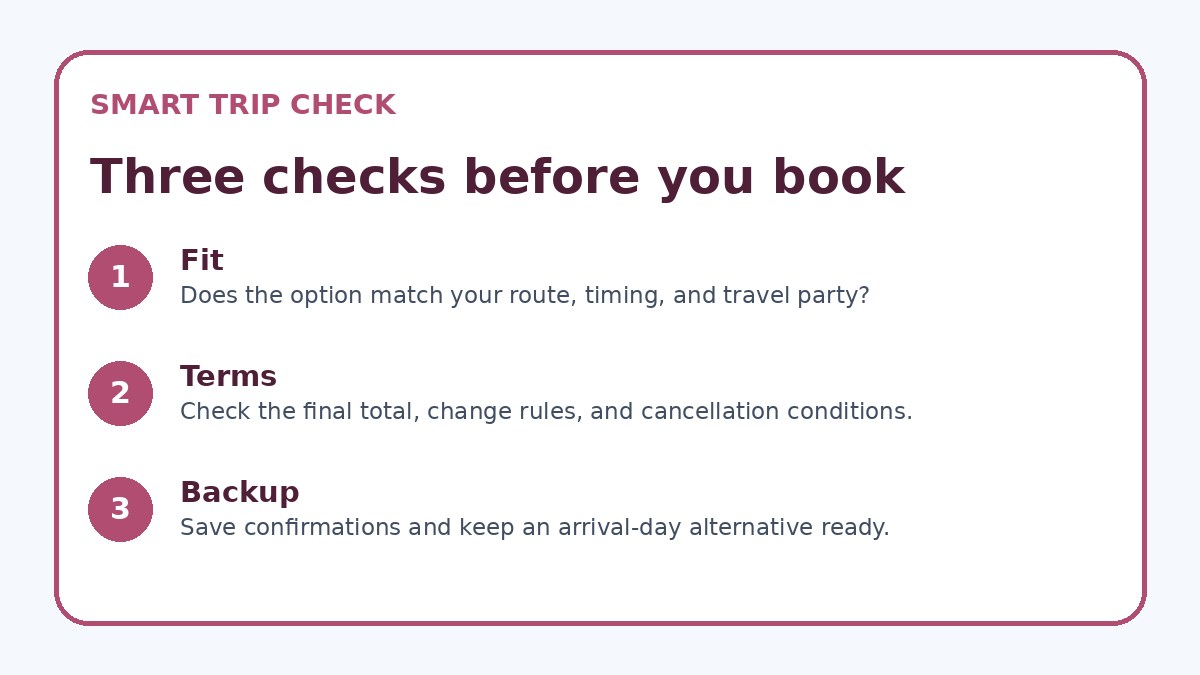
Before you book
- Read the exact cancellation deadline and any time-zone reference on the provider’s final booking page before confirming.
- Verify whether refunds are issued to the original payment method, as a travel credit, or with administrative fees.
- Check who handles cancellations (platform, airline, hotel) and note the contact method and typical processing time on confirmation emails.
- Compare the refundable rate vs non-refundable fare and calculate the breakeven probability where flexibility pays off.
- If buying travel insurance, confirm covered reasons, claim documentation required, and the insurer’s cancellation timeline.
- For group or multi-segment bookings, make flexible bookings for travelers or segments most likely to change, not necessarily the whole itinerary.
How to decide what flexibility level to buy
Start by mapping risk: list what could realistically force you to change plans (work, health, visas, extreme weather). Assign each risk a likelihood and the cost impact of losing a non-refundable booking. If the expected loss is high, prioritize refundable options. Next, compare the price difference between flexible and non-refundable options and calculate a breakeven: how likely would a change have to be to make the flexibility worth the extra cost? That practical math helps you avoid emotional reactions at checkout.
Also factor in itinerary complexity. A simple return flight and two-night hotel carry different stakes than a multi-city itinerary with tours and local transfers. For complicated trips, more flexibility reduces the cost of a single change cascading across multiple reservations. Finally, consider liquidity—if you can comfortably absorb the loss of non-refundable bookings, you may accept lower flexibility for savings. Otherwise, paying more for refundable options or purchasing targeted insurance is usually the calmer choice.
Frequently asked questions
Should I always book refundable flights and hotels for Abu Dhabi travel deals?
Not always. Refundable bookings make sense if your dates are likely to change, you need visa or work approvals, or you value the option to rebook without penalty. If your plans are fixed and you’re confident those dates won’t shift, a non-refundable deal can be a reasonable way to lower upfront cost. The decision depends on the probability of change, the difference in price, and whether you can absorb losing a non-refundable payment. Run a quick breakeven calculation: is the extra cost of flexibility less than the expected loss if you change plans?
How does buying travel insurance interact with supplier cancellation policies?
Travel insurance typically covers cancellations for specific reasons defined in the policy—illness, jury duty, or certain travel advisories—and rarely duplicates a supplier’s refund policy. Insurance may reimburse non-refundable costs if your reason is covered, but you’ll still need to follow the supplier’s cancellation process first and keep proof for claims. Carefully review exclusions, claim deadlines, and required documentation. Insurance can be a cost-effective way to protect non-refundable bookings, but it should be chosen to match your real risks rather than used as a catch-all.
What should I verify when a platform like Trip.com lists a flexible Abu Dhabi travel deal?
Use platforms such as Trip.com to compare availability, but verify the provider’s final terms on the airline or hotel confirmation. Check the exact cancellation window, whether fees apply, and how refunds are processed. Confirm whether the listing’s flexible label applies to the channel you’re booking through—sometimes a rate is refundable on the supplier site but non-refundable when sold through a third-party. Also note contact points for cancellations and any conditions (prepayment, deposit amounts) that affect flexibility before you click confirm.
Final planning note
Choosing the right cancellation flexibility for Abu Dhabi travel deals is a balance between price and risk tolerance. First-time visitors should lean toward refundable or change-friendly options when plans are uncertain, especially for long flights or multi-segment itineraries. If you opt for non-refundable savings, mitigate risk with targeted travel insurance or change waivers that match likely disruptions. Always verify exact terms on the final booking and confirmation pages, and keep documentation for any claims. With a clear risk map and the checklist above, you’ll make a pragmatic booking decision that protects your budget and reduces stress while you plan your Abu Dhabi trip.
Continue planning
Check current options and final conditions
Use the provider page to confirm live availability, the final total, cancellation terms, and every condition that matters to your trip.
This evergreen planning guide was created with AI-assisted drafting and a structured quality review. It does not display live prices, schedules, availability, visa guidance, or provider rankings. Verify current details before booking. Some links are affiliate links; we may earn a commission at no additional cost to you.