For couples deciding how to travel between Seoul and Taipei, the practical choice often comes down to one question: do you value strict schedule flexibility or the convenience of a shorter, simpler journey? The answer shapes which flights you consider, which airport you pick, and how you plan arrival and onward transfer. Start by deciding whether you prioritize fixed departure times that match sightseeing and evening plans, or a ticket class and route that lets you change plans without penalties. From there, compare total door-to-door time, the number of connections, baggage and seat policies, and the true cost of flexibility. This article walks through the tradeoffs and gives a clear checklist so you and your partner can pick an option that supports your travel style and relationship priorities.
See current options before you compare the details
Availability and final conditions change. Open Trip.com now or keep reading for the practical comparison.
Define what flexibility means for your couple
Flexibility can mean different things: the right to change dates without fees, the ability to cancel and get a refund, or simply not being tied to a strict timeline so you can linger over a morning coffee. Couples often balance practical constraints—work windows, event dates, visa windows—with personal preferences like a relaxed pace or tightly scheduled sightseeing. Talk through what would actually upset your trip: is it missing one day of activities, or paying a penalty to rebook? Pinpointing the realistic scenarios that would force a change makes it easier to choose a fare class and options that protect you from the most likely disruptions.
Once you agree on the kinds of changes that matter, translate them into booking criteria. If changing dates is likely, prioritize fares or add-ons that permit free or low-cost changes; if only minor timing shifts matter, focus on options with flexible check-in and seat selection. Also consider the emotional cost: some couples prefer paying more up front to avoid stress, while others accept some risk for a lower fare. Defining flexibility early speeds comparisons and keeps discussions practical when you’re looking at itineraries and price pages.
Compare convenience: airports, connections, and total travel time
Convenience is about more than flight time. On the Seoul side, weigh which airport you’ll use and how easy it is for both of you to reach it—train, shuttle, drive, or ride-hailing options—and the same for Taipei’s arrival airport. Compare total door-to-door travel time: include transfer times, recommended airport arrival windows, security and immigration queues, and any local transport from the arrival airport to your accommodation. Sometimes a slightly longer flight with fewer connections or simpler airport logistics will save time and stress overall.
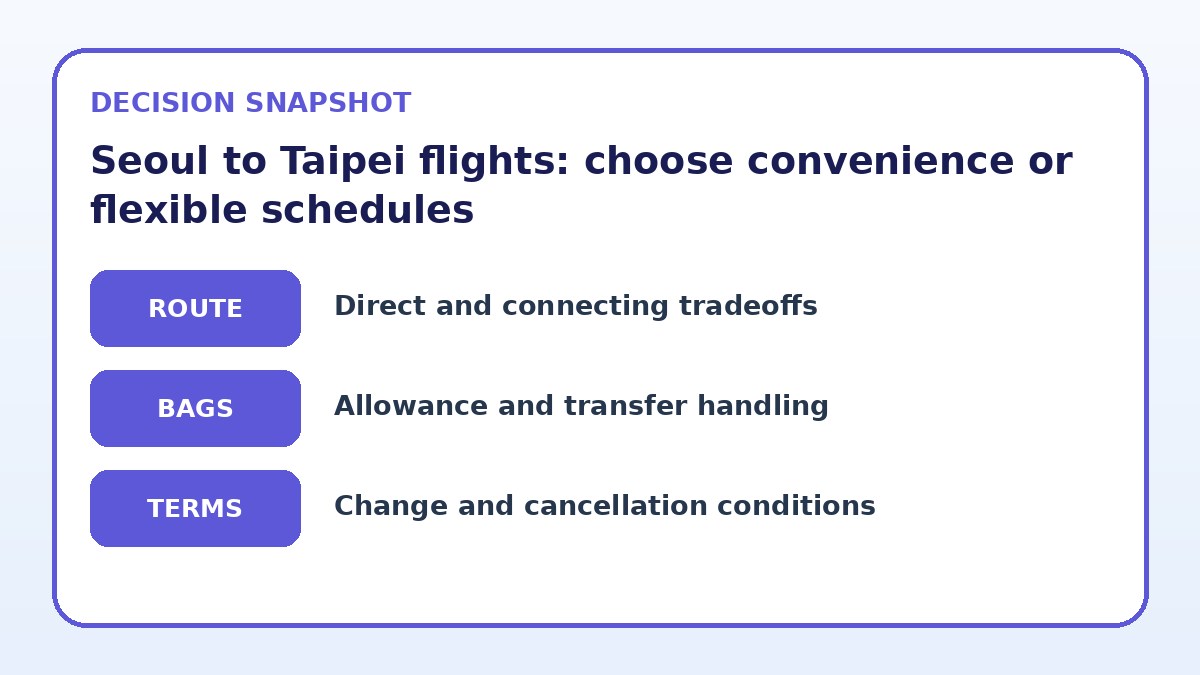
When comparing direct and connecting options, ask how likely a connection is to add risk versus convenience. Direct flights reduce the chance of missed transfers and can make arrival smooth, while connecting itineraries might offer better departure times or lower fares. If a connection is unavoidable, prioritize schedules with comfortable layovers—enough time to transfer but not so long you spend hours waiting. For couples traveling with luggage or mobility needs, fewer transfers and simpler ground transport often deliver more convenience than marginal savings.
| Approach | Best for | Tradeoff to check |
|---|---|---|
| Flexible fare with free or low-cost changes | Couples who expect possible date changes or want peace of mind | Higher upfront fare versus lower risk of expensive rebooking later |
| Lowest-available nonrefundable fare | Couples with fixed travel dates and tight budgets | Little room for schedule changes; added fees for luggage or seats |
| Direct flight with shorter total travel time | Couples prioritizing convenience and minimal transfer stress | May cost more or offer fewer departure time options |
| Connecting itinerary with attractive departure times | Couples who want specific departure windows or lower fares | Longer door-to-door time and higher risk of missed connections |
Ready to check the option that fits your plan?
Use your exact dates and traveler details so the provider page can show the current total and conditions.
How to evaluate fare rules and add-ons together
Fare headlines rarely tell the full story. Review baggage allowances, seat selection policies, change and cancellation fees, and what’s included in each fare type. A low headline price may exclude checked bags or seat choice, which adds cost and friction at booking or at the airport. For couples, seating together and checking a bag for shared items can be important; factor those costs and availability into your comparisons before deciding which option is truly most convenient or flexible for you.
Also consider refundable versus nonrefundable fares and whether the airline or fare class allows free changes or credits toward future travel. If you expect plans could shift, a flexible fare that allows date changes or a travel credit could outweigh a lower fare with strict penalty terms. When provider-specific facts matter—like the precise change fees, what triggers a free change, or how baggage is measured—verify those details on the carrier’s final booking page or the travel platform before purchase. Trip.com can be used as one place to compare current availability, but always confirm the provider’s terms.
Before you book
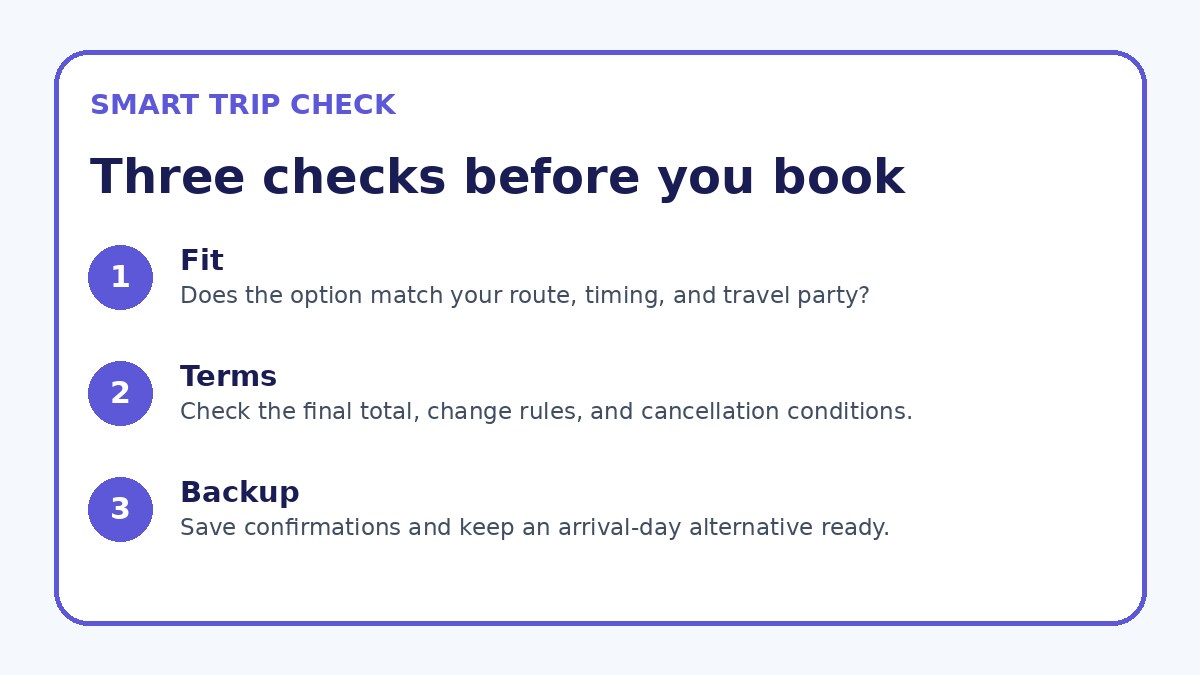
- Agree on what level of schedule flexibility you both need (free changes, partial credits, or strict dates) before comparing fares.
- Compare door-to-door time for each itinerary, adding transfer, check-in, and immigration estimates to airborne time.
- Verify baggage allowances and seat selection rules on the provider’s final booking page to avoid surprise fees at checkout.
- Check change, cancellation, and refund policies for the exact fare class you intend to buy and screenshot or save the terms.
- Decide whether extras like lounge access, priority boarding, or prebooked transfers are worth the added cost for comfort together.
- Split booking tasks: one partner confirms schedule and fare rules, the other secures seats and ground transfers, then review together.
Practical couple-focused tradeoffs and on-the-ground tips
Think about the rhythm of your trip: do you prefer landing with time to settle and dine together, or do you want to maximize daylight hours at your destination? Later arrivals might be cheaper or more available, but they can mean navigating unfamiliar transport at night. Conversely, early arrivals may require waking up before either of you are ready. Build a buffer into your schedule so you can recover together from travel time and avoid making your first hours stressful. Small comforts—a prebooked airport transfer, lounge access, or priority boarding—can pay off more in calm and connection than a marginally cheaper fare.
Finally, make the booking decision together but split small tasks to reduce friction: one person compares seats and baggage, the other verifies change and cancellation rules. Keep digital copies of booking confirmations and highlight contact points for customer service in case you need changes. If you have a preferred seat type or accessibility need, confirm availability before final payment. These practical steps protect both your travel plans and your relationship—reducing last-minute arguments and ensuring you both enjoy the journey as part of the trip.
Frequently asked questions
Is it better for couples to book refundable or changeable tickets from Seoul to Taipei?
Refundable or easily changeable tickets offer emotional and logistical insurance if your plans might shift. For couples with work, family duties, or uncertain dates, the extra cost can avoid scrambling and arguments later. If your dates are locked and both partners are confident they won’t change, a nonrefundable fare can reduce upfront cost—but factor in any likely fees for baggage or seat selection. Always read the exact fare rules on the airline’s booking page so you understand what constitutes a free change, whether credits are issued, and how long credits remain valid.
How should couples weigh direct versus connecting flights for this route?
Direct flights simplify travel by reducing transfer risk and often shortening total travel time, which can be especially welcome when you want relaxed arrival together. Connecting flights can offer better departure times or lower fares but introduce layover stress and the chance of missed connections. Consider your tolerance for transfers, the quality of airport connections, and whether you’re carrying shared luggage that’s harder to manage between flights. If choosing a connection, opt for a comfortable layover buffer and verify minimum connection times on the carrier’s final itinerary.
What practical steps reduce travel stress for couples on arrival in Taipei?
Prebooked ground transport, such as an airport shuttle or private transfer, removes arrival uncertainty and helps you both relax after the flight. Have your accommodation address and local directions saved, and plan a simple first meal or quiet activity to unwind. If you expect fatigue, choose arrival times that allow natural recovery before major plans. Keep essential documents and phone chargers handy in a carry-on, and split responsibilities—one person handles immigration forms while the other retrieves bags—so neither of you is overwhelmed in the arrival process.
Final planning note
Balancing flexibility and convenience on Seoul to Taipei flights comes down to honest priorities and clear tradeoffs. If potential date changes or the stress of last-minute shifts concern you, invest in a fare with change-friendly terms. If you want a smoother, shorter journey and fewer transitions, prioritize direct flights or itineraries with simple airport logistics—even if that means paying a bit more. For couples, the real value is reducing friction: choose the option that keeps both of you calm and focused on enjoying the trip together. Verify fare rules, baggage policies, and exact connection times on the carrier’s final booking page before payment to make an informed choice.
Continue planning
Check current options and final conditions
Use the provider page to confirm live availability, the final total, cancellation terms, and every condition that matters to your trip.
This evergreen planning guide was created with AI-assisted drafting and a structured quality review. It does not display live prices, schedules, availability, visa guidance, or provider rankings. Verify current details before booking. Some links are affiliate links; we may earn a commission at no additional cost to you.