
If you need to travel to Jeju for work, pick a booking window that balances flexibility and certainty: aim to confirm travel and at least the first two nights of lodging three to six weeks before your trip when schedules are moderately stable, tighten that to one to three weeks when your itinerary is fixed, and allow for shorter lead times only if your employer permits last-minute changes. Business travel often requires juggling client availability, meeting schedules, and expense approvals — so the realistic window depends more on your approval process and internal flexibility than on any destination-specific rule. This article gives clear decision criteria, tradeoffs, and a step-by-step approach you can use when comparing Jeju travel deals, flights, and hotels so you can choose a booking cadence that minimizes stress and unnecessary cost risk without sacrificing on-the-ground practicality.
See current options before you compare the details
Availability and final conditions change. Open Trip.com now or keep reading for the practical comparison.
Assess your internal constraints first
Before hunting flights or lodging, list the internal factors that control your timing: approval turnaround, client confirmation windows, budget-holder signoff, and any required visa or company travel clearance. For many business travelers, the approval timeline is the single largest gating item — if approvals routinely take several weeks, your realistic booking window shifts outward accordingly. Knowing exact internal deadlines lets you avoid premature bookings that you may need to cancel or rebook, and it helps you decide whether a refundable fare or a nonrefundable rate with lower cost is the smarter choice.
Also consider how mission-critical the trip is. If the visit is essential and rescheduling would harm the company relationship, prioritize stability: secure flights and the nights around key meetings earlier and use flexible options for ancillary days. If the trip is exploratory or contingent, a shorter booking horizon with change-allowed rates makes sense. Make these judgments before comparing Jeju travel deals so you compare like-for-like options—flexible versus restricted—and can estimate actual net cost after potential change fees.
Compare risk vs. reward for timing
Booking earlier generally increases room and seat selection while reducing the administrative scramble to secure approvals, but it can lock you into dates that shift. The reward for booking farther out is better choice of morning flights and centrally located hotel rooms, which matters when meetings require punctuality or proximity to business districts. The risk is the need to change or cancel: check provider change and cancellation policies carefully and calculate worst-case fees to understand exposure if plans change.
Waiting until closer to travel dates can reveal short-term fare drops or last-minute corporate fare inventory, but it reduces options and increases the chance of inconvenient flight times or distant lodging. For business trips to Jeju where punctuality is important, weigh whether a small premium for earlier booking is worth avoiding the operational risk of a missed meeting or a long commute. Always compare refundable and nonrefundable options and factor in how easy it is to rebook flights or rooms through your travel management team.
| Approach | Best for | Tradeoff to check |
|---|---|---|
| Book 6+ weeks ahead | Trips with fixed approvals and essential meeting schedules | May lock you in before small internal changes are resolved |
| Book 3–6 weeks ahead | Balanced approach for predictable business trips | Slightly less selection than very early bookings but more flexibility |
| Book 1–3 weeks ahead | Confirmed itineraries where approvals clear late | Fewer flight and room choices; higher chance of less convenient times |
| Book within 7 days | Urgent onsite needs and last-minute client requests | Limited availability and likely premium for flexibility |
Ready to check the option that fits your plan?
Use your exact dates and traveler details so the provider page can show the current total and conditions.
Practical windows for common scenarios
If your meetings are scheduled weeks in advance and approvals are fast, book flights and central hotel nights three to six weeks ahead. That window balances availability and manageability: you typically still have good flight and room selection without committing months in advance. For a one- to two-night visit tied to fixed appointments, narrowing to one to three weeks often finds competitive corporate fares while leaving enough time for any necessary internal paperwork.
When trips are confirmed on very short notice — for example, emergency onsite work or sudden client needs — plan for same-week or next-week bookings and prioritize refundable or highly changeable fares and hotels close to your meeting venue. In these cases, expect tradeoffs: fewer schedule choices, possible longer transfers, and higher stress. Build buffer time into your calendar for contingencies and verify final refund/change rules before booking to minimize surprises.
Before you book
- Confirm internal approvals and expense signoff deadlines before searching fares or availability.
- Decide which hotel nights are mission-critical and book those first with refundable or changeable rates.
- Compare total landed cost including likely transfer and change fees, not just headline room or fare prices.
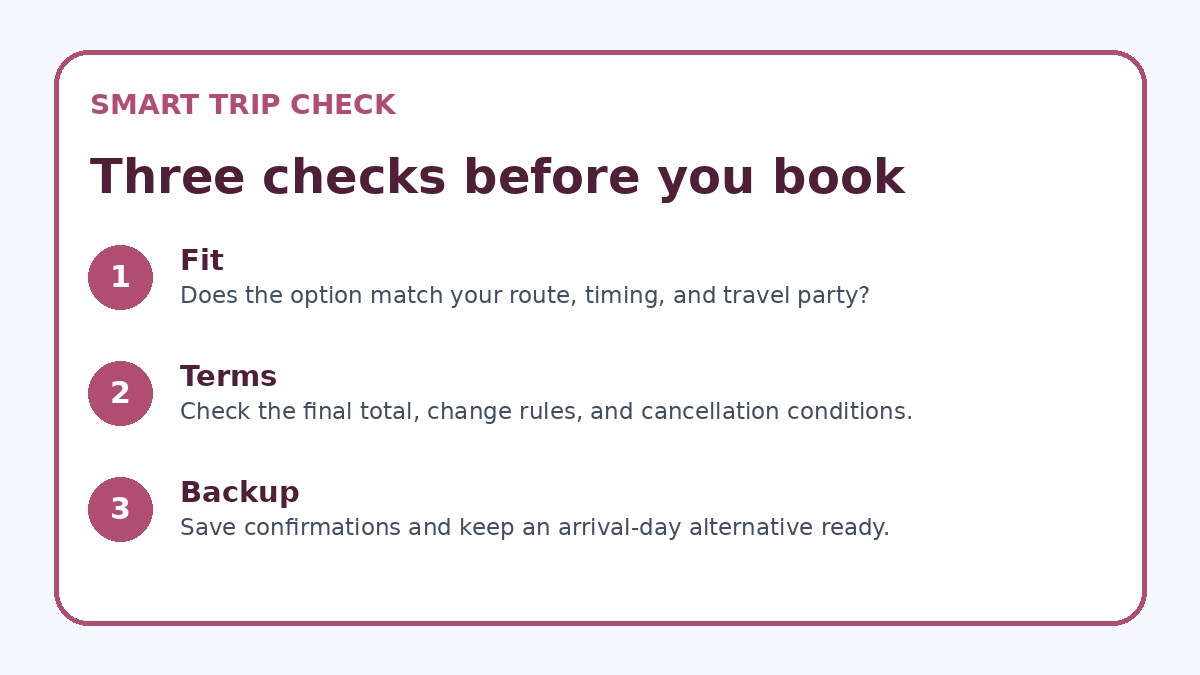
- Check supplier change and cancellation terms on the final booking page before paying.
- Use loyalty benefits or corporate rates as tie-breakers when windows and costs are similar.
- Reserve a backup flight or refundable ticket if your schedule is likely to change and your employer approves.
How to compare Jeju travel deals effectively
When evaluating deals, compare the total landed cost, not just the headline fare or rate: include potential change fees, transfer costs on Jeju (taxi, rental car, or shuttle), and the administrative burden of modifications. Look at cancellation and modification windows, loyalty program benefits, and whether corporate rates or negotiated inventory applies. If using an online provider, verify the refundable status, baggage rules, and any required documentation on the final booking page before completing payment.
If you use a travel management company or online tool such as Trip.com to check availability, use their quotes for comparison but confirm key rules on the supplier’s final booking page: seat assignment policies, exact check-in and check-out times, and the fine print about changes. For flights, compare direct versus connecting options side-by-side and consider total door-to-door time; for hotels, compare distance to meeting locations and whether breakfast or workspace amenities are included.
Frequently asked questions
Can I wait for last-minute Jeju travel deals if my calendar isn’t fixed?
You can, but understand the tradeoff: waiting may reveal short-notice inventory or discounts, yet it also reduces flight and hotel choices and can increase the risk of inconvenient timings. If your calendar is genuinely flexible and the trip is noncritical, a shorter booking window can work; however, for meetings where punctuality matters, prioritize booking core nights and travel earlier to ensure reliable logistics. Always verify change and cancellation policies on the supplier’s final booking page so you know the cost of changing plans.
How should I decide between refundable and nonrefundable rates for a business trip to Jeju?
Choose refundable or change-allowed rates when approvals or client confirmations are uncertain and the cost of potential changes outweighs the premium. If approvals are firm and your schedule won’t shift, a nonrefundable rate can save money but increases risk. Quantify that risk by estimating likely change fees and comparing them to the refundable premium. Also consider your company’s travel policy — some employers require refundable fares for certain employees or trip types.
What details must I verify on the final booking page before completing a reservation?
On the supplier’s final booking page confirm the exact change and cancellation windows, baggage rules, check-in and check-out times, seat or room selection options, and any corporate or loyalty benefits applied. For flights, check whether the fare includes carry-on and checked baggage and whether seat assignment is guaranteed. For hotels, verify cancellation deadlines and whether breakfast, Wi-Fi, or workspace amenities are included. If you used a comparison site like Trip.com, re-check these specifics with the airline or hotel before finalizing payment.
Final planning note
Choosing a booking window for Jeju travel deals is a practical decision driven by your approval process, the importance of meeting punctuality, and your tolerance for change risk. For most predictable business trips, a three- to six-week window balances choice and manageability; tighten to one to three weeks when dates are confirmed, and accept the constraints of last-minute booking only for urgent needs. Always compare total landed costs, verify change and cancellation terms on the supplier’s final booking page, and prioritize refundable options when internal uncertainty remains. With a clear internal checklist and a sensible booking cadence, you can reduce stress and keep your Jeju business trip efficient and professional.
Continue planning
Check current options and final conditions
Use the provider page to confirm live availability, the final total, cancellation terms, and every condition that matters to your trip.
This evergreen planning guide was created with AI-assisted drafting and a structured quality review. It does not display live prices, schedules, availability, visa guidance, or provider rankings. Verify current details before booking. Some links are affiliate links; we may earn a commission at no additional cost to you.