If you’re a first-time visitor to Auckland and want to take the family on a flexible, memorable road trip, start by choosing the right car and a sensible base. The practical answer: rent a comfortable medium SUV or wagon with enough boot space and ISOFIX anchors for child restraints, pick up at Auckland Airport or a central city location that fits your arrival, and plan days with short driving legs so kids stay comfortable. Balance driving distances with one overnight stop outside the city to unpack and recharge. Before booking, compare insurance options, fuel policies, and child-seat availability; confirm pickup and drop-off locations, opening hours, and any additional driver rules on the provider’s booking page. Trip.com is a helpful place to compare current availability, but verify final terms directly with the rental company.
See current options before you compare the details
Availability and final conditions change. Open Trip.com now or keep reading for the practical comparison.
Choosing the right car for a family in Auckland
Space, comfort and safety should drive your choice. For a family of four with luggage and a stroller, a medium SUV or estate/wagon gives easier loading and a more comfortable ride on New Zealand roads. Look for models offering ISOFIX or LATCH anchors, a flat boot floor for suitcases, rear doors wide enough for child seats and a climate system that keeps the cabin comfortable on longer drives. If you plan ferry crossings to islands like Waiheke, check vehicle height and length limits on the ferry operator’s website before booking larger vehicles.
Think about terrain and season: if you’ll stick to sealed roads around Auckland and the Coromandel, two-wheel drive is often sufficient; if you plan to explore gravel backroads or high-country tracks, consider all-wheel drive but verify the rental contract allows self-driven travel on unsealed roads. Also confirm fuel type (petrol/diesel) and whether you must return the car with the same fuel level. Finally, assess luggage volume practically — bring a soft bag for tight boot spaces or a roof box if you truly need extra capacity, but check that your chosen provider allows roof attachments.
Where to base your family and how to plan daily legs
Base your trip on one or two hubs to reduce packing and hotel changes. A central Auckland base (Central Business District or Ponsonby) keeps you near restaurants and an easy morning departure, while a night or two in a beach town like Takapuna or Devonport gives a relaxed seaside rhythm. For a typical family route, limit daily driving to one to two hours between stops: a morning drive to a coastal lookout or wildlife reserve, a relaxed lunch, and an afternoon activity — this keeps travel time manageable for younger kids and offers flexibility if you need an early end to the day.
When plotting the route, factor in ferries, short walks and playground breaks. Ferry travel to islands requires reservations for vehicles during peak times; if you plan to leave the car in Auckland and go by passenger ferry, pick a hub with good parking or a family-friendly pier. Use a mix of outdoor and indoor activities so weather changes don’t derail plans: beach time and a low-key nature walk in the morning, followed by museum or aquarium visits in the afternoon to give everyone a calmer environment.
| Approach | Best for | Tradeoff to check |
|---|---|---|
| Rent a mid-size SUV | Families wanting comfort, luggage space, and flexible seating | Larger footprint may mean higher rental and fuel costs and tighter parking in central Auckland |
| Rent a compact car and use soft luggage | Couples with one small child and light packing needs | Less boot space and tighter fit for child seats; less comfortable for long drives |
| Reserve vehicle plus rental child seats | Travellers who can’t bring their own restraints and want convenience | Inventory varies; you must verify seat type and condition on the booking page |
| Hire a vehicle with roof box | Families needing extra cargo for strollers, bulky gear, or extended trips | Added rental and fuel cost and height limits for ferries and parking |
Ready to check the option that fits your plan?
Use your exact dates and traveler details so the provider page can show the current total and conditions.
Key paperwork, insurance and child-seat rules to verify
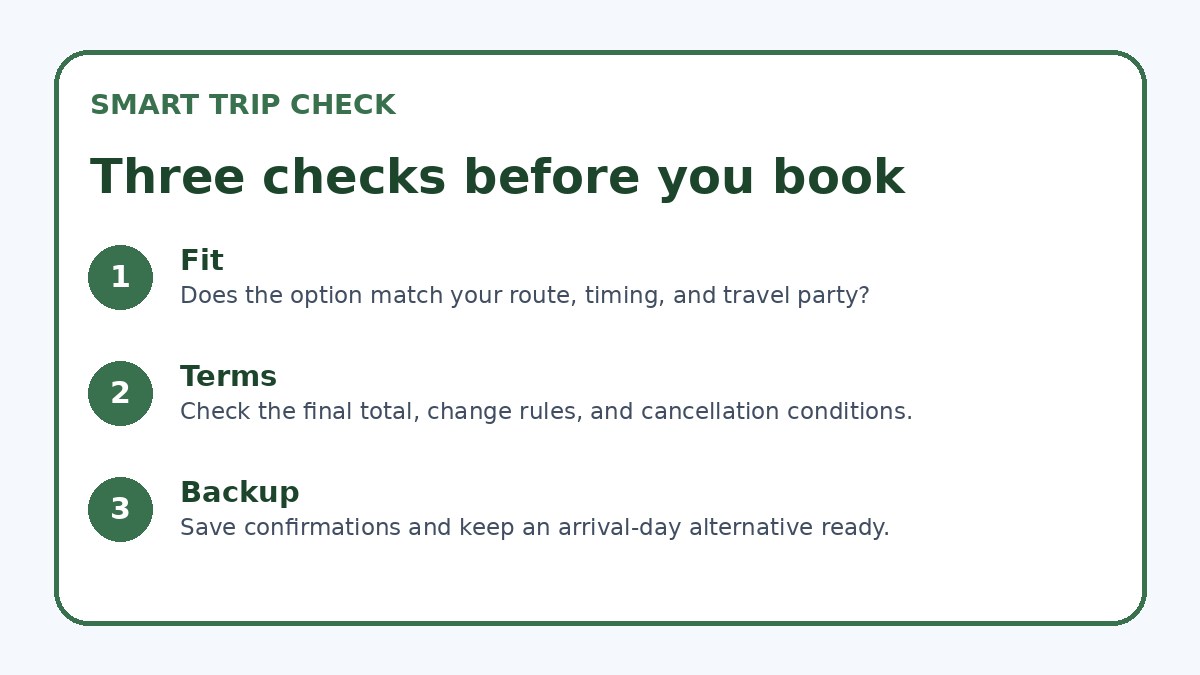
Before you finalize any booking, compile what you’ll need on pickup: a full valid driving licence that the rental company accepts (and any international driving permit if required), the card used for the booking, and proof of identity. Confirm whether the lead driver must be above a certain age or whether young-driver supplements apply. Check the exact insurance coverage included and what excess (if any) applies; where available, compare an excess-reduction product and read the insurer’s exclusions so you understand collision, theft or off-road limitations. Always verify these limits on the rental provider’s final page.
Child restraint requirements are specific: New Zealand law requires appropriate restraints for children, so make sure you either bring certified child seats from home or reserve them in advance from the rental. On the booking page, verify the type of seat supplied (infant, convertible, booster) and whether it fits ISOFIX anchors or needs seat-belt installation. Inspect any seat at pickup for expiry dates, visible damage, and correct fit in your chosen vehicle. If you need a rear-facing infant seat, ensure the vehicle’s rear seat geometry allows it.
Before you book
- Confirm acceptable driver licences and print or save digital copies required by the rental provider.
- Book the appropriate child seats by type and age group and verify ISOFIX compatibility on the vehicle.
- Compare included insurance and any excess-reduction options; note exclusions and confirm on the provider’s page.
- Check pickup and drop-off locations and hours against your arrival and departure schedule.
- Photograph the car’s condition at pickup and log the fuel level and odometer with staff signatures where possible.
- Plan daily driving legs under two hours with frequent stops and at least one overnight outside central Auckland.
Comparing rental choices and practical booking tips
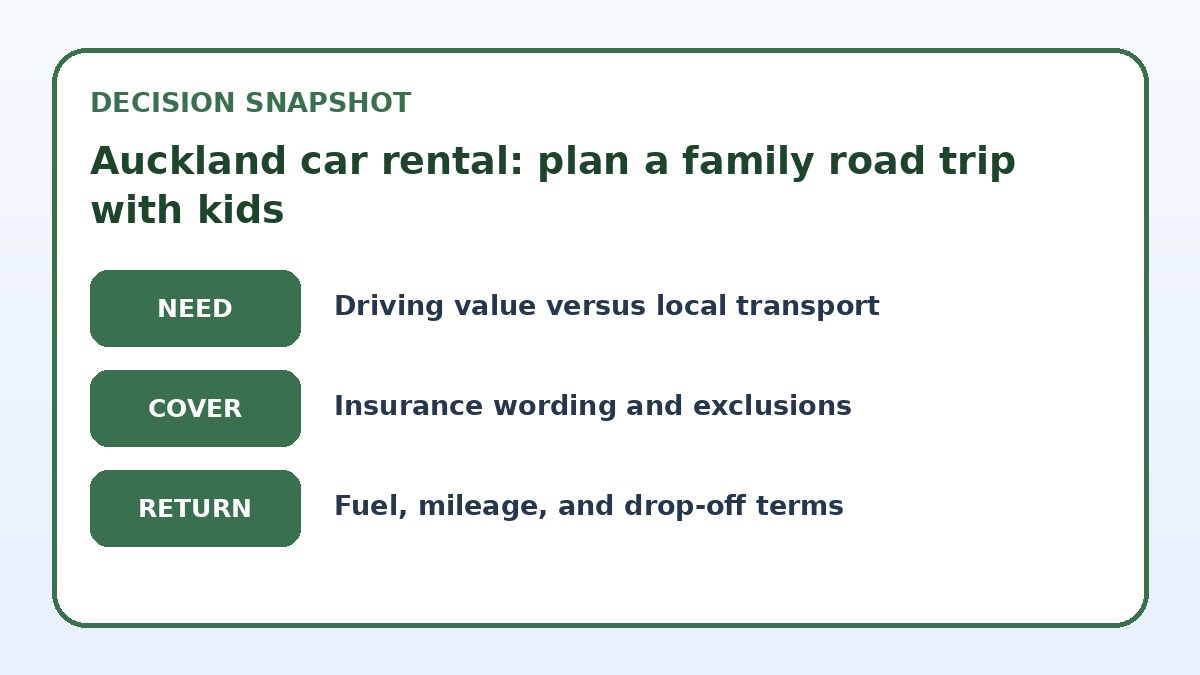
When comparing rental deals, focus on what affects your family’s comfort and risk: vehicle size, child-seat availability, fuel policy, mileage limits, and the insurance package. Don’t let headline daily rates be the only factor — a low rate with a punitive fuel policy or high excess can cost more overall. Check pickup and drop-off hours against your flight times; if you expect a late arrival, confirm after-hours pickup possibilities and any extra fees. Always read the cancellation and modification terms to understand flexibility if plans change.
Reserve child seats and any extras early — these inventory items can run out for peak family travel dates. If you need roof storage or a tow bar for a trailer, confirm provider permission and request these in writing on the booking confirmation. When you collect the car, do a walk-around and photograph any existing damage and confirm fuel level and odometer reading with staff. Finally, check return instructions for drop-off location and any out-of-hours return process so your family’s final day is smooth.
Frequently asked questions
Can I use an international driving licence to rent a car in Auckland?
Many rental companies accept international driving licences alongside your valid home licence, but acceptance rules differ between providers. Check the rental company’s booking page to confirm whether an International Driving Permit (IDP) is required in addition to your licence, which countries’ licences are accepted, and whether translations are necessary. Also verify age requirements and young-driver surcharges and ensure the lead driver’s name matches the booking exactly to avoid pickup delays.
Are child seats mandatory for children in New Zealand and can I rely on rental seats?
New Zealand law requires appropriate child restraints for children of different ages and sizes, so you must use a correctly fitted seat for your child. Rental seats can be convenient but availability and types vary by provider. Always reserve specific seat types in advance, inspect seats at pickup for manufacture/expiry dates and visible wear, and test the fit in your car before you leave the lot. If in doubt, bring a certified seat from home and confirm acceptance with the rental company.
What should I do if I plan to take the rental car on a ferry or drive on unsealed roads?
Ferries that carry vehicles set their own size and booking rules; if you intend to take a car to islands such as Waiheke, check vehicle dimensions and ferry vehicle reservations before you book a larger vehicle. Rental contracts often restrict travel on unsealed or high-clearance tracks — read the contract’s permitted-terrain clause carefully. If your itinerary includes gravel roads, confirm permission with the rental provider and any related insurance limitations or excess increases on the booking page.
Final planning note
Auckland is a highly rewarding base for a family road trip when you plan around comfort, short daily drives and the right rental choices. Start by picking a vehicle with space and ISOFIX anchors, reserve child seats and extras early, and confirm insurance and driving-license rules on the provider’s final booking page. Base yourselves in a convenient city location with at least one night near a beach or regional town to split the journey. With careful booking, short driving legs and a practical checklist at pickup, you’ll spend less time worrying about logistics and more time enjoying Auckland’s coastal and island experiences together.
Continue planning
Check current options and final conditions
Use the provider page to confirm live availability, the final total, cancellation terms, and every condition that matters to your trip.
This evergreen planning guide was created with AI-assisted drafting and a structured quality review. It does not display live prices, schedules, availability, visa guidance, or provider rankings. Verify current details before booking. Some links are affiliate links; we may earn a commission at no additional cost to you.