If you’re visiting Melbourne for the first time, the quickest practical rule is: pick the cancellation flexibility that matches how likely your plans are to change. If your dates, accommodation area, or activities are uncertain, prioritize free cancellation with clear deadlines; if your schedule is fixed, a stricter non-refundable fare or rate can still be reasonable. Read the provider’s cancellation window, how refunds are processed, and any fees that apply for partial refunds, then confirm those exact terms on the final booking page before you pay. This article explains the tradeoffs—price vs flexibility, how to compare hotel and flight policies, what to look for in package deals, and the specific checks to perform so you don’t discover surprise penalties after booking.
See current options before you compare the details
Availability and final conditions change. Open Trip.com now or keep reading for the practical comparison.
How cancellation flexibility differs between flights and hotels
Flights and hotels present flexibility in quite different ways. Airlines commonly use fare classes: some allow name changes, date changes with a fee, or refundable fares that return money minus a processing charge. Hotels typically show either fully refundable rates up to a specified time before arrival, or prepay/non-refundable rates that are cheaper but carry full loss if you cancel. Crucially, the wording matters: “free cancellation up to 48 hours before arrival” is not the same as “refundable less taxes and fees on cancellation,” so always open and read the full policy section on the provider’s booking page before you commit.
Another practical difference is timing and processing of refunds. Airline refunds for refundable tickets may take several billing cycles to hit your card, and vouchers or credits are commonly offered instead of cash refunds for less flexible fares. Hotels sometimes process refunds faster but can deduct service or cleaning fees. For both, verify whether third-party booking sites, tour operators, or consolidators handle the refund or whether you must go through the airline or hotel directly—this affects speed and ease of recourse if something goes wrong.
Evaluating package deals and combined bookings
Package deals that bundle flights, hotels, and transfers can simplify planning and sometimes reduce cost, but they also change how cancellations are handled. Some packages are sold as a single contract with one cancellation policy; others combine separate supplier policies and may require you to cancel each component individually. Before booking a package, locate the section that explains who is responsible for cancellations and refunds, and whether there are any combined penalties. If the package is sold via a third-party site, confirm if that seller is the contact for refunds or merely an intermediary.
When comparing package flexibility, ask whether the supplier offers partial flexibility—such as refundable hotel nights within a non-refundable flight—or whether the whole package becomes non-refundable if one element is canceled. Another decision factor is support: in the event of disruption, does the package provider offer a single point of contact to rebook or refund, or will you need to negotiate with multiple suppliers? Weigh the convenience of a single-support option against the possibly higher penalties of bundled non-refundable selections.
| Approach | Best for | Tradeoff to check |
|---|---|---|
| Fully refundable rates | Travelers with uncertain dates or high-planning risk | Higher upfront cost but lowest cancellation risk and simpler refund process |
| Non-refundable discounted rates | Travelers with fixed schedules seeking lower fares | Cheaper up front but full loss if plans change; limited change options |
| Non-refundable plus travel insurance | Those wanting price savings while protecting against specific risks | Saves money and transfers some risk to insurer; claims process may be required |
| Package deals with single-provider support | Travelers who value one-stop customer support for changes | May lock you into bundled penalties; verify who issues refunds and credits |
Ready to check the option that fits your plan?
Use your exact dates and traveler details so the provider page can show the current total and conditions.
Tradeoffs: cost savings versus risk management
Choosing a cheaper, restricted fare or non-refundable hotel rate is tempting for budget-conscious travelers, but it increases your financial exposure if your plans change. To decide, estimate how likely a change is—medical issues, shifting work commitments, or family needs all raise the value of flexibility. Consider whether refund timelines matter: a delayed refund may affect your cash flow, so if getting money back quickly is important, prioritize options that explicitly promise rapid refunds or immediate credits. Also check whether the supplier will issue a travel credit with an expiry date instead of a cash refund, and whether that credit is transferable.
A practical way to balance cost and risk is to buy the non-refundable rate and add travel insurance that covers your specific risks; alternatively, book refundable options for the most expensive or hard-to-replace parts of the trip and accept restrictions for lower-cost elements. Keep in mind that adding flexibility usually raises the upfront price, but that extra cost is an insurance premium against unpredictable cancellations. Run the numbers: how much you would lose versus how much extra you pay for flexibility and let that calculation guide the choice.
Before you book
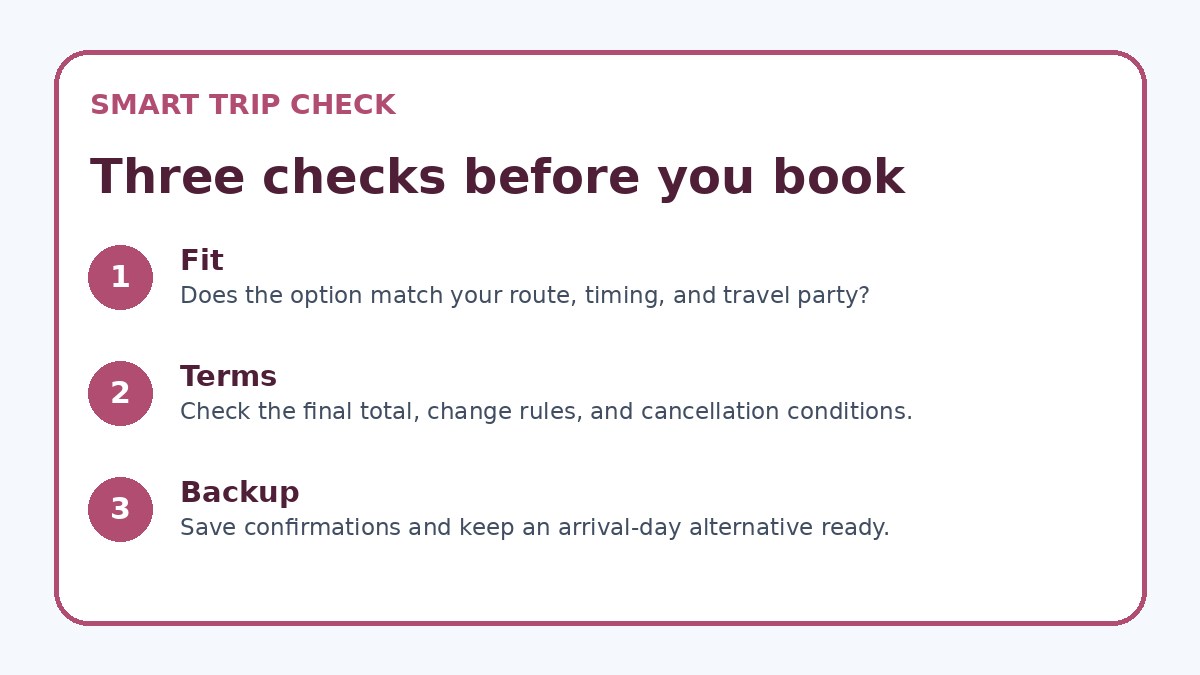
- Read the full cancellation policy on the booking page and note the exact deadline and time zone for free cancellation.
- Confirm whether refunds are returned to your original payment method or issued as travel credits, and how long processing takes.
- Check if a third-party agency or the supplier processes refunds and save their contact details from the confirmation email.
- Compare the cost difference between refundable and non-refundable options and calculate the potential loss if you must cancel.
- If considering travel insurance, read the insurer’s cancellation triggers and the claims process before relying on coverage.
- Take screenshots of the final terms shown at purchase and keep the booking confirmation email for dispute resolution.
What to verify on the provider’s final booking page
Before completing any payment, read the full cancellation policy shown on the final booking page and confirm three things: the exact cancellation deadline (date and time in a named timezone), what portion of the payment is refundable, and whether refunds are issued to the original payment method or as vouchers. If the page includes a shortened summary, click any links to the full terms and ensure there are no surprise fees for processing or administration. If you booked via an agency, check whether refunds will come from the agency or the supplier; getting that clear avoids unexpected hoops later.
Also look for change and name-correction rules, as they can matter if your travel dates shift slightly or you need to transfer a booking. Note any blackout periods or peak-season exceptions when normally refundable rates may be restricted. If travel insurance is suggested or bundled, read its policy to confirm what triggers a covered cancellation and how claims are filed. When in doubt, capture screenshots of the final policy text and save the booking confirmation email that documents the rules you saw at purchase time.
Frequently asked questions
Can I rely on a ‘free cancellation’ label when booking hotels in Melbourne?
A label that says “free cancellation” is just a summary—always expand and read the full cancellation clause on the booking page. Confirm the exact cut-off date and time, any fees or taxes that remain non-refundable, and whether free cancellation applies to the whole booking or only specific nights. Also verify who issues refunds if you booked through an intermediary: some platforms mediate refunds but others require you to contact the hotel directly. Keep a saved copy or screenshot of the terms shown at checkout in case the provider later disputes which rules applied.
If I buy a non-refundable flight, can I switch dates later without losing all my money?
That depends on the airline’s fare rules. Some non-refundable fares permit date changes for a fee plus any fare difference, while others prohibit changes entirely. Always check the fare conditions on the final booking page for change fees, name-change rules, and whether a voucher will be offered instead of cash for cancellations. If date flexibility might be needed, compare the total cost of a refundable fare versus the non-refundable fare plus potential change fees, and consider whether travel insurance covers the specific reason you might need to change.
How do package bookings affect my cancellation options for Melbourne trips?
Packages can be sold either under a single cancellation contract or as a bundle of separate supplier contracts; the distinction matters. If the package is a single product, one cancellation policy usually governs refunds and changes—confirm whether it’s strict or flexible. If components keep their own rules, you may need to cancel the flight, hotel, and transfers separately with different penalties. Before booking, identify who you will contact for cancellations and refunds, and request this information in writing if it’s not clear on the booking page.
Final planning note
For first-time visitors to Melbourne, cancellation flexibility is a practical tool for managing uncertainty. Begin by honestly assessing how likely your plans are to change, then choose refundable options for the highest-risk parts of your trip and accept restrictions where the financial exposure is small. Always verify the exact policy text on the final booking page, note deadlines and refund methods, and save confirmation screenshots. Consider travel insurance where appropriate, and weigh the convenience of package support against potential combined penalties. If you want to compare current availability and the exact cancellation wording before booking, websites such as Trip.com can be a useful place to check—but always confirm the final terms on the supplier’s booking page.
Continue planning
Check current options and final conditions
Use the provider page to confirm live availability, the final total, cancellation terms, and every condition that matters to your trip.
This evergreen planning guide was created with AI-assisted drafting and a structured quality review. It does not display live prices, schedules, availability, visa guidance, or provider rankings. Verify current details before booking. Some links are affiliate links; we may earn a commission at no additional cost to you.