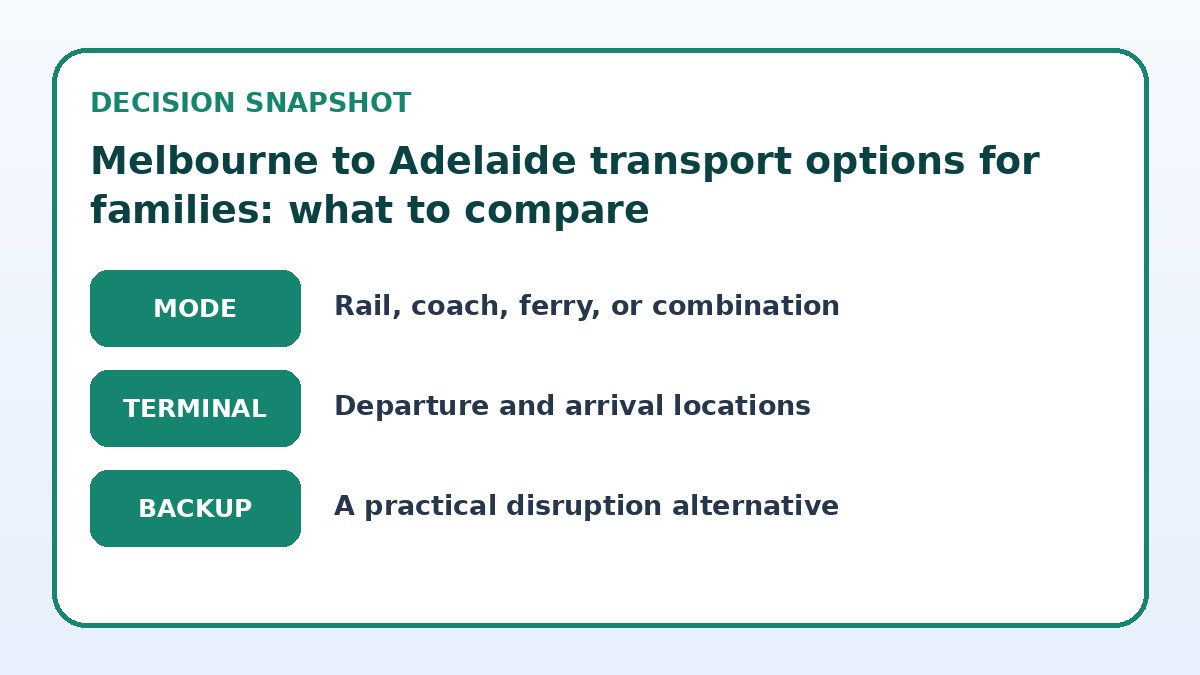
Practical answer first: for most families the decision comes down to two tradeoffs — comfort and convenience versus door-to-door flexibility. If you want a relaxed trip with space to move and less driving stress, rail or coach are the simplest choices because you avoid navigating long country roads and can reserve seats or cabins. If your priority is stops, luggage, and a flexible schedule, driving a private car or camper is compelling. A ferry isn't a direct mainland option between the two cities but can be part of a multi-leg route if you plan to include Kangaroo Island or coastal detours. Below I explain how to weigh travel time, child comfort, luggage and costs, plus what to check on operator pages before you book (schedules, seat types, group fares, and vehicle carriage rules).
See current options before you compare the details
Availability and final conditions change. Open Trip.com now or keep reading for the practical comparison.
Train: comfort and predictable schedules
Taking the train appeals to families who want space to move, a stable surface for activities, and clearer seating arrangements. Rail trips typically allow you to book adjacent seats, access onboard toilets and catering areas, and sometimes reserve private sleeping or couchette options for overnight travel. For parents with toddlers, the ability to walk aisles, carry basic supplies in a small bag, and avoid driver fatigue are major advantages. Before booking, check the operator’s exact seat types, family or group fare rules, how children under certain ages travel for free or at reduced rates, and whether luggage limits suit prams and bulky gear.
Tradeoffs include fewer departure times than coaches and limited door-to-door reach—stations may require a transfer or taxi at either end. If the rail itinerary includes connections, carefully compare total journey time and transfer wait times against a direct coach or driving plan; a seemingly faster train can be less convenient if station transfers are lengthy. Also verify onboard Wi‑Fi reliability and power outlet availability if keeping kids entertained depends on screens. Finally, confirm any bike or large luggage carriage rules if you plan to bring strollers, car seats, or bulky sporting equipment.
Coach: budget-friendly with frequent departures
Coaches are often the most straightforward public option for families prioritizing lower cost and many timetable choices. Modern long-distance coaches usually have reclining seats, toilets, and luggage bays, making them practical for those who don’t want to drive. Frequent departures let you pick daytime runs to keep children on a familiar routine or night services for sleeping travelers. When comparing coach options, look at seat pitch, onboard amenities, and whether vehicles accept car seats or have seat belts compatible with child restraints—operator rules vary and you should verify them before booking.
The tradeoffs are longer exposure to a confined seat for children and less space to walk compared with trains. Coaches also stop at limited locations, so you may need local transport at either end to reach accommodation. If you have a big stroller or several large bags, ensure the coach’s luggage allowance and loading procedures meet your needs. Finally, if comfort is a priority, compare premium or express coach services against basic ones—some have extra legroom or onboard entertainment but may cost more and have different cancellation or change policies.
| Approach | Best for | Tradeoff to check |
|---|---|---|
| Train | Families who want space to move and less driving stress | Fewer departure times and potential transfers to reach end destinations |
| Coach | Budget-conscious families needing flexible timetable options | Less legroom and movement than trains; luggage restrictions vary |
| Driving (car or camper) | Families who prioritize flexibility, stops, and carrying bulky gear | Driver fatigue, parking, and potentially higher overall costs |
| Ferry or mixed-route | Families seeking scenic island detours or overnight cabin options | Adds planning complexity and can lengthen total travel time |
Ready to check the option that fits your plan?
Use your exact dates and traveler details so the provider page can show the current total and conditions.
Driving: flexible routes, family-focused stops
Driving gives families the most control over timing, stops, and luggage. With a car or camper you can plan breaks at child-friendly attractions, choose where to eat, and bring bulky gear without worrying about baggage limits. A multi-driver plan keeps fatigue down; older children can help with navigation or entertainment. For parents, driving can feel less stressful than coordinating transfers, provided you’re comfortable with the distance and local road conditions. Before you leave, plan realistic daily driving targets, identify family-friendly rest stops, and research overnight options that welcome children and offer safe parking.
The main tradeoffs are driver fatigue, potential higher fuel and toll costs, and parking or congestion at city centers. If you’re bringing an infant car seat, check car hire policies for seat provision and installation fees—many rental companies offer seats but require advanced requests. Consider whether a single long drive works for your children’s ages, or whether breaking the route into two shorter days improves everyone’s mood. Also compare the cost and convenience of hiring a vehicle versus using public options with car seats and transfers, and verify rental insurance and cross-border rules if your route crosses state lines.
Before you book
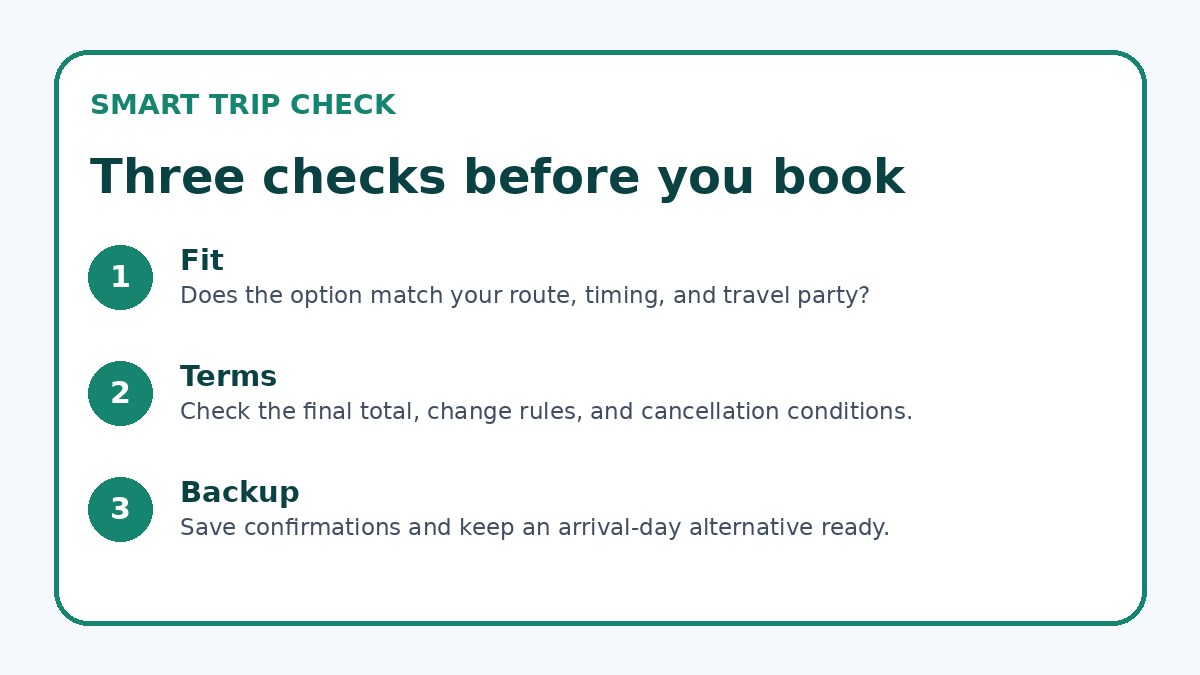
- Decide whether comfort (space, beds) or flexibility (stops, luggage) matters most to your family.
- Compare total door-to-door travel time, including transfers and local transit at each end of the journey.
- Confirm child fare rules, seat reservation policies, and whether car seats or booster seats are provided or required.
- Verify luggage, stroller, and large-item carriage rules on the operator’s booking page before finalizing.
- Plan realistic driving shifts and prebook any overnight stays that offer child-friendly facilities and secure parking.
- If mixing modes, allow at least one extra hour between connections and reconfirm timetables within 48 hours of travel.
Ferries and mixed routes: for island detours and scenic variety
There is no direct mainland ferry between Melbourne and Adelaide, but ferries can be part of a multi-leg itinerary if your family wants to include coastal islands or scenic detours. Ferries to islands near Adelaide or seasonal coastal services may add a memorable element to a longer trip. Combining rail or road travel with a ferry leg requires coordination: check connections so you’re not left waiting with children, and confirm how vehicles, bicycles, and large luggage are handled on ferry services. Ferry cabins, if available, offer a good option for families on overnight crossings.
Mixed-mode trips introduce scheduling complexity and can increase total travel time, but they reward families seeking variety and outdoor experiences. When planning, add buffer time between modes to account for delays, and verify transfer services between ports and stations or coach stops. If you intend to bring a car onto a ferry, verify vehicle height and length limits and whether safety regulations require child restraints on board. Use ferry operator booking pages to confirm exact boarding procedures, pet rules, and any age-specific policies for passengers.
Frequently asked questions
Can I bring a car seat on trains or coaches when traveling between Melbourne and Adelaide?
Most operators allow you to bring a car seat as carry-on luggage, but formal installation points vary and coaches may not have fittings for fixed child restraints. Check the operator’s baggage and safety pages before you book, and if hiring a car at the destination, reserve a properly installed car seat from the rental company. For longer rail trips, reserve seating that gives you space for the seat and any additional baby gear, and confirm any stowage rules for prams and folded strollers.
Is mixing modes (train plus ferry or coach) practical for families?
Mixing modes is practical if you plan buffers and coordinate tickets; it’s rewarding for families wanting island stops or coastal sightseeing. However, transfers can be stressful with small children, so schedule extra time between services and consider booking through providers that permit changes. Always verify connecting services’ timetables and the transfer options—taxis, shuttles, or local buses—and check how operators treat delays or missed connections in their terms so you know your options if something runs late.
What should we pack differently for a public transport trip versus a self-drive?
Public transport favors compact, easily carried items: a daypack per adult, a small folding stroller, activity kits for kids, snacks, and emergency medication. Minimize bulky gear unless operators allow large luggage. For self-drive trips, you can bring larger items like travel cots, more toys, and extra clothing, but remember to secure loose items and plan for storage. In both cases, include a basic first-aid kit, wet wipes, and quick-access entertainment; confirm luggage allowances with your chosen provider before departing.
Final planning note
Families choosing Melbourne to Adelaide transport should weigh practical family priorities—room to move, luggage needs, and how much flexibility you want on the road. Trains and coaches reduce driving stress and let parents relax or engage children during the journey, while driving gives unmatched freedom to stop and explore. Ferries and mixed routes suit families who want an island visit or extra scenic variety, but add coordination. Use the checklist to compare total door-to-door time, seat and car-seat rules, and luggage policies on operator booking pages before you commit. For up-to-date availability and timetable comparisons, you can check Trip.com or the provider pages directly to confirm exact schedules and booking conditions.
Continue planning
Check current options and final conditions
Use the provider page to confirm live availability, the final total, cancellation terms, and every condition that matters to your trip.
This evergreen planning guide was created with AI-assisted drafting and a structured quality review. It does not display live prices, schedules, availability, visa guidance, or provider rankings. Verify current details before booking. Some links are affiliate links; we may earn a commission at no additional cost to you.