
Practical answer first: if your dates are fixed and you want the least stress, book 2–4 months before travel; if you need flexibility or are planning around events, aim for 6–12 weeks with refundable or change-friendly options. Solo travelers often trade lower prices for simpler logistics and peace of mind — one clear booking reduces planning fatigue and helps secure a preferred neighborhood and comfortable, single-room options. If you’re flexible on dates, start searching early to gauge fare patterns but wait to lock in only when your must-haves (accommodation location, activity availability, and transport connections) align. This guide explains the tradeoffs across timing choices, how to compare refundable versus nonrefundable deals, and what to verify on provider pages before you click purchase.
See current options before you compare the details
Availability and final conditions change. Open Trip.com now or keep reading for the practical comparison.
How booking windows affect solo travel in Sydney
Booking timing affects three key things solo travelers care about: accommodation choice, transport connections, and activity availability. In Sydney, desirable central neighborhoods and single-occupancy rooms can sell out earlier than larger group rooms because hotels have fewer single rooms overall. Flights also react to demand cycles; choices between direct and connecting itineraries change price and convenience. When you know which neighborhood you want, such as near the harbour or good transit links, earlier booking reduces the risk of a long commute or multiple transport transfers that add friction to a solo trip.
Beyond logistics, your comfort and safety preferences matter. Solo travelers often prefer well-reviewed, walkable areas and accommodations with clear security features and easy check-in. Booking earlier increases the chance of securing a room that meets those needs. If your itinerary depends on popular day tours, performances, or guided walks, those activities can have fixed capacity and limited slots: factor that into your window so you aren’t forced to choose less suitable alternatives at the last minute.
Choosing between risk and flexibility
Lower prices usually come with restrictions: nonrefundable fares or fixed-date hotel rates. For a solo traveler, the financial tradeoff must be balanced against the risk of a single disruption — illness, a sudden work call, or a change in personal plans can wipe out a nonrefundable fare. Decide how much change or cancellation risk you can stomach and price that risk into your decision. If losing the fare would mean a major setback, favor refundable/changeable options even if they cost more upfront.
On the other hand, fully refundable bookings can be pricier and sometimes sell out sooner. If you have high schedule certainty — for example, approved time off and no major commitments — locking in a nonrefundable deal earlier can save money. Use a middle-ground approach: book transport or accommodation that offers a reasonable change window, or combine a nonrefundable flight with a refundable hotel if that mix better matches your priorities. Always verify cancellation and change terms on the final booking page before you pay.
| Approach | Best for | Tradeoff to check |
|---|---|---|
| Book 3–4+ months ahead | Travelers with fixed dates who value location and room choice | Less ability to react to lower last-minute fares or schedule changes |
| Book 6–12 weeks ahead | Solo travelers seeking balance between price and flexibility | Some preferred rooms or tours may already be limited |
| Book within 2–6 weeks | Flexible travelers who can handle shorter notice and alternate options | Higher chance of paying premium for preferred locations or direct routes |
| Last-minute booking (under 2 weeks) | Highly flexible solo travelers prioritizing lowest upfront cost | Significant risk of limited room types, longer transfers, and nonrefundable conditions |
Ready to check the option that fits your plan?
Use your exact dates and traveler details so the provider page can show the current total and conditions.
Practical steps for timing searches and monitoring deals
Start by mapping fixed points in your trip: confirmed work dates, must-see events, or tour reservations. These anchors set the earliest sensible booking moment for the rest of your trip. Next, set alerts for flights and accommodation and check prices at consistent intervals — weekly at a minimum. For solo travel, also monitor room type availability (single or twin use) rather than just hotel listings; sometimes the hotel remains listed but your preferred room category disappears.
Use comparison tools but treat them as a starting point: always click through to the provider’s final booking page to confirm total price, baggage rules, cancellation terms, and any required identity or visa checks. Trip.com can be one of several places to compare current availability and conditions, but verify the provider page for final confirmations and any restrictions. Keep notes on price trends and be prepared to act when a combination of price and preferred logistics matches your minimum standards.
Before you book
- List your nonnegotiables (neighborhood, single-room type, transit proximity) before searching so you can judge deals against real needs.
- Set price alerts for flights and hotels and review them at least once a week to spot meaningful trends.
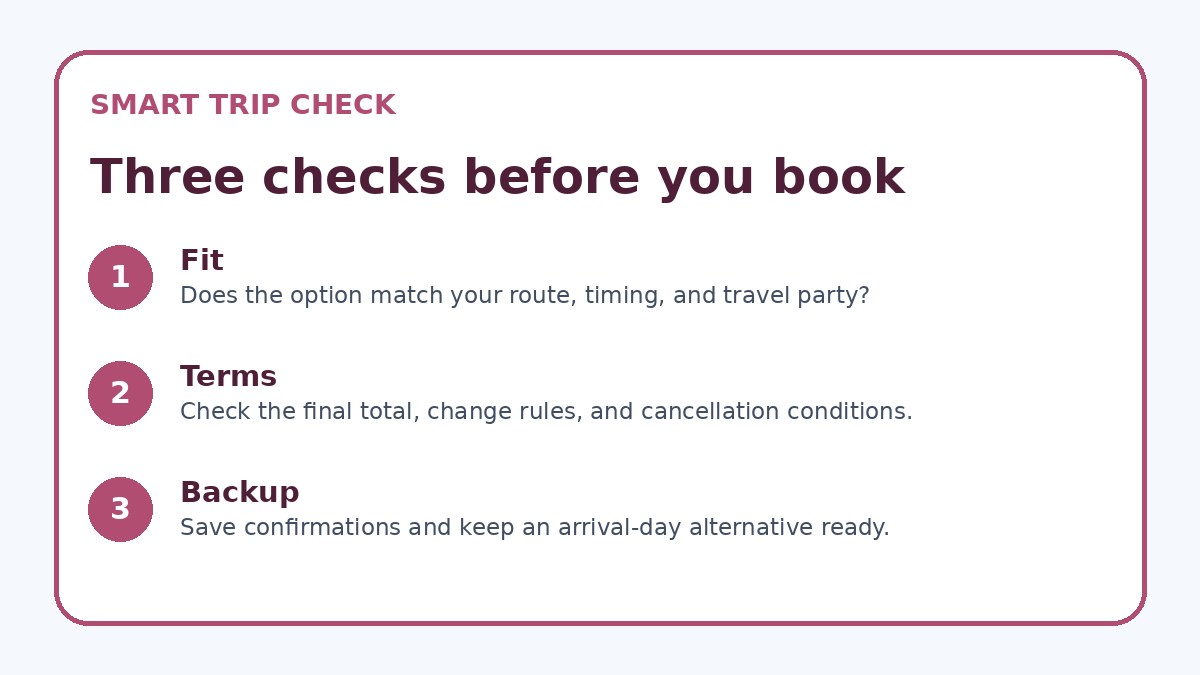
- Before paying, open the provider’s final booking page and read the cancellation, change, and baggage rules in full.
- Compare total door-to-door travel time for flight options, including layovers and transport from Sydney airport to your accommodation.
- Reserve refundable or change-friendly options if losing the fare would cause serious disruption to your plans.
- Document confirmation numbers, provider contact details, and the exact terms referenced on the booking page in a single travel note.
When to lock in versus when to wait
Lock in your booking when your must-haves line up: acceptable neighborhood, acceptable travel time to key sites, and ticketed activities still available. For many solo travelers to Sydney, that means booking accommodation once you can secure a room with good transit access and confirming at least one key tour or event. If airfare looks reasonable for your route and you’re comfortable with the fare rules, purchase the flight and then finalize hotels and activities.
Wait if you’re still deciding on core elements — neighborhood, exact dates, or whether you’ll take connecting flights — because changing a nonrefundable booking can be costly and stressful. If you’re flexible on dates and want to chase the lowest fares, monitor for patterns and only lock in when the combined logistics (flight timing, total travel time, and accommodation location) meet your comfort threshold. Whatever you decide, write down the provider cancellation and change policy details and confirm them at checkout.
Frequently asked questions
How far in advance should I book flights to Sydney as a solo traveler?
There’s no one-size-fits-all answer, but consider your tolerance for risk and how fixed your dates are. If your travel dates are firm, booking several months ahead secures preferred flight times and seat options; if you’re flexible, monitoring fares and booking within a 6–12 week window often balances price and flexibility. Always review fare rules on the final booking page — look for change fees, refundability, baggage allowances, and whether a seat selection is included — because these details determine your real exposure if plans change.
Should I prioritize refundable hotel rates when traveling solo?
Refundable rates offer peace of mind and are often worth the premium for solo travelers who don’t want to risk losing the entire cost of accommodation. If your schedule is firm and you can secure a room in your preferred area at a reasonable nonrefundable rate, that’s also a valid choice. Compare both options and consider mixing strategies: book a refundable first night to guarantee arrival logistics, then reserve the remainder at a lower rate once you’re sure of dates. Verify the exact cancellation deadlines and any admin fees on the property’s booking page before choosing.
Can I rely on last-minute Sydney travel deals as a solo traveler?
Last-minute deals can appear, but relying on them requires flexibility in dates, accommodation type, and location. For solo travelers who can adapt, waiting may yield lower prices, but it can also mean settling for less convenient neighborhoods, longer transfers from the airport, or nonpreferred room types. If you depend on specific activities or neighborhood safety and convenience, it’s safer to lock in at least your arrival logistics and one or two must-do activities rather than expecting favorable last-minute availability.
Final planning note
Choosing a realistic booking window for Sydney travel deals comes down to balancing certainty and flexibility. For most solo travelers, aiming for a mid-range window — roughly 6–12 weeks — gives a sensible mix of price opportunity and reliable availability, while booking earlier suits those with fixed dates or strict neighborhood preferences. Always prioritize the logistics that affect your day-to-day comfort: neighborhood safety, transport time from the airport, and the availability of the specific room type you prefer. Before you finalize anything, verify cancellation, change, and baggage rules on the provider’s final booking page; consider using comparison sites, including Trip.com, to view options but confirm details with the supplier at checkout.
Continue planning
Check current options and final conditions
Use the provider page to confirm live availability, the final total, cancellation terms, and every condition that matters to your trip.
This evergreen planning guide was created with AI-assisted drafting and a structured quality review. It does not display live prices, schedules, availability, visa guidance, or provider rankings. Verify current details before booking. Some links are affiliate links; we may earn a commission at no additional cost to you.