If you’re visiting Los Angeles with family for the first time, renting a car will usually make your life easier—LA is sprawling, public transit is limited for sightseeing, and attractions are spread across neighborhoods. Start by picking a vehicle that fits how many people and bags you have, plus a route plan that groups nearby sights into single-day drives to avoid back-and-forth traffic. Decide whether you want a single base (easier with young kids) or two bases to split driving times. Finally, check pick-up and drop-off locations, child-seat rules, parking options at hotels and attractions, and any one-way drop fees before confirming the rental. These core decisions will shape the pace, comfort, and daily logistics of your family road trip.
See current options before you compare the details
Availability and final conditions change. Open Trip.com now or keep reading for the practical comparison.
Which car to choose and why size matters
Choosing the right vehicle is the most practical first decision. For families, think beyond the number of seats: include space for suitcases, a stroller, groceries, and possibly a cooler. An SUV or minivan gives extra cargo room and a higher driving position for better visibility when navigating busy LA streets and freeways. If you’ll primarily stay near one area and take short drives, a compact or hybrid may be more fuel-efficient, but weigh that against the comfort needs of children and the effort of loading gear every day.
Also consider ease of parking and maneuverability. Downtown parking garages, beach lots, and older Hollywood streets can be tight; if you plan to park and walk a lot, a smaller vehicle fits into more spots. If you expect frequent longer drives—to Joshua Tree, Big Bear, or the coast—prioritize comfort, trunk space, and climate control for the whole family. Finally, verify the rental company’s child-seat availability and whether you need to bring booster seats, since rules and charges vary widely.
Where to base your family and how to split days
Pick a base by grouping attractions you want to visit within short drives. Families who want beaches and a relaxed evening scene will find Santa Monica or Venice convenient; you can walk to the pier, play areas, and restaurants and then drive inland for studio tours or Griffith Park on separate days. Staying in Hollywood or West Hollywood puts studio-area sights and family-friendly museums closer, but beach time will require longer drives. Downtown LA is practical for airport access and some museums, though it’s less convenient for beaches.
Consider whether a single base or two different hotels fits your itinerary better. A single base cuts packing and check-in hassles, which is easier with small children. Two bases can reduce daily drive time if you want both beach days and mountain or desert escapes. If you choose two locations, schedule a mid-trip hotel transfer on a light travel day to avoid exhausting the family and to keep driving windows outside peak rush hours.
| Approach | Best for | Tradeoff to check |
|---|---|---|
| Single base (one hotel for entire stay) | Families with young children or limited time who prefer fewer check-ins | More daily driving between distant attractions and possible longer drives to beaches or mountains |
| Two bases (split stay between neighborhoods) | Families wanting to reduce daily drive time and mix beach and inland experiences | Extra time packing, checking out and in, and possible cost of a second night |
| Large vehicle (SUV/minivan) | Families needing cargo space, strollers, and comfort on longer drives | Harder to park in tight city lots and typically lower fuel efficiency |
| Compact/hybrid car | Families prioritizing parking convenience and fuel economy for short, local driving | Less cargo and legroom, which can be uncomfortable on long days or with many bags |
Ready to check the option that fits your plan?
Use your exact dates and traveler details so the provider page can show the current total and conditions.
Practical route planning and avoiding traffic traps
Los Angeles traffic patterns are predictable once you learn the morning and evening rush hours: highways and major arterials become congested, and travel times can vary drastically by hour. Structure sightseeing into loops that avoid crossing the city during peak times—for example, do a Westside (Santa Monica, Beverly Hills) day in the morning and an eastside (Griffith Park, Hollywood) day when logical. Use real-time navigation apps on the day to adapt, but build buffer time into every plan so you’re not racing to make reservations or tours.
For longer day trips—Malibu, the Channel Islands ferry, or inland mountains—leave early to beat traffic and give kids time to settle in. Plan pit stops for snacks and leg-stretching at parks or scenic pullouts. If you have timed tickets (museum entries or studio tours), schedule those within low-traffic windows and locate nearby parking options in advance. Always have an alternative activity near your base in case a drive takes longer than expected.
Before you book
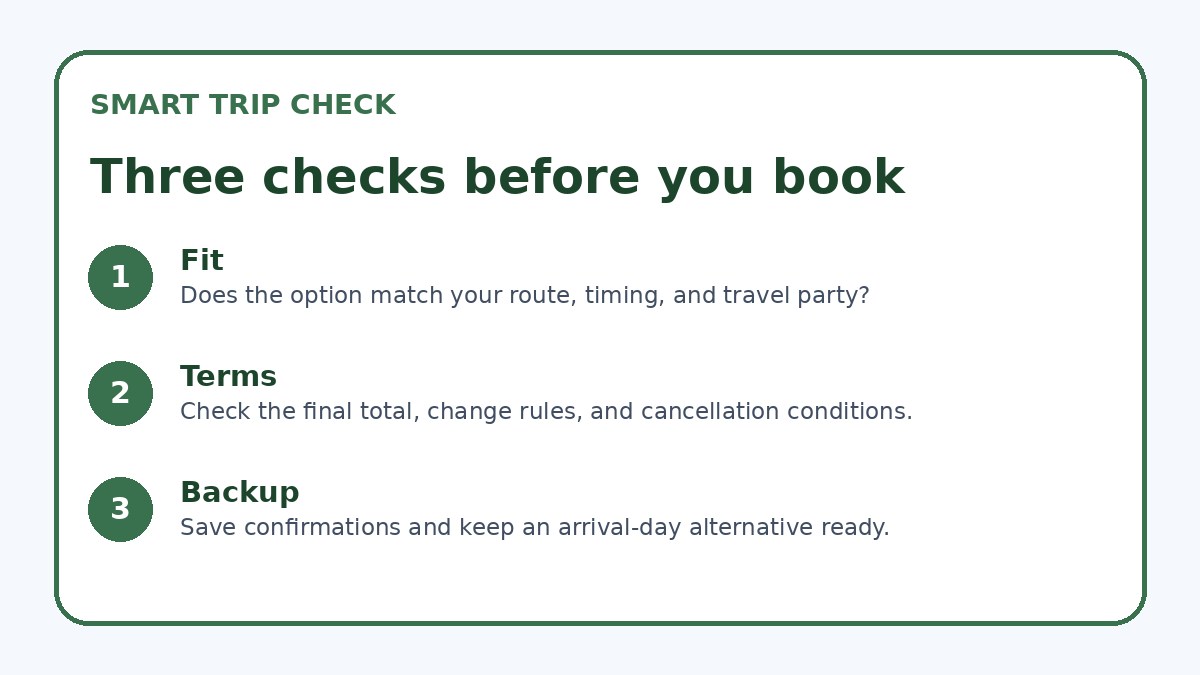
- Measure your luggage and stroller to confirm they fit in your chosen vehicle’s trunk space before booking.
- Reserve child seats through the rental provider or bring your own and verify the rental company accepts them.
- Check hotel parking type (valet, self-park, height limits) and whether parking is included in your rate.
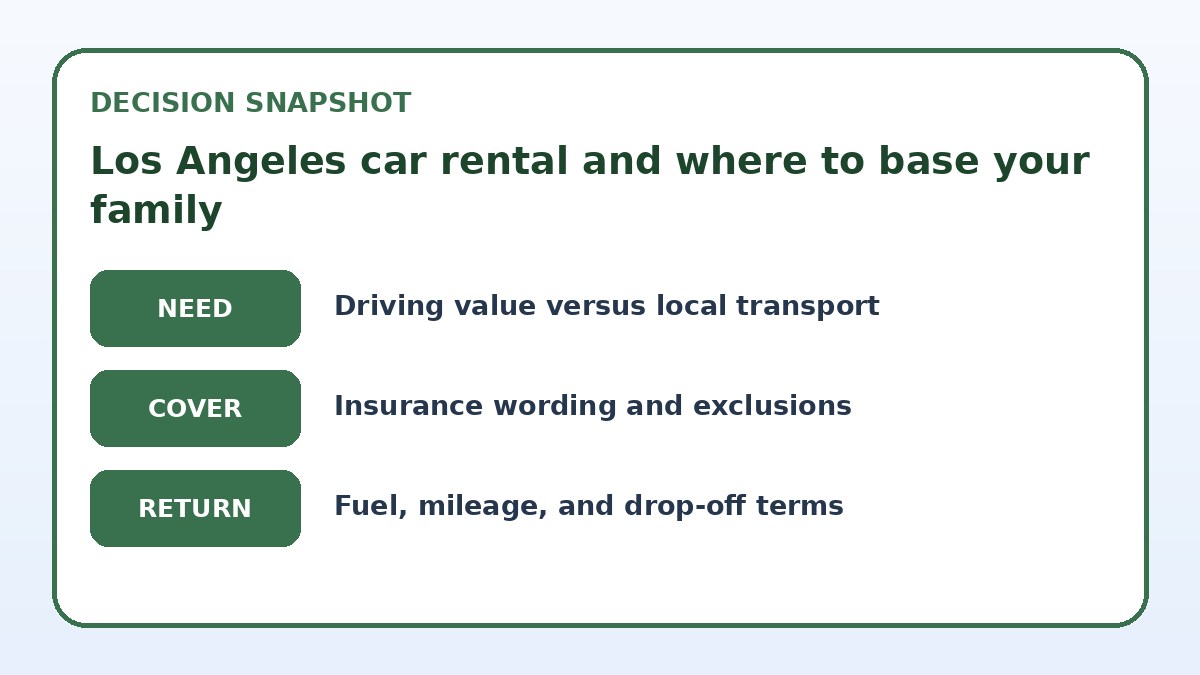
- Note pick-up and drop-off locations and read the final rental page for fuel policy, damage excess, and one-way fees.
- Download or screenshot the rental confirmation, driver’s license page, and roadside assistance contacts for offline access.
- Plan each driving day as a loop, leaving buffer time for traffic and scheduling indoor activities for peak congestion hours.
Booking, insurance, parking, and final checks
When you book, compare pick-up and drop-off locations: airport counters are convenient but can charge extra fees and have longer lines. Off-airport locations may be cheaper and quicker. Before finalizing, read the rental confirmation page for insurer requirements, damage excess, fuel policies, and any one-way or young-driver fees. If you plan to drive outside California or cross state lines on day trips, verify that the rental agreement allows it and whether any geographic restrictions apply.
Parking is a constant consideration in LA. Verify whether your hotel includes parking and whether it’s valet or self-park; ask about height limits for parking structures if you have a taller vehicle. For attractions, check whether on-site lots or nearby metered parking are available and whether reservations are needed. Keep both digital and paper copies of all rental paperwork, your driver’s license, and child-seat documentation, and confirm emergency roadside assistance contact details before you leave the lot.
Frequently asked questions
Is it worth renting a car in Los Angeles with kids?
Yes—renting a car usually makes family travel in Los Angeles significantly easier because attractions are spread out across the region. A vehicle gives you flexibility to set your own schedule, carry strollers and snacks, and return to your hotel midday for naps. However, consider the trade-offs: you’ll manage parking and be exposed to rush-hour congestion. If your itinerary clusters activities near one neighborhood and you prefer not to drive, you could combine short rideshares with walking, but for mixed beach, mountain, and city sightseeing, a rental is typically the most practical choice.
What should I check about child seats and driver rules before renting?
Confirm whether the rental company supplies child or booster seats, the model and condition of the seats, and any additional fees. Check the local child-restraint laws for the ages and sizes of your children so you bring the correct seats if needed. Also verify the rental’s policy for additional drivers and the minimum driver age; some companies add extra charges or restrictions for drivers under a certain age. Always inspect seats on pick-up and note any damage in writing before you accept the vehicle.
How do I avoid wasting time in LA traffic during a road trip?
Plan drives to avoid peak commute windows—typically weekday mornings and late afternoons—by scheduling museum visits, studio tours, or long transfers outside those hours. Structure each day as a local loop rather than crisscrossing the city: group Westside, Hollywood, and Downtown activities on separate days. Use real-time navigation apps to adapt, but keep buffer time in every schedule and set realistic expectations for distances. If a destination has timed entry, build extra time into the trip schedule and locate nearby alternatives in case congestion makes you late.
Final planning note
A Los Angeles family road trip works best when you match vehicle choice, base locations, and daily planning to your family’s rhythms. Prioritize comfort and cargo room if you have multiple children or bulky gear; opt for a compact car if parking and fuel economy matter more and drives will be short. Decide early whether to stay in one base or split your nights to reduce driving, and organize each day as a short loop that avoids peak traffic. Before booking, read the rental provider’s final terms for fuel policy, child-seat arrangements, extra-driver rules, and any geographic restrictions. With those checks done, you’ll reduce surprises and keep the focus on experiences, not logistics.
Continue planning
Check current options and final conditions
Use the provider page to confirm live availability, the final total, cancellation terms, and every condition that matters to your trip.
This evergreen planning guide was created with AI-assisted drafting and a structured quality review. It does not display live prices, schedules, availability, visa guidance, or provider rankings. Verify current details before booking. Some links are affiliate links; we may earn a commission at no additional cost to you.