Practical answer first: most families choose between the intercity train and long‑distance coach for a straightforward, low‑stress Sydney to Canberra transport choice; driving is best if you want total schedule control and flexibility, while ferries are only relevant for adding a scenic detour if you plan a coastal leg. If you need fewer changes and easier luggage handling, prioritize services with direct routes and simple station transfers. For family comfort, compare seat space, onboard facilities, luggage rules and whether strollers or car seats are allowed. Later sections explain tradeoffs—time versus cost, convenience versus scenery—and give decision criteria so you can pick the right mode for your family’s needs and itinerary.
See current options before you compare the details
Availability and final conditions change. Open Trip.com now or keep reading for the practical comparison.
Train: comfort, predictability and easy movement
Taking a train between Sydney and Canberra typically appeals to families who value predictable journeys, the ability to move around, and less hands‑on driving. Trains usually provide corridors where small children can stand or walk a little, and larger luggage spaces compared with many coaches. When comparing options, look at station access in both cities, how easy it is to get a taxi or rideshare at arrival, and whether the train you choose is direct or requires a connection. If your family needs infant seats or stroller storage, verify the operator’s policy before you book.
Decide whether a slightly longer but direct train is better than a faster but multi‑leg itinerary that forces repeated boarding and transfers. Check for dedicated family seating areas or quiet cars if you prefer a calmer trip for napping kids. Remember to confirm exact luggage allowances, bicycle carriage rules, and whether onboard restrooms are family‑friendly. For final booking details and the latest conditions, always verify schedules and ticket rules on the provider’s official booking page or a comparison site such as Trip.com before you commit.
Coach: flexible routing and practical stops
Coaches frequently serve families who need more pick‑up and drop‑off options, or who want a stop at a town en route. Some coach routes are timed to serve regional hubs and can drop you closer to suburban hotels or attractions in Canberra. Coaches often have onboard restrooms and may allow more flexible last‑minute bookings, but that varies by operator. Before choosing a coach, check seat pitch and whether there are power outlets, onboard toilets, and clear luggage policies so you’re not surprised at boarding.
Think about how coach travel fits your family routine: does the route allow sensible stretch breaks and meal stops? A direct coach can be simpler than a train with connections, but also may be less forgiving if someone becomes restless without space to move. Verify cancellation terms, baggage size limits, and infant policies with the operator before purchasing. If you need to compare multiple providers quickly, Trip.com can list current options, but you should still confirm any family amenities on the provider’s official pages.
| Approach | Best for | Tradeoff to check |
|---|---|---|
| Train | Families wanting easy movement, predictable stops, and comfortable seating | May require transfers; check luggage and stroller rules before booking |
| Coach | Groups who want more drop‑off options and potential savings on multi‑stop itineraries | Less onboard space to move; confirm toilet and luggage arrangements |
| Driving | Families needing full schedule control and room for bulky gear | Driver fatigue and parking logistics; factor in rest stops and safety planning |
| Ferry + other modes | Families making a coastal detour for scenery before heading inland | Indirect route with extra transfers; coordinate tight connection times carefully |
Ready to check the option that fits your plan?
Use your exact dates and traveler details so the provider page can show the current total and conditions.
Driving: control, stops and packing considerations
Driving from Sydney to Canberra gives the most control over departure time, rest breaks, and detours to family attractions. If your party travels with bulky items such as multiple car seats, a travel cot or outdoor gear, a private car reduces the hassle of repeated handling. Driving also lets you divide the journey into stopover chunks tailored to nap schedules and meal times. Keep in mind that the person driving is responsible for navigation, fatigue management and vehicle safety; plan driver swaps if possible and factor in rest stops to avoid rushed or unsafe driving.
Before setting off, map out rest and fuel stops, and choose a few safe roadside parks where kids can run. Pack an organized travel bag with easy snacks, water, first‑aid basics, and activity kits to keep children occupied. Confirm that your vehicle seats properly accommodate the required child restraints and that you have any necessary travel documents, roadside assistance membership details, and emergency contacts accessible. Driving can be cost‑effective for groups but needs careful preparation for a calm family experience.
Before you book
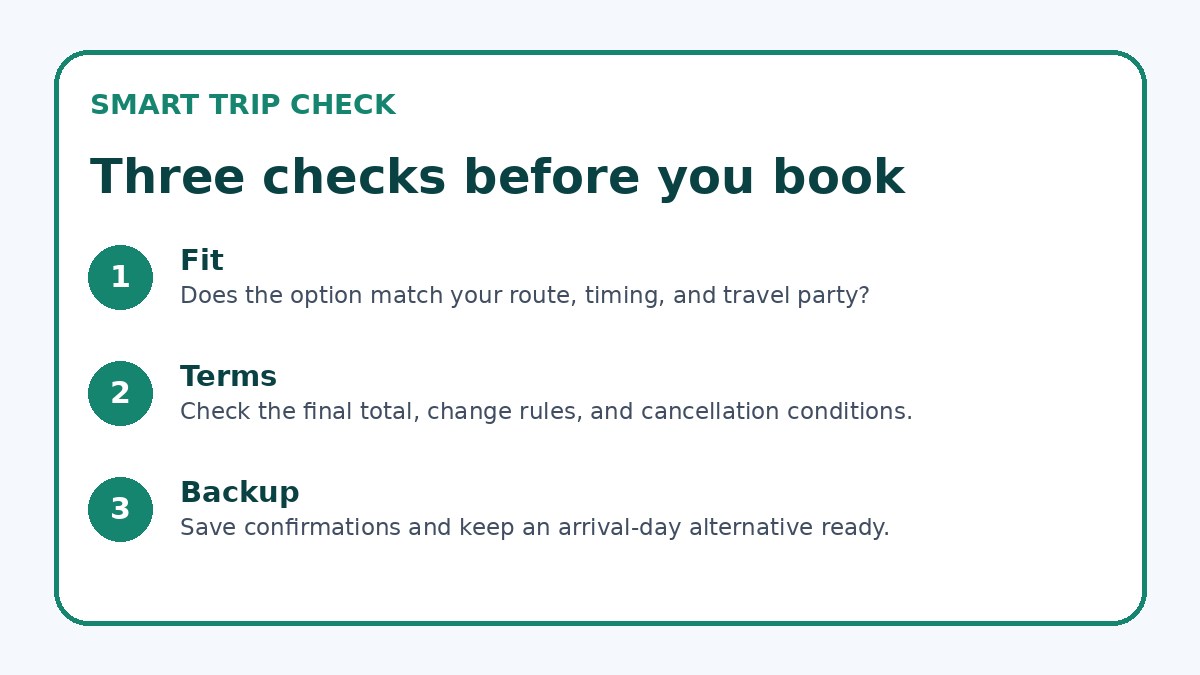
- Confirm direct versus connecting options and the number of transfers for each possible itinerary before comparing times.
- Verify luggage allowances, stroller policies, and child restraint rules on the provider’s official booking page before you buy.
- Pack an activity kit and snacks in a reachable bag so children have distractions during transfers and delays.
- Plan realistic connection windows—add time for bathroom breaks, stroller folds, and walking between platforms or terminals.
- Reserve or pre‑select seats if available to keep your family together and reduce boarding stress.
- Save emergency contacts, roadside assistance details, and local taxi or rideshare apps on your phone for arrival in Canberra.
Ferries and mixed‑mode options: scenic but indirect
There isn’t a direct ferry from Sydney to Canberra—Canberra is inland—so ferries only enter the decision if you’re combining a coastal leg with inland travel. For example, families who want a scenic harbour cruise or coastal sightseeing might take a ferry out of Sydney as part of a multi‑segment journey, then switch to train, coach or car for the inland leg. Mixed‑mode travel can add variety and make the trip an excursion rather than a simple transfer, but it also increases the number of handoffs and potential delays that affect small children.
If you plan a mixed itinerary, carefully coordinate the transfer times between ferry, train or coach so that connection windows are realistic with children in tow. Consider luggage logistics and whether each provider accommodates bulky items or strollers during transfers. Verify the boarding process for ferries, including where you disembark relative to your next transport, and always check the final operator’s booking pages for restrictions and the most up‑to‑date passenger information before you buy.
Frequently asked questions
Which mode is easiest for traveling with a stroller and a baby seat?
Trains generally give more space to manage a stroller and a baby seat because you can move through corridors and often find larger luggage areas. However, operators differ: some trains allow easy carriage of strollers and will store folded prams in vestibules or dedicated spaces, while others may limit storage. Coaches may accept strollers in the luggage hold but loading and unloading takes time, and vehicles without step‑free boarding make it harder. Driving removes those constraints but requires securing the baby seat properly. Always check the specific provider’s policies on stroller and child‑seat carriage before booking.
How should families compare total door‑to‑door travel time?
Don’t just compare scheduled journey times—factor in time to get to and from stations or coach terminals, expected waiting or transfer windows, and typical traffic or urban peak delays. For driving, include planned rest stops and parking at your destination. Mixed‑mode itineraries need realistic buffer time for disembarking a ferry and walking to the next terminal, or for handling luggage between providers. Use the final operator pages to confirm terminal locations and arrival procedures so you can estimate door‑to‑door time accurately and build in extra minutes for family needs.
Can I rely on online comparison sites for the final booking?
Comparison sites are good for seeing options side‑by‑side, but always use them as a starting point. Once you find an itinerary that suits your family, go to the transport provider’s official booking page to verify seat selection, cancellation and refund policies, baggage rules, and any family‑specific amenities. Trip.com can be used to compare current availability and conditions, but it should not replace direct confirmation on the operator’s site where the binding rules and the latest service notices are posted.
Final planning note
Choosing Sydney to Canberra transport for a family depends on what you value most: trains for predictable comfort and space to move, coaches for flexible routing, driving for control and packed gear, and ferries only as part of a scenic coastal add‑on. Start by listing priorities—number of children, luggage needs, nap schedules and willingness to drive—then compare direct versus connecting options, luggage policies, and seat availability. Verify the final details on the provider’s booking pages, allow generous connection time, and pack a small family kit for comfort. With a bit of preparation, you’ll pick the option that reduces stress and keeps the trip enjoyable for everyone.
Continue planning
Check current options and final conditions
Use the provider page to confirm live availability, the final total, cancellation terms, and every condition that matters to your trip.
This evergreen planning guide was created with AI-assisted drafting and a structured quality review. It does not display live prices, schedules, availability, visa guidance, or provider rankings. Verify current details before booking. Some links are affiliate links; we may earn a commission at no additional cost to you.