
If you’re taking your family from Rome to Florence, pick the ticket flexibility that matches how you actually travel: kids’ naps, stroller space, and last-minute timetable changes matter. For most families the practical choice is a flexible train fare that allows easy date or time changes and straightforward refunds for one or more passengers. Cheaper non-refundable fares can save money but add stress if plans change, while fully flexible fares cost more but reduce the chance of scrambling at the station with tired children. This article explains the tradeoffs, the ticket features to compare, and the family-focused decision steps so you can book with confidence. Read this before you pick a fare type so you know what to check on the provider’s booking page and what to carry to keep the trip calm.
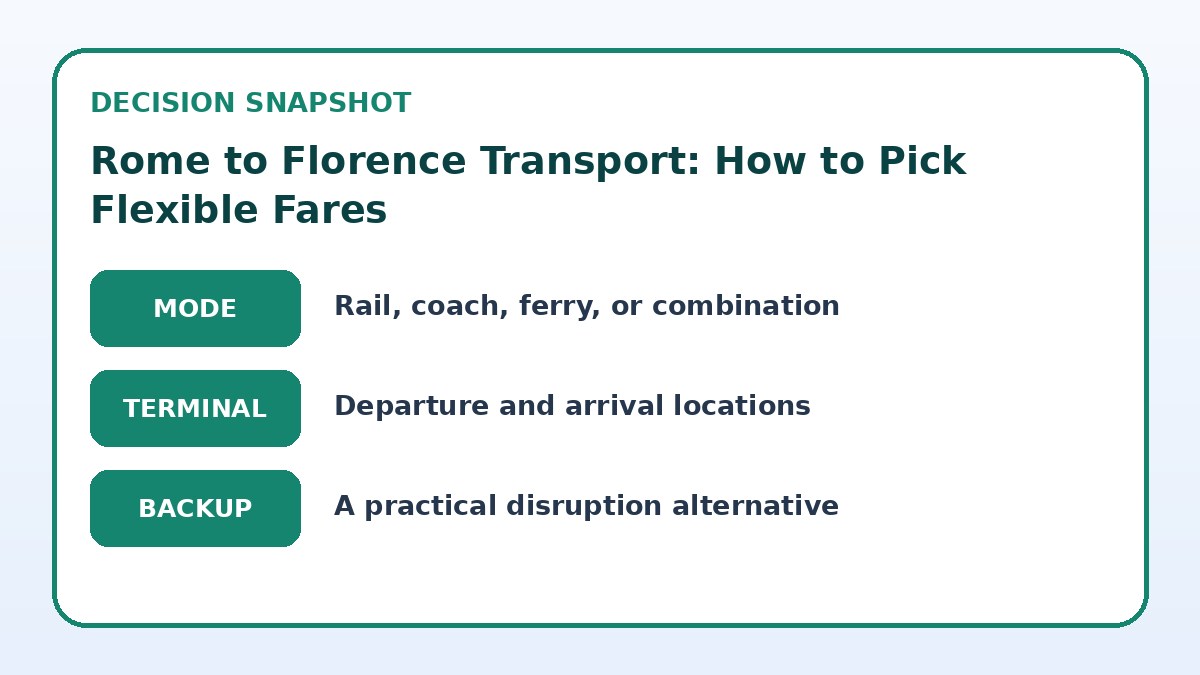
See current options before you compare the details
Availability and final conditions change. Open Trip.com now or keep reading for the practical comparison.
What ticket flexibility means for families
Ticket flexibility generally refers to the ability to change travel dates or times, cancel and receive a refund, or transfer a ticket between passengers. For families these features translate to real-world scenarios: a child’s sudden fever, traffic delays getting to the station, or a longer-than-expected museum visit. Flexibility can apply to individual passengers on a single booking or to the whole reservation; read the rules closely because some cheaper fares let adults change their ticket but not accompanying children, or allow changes only with a fee.
Beyond changes and refunds, flexibility also involves practical add-ons that make travel smoother: optional seat reservations so a family can sit together, allowances for strollers and car seats, and how a carrier handles missed connections. When comparing fares, treat these elements as part of the flexibility package. Even a refundable ticket can feel rigid if seat reservations are sold out or if a carrier’s process for applying refunds is slow and administrative. Plan by imagining likely disruptions and mapping them to the fare’s written rules.
Comparing fare types and family tradeoffs
At a high level you’ll see three common fare types: fully flexible refundable fares, semi-flexible/changeable fares, and non-flexible/non-refundable fares. Fully flexible fares allow cancelations and changes with minimal penalty and are best when family plans are uncertain. Semi-flexible fares usually permit time changes or partial refunds for a fee — a useful compromise if you expect minor shifts. Non-flexible fares maximize savings but shift all risk to you; they can be appropriate for families with iron-clad plans and predictable schedules.
When weighing tradeoffs, consider the likelihood and cost of disruptions. Factor in the cost of buying a replacement ticket, the administrative hassle of refunds, and the impact on children’s routines. Also compare whether seat reservations or family discount rules are included or sold separately, because paying extra for reserved family seating can be worth more than the premium for refundable fares in some cases. Decide which risk you can tolerate and how much time you want to spend managing changes if something goes wrong.
| Approach | Best for | Tradeoff to check |
|---|---|---|
| Buy fully flexible tickets for the whole family | Families with uncertain timelines or frequent plan changes | Higher upfront cost in exchange for easy refunds and changes |
| Choose semi-flexible fares plus paid seat reservations | Families who want cost control with some ability to adjust | Change fees may apply and reservations add to total price |
| Pick non-refundable fares and accept the risk | Families with fixed schedules confident in travel plans | Lowest fare but little to no recourse if you must change plans |
| Mix flexible and cheap separate tickets per person | Families with variable individual plans or split itineraries | More bookings to manage and different rules for each ticket |
Ready to check the option that fits your plan?
Use your exact dates and traveler details so the provider page can show the current total and conditions.
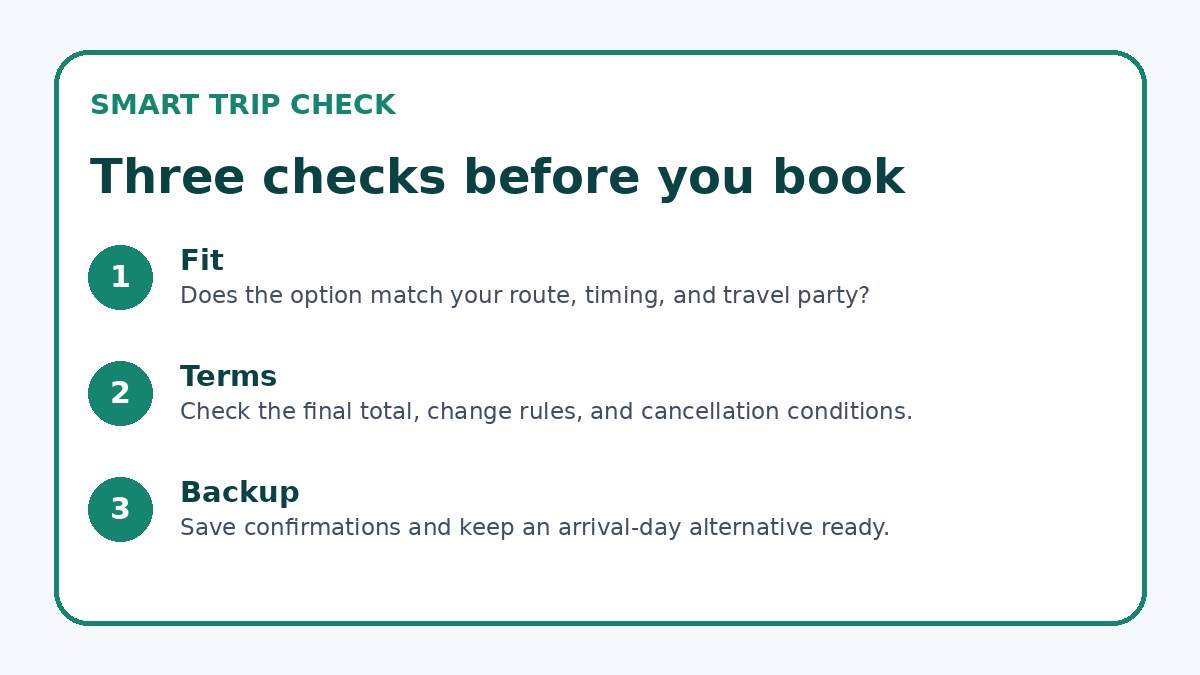
Practical steps to compare and book
Start by searching trains for your preferred travel day and note available fare classes and what each allows: changes, refunds, and whether fees apply. On each option’s booking page, confirm whether changes are allowed free of charge, subject to a fee, or not permitted at all, and whether refunds are full, partial, or only in voucher form. For families, prioritize fares that explicitly allow separate handling for children or permit changes to individual passengers without voiding the whole reservation.
Next, check seat reservations and policy details separately even if a fare claims to be flexible. Some companies require paid seat reservations on high-speed lines, and family seats may sell out early. Verify stroller and luggage allowances, whether infants travel free or require a ticket, and how the provider issues refunds (bank transfer, voucher, or credit). Finally, compare the total cost after adding any required reservation fees so you’re comparing real out-of-pocket prices, not just headline fares.
Before you book
- Confirm whether changes are free, fee-based, or not allowed on the carrier’s final booking page before you pay.
- Reserve family seats if available and add required paid seat reservations to your total cost comparison.
- Check stroller, car seat, and luggage allowances and whether these are included with your chosen fare.
- Note how refunds are issued (bank transfer, credit, or voucher) and the expected processing time on the booking page.
- Record booking references, passenger names, and the provider’s customer-service contact to speed up any changes.
- Allow buffer time between connections or choose direct options to reduce the chance of missed legs with non-flexible tickets.
When to mix transport modes or buy separate tickets
Families sometimes combine high-speed trains with regional services or coach legs to save money or match schedules. Mixing modes can increase complexity: each provider will have its own flexibility rules, and a missed connection on one leg may not entitle you to compensation or a replacement on the next. If you choose mixed tickets, ensure each leg has acceptable change or refund terms, or build buffer time into your itinerary to lower the chance of missed connections.
Buying separate tickets for each family member or leg can be useful when one person’s plans are more flexible than the rest — for example, an older child staying longer with relatives. Separate tickets can also let you buy a flexible fare for the most risk-prone traveler and cheaper fares for others. The key is documenting the rules for each ticket and keeping easy access to booking references so you can quickly make changes or request assistance if plans shift.
Frequently asked questions
Can I change only one passenger’s ticket on a family booking from Rome to Florence?
Sometimes, yes — but it depends on the carrier and the fare class. Some providers allow changes for individual passengers within a single reservation, while others require modifying the whole booking. Check the fare rules on the final booking page: look for language about individual passenger modifications and associated fees. If the booking system is unclear, contact the carrier’s customer service before purchase so you’re not surprised when a change affects the entire family reservation.
Are seat reservations necessary for families on Rome to Florence trains?
Seat reservations are not always mandatory, but they’re highly recommended for families who want guaranteed seating together, especially on high-speed and popular services. Some fares include reservations, others sell them separately; during busy travel times family seats can sell out. Before booking, confirm whether your selected fare covers seat reservations or if you must purchase them separately, and factor that extra cost and availability into your decision about fare flexibility.
If I buy cheap non-refundable tickets, what’s the easiest way to handle an unexpected change?
With non-refundable tickets your main options are buying a new ticket for a different train, seeking a partial refund or credit if the provider allows it, or using travel insurance to recoup costs. The practical approach is to check whether the carrier offers inexpensive change options or credits, and to compare the cost of buying a new ticket versus upgrading at the station. Also consider travel insurance that covers missed transport for an extra layer of protection for families.
Final planning note
Choosing ticket flexibility for a family trip from Rome to Florence is a balance between cost and peace of mind. Fully flexible fares give the clearest path to easy changes and refunds, while semi-flexible options plus paid reservations often provide a sensible middle ground. Non-refundable tickets work when schedules are fixed and you accept the risk. Always read the specific change, refund, and seat reservation rules on the carrier’s booking page before purchase, and compare total out-of-pocket costs. For current availability or to compare options across providers, you can check Trip.com as one place to view live choices, but verify all fare conditions on the provider’s own page before finalizing.
Continue planning
Check current options and final conditions
Use the provider page to confirm live availability, the final total, cancellation terms, and every condition that matters to your trip.
This evergreen planning guide was created with AI-assisted drafting and a structured quality review. It does not display live prices, schedules, availability, visa guidance, or provider rankings. Verify current details before booking. Some links are affiliate links; we may earn a commission at no additional cost to you.