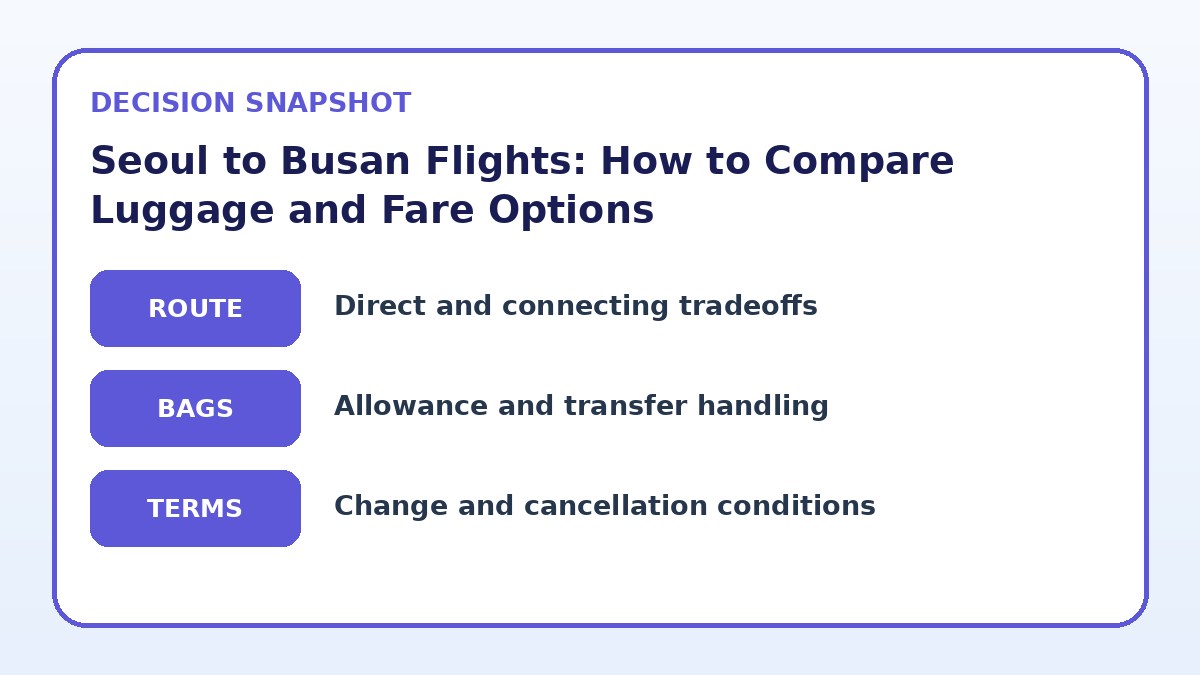
If you’re traveling from Seoul to Busan with more bags than usual, the single most practical step before you book any ticket is to confirm the airline’s baggage allowances and the total out-the-door cost for your exact luggage mix. Do that first, then compare flight duration, direct versus connecting routing, and airport or ground-transfer logistics that matter when you're hauling heavy or bulky items. Beyond the headline fare, fees and baggage weight/size limits vary by fare class and carrier and may change at check-in versus what’s shown in search results. Use this checklist-driven approach to avoid surprises at departure: verify checked-bag weight and dimensions, confirm carry-on rules, check connection feasibility, and review airport transfer options in both Seoul and Busan. Keep the provider’s final booking page open to confirm the precise baggage charges before you complete payment.
See current options before you compare the details
Availability and final conditions change. Open Trip.com now or keep reading for the practical comparison.
Start with precise baggage rules and total costs
Airlines and low-cost carriers publish baggage rules that differ by fare class, route, and booking channel. Before you press buy, identify exactly how many checked pieces, the permitted weight per piece, and the maximum dimensions allowed on your chosen ticket. Don’t rely on a generic baggage summary; the allowance shown in the search results or mobile app may be a baseline and not reflect the fare’s actual rules. Open the carrier’s baggage policy for the specific fare code on the airline’s final booking page and take note of any links to overweight or oversized baggage terms.
Equally important: calculate the true total cost for the bags you will travel with. Some carriers let you pre-pay for extra pieces at a lower rate than airport check-in, while others charge per kilogram or per additional item. The math should include any fees for oversized or overweight pieces, plus fees for carry-on if your item exceeds dimensions. If multiple carriers appear comparable on fare, use the baggage total as a tie-breaker, and keep a screenshot or PDF of the final booking page showing the baggage fees before you complete payment.
Weigh route choices: direct vs connecting flights
A direct flight is usually the simplest option when you have bulky or multiple bags, but travel time and airport convenience can change the calculus. If a direct flight is available, verify whether it departs from Gimpo or Incheon (if relevant) and whether the arrival airport in Busan is convenient for your onward plans. Connections introduce extra handling points where you may need to collect and re-check bags or transfer between terminals. That adds time, physical effort, and risk—especially when tight connection windows are involved.
When comparing options, examine the minimum connection time, baggage transfer policy, and whether the same carrier or alliance operates both legs. If you must change terminals or re-check luggage, consider longer layovers. Also look at arrival times: off-hour arrivals can mean fewer ground transport choices and more hassle with oversized items. Balance price against these practicalities; paying a bit more for a single nonstop can save time and reduce strain if you’re traveling with heavy luggage.
| Approach | Best for | Tradeoff to check |
|---|---|---|
| Book a direct flight with standard baggage allowance | Travelers prioritizing simplicity and minimal handling | Potentially higher fare but fewer transfer hassles and lower risk of bag mishandling |
| Book a connecting flight to save base fare | Travelers willing to trade time for lower ticket cost | Extra transfers increase handling, time, and the chance of rechecking or missing connections |
| Buy a bundled fare with checked-bag inclusions | Those carrying predictable extra pieces who want upfront clarity | Bundled fares may lock you into less-flexible change policies or higher base fare |
| Pre-purchase excess baggage online or use a parcel service | Travelers with oversized or many items beyond airline limits | Adds logistical steps and costs; shipping may take longer than the flight |
Ready to check the option that fits your plan?
Use your exact dates and traveler details so the provider page can show the current total and conditions.
Plan ground logistics at both ends
Getting to and from the airports with extra baggage often determines how comfortable the whole trip feels. In Seoul, check which airport the flight uses—Gimpo or Incheon—and plan how you’ll transport your bags to the terminal. Consider whether a taxi, ride-hailing service, or airport limousine will accept all your pieces without multiple trips; trains and buses can be cramped at peak times. For Busan, decide how you’ll reach your final destination from the airport: taxis are quicker with luggage but cost more, while public transit may require stair or elevator transfers and is less convenient with bulky items.
If you are flexible on airports or departure times, pick options that minimize transfers and walking with bags. At both airports, review the terminal layout and whether baggage trolleys are available and free. Also identify luggage services: some airports offer luggage storage, porter assistance, or paid help moving oversized pieces. If you anticipate exceeding airline limits, compare options for shipping excess items separately via a parcel service or local freight provider as an alternative to paying high overweight fees.
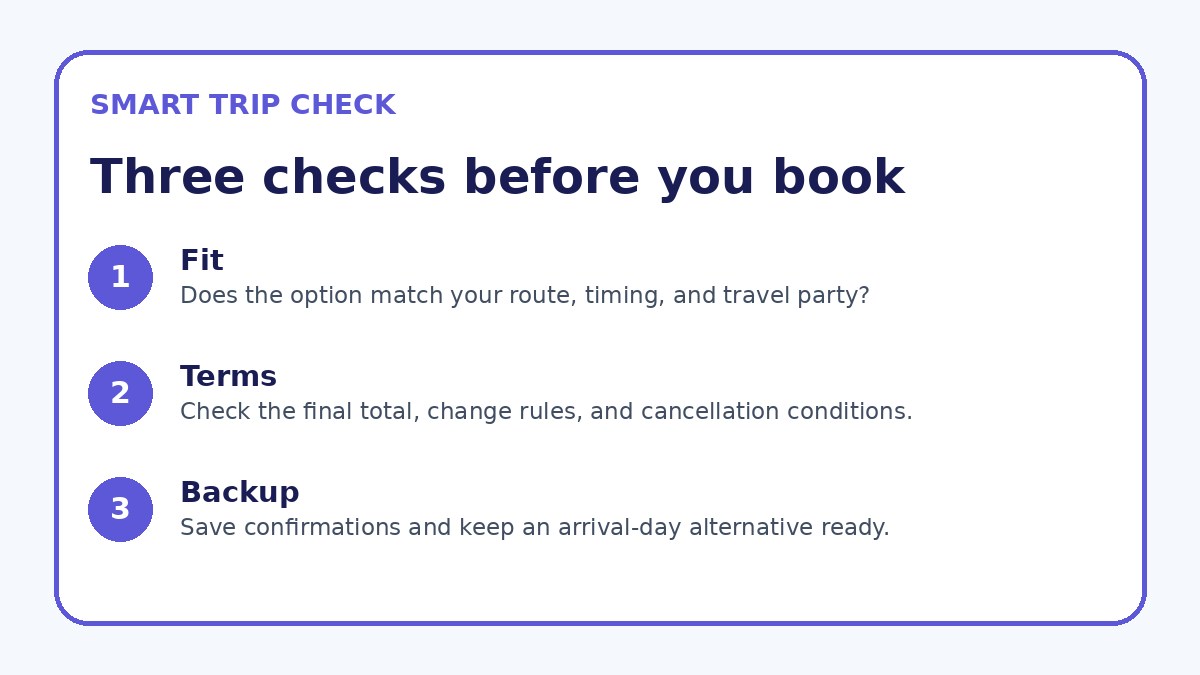
Before you book
- Confirm the exact checked-bag weight limit, maximum dimensions, and number of included pieces for the specific fare code on the carrier’s final booking page before paying.
- Calculate total baggage fees (checked, overweight, oversized, carry-on surcharges) for your planned number and size of items and compare across flight options.
- Compare nonstop and connecting itineraries for bag-handling steps and minimum connection times; avoid tight connections if you must re-check or move heavy luggage.
- Verify which Seoul airport (Gimpo or Incheon) the flight departs from and plan your ground transfer method that can accommodate all bags in one trip.
- Reserve seats that ease boarding and overhead access (aisle or bulkhead) and consider priority boarding or bundled fares if they include needed baggage allowances.
- If baggage exceeds airline limits, get a written quote for excess charges from the carrier and compare with local parcel or freight services as an alternative.
Select seats and ancillary options with luggage in mind
Seat choice affects how much carry-on you can comfortably manage. Bulkhead and aisle seats make stowing and accessing bags easier, while window seats may limit access in cramped cabins. When booking, review seat maps and consider paid seat selection if it reduces the chance of being blocked by other passengers or needing to gate-check items. Also evaluate priority boarding or checked-bag bundling offers: sometimes bundled fares that include extra checked pieces save both money and last-minute stress compared with paying for each bag individually.
Remember to verify what happens at boarding: some airlines may gate-check oversized carry-ons for safety or space reasons. If your carry-on is unusually large, check the airline’s rules for gate-checked items and whether that service is free or charged. Add any required special-handling requests—fragile tags, oversized labels, or assistance for heavy bags—during booking or by calling the airline to confirm. Keep contact details for airline baggage support handy in case of issues after arrival.
Frequently asked questions
How can I tell whether a Seoul to Busan flight includes the checked baggage I need?
The only reliable place to confirm what’s included is the carrier’s final booking page for the exact fare code you intend to buy — not the initial search summary. Look for a link or section labelled baggage allowance or fare conditions, which should specify the number of pieces, per-piece weight limit, and size limits. If the policy language is unclear, use the airline’s customer-service chat or phone line and get a confirmation reference or screenshot. Keep that documentation until after travel so you can present it if fees are charged differently at the airport.
Is it better to pre-pay for extra bags or pay at the airport?
Pre-paying online is often cheaper and removes the uncertainty of airport counters, but policies differ between carriers. When you pre-pay, you typically secure a known price and the booking page will reflect that charge. Paying at the airport can be more expensive and add time to check-in, and if counters are understaffed you might face delays. If you expect overweight or oversized items, request a written estimate from the airline in advance; for very large or heavy pieces, compare the airline’s fee with a parcel service, which could be more economical depending on timing.
What should I plan for when transferring between flights with extra luggage?
Assume transfers add time and handling steps. First, check whether your baggage is checked through to your final destination or must be claimed and rechecked at the connection—this depends on whether both legs are on the same ticket and airline. Allow extra layover time to collect and move luggage between terminals or re-check at transfer desks. Check terminal transfer options (shuttle, walking routes, elevators) and whether trolleys are available. If connections are tight, consider switching to a longer layover or choosing a direct flight to reduce the risk of missed connections and damage to bags.
Final planning note
Traveling from Seoul to Busan with extra luggage becomes far less stressful when you make baggage rules and real costs the starting point of your decision. Confirm the specific fare’s baggage allowance on the airline’s final booking page, calculate total baggage charges, and choose routes and seats that minimize handling. Factor in ground transfers at both airports and have a backup plan—prepaid extra bags, parcel shipping, or a bundled fare—if your luggage exceeds limits. With these checks in place, you can balance cost against convenience and select the option that saves time, reduces physical strain, and limits surprises at the counter.
Continue planning
Check current options and final conditions
Use the provider page to confirm live availability, the final total, cancellation terms, and every condition that matters to your trip.
This evergreen planning guide was created with AI-assisted drafting and a structured quality review. It does not display live prices, schedules, availability, visa guidance, or provider rankings. Verify current details before booking. Some links are affiliate links; we may earn a commission at no additional cost to you.