If you have a meeting to close and a flight to catch, plan your Fukuoka airport transfer with the same precision you apply to meetings. First, pick the transfer approach that fits your schedule risk tolerance: allow buffer time for check-in and security, decide whether you need a direct ride or can use a scheduled service, and factor luggage handling and payment method into the choice. This article gives a clear decision path for business travelers: identify the local transport options, compare door-to-door convenience against cost and reliability, and list the exact things to verify on booking pages. Use these steps to turn airport travel from an unknown into a routine, efficient part of your business trip.
See current options before you compare the details
Availability and final conditions change. Open Trip.com now or keep reading for the practical comparison.
Assess your schedule and buffer needs
Start by working backward from your flight’s check-in or recommended arrival time. For business travelers, the safe approach is to treat airport transfer planning like meeting logistics: give yourself margin for delays caused by traffic, last-minute work calls, or sudden changes to luggage. Consider where you'll be in Fukuoka at the end of the day—city center hotels, conference venues, or client offices each add different travel variables. If your final appointment might overrun, schedule a longer buffer or choose a flexible transfer option that can accommodate small timing changes.
Also factor in the airport’s layout and processing times as part of your buffer decision. While you should not assume specific processing speeds, allow extra time if you need to check bags, go through security, or visit an airline counter. If you must connect to another flight or pass through immigration, add more margin. Create two plans: a primary transfer timed for a comfortable arrival and a backup route or later service you can use if your schedule shifts. That redundancy reduces stress and helps keep you on time for business commitments.
Compare transport approaches: private car, shuttle, and public options
Private cars and on-demand taxis offer door-to-door pickup and the simplest logistics for business travelers balancing time and convenience. Their main benefits are direct routing, easier luggage handling, and no fixed stops. The tradeoff is that availability, pickup procedures, and final booking terms can vary; always check the provider’s latest pickup location instructions, waiting policies, and accepted payment methods on their booking page. For late-evening departures or tight itineraries, a private ride removes transfers and reduces the chance of missed connections.
Scheduled airport shuttles and public transit—buses, metro, or regional trains—can be reliable and cost-effective if your schedule is firm and you can reach a stop or station easily. They typically follow fixed timetables and known routes, which simplifies planning if your end time is certain. However, they may require short walks, luggage handling between hops, or rigid departure times. Compare door-to-door travel time against total journey time including any walking or transfers, and evaluate whether a shuttle’s pickup point is convenient for your final meeting location.
| Approach | Best for | Tradeoff to check |
|---|---|---|
| Private car or taxi | Direct door-to-door travel with flexible timing and less handling of luggage | Higher per-trip cost and variability in pickup procedures; must confirm vehicle size and payment options |
| Scheduled airport shuttle | Predictable departures from central points with some cost savings over private hires | Fixed stops and times may require extra walking or earlier departure from your meeting or hotel |
| Public train or metro plus short taxi | Fast, reliable core travel on high-capacity routes when you can adhere to timetables | Requires luggage transfers and coordination between modes, less door-to-door convenience |
| Hotel-arranged transfer | One-stop coordination via your accommodation, often with clear pickup instructions | May have limited availability and could be pricier than booking directly; verify cancellation terms |
Ready to check the option that fits your plan?
Use your exact dates and traveler details so the provider page can show the current total and conditions.
Booking details to verify before you commit
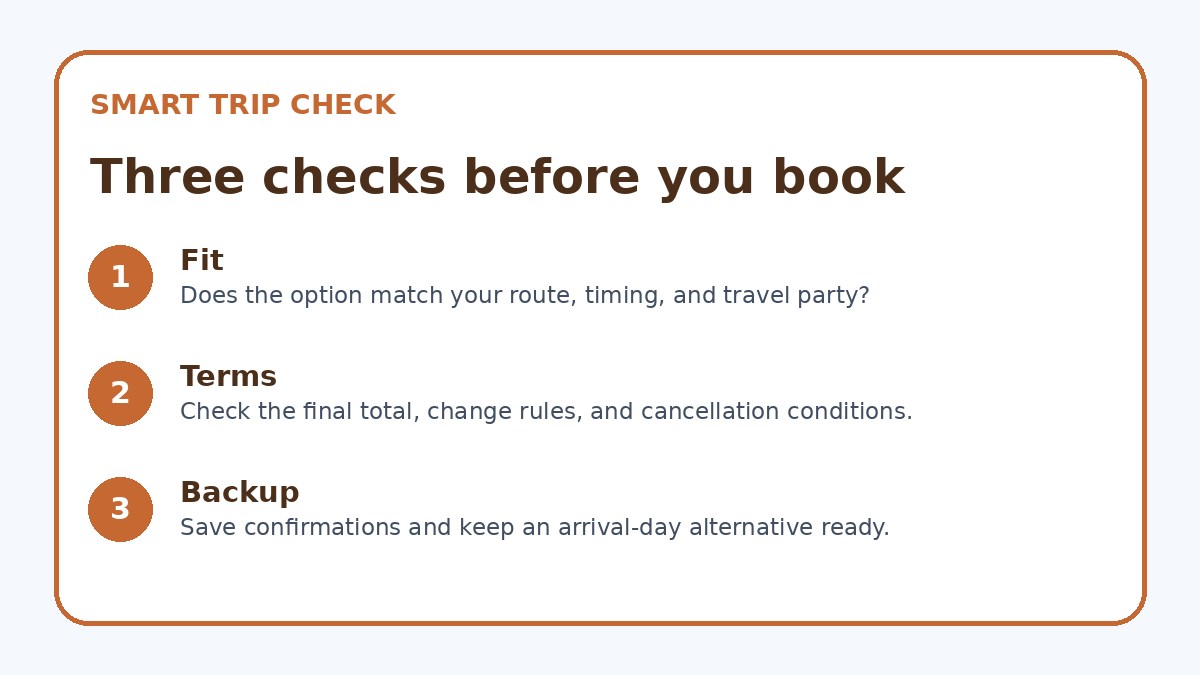
When you’re ready to book, check specific operational details on the provider’s final page. Confirm pickup location formatting (hotel lobby, street corner, or station exit), driver contact procedures, and how waiting time is handled. For scheduled services, verify boarding points and whether advance seat reservations are required. For private hires and taxis, look for clear instructions about where the driver will meet you and how to identify them. If you rely on a third-party app, confirm the provider’s most recent terms and local contact numbers.
Also verify acceptable payment methods and cancellation or change policies. Business travel often requires flexible changes, so understand whether you can modify pickup times, add stops, or recover a portion of fees if plans change. Check whether receipts suitable for expense reports are provided and what information they include. If you need invoicing or corporate billing, contact the provider in advance to confirm how they handle company accounts. For comparison shopping, you can use Trip.com as one place to see current availability, but verify details on the actual supplier page before paying.
Before you book
- Note your flight’s recommended check-in time and subtract your chosen buffer to determine the latest acceptable departure from your meeting or hotel.
- Select two transfer options (primary and backup) that match your timing risk tolerance and passenger/luggage needs before you leave for meetings.
- Confirm pickup point details, driver contact methods, and identification procedure on the supplier’s final booking page or confirmation email.
- Verify vehicle size or luggage allowance and request a larger vehicle if you carry cases, samples, or presentation equipment.
- Check payment methods, invoicing options, and how to obtain a receipt suitable for expense reporting before you confirm the ride.
- Save local emergency and customer-service numbers and add the pickup reference to your calendar with an alarm for departure time.
Luggage, group size, and special requirements
Match vehicle type to your luggage and passenger needs. If you travel with a wheeled case, presentation materials, or technical gear, choose a transfer that explicitly accommodates larger items or offers extra trunk space. For groups or shared rides, confirm whether the service caps the number of passengers and how luggage is distributed. Bringing fragile or bulky equipment often means choosing a private car or booking an upgraded vehicle type; ask the provider about handling and any additional size restrictions before finalizing a booking.
Also plan for special requirements like accessibility, child seats, or multilingual drivers. If any passenger has limited mobility, request a vehicle with step-free access and confirm the pickup point is accessible. For international business travelers who prefer English instructions, note whether the operator provides driver contact details and pickup confirmation in your preferred language. Clear, early communication of these needs reduces the possibility of last-minute mismatches and keeps your final leg smooth and reliable.
Frequently asked questions
How far in advance should I book a Fukuoka airport transfer for a business trip?
For predictable peace of mind, book private transfers at least a day in advance where possible; scheduled shuttle seats can also be pre-booked. If your itinerary is tight or you require a specific vehicle size or accessibility features, confirm the booking as early as you can to secure the needed service. For last-minute departures, contact providers directly to check immediate availability and pickup procedures. Always re-check the provider’s final booking page the day before travel for any updates to pickup points or special instructions.
What should I do if my meeting runs late and I risk missing a booked transfer?
Have a contingency plan: either keep a later scheduled shuttle or a contact for on-demand taxis or private hires. Before booking, understand each provider’s change and cancellation rules so you can modify without unexpected penalties. If you anticipate a likely overrun, choose a flexible transfer with a buffer or a provider that lets you adjust pickup windows. In real time, call the transfer operator to explain your status and request a delay or rebooking; many can accommodate close-in changes if contacted promptly.
Can I combine public transit and a short taxi to manage time and cost for the trip to the airport?
Yes; combining a fast train or metro segment with a short taxi or rideshare for the first or final mile balances speed and cost. Plan the transfer points carefully so you avoid heavy luggage on stairs or long walks between stations. Check where trains or metros stop in relation to your final meeting location, and confirm taxi pickup points and timing at those stations. Before choosing this hybrid approach, evaluate whether the added complexity is acceptable for your schedule and whether you can comfortably handle luggage between modes.
Final planning note
For business travelers in Fukuoka, treating the airport transfer like a business task reduces stress and keeps schedules reliable. Make decisions by first setting the buffer you need, then comparing door-to-door convenience against schedule rigidity and luggage needs. Verify operational details—pickup points, vehicle size, payment and cancellation rules—on the provider’s final booking page before you pay. Keep a backup option and clear contact numbers to manage late changes. With these checks in place, your return transfer becomes a planned, manageable step that protects your meeting outcomes and gets you to the airport with confidence.
Continue planning
Check current options and final conditions
Use the provider page to confirm live availability, the final total, cancellation terms, and every condition that matters to your trip.
This evergreen planning guide was created with AI-assisted drafting and a structured quality review. It does not display live prices, schedules, availability, visa guidance, or provider rankings. Verify current details before booking. Some links are affiliate links; we may earn a commission at no additional cost to you.