If you’re planning a first visit to Washington, DC, the practical choice comes down to three questions: do you want convenience, control, or a mix of both? Packages (flight + hotel + sometimes tours) wrap logistics into one booking and can save time when you’re short on planning bandwidth. Booking components separately—flights, hotels, local transit, and individual attractions—gives you more flexibility to choose neighborhoods, adjust length of stay, and prioritize specific museums or events. This guide compares those approaches so you can match them to your priorities, budget flexibility, and comfort with research. Read on for the tradeoffs that matter for a DC trip, what to check on provider pages before you hit purchase, and a short checklist to use while shopping Washington, DC travel deals.
See current options before you compare the details
Availability and final conditions change. Open Trip.com now or keep reading for the practical comparison.
When a package makes sense for your first Washington, DC trip
A package can suit travelers who prefer one-stop planning. If building an itinerary feels overwhelming, a bundled booking reduces the number of decisions: one confirmation email, a single policy to review, and fewer vendor relationships to track. Packages often include suggested sightseeing or transfers that give a straightforward structure for a short trip. For first-time visitors who want a relaxed introduction to the city without micro-managing each arrival and departure, the logistical simplicity is a real benefit.
That convenience comes with practical tradeoffs to weigh. Packages may offer a narrower selection of properties or flight times compared with searching the market separately. If you want to stay in a specific DC neighborhood—such as Dupont Circle, Capitol Hill, or near the National Mall—or if you have precise flight-time needs, a package might not match those preferences. Before booking, read the package terms and verify what’s changeable: which elements can be modified, whether refunds are partial or full, and where to confirm local pickup or reservation details.
When booking components separately is the better choice
Separating flights, hotels, and tours gives you control over the travel experience—and can be especially useful in Washington, DC, where neighborhood choice affects your daily rhythm. Book your flight based on your preferred arrival time and connection tolerance; then choose a hotel near the metro line or sights you plan to visit. Buying attraction tickets directly or in advance through the museum or operator pages can give you access to timed-entry options and the latest reservation requirements. This approach is ideal if you plan to linger at a few museums, add day trips, or want specific accommodation features.
The main downside of DIY booking is time and coordination. You’ll need to compare schedules, keep track of multiple confirmation numbers, and reconcile separate cancellation policies. There’s also the risk of compatibility issues—matching arriving flight times with check-in windows or shuttle schedules, for example. Mitigate those risks by creating a simple itinerary document listing all confirmation numbers, check-in/check-out times, and contact information for each provider. If you prefer, use a price-aggregation site like Trip.com to compare availability and then complete bookings on the provider’s official pages for the final terms.
| Approach | Best for | Tradeoff to check |
|---|---|---|
| Package booking (flight + hotel + extras) | Travelers wanting one-stop planning and fewer vendor contacts | Less flexibility on flight times, hotels, and separate cancellation rules |
| Separate bookings for flights and hotels | Visitors prioritizing exact schedules and neighborhood choices | More time to research and manage multiple cancellation policies |
| Package with customizable add-ons | Those who want structure but still pick certain hotels or tours | Customization may increase cost and complicate refunds or changes |
| Hybrid approach (book flight or hotel bundled, buy tours separately) | Travelers balancing convenience and control | Requires more coordination but keeps key elements flexible |
Ready to check the option that fits your plan?
Use your exact dates and traveler details so the provider page can show the current total and conditions.
How to compare value and flexibility (decision criteria)
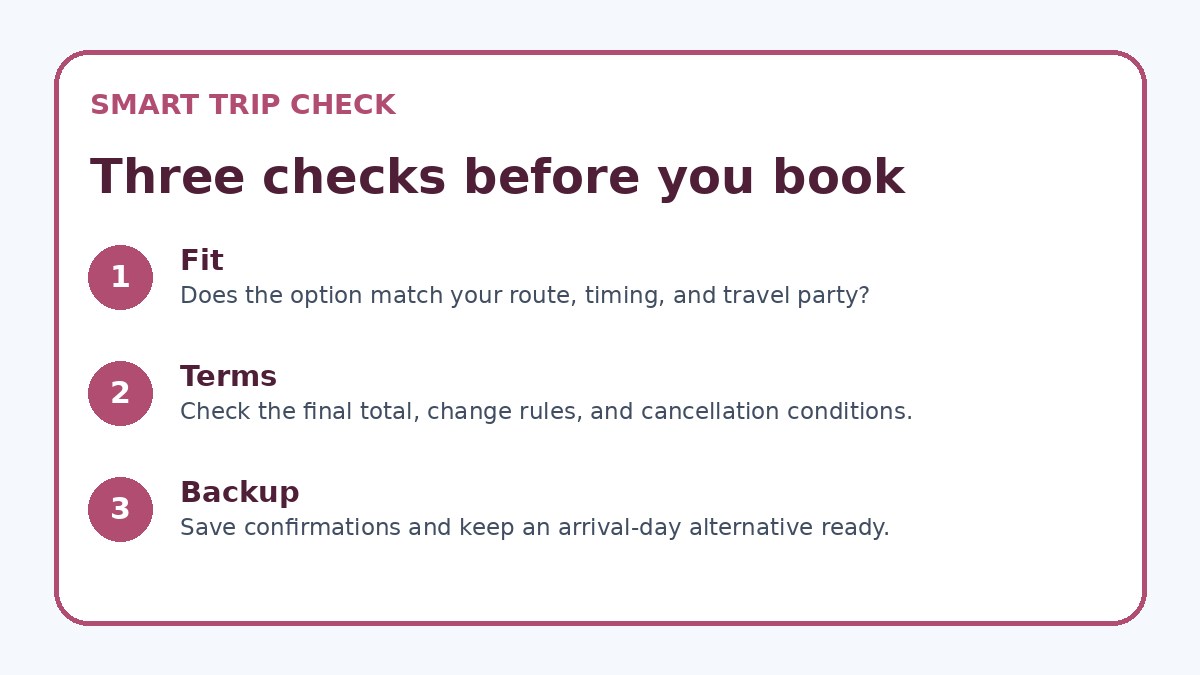
Start by ranking what matters most: schedule control, neighborhood choice, price predictability, or minimal planning. If schedule control is critical—say you need to arrive early for a business meeting or special event—prioritize direct flight options and flexible fare rules. If neighborhood matters for walking access to sites or nightlife, prioritize hotel location over a small fare difference. For price predictability, compare the total out-the-door cost, including taxes, baggage fees, and attraction reservation fees. A side-by-side spreadsheet with columns for refundability, change fees, and included extras helps make the tradeoffs visible.
Next, check the fine print on cancellation, changes, and bundled inclusions before committing. For packages, verify which single provider handles customer service and how refunds are processed. For separate bookings, note that each supplier’s rules apply individually—your flight ticket may be nonrefundable while a hotel reservation could be flexible. Also compare arrival logistics: how you’ll transfer from the airport (shared shuttle, rideshare, or Metro) and whether those transfers are included in a package. Confirm these details on the provider’s final booking page to avoid surprises.
Before you book
- List your non-negotiables (arrival time, preferred neighborhood, must-see sites) and rank them before comparing deals.
- Compare total out-the-door costs: base fare plus taxes, baggage fees, resort fees, and attraction reservation charges.
- Open each provider’s final booking page to read cancellation, change fees, and what’s included before you confirm.
- Check transfer options from the airport to your hotel and whether transfers are included in a package or must be arranged separately.
- If you need timed-entry tickets for museums or memorials, verify reservation requirements and book them through the attraction’s official channel.
- Save all confirmations and create a one-page trip plan with addresses, metro lines, contact numbers, and ticket QR codes.
Practical tips for first-time visitors booking Washington, DC travel deals
Plan around the neighborhoods and transit lines that match your interests rather than just the lowest rate. Staying near a Metro line, like the Red, Blue, or Orange, multiplies your daily options; staying within walking distance of the National Mall is convenient but often more expensive. If you value mornings at museums or long evening walks, prioritize a hotel with earlier check-in or luggage storage options. For attraction tickets that use timed entries—Smithsonian units and other popular museums may recommend reservations—book those directly to secure your preferred slots.
Use a two-step booking habit: compare packages and component prices on an aggregator or travel site to understand the market, then open the provider’s own page to confirm the terms you care about. If you buy a package, note the steps required to add or change activities later and the contact method for customer support. If you assemble your own trip, save a single document with all booking confirmations, transit directions, and emergency contacts. This habit reduces last-minute stress and helps should you need to change or cancel any piece of your itinerary.
Frequently asked questions
Are travel packages usually cheaper than booking everything separately for Washington, DC?
Packages can be cost-competitive because they bundle components and simplify checkout, but that isn’t universally true. Savings depend on travel dates, flexibility of your schedule, and whether bundled hotels or flights match your preferences. To decide, compare the package’s total price with the prices of separate bookings for the exact same flights and hotel nights, and factor in extras like baggage or attraction reservation fees. Always read cancellation and change policies on the provider’s final booking page to see how much flexibility you’re buying.
How should I choose a neighborhood in DC when booking my hotel or package?
Choose a neighborhood based on the activities you plan: the National Mall and Smithsonian museums suit first-time sightseeing; Penn Quarter and Chinatown are convenient for theaters and restaurants; Dupont Circle and Logan Circle offer nightlife and cafes; Capitol Hill is close to the east end of the Mall and congressional sites. Prioritize proximity to a Metro station if you expect to rely on public transit. Check walking distances and transit lines on a map rather than only looking at hotel star ratings or promotional descriptions.
If I buy a package, how do I confirm specifics like luggage allowances or attraction reservations?
After purchasing a package, get the exact details from the provider who issued the booking. Check the airline’s page for luggage rules and seat options and the hotel’s page for check-in, parking, and early luggage storage policies. For included tours or attractions, confirm whether they require separate timed reservations and where to collect tickets. Never assume the package includes all local transfers or timed-entry tickets—verify each component on the provider’s final booking pages so you understand what’s included and what needs a separate reservation.
Final planning note
For a first-time Washington, DC visit, choose the approach that matches your priorities: pick a package if you want simplicity and fewer logistics to manage, or assemble separate bookings for maximum control over flights, neighborhoods, and timed attractions. A hybrid approach often delivers the best of both worlds—bundle the part you want simplified and handle the rest yourself. Whatever you choose, do the key comparisons: total cost, cancellation rules, transfer logistics, and attraction reservation requirements. Use a single itinerary document to keep confirmations and contact information handy, and always verify final terms on the provider’s booking page before you pay.
Continue planning
Check current options and final conditions
Use the provider page to confirm live availability, the final total, cancellation terms, and every condition that matters to your trip.
This evergreen planning guide was created with AI-assisted drafting and a structured quality review. It does not display live prices, schedules, availability, visa guidance, or provider rankings. Verify current details before booking. Some links are affiliate links; we may earn a commission at no additional cost to you.