If you’re traveling solo between Osaka and Kyoto, choose the rail option that matches your priorities: JR rapid/local trains if you value speed and simplicity, private lines for closer station access, and highway buses when you want the lowest-effort budget choice. Practical decisions come down to three things: how close your start and end points are to major stations, whether you need luggage convenience, and how fixed your timetable is. This guide explains those tradeoffs plainly and gives a short checklist for booking and day-of-travel checks. Read the quick points, then use the sections that match your priority—speed, cost, comfort, or flexibility—to make the single best choice for your solo trip.
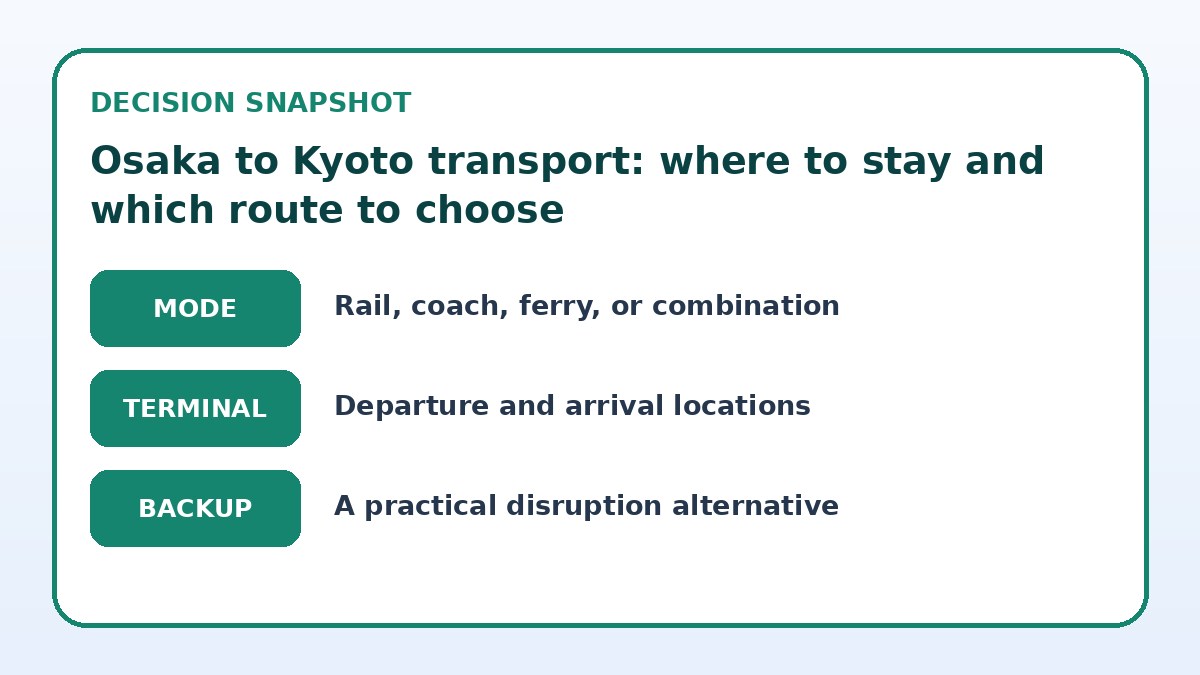
See current options before you compare the details
Availability and final conditions change. Open Trip.com now or keep reading for the practical comparison.
Decide by speed and simplicity: direct trains and transfers
For many solo travelers, speed and a straightforward journey are top priorities. Direct trains that require no transfers minimize stress: you board at a major Osaka station and disembark at Kyoto’s central station. The advantage is fewer decisions mid-trip and predictable platform navigation, which is especially useful if you’re carrying luggage or arriving after a long day of travel. When comparing direct trains, focus on departure frequency, whether seats are reserved or unreserved, and which stations are most convenient for your accommodation. A slightly slower direct service with fewer platform changes can be preferable to a faster route that requires a confusing transfer.
When evaluating options, map your door-to-station and station-to-hotel walking or transit times as part of the total journey. A train advertised as faster on paper may not be if it leaves you at a peripheral station that adds time and cost for local transport. Also consider how many times you must manage baggage—each transfer adds handling risk. Before booking, look at run patterns: some routes offer many departures per hour while others rely on infrequent scheduled trains. Verify precise departure and arrival stations and platform transfer details on the operator’s final booking page to avoid surprises.
Choose by cost and frequency: buses and local trains
If your priority is budget, highway buses and slower local trains are the usual contenders. Buses can offer lower fares and direct hotel-area stops, but they trade off speed and potential traffic delays. Local trains often stop more frequently and may require a longer ride time, yet they provide very regular departures that reduce wait time anxiety. For solo travelers who plan flexible schedules and want to trim expenses, compare how often each service runs during your travel window and whether the fare structure allows one-way purchases without prebooking.
When cost sensitivity is high, also compare convenience-related expenses: will a cheaper bus drop you near your accommodation, or will a longer train route force additional transfers that erode savings? Consider whether seat reservations are optional or necessary—reserved seats reduce uncertainty but can add cost. Check baggage policies and whether overnight buses or early-morning services align with your arrival and departure timing. Always verify the latest availability, seating options, and boarding points on the provider’s booking page, and consider Trip.com as one place to compare current schedules and conditions.
| Approach | Best for | Tradeoff to check |
|---|---|---|
| Direct express train | Travelers who prioritize speed and minimal transfers | May be slightly more expensive or require seat reservations during busy periods |
| Private local rail lines | Those staying near smaller stations or needing convenient station access | Frequent stops can increase journey time compared with express services |
| Highway bus | Budget-focused travelers and those with endpoints near bus stops | Subject to road traffic and often slower than rail in peak periods |
| Slow local trains with frequent departures | Travelers who value schedule flexibility and multiple departure options | Longer overall travel time and possible standing room during rush hours |
Ready to check the option that fits your plan?
Use your exact dates and traveler details so the provider page can show the current total and conditions.
Prioritize comfort and luggage: reserved seats and station access
Comfort matters more when you’re traveling solo and relying on your own planning—especially with luggage or after long festival days. Reserved seats, express services with roomy seats, or choosing departures that use main terminal platforms can make a small extra cost worthwhile for stress reduction. Evaluate whether an express train provides more legroom and easier luggage storage than a busy commuter service. Also think about station features: some stations have elevators, escalators, and clearer signage that reduce the effort of moving bags between platforms and exits.
If accessibility or minimizing physical strain is a concern, target services that stop at stations with direct exits to street-level or to specific transit hubs. Confirm whether the train or bus boarding area is level with the platform and if staff assistance is available—details that may change and should be checked on the operator’s final booking page. For evening or off-peak travel, reserved seats are useful because unreserved cars can fill quickly. Bring a small travel scale and luggage straps to keep baggage organized regardless of which transport you choose.
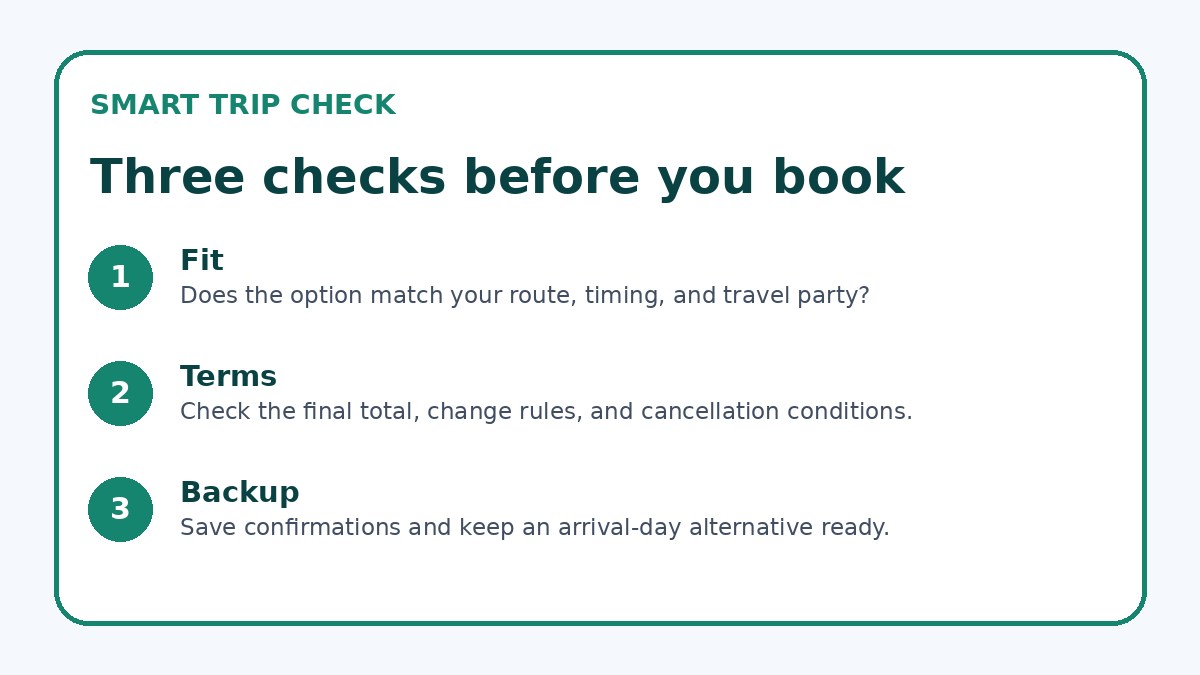
Before you book
- Map door-to-station and station-to-hotel times to calculate true door-to-door travel duration.
- Compare frequency of departures in your travel window to avoid long waits or risky connections.
- Verify whether your chosen service requires or offers reserved seating and book if you prefer certainty.
- Check luggage allowances and whether stair-free station access is available for your route.
- Confirm real-time schedules and any planned maintenance on the provider’s official booking page before departure.
- Have a backup route identified (alternate station or bus stop) and keep screenshots of bookings and contact numbers.
Flexibility and contingency planning: when plans change
Solo travel frequently requires backup plans. Choose services with easy rebooking or frequent departures if your schedule is uncertain. If you anticipate last-minute changes, picking a provider with many daily departures reduces the cost of urgency and the need for advanced change fees. For same-day flexibility, local trains with high frequency or bus routes that run often are simpler to switch between without significant delay. Consider travel protection options if you have nonrefundable local arrangements that would be costly to modify.
Also plan for day-of disruptions: line maintenance, unexpected crowding, or heavy luggage can force you to switch options. Keep an eye on real-time status via the provider’s live updates and have a backup route mapped—identify a nearby alternative station or a bus stop you could use instead. Carry a screenshot of your booking and a note of the operator’s help desk number. If relying on connecting services, leave longer transfer windows to absorb delays and avoid tight connections that add stress to a solo itinerary.
Frequently asked questions
Is it better to take a train or bus from Osaka to Kyoto when traveling alone?
Both trains and buses have strengths for solo travelers. Trains usually offer faster, more frequent, and more reliable journeys between central Osaka and Kyoto, with major stations that make transfers easy. Buses can be cheaper and may drop you closer to certain hotels, but they are subject to traffic and usually slower. Decide by mapping where you start and end, checking how many transfers each option requires, and weighing comfort needs against budget. Always verify departure points, boarding instructions, and seat reservation options on the operator’s booking page before choosing.
Do I need to reserve a seat in advance on rail services between Osaka and Kyoto?
Seat reservations are not always necessary, but they can reduce stress—especially during peak travel times, holidays, or if you’re carrying significant luggage. Unreserved cars are fine for many solo travelers during off-peak hours, but reserving guarantees a seat and may simplify boarding. If you prefer guaranteed space or a specific seating arrangement, check the provider’s reservation policy and available seat types on the final booking page. For last-minute travel, choose services with frequent departures to avoid needing a reservation.
How should I factor luggage into choosing Osaka to Kyoto transport?
Luggage affects platform transfers, walking distance, and carriage choice. If you have large bags, favor services with reserved seating, direct station-to-station routes, and stations known for elevators and clear signage to reduce physical handling. Buses sometimes offer more straightforward loading but can involve longer travel times. Before booking, verify baggage policies, storage space, and whether elevators or ramp access exist at your boarding and arrival stations on the provider’s booking page. Pack essentials in a carry-on and bring straps or organizers to keep items compact and manageable.
Final planning note
For solo travelers, the most practical Osaka to Kyoto transport option depends on your primary priority: choose express or direct trains for speed and simplicity, private lines for station convenience, buses for budget savings, and frequent local trains for schedule flexibility. Start by mapping station proximity to your accommodations and factoring luggage and comfort needs. Use reserved seats when you value certainty, and always verify live schedules, seat availability, and station access on the provider’s official booking page before you finalize. Keep a simple backup plan and contact details handy so you can adapt calmly if plans change.
Continue planning
Check current options and final conditions
Use the provider page to confirm live availability, the final total, cancellation terms, and every condition that matters to your trip.
This evergreen planning guide was created with AI-assisted drafting and a structured quality review. It does not display live prices, schedules, availability, visa guidance, or provider rankings. Verify current details before booking. Some links are affiliate links; we may earn a commission at no additional cost to you.