
For a business traveler leaving Paris, the practical decision is simple: pick an airport transfer option that balances schedule reliability with predictable door-to-door time. Start by identifying which airport your outbound flight departs from (Charles de Gaulle, Orly, or Beauvais), then match your departure time, luggage needs, meeting schedule, and tolerance for uncertainty to a transfer mode. If you must be at the airport with a firm buffer, choose a transfer with guaranteed pickup windows or a private car; if you have flexible time and want to save, rail plus shuttle or a taxi alternative can work. This guide explains the tradeoffs, the questions to ask at booking, and how to verify the latest operational details on the provider’s booking page so you arrive relaxed and on time.
See current options before you compare the details
Availability and final conditions change. Open Trip.com now or keep reading for the practical comparison.
Pick the right transfer by departure airport and schedule
Paris has several airports and each requires a different timing mindset. Start by confirming which airport your airline uses and the airline’s minimum arrival recommendation for international or domestic flights. Business travelers should also factor in time to drop off rental cars or retrieve stored materials and the distance from your meeting location to the nearest rail or road link. Map the route on a transit app to see typical options and station names so there’s no confusion on the day.
Next, turn your calendar into a timeline: work backward from your airline’s check-in or boarding deadline and add buffer minutes for local traffic, security screening, and unexpected delays. For early-morning or late-night flights, verify the transfer mode runs at that hour — not all trains or shuttles operate 24/7. Document a firm departure window from your hotel or office and share it with the driver, concierge, or colleague who’s coordinating the pickup.
Compare private car, taxi, rideshare and public transit
Private car transfers and chauffeur services offer door-to-door pickup and the advantage of a set pickup time; they can be prebooked with vehicle size and meet-and-greet details. These are useful when you need a guaranteed pickup for a tight itinerary or when carrying presentation materials. When you book, verify the cancellation policy, included waiting time, what happens if you’re delayed, and exactly where the driver will meet you — those details are what you should confirm on the provider’s final booking page.
Taxis and rideshares are flexible but can be unpredictable during rush hours or events that cause surge pricing and longer waits. Public transit (RER trains, metro, and official airport shuttles) is often cheaper and can be faster during heavy traffic, but it requires transit connections and time for luggage transfers. For each option, weigh the predictability of travel time against cost and convenience — and always plan a backup if the first choice becomes unavailable.
| Approach | Best for | Tradeoff to check |
|---|---|---|
| Prebooked private car | When schedule certainty and door-to-door service matter most | Higher cost and requires advance booking and clear pickup instructions |
| Taxi or rideshare | Flexible departures with immediate street-level access | Variable wait times and possible surge pricing during peak hours |
| Train + airport shuttle | Avoiding road traffic and keeping costs moderate | Requires transfers and extra time for luggage handling |
| Hotel concierge-arranged transfer | Convenience, billing to the room, and local logistics handled for you | May be pricier and you must confirm exact pickup point and timing |
Ready to check the option that fits your plan?
Use your exact dates and traveler details so the provider page can show the current total and conditions.
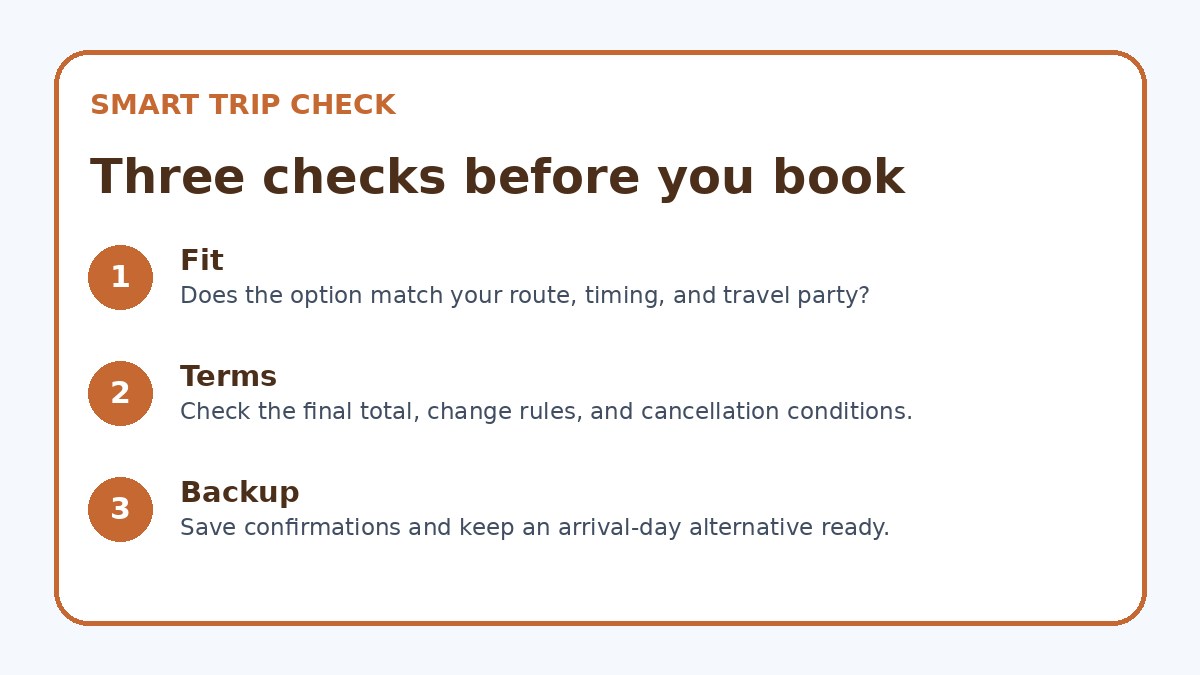
Account for meetings, luggage and last-minute needs
Business travel often includes last-minute schedule changes, additional meetings, or material retrieval. Build explicit extra time into your plan for any unforeseen discussions or for packing final documents. If you need receipts, corporate billing, or an invoice for expense reporting, ask for that at booking and keep confirmation emails. For hotel pickups, confirm where the driver will wait (lobby, street entrance, or concierge desk) and whether the driver will assist with luggage.
Consider luggage size when choosing a vehicle; a small car may not comfortably carry a large roller bag and a garment bag. If you anticipate last-minute courier needs—shipping samples or documents—allow time to drop them at a courier office or hotel concierge that handles outbound shipments. These practical checks prevent rushed decisions that can lead to missed flights or extra stress.
Before you book
- Confirm your departing airport and the airline’s recommended arrival time before choosing a transfer mode.
- Book or reserve your transfer with clear pickup address, phone contact, and vehicle details; save confirmation and cancellation terms.
- Allow explicit buffer time for traffic, security lines, and any last-minute meetings—add at least one extra contingency window.
- Verify luggage capacity and plan for additional cargo needs or courier drop-offs ahead of departure.
- Enable provider tracking or save the driver’s contact number for updates and changes the travel day.
- Prepare a Plan B: a trusted taxi number, a nearby train or shuttle route, and an alternate pickup location.
Verify, communicate, and keep a Plan B
Before the travel day, recheck your booking confirmation and any service-specific details the provider lists: pickup address and point, contact phone numbers, vehicle type, waiting policy, and how they handle delays. If the provider gives live tracking or an SMS update feature, enable it so you and your assistant (if you have one) can monitor the vehicle’s approach. When possible, set a reminder to reconfirm the transfer 24 hours and again three hours before departure.
Always have a Plan B: the name and number of a reputable local taxi company, an alternative pickup point near a metro or train station, and a buffer time in case you must switch modes. If you want to compare availability or options in one place, Trip.com can be used as a comparison tool, but always verify critical operational details on the provider’s official booking page before relying on that option.
Frequently asked questions
How far in advance should I book a Paris airport transfer for a business flight?
For predictable service on a business schedule, book a private transfer or chauffeur as soon as your flight time is confirmed—especially for early-morning or late-night departures when options can be limited. For taxis or rideshares, booking the night before can be sufficient, but confirm on the booking page whether the provider requires prepayment or has pick-up windows. If relying on public transit, check schedules the day before and allow extra time in case of service adjustments.
Which transfer option most reliably guarantees on-time arrival for an international flight from Paris?
A prebooked private car or dedicated airport chauffeur provides the clearest pickup time and door-to-door service, which helps manage tight schedules. However, a private transfer’s reliability depends on accurate pickup instructions and realistic buffer time for traffic. Always check the provider’s waiting policy and what happens if the driver is delayed; confirm these operational details on the booking page rather than assuming standard terms.
Can I use public transport with business luggage and still arrive on time for a morning flight?
Yes—public transit can be efficient and avoid road congestion, but it requires careful planning. Choose train services that connect directly to the airport when possible, verify the distance and steps between platforms for luggage transfers, and add generous extra time for walking and security. If you have oversized luggage or tight timing, a mixed approach—train to a nearby station followed by a short taxi or shuttle—reduces risk while retaining some cost savings.
Final planning note
Planning your Paris airport transfer for a business trip is about matching risk tolerance with schedule needs. Confirm your airport, map a clear timeline with buffer time, and choose an option that gives you predictable door-to-door performance — whether that’s a prebooked private car, a timed taxi/rideshare strategy, or a rail-plus-shuttle route. Verify pickup points, waiting policies, contact numbers, and any invoicing requirements on the provider’s final booking page before you go. Keep a straightforward Plan B and communicate arrival and pickup details with colleagues or hotel staff so the last leg of your trip is calm and controlled.
Continue planning
Check current options and final conditions
Use the provider page to confirm live availability, the final total, cancellation terms, and every condition that matters to your trip.
This evergreen planning guide was created with AI-assisted drafting and a structured quality review. It does not display live prices, schedules, availability, visa guidance, or provider rankings. Verify current details before booking. Some links are affiliate links; we may earn a commission at no additional cost to you.