
If you’re traveling from Ho Chi Minh City to Da Nang with children, pick ticket flexibility that reduces stress: look for family-change allowances, simple rebooking, and clear refund rules. For many families the priority is not the absolute cheapest fare but the option to change plans easily if illness, delays, or a sudden schedule clash occur. That can mean paying a bit more for a refundable or changeable fare, or choosing a service class that explicitly allows free or low-fee modifications. This guide explains the tradeoffs between refundable, changeable, and restricted tickets across modes (air, train, bus), what to verify on the provider’s booking page, and how to compare options when direct and connecting services are possible. Use the checklist and comparison rows to match your family’s tolerance for risk, budget, and on-the-day logistics.
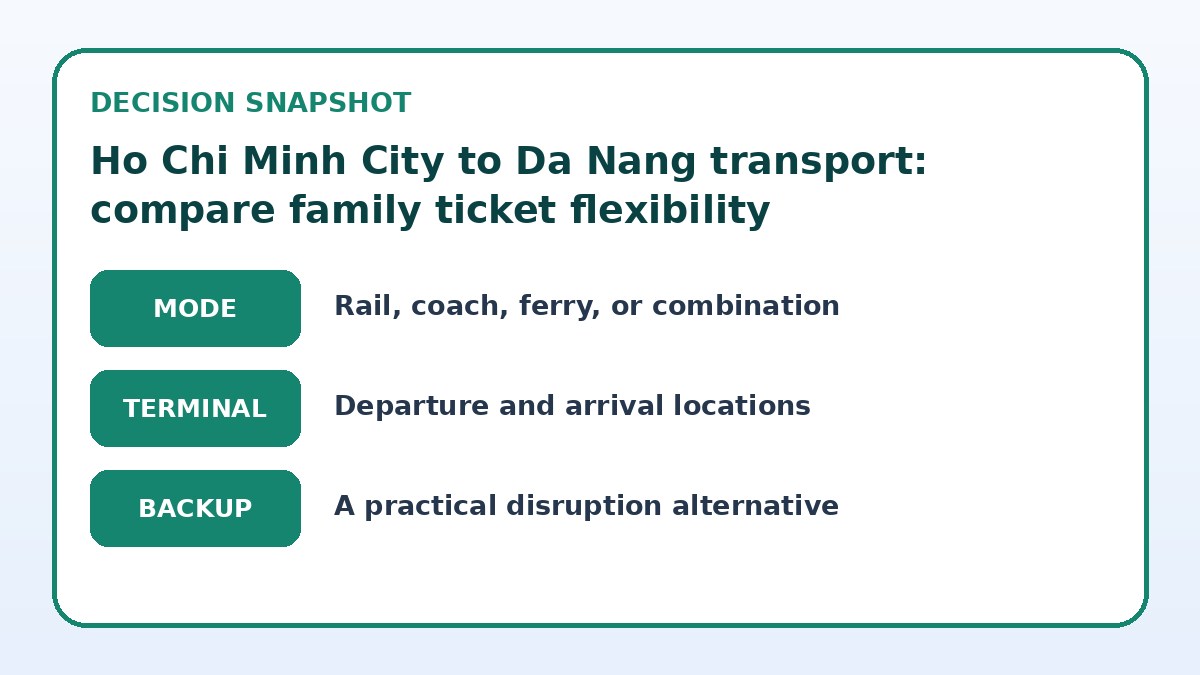
See current options before you compare the details
Availability and final conditions change. Open Trip.com now or keep reading for the practical comparison.
Why flexibility matters for family travel choices
Families have many small, unpredictable disruptions: a fever, a delayed taxi, or a stroller that breaks. Flexible tickets reduce the logistical friction of those moments because they let you change plans quickly without starting a new booking. Flexibility also buys peace of mind during long travel chains—parents can choose a later departure if a morning meltdown looks likely rather than forcing everyone onto an inconvenient trip. When evaluating options, treat flexibility as an insurance cost: it’s not just about saving money but avoiding the time and stress of chasing refunds or juggling separate reservations.
Flexibility needs differ by family. A one-day parental emergency or a toddler’s nap schedule might require the option to move to a nearby train or flight that same day, while other families only need a refundable option weeks in advance. Also consider the age mix—infants and young children often have separate fare and baggage rules, while older children may require their own seat. Balancing budget and adaptability means identifying the specific change scenarios you value, then prioritizing ticket features that cover those situations.
Comparing ticket types across transport modes
Air: airline fare families often range from non-changeable low fares to fully refundable tickets. The key family-focused questions are whether infant or child fares can be moved without full fees, how seat assignments and bassinets are handled, and whether the carrier protects connections booked on the same reference if you miss a leg. For Ho Chi Minh City to Da Nang travel, you may find direct and connecting flights; always check whether a connection is on a single ticket (provider responsibility) or two separate tickets (your responsibility if you miss one). Verify final change and cancellation terms on the airline’s booking page before paying.
Train and bus: rail and coach services can be simpler: some offer free changes up to a cutoff, while others treat low-cost seats as strictly non-changeable. Trains often allow seat reservations and provide clearer rules for child fares and luggage, which helps families manage strollers and car seats. Long-distance buses may be cheapest but often have stricter no-change clauses. For any ground option, confirm how the provider handles missed departures, whether you can hold seats for a small fee, and how refunds are processed to a card or voucher. Always read the carrier’s specific policy language rather than relying on third-party descriptions.
| Approach | Best for | Tradeoff to check |
|---|---|---|
| Refundable or fully flexible tickets | Families who expect schedule changes or want maximum peace of mind | Higher upfront cost but minimal hassle for date or time changes and straightforward refunds |
| Changeable tickets with moderate fees | Families wanting a balance between savings and flexibility | Lower price than refundable fares but you'll pay a fee to move travel dates; compare fee vs. likely risk |
| Low-cost non-changeable fares | Families on tight budgets willing to accept risk of rebooking if plans change | Lowest fare but high potential cost or chaos if you must cancel or rebook under pressure |
| Separate single-leg bookings (mix-and-match) | Families optimizing schedule or price across different modes or operators | Greater control over choices but you bear full responsibility for missed connections and rebooking |
Ready to check the option that fits your plan?
Use your exact dates and traveler details so the provider page can show the current total and conditions.
Practical verification steps before you book
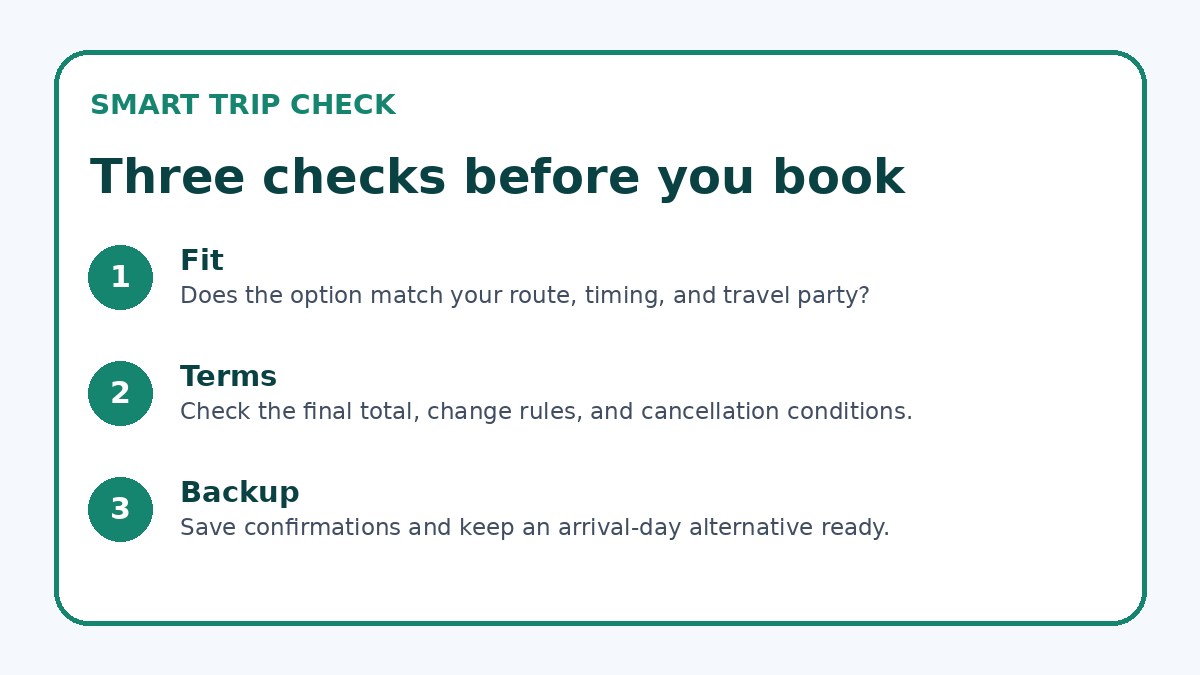
When you’ve narrowed options, open the final booking page and look specifically for: permitted changes (what can change: date, time, name), the change fee structure and when it applies, refundability conditions including non-refundable portion definitions, and whether taxes or supplier fees are returned. Also find the fine print on minors and infant travel—some fares require age proof at boarding and have different cancellation rules. If you see ambiguous wording, use the provider’s contact channels to get a clear written confirmation of what happens if you need to change or cancel.
If you mix providers (for example, a flight then a train), check each supplier’s policy and assume responsibility for missed onward connections unless you booked a single itinerary. Trip.com can be used as an entry point to compare current options and link to providers, but verify final change and refund terms on the airline, train operator, or coach company’s own booking page before completing payment. Record screenshots or save confirmation emails showing the rules attached to the ticket you buy—those are often critical in disputes.
Before you book
- Open the final booking confirmation page and copy the exact change and refund terms into a note before you pay.
- Confirm whether child and infant fares can be changed or refunded under the same conditions as adult tickets.
- Check whether your ticket is part of a single itinerary that protects connections or two separate bookings that do not.
- Ask the provider for written confirmation by email if any change policy wording appears ambiguous.
- Save screenshots of the purchase terms and the booking reference in a cloud folder accessible during travel.
- Compare the change fee to the cost of repurchasing a ticket to decide if a flexible upgrade is worth it.
Decision criteria to choose the right ticket for your family
Start by listing your family priorities: maximum flexibility, lowest out-of-pocket cost, simplest logistics with luggage and car seats, or a specific schedule for events or check-ins. Assign a relative weight to each priority and then rule out options that fail on your top two requirements. For example, if flexibility ranks highest, eliminate deeply restricted fares even if they look cheap; if budget is paramount, focus on changeable-but-not-refundable fares with low change fees. Don’t forget practicalities like departure time, number of transfers, and how early you’ll need to arrive at a terminal.
Think through worst-case scenarios and the cost of each (e.g., paying a change fee versus buying a new ticket). Factor in soft costs too: the stress of an early morning transfer with sleepy children or the extra time needed to rebook when you land. Finally, check bundling options—sometimes a slightly higher fare that includes free seat selection or checked baggage reduces on-the-day friction for families and can be worth the upfront premium compared with a cheaper fare that adds fees later.
Frequently asked questions
Is it better to book refundable tickets for a family traveling with young children?
Refundable tickets give the most straightforward protection if you expect uncertain dates or health issues, because you can return funds rather than accepting a voucher or paying to reissue. However, refundable fares can be significantly more expensive, so weigh the extra cost against how likely you are to change plans. For many families a middle ground—tickets that allow date changes for a modest fee or those that offer free rebooking within a short window—provides adequate protection without the full premium of refundable fares. Always verify what refund form (card or voucher) the provider offers.
If I miss a connection with a separate flight and train booking, who covers the cost to catch up?
When you book legs separately, each provider treats their leg independently: one operator rarely covers missed onward travel booked with a different company. That means you are typically responsible for buying a new ticket or paying change fees for the second leg. If protecting connections matters to your family, look for a single-ticket itinerary that includes the connection or allow a generous buffer between services. On the booking pages, check for any carrier policies that might rebook you in the event of a delay when both legs are on the same reservation.
How do seat and luggage rules affect family ticket flexibility?
Seat assignments and baggage allowances can change the practical flexibility of a ticket. A cheap fare that allows date changes but charges for every checked bag or seat selection might be less family-friendly than a slightly higher fare that includes seats together and checked baggage. Confirm whether seat changes are allowed without penalty and whether infant items like car seats or strollers have separate handling rules. These operational details are often in a separate policy section on the booking page—review them before purchase to avoid extra costs or surprises at boarding.
Final planning note
Choosing the right ticket from Ho Chi Minh City to Da Nang for a family is about matching flexibility to likely risks. Start by listing what disruptions worry you most—illness, timing shifts, or missed connections—and prioritize ticket features that address those. Use refundable fares only if the premium is worth it; otherwise consider changeable fares with clear, limited fees or single-itinerary bookings that protect connections. Always verify the exact change and refund language on the provider’s final booking page, save proof of the terms, and weigh convenience features like seat selection and baggage against the savings. Following this approach will keep decisions practical and reduce stress on travel day.
Continue planning
Check current options and final conditions
Use the provider page to confirm live availability, the final total, cancellation terms, and every condition that matters to your trip.
This evergreen planning guide was created with AI-assisted drafting and a structured quality review. It does not display live prices, schedules, availability, visa guidance, or provider rankings. Verify current details before booking. Some links are affiliate links; we may earn a commission at no additional cost to you.