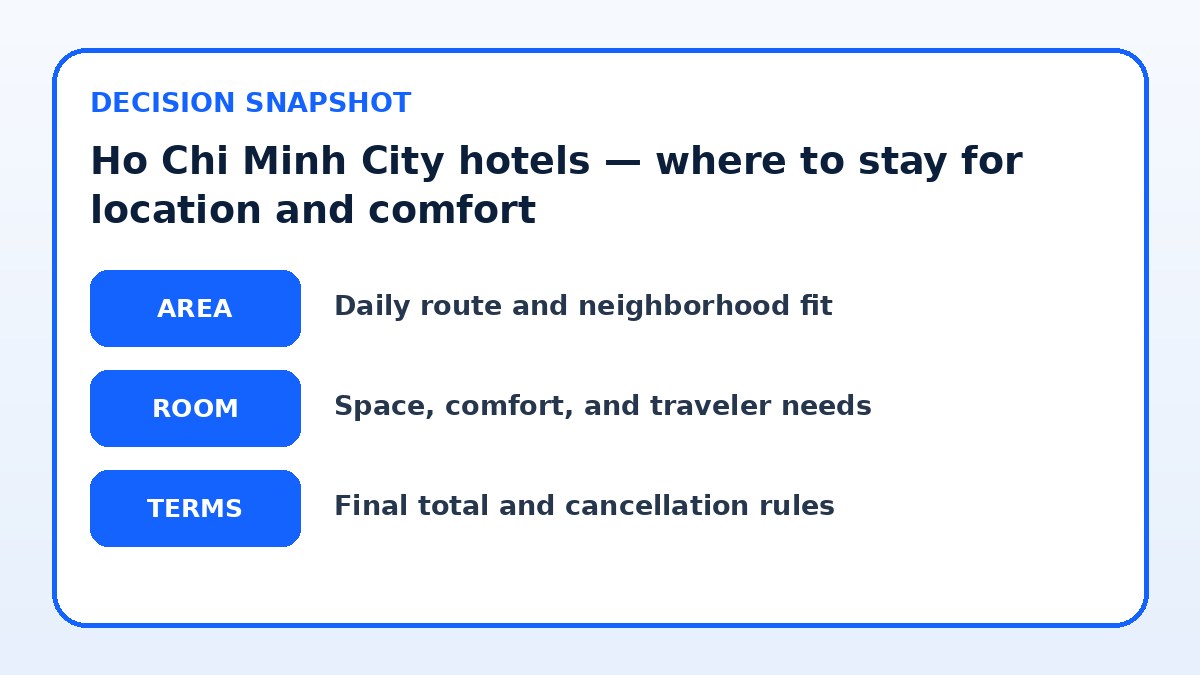
If you’re a solo traveler deciding between a central base and a quieter, more comfortable room in Ho Chi Minh City, focus first on what you’ll actually do each day. Pick a hotel near the neighborhoods where most of your activities start—District 1 if you want walkable nightlife, District 3 for a calmer feel, or near Ben Thanh Market if you’re hopping between sights. If daytime plans are packed, prioritize location to cut transport time; if you need reliable rest or remote work space, prioritize room size, noise insulation and reliable Wi‑Fi. Read the provider’s final booking page for exact room dimensions, bed type, cancellation policy, included amenities and any extra fees before you commit.
See current options before you compare the details
Availability and final conditions change. Open Trip.com now or keep reading for the practical comparison.
Decide what matters: daily routine versus restful nights
The simplest way to choose is to map your typical day. If mornings and evenings will be spent exploring markets, museums, street food and nightlife, staying in a compact but centrally located hotel in District 1 or near Bui Vien will cut taxi and motorbike ride time and let you return quickly for a mid‑day break. For a trip focused on a few long work blocks, language classes, or day trips that start early, a hotel with comfortable desk space, stronger soundproofing and a quieter neighbourhood may be more valuable even if it adds 15–30 minutes of commuting.
Think in concrete hours: count how many hours you’ll spend sleeping, working, and moving between activities. If you’ll spend more than a couple hours a day in your room, comfort components—bed quality, room size, climate control and reliable internet—affect wellbeing and productivity. If you’ll only sleep and shower there, prioritize location and ease of arrival and departure. This approach stops choices from becoming abstract and helps you compare real tradeoffs using the same list of needs each time you check a hotel listing.
Location tradeoffs: convenience, safety and atmosphere
Central neighborhoods like District 1 place you near museums, rooftop bars, markets and the main transport hubs for day trips. That means shorter rides late at night, better pedestrian options and more dining choices within a few blocks. The tradeoff is that the busiest areas tend to have noise, higher foot traffic, and sometimes higher nightly rates; street food smells and motorbike traffic are part of the urban character. If you plan to wander late, factor walking routes back to the hotel, lighting, and how easy it will be to get a taxi or ride app at night.
Quieter districts—District 3, Phu Nhuan and parts of District 10—offer calmer streets, more green spaces, and often more local cafés where you can work or read without interruption. You’ll give up some immediate nightlife and might need to budget for extra ride time to the tourist core, but you gain lower noise levels and a better chance of spacious rooms at the same price point. Check the hotel’s immediate surroundings on a map and recent photos to confirm the atmosphere matches your preferences.
| Approach | Best for | Tradeoff to check |
|---|---|---|
| Central compact room in District 1 | Sightseeing, nightlife and first-time explorers | Smaller rooms, more street noise and busier surroundings |
| Quieter mid‑range hotel in District 3 | Longer stays, better rest and local neighborhood feel | Longer rides to main tourist spots and evening hotspots |
| Boutique hotel with strong in‑room amenities | Remote work and privacy-focused travelers | Often pricier per night and sometimes farther from transport hubs |
| Budget guesthouse or hostel with private room | Solo travelers on tight budgets wanting local tips | Variable comfort levels, shared facilities, and potential noise |
Ready to check the option that fits your plan?
Use your exact dates and traveler details so the provider page can show the current total and conditions.
Room comfort tradeoffs: size, amenities and practicalities
Room size, layout and functional furniture matter differently for different travelers. A solo backpacker prioritizing nightlife might accept a compact room with a comfortable bed and private bath, while a remote worker needs a stable desk, an ergonomic chair and strong air conditioning. Look at photos for desk light, plug placement, and whether the room layout allows you to keep luggage out of the way. If you need daily work, verify whether the hotel advertises reliable, high‑speed Wi‑Fi or offers a quiet business lounge or co‑working partner.
Amenities such as in‑room safe, laundry service, hot water pressure, blackout curtains and HVAC controls greatly affect comfort even in smaller rooms. If you’re sensitive to noise, request a high floor and a room away from the street when booking, and confirm on the provider’s final page whether the hotel offers soundproof windows or quiet rooms. Where possible, contact the property directly through the booking platform to confirm specifics you can’t discern from photos and standard descriptions.
Before you book
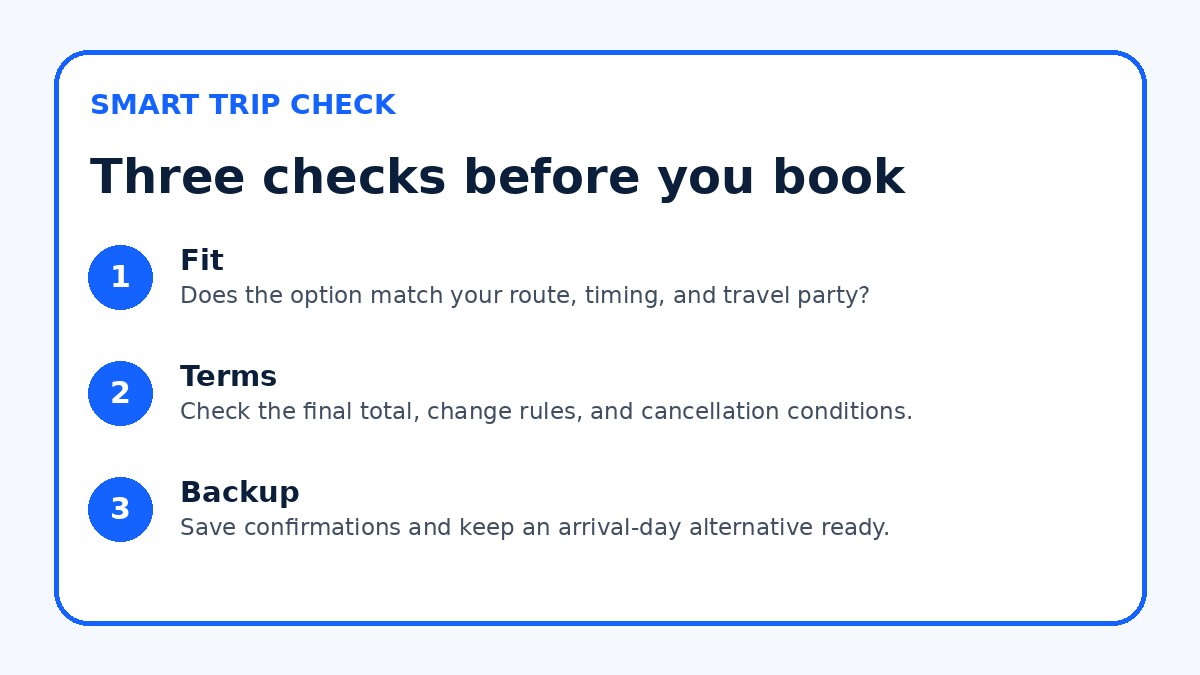
- List your daily plans and mark the neighborhood(s) you’ll spend most time in before searching hotels.
- On the booking page, confirm bed type, room square footage (or room type description), and whether photos match the listed room.
- Message the hotel or check the listing for noise mitigation details: high floor, quiet rooms, soundproof windows or street-facing status.
- Test Wi‑Fi expectations: check guest comments on connectivity and confirm any business center or co‑working options on the booking page.
- Compare transit time: use a map to estimate ride durations from the hotel to your main attractions at different times of day.
- Verify cancellation terms, check‑in/out times and whether airport transfer or luggage storage is offered before finalizing payment.
Budgeting the balance: where to spend and where to save
A useful budgeting approach is to assign priority tiers: top tier (must‑have), mid tier (nice to have), and cuttable (optional). For many solo travelers the top tier includes a safe neighborhood, secure luggage storage, and either a private bathroom or reliable shared facilities. Mid tier might include a small desk, decent Wi‑Fi and a simple breakfast. Optional extras can be rooftop pools, suite upgrades, or daily housekeeping if those don’t directly affect your day-to-day comfort.
Another tactic is to split budget across nights: book central, compact rooms for the busiest nights when you’re out late, and quieter, more comfortable rooms for nights you plan to work or rest. That allows you to experience the city’s pulse without sacrificing a few nights of solid sleep and productivity. When comparing prices, verify what’s included on the booking page—airport transfers, breakfast, taxes and cancellation policies—so you’re comparing net value rather than headline rates.
Frequently asked questions
Should solo travelers always choose District 1 for convenience?
District 1 is very convenient for first visits because it concentrates many attractions, restaurants and nightlife within walking distance, which reduces taxi dependence. However, it’s not always the best choice if you value quiet or larger rooms; central locations often mean smaller rooms and more street noise. For a balanced stay, consider a short stint in District 1 to cover major sightseeing, then move to a calmer neighborhood like District 3 or Phu Nhuan for longer rest and deeper local exploration. Compare commute times and room features on the booking page to decide.
How can I ensure the room I book is quiet and comfortable for remote work?
Prioritize listings that explicitly mention soundproofing, high‑floor rooms, and dedicated workspaces or business centers. Look closely at photos for a proper desk, chair, and nearby power outlets. Read recent guest comments about Wi‑Fi reliability and noise after midnight. If the listing is unclear, contact the property through the platform to ask about internet speed, air conditioning controls, and whether there are quieter room categories you can request. Always confirm these details on the provider’s final booking page before payment to avoid surprises.
Is it worth paying more for a hotel with extra amenities like breakfast and laundry?
Paying extra can be worth it when those amenities save you time or reduce friction during your trip. Breakfast included is valuable if you prefer quick mornings or irregular schedules; laundry matters on longer trips or warmer months when you need fresh clothes frequently. However, if you plan to explore local cafés and street food for meals and use laundromats for occasional washes, you can redirect that budget to room comfort or location. Check the booking page to confirm which services are actually included and whether any 'complimentary' items have usage limits or additional fees.
Final planning note
Balancing location and room comfort in Ho Chi Minh City comes down to clarifying how you’ll spend your hours and which comforts affect your trip most. Map daily routes, then shortlist hotels in the neighborhoods that minimize transit for those plans. For nights where rest or focused work is essential, prioritize room features like soundproofing, a proper desk and reliable Wi‑Fi; for heavy sightseeing days, accept a smaller but centrally located room to maximize time on the streets. Always verify room details, photos, cancellation policies and exact amenities on the booking page before you finalize. Use a mix of central and quieter nights if your schedule allows; the flexibility will give you both the city’s energy and the restful downtime solo travel requires.
Continue planning
Check current options and final conditions
Use the provider page to confirm live availability, the final total, cancellation terms, and every condition that matters to your trip.
This evergreen planning guide was created with AI-assisted drafting and a structured quality review. It does not display live prices, schedules, availability, visa guidance, or provider rankings. Verify current details before booking. Some links are affiliate links; we may earn a commission at no additional cost to you.