Should you rent a car as a solo traveler in Washington, DC? Short answer: sometimes. A car can give you freedom to reach outlying attractions, neighborhoods, or day trips outside the city, but downtown traffic, parking limits, and pickup/return conditions can erase any time savings. This article gives a practical decision: when driving genuinely improves your trip, what pickup and return terms most affect solo travelers, how insurance wording changes your risk and cost, and a clear non-driving fallback. Read this before you click confirm: I’ll explain route value, common pickup and return friction points, what to verify on the final booking page, and four mobility strategies to compare so you can choose the best practical option for your Washington stay.
Decide if driving improves your Washington itinerary
Begin by mapping what you actually plan to do in Washington, DC. If your days focus on the National Mall, Smithsonian museums, Capitol Hill, and nearby neighborhoods, the compact, walkable core plus Metro and scooters usually outperforms a car because parking is limited and often costly. Conversely, if your trip includes Arlington National Cemetery at odd hours, a Virginia wine country day, or Gettysburg and Antietam as day trips, the flexibility of a rental can save time and let you reach destinations public transit barely serves.
Weigh schedule freedom against friction: driving adds door-to-door control but also requires time for pickup, fueling, parking hunts, and returns. For solo travelers, the mental overhead and potential for single-driver fatigue matter. Quantify travel minutes vs. parking and pickup time; if the net driving time advantage is less than 30–45 minutes per day, a non-driving approach may be simpler and less stressful.
Decide whether driving earns its place
| Mobility strategy | Best for | Cost or friction to check |
|---|---|---|
| Rent a car for the whole stay | Solo travelers with frequent suburban excursions or multi-stop day trips outside the city | Higher parking, pickup/return friction, and responsibility for all driving and insurance details |
| Rent for a single day trip only | Those who otherwise rely on transit but need freedom for one extended outing beyond rail or bus reach | You still face pickup timing, fuel and cleaning rules, and the stress of a one-day pickup/return window |
| Public transit plus occasional rideshare | Travelers staying in central DC who want minimal hassle and lower fixed costs | Less flexibility for late-night or cross-jurisdiction travel; higher per-trip cost for many off-hours journeys |
| Guided excursions or regional rail for day trips | Visitors who want structured access to suburbs and attractions without driving or managing a rental | Schedules and routes are fixed; you trade personal control for convenience and simplified logistics |
Check live rental choices only after the route test
Use the exact driver, dates, pickup point, and return plan to compare current conditions.
Pickup terms that commonly trip up solo renters
Pickup friction usually stems from identity, payment, and driver-authority rules. Check whether the reservation requires the renter’s credit card at pickup, whether another cardholder is allowed, and which photo IDs are acceptable. Age surcharges and additional-driver rules vary—if you’re under a specified age or plan to switch drivers during long legs, confirm permitted drivers and their documents. Also ask about airport pickup shuttles versus on-site counters; off-airport locations sometimes require prearranged transfers that extend your arrival time.
Inspect the supplier’s fueling and pre-rental inspection process: many contracts require you to accept a pre-existing damage report and sign checklist items at pickup. Solo travelers should photograph the car from multiple angles, record mileage and fuel level on your phone, and get a copy of the inspection record. Finally, verify the allowed pickup window and any late-arrival grace period so you’re not penalized for flight delays or unexpected transit issues.
Compare the full rental conditions
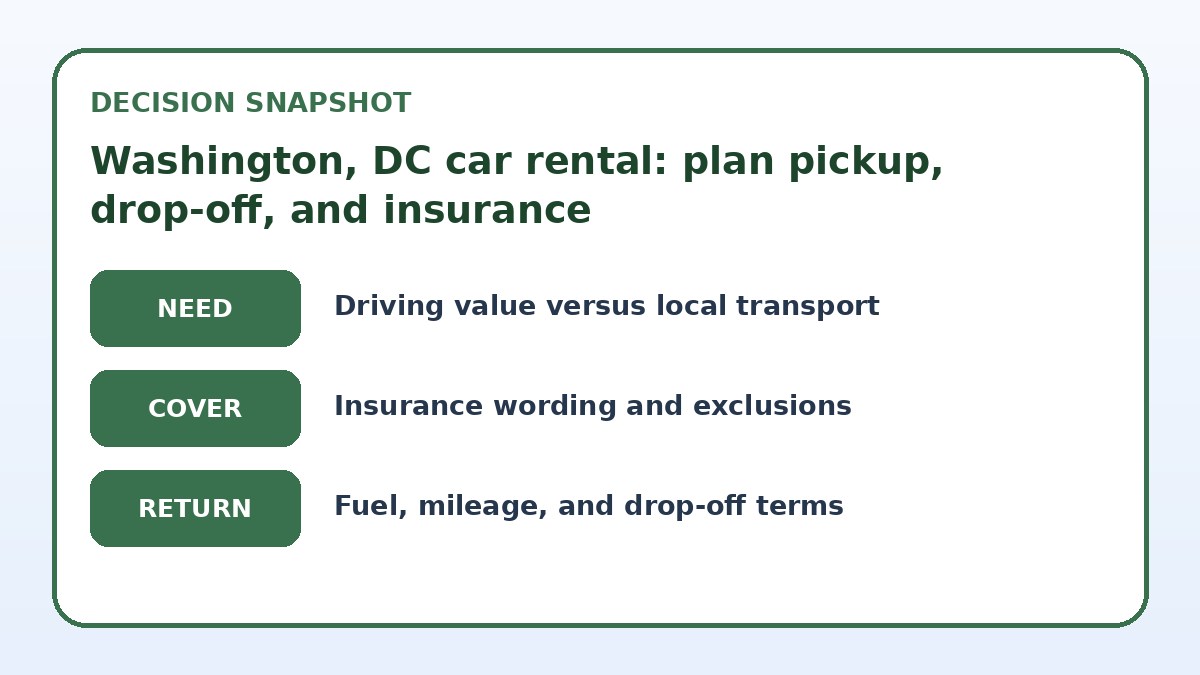
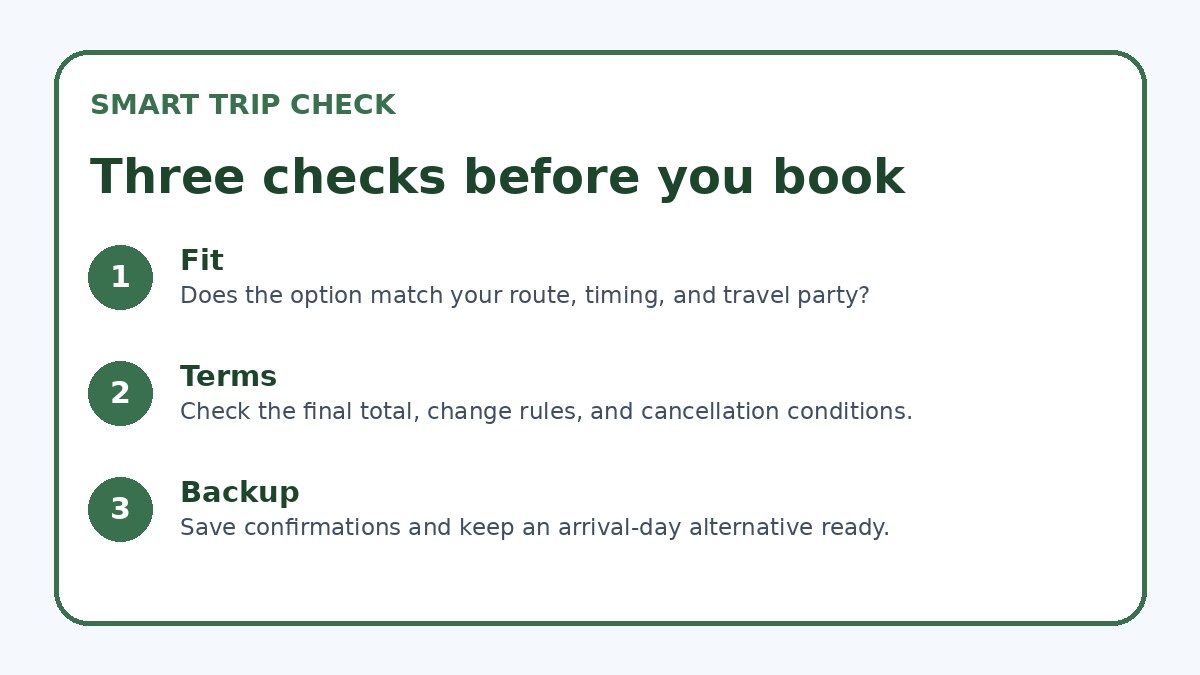
Confirm insurance wording, exclusions, deposit, fuel, mileage, and return terms on the final page.
Return terms, fees, insurance wording and what to verify
Returns are where costs sneak in. Common return terms include strict fuel policies (full-to-full is most straightforward), after-hours drop procedures (key drop vs. staff inspection), mileage limits, and cleaning or pet-hair charges. Understand whether the quoted rate includes unlimited mileage for your itinerary and what constitutes an unacceptable level of dirt that could trigger fees. For after-hours returns, confirm whether camera verification is accepted and whether you need to photograph mileage and fuel level at the same time as the staff’s record to avoid disputes.
Insurance wording can change your outlay and freedom. Determine on the booking page whether the offered collision damage waiver is primary (pays without touching your personal policy) or secondary (you must file with your own insurer first). Clarify the deductible amount, coverage for theft of personal items, and whether roadside assistance and towing are included. If the rental company offers its own protection, read its terms carefully and compare that to your credit card and personal auto insurance statements—don't assume coverage until you've verified policy language.
Car rental terms to verify
- Confirm allowed drivers, age limits, and required IDs on the final rental booking page before reserving.
- Photograph the rental vehicle’s exterior and interior at pickup, including odometer and fuel level, and keep timestamps.
- Verify whether the quoted insurance is primary or secondary, note deductibles, and compare with your card’s coverage.
- Read return instructions carefully: fuel policy, after-hours key drop procedure, and where to record final mileage.
- Ask about tolling, parking, and congestion charges and whether the rental includes a toll device or billing option.
- Check the cancellation and modification terms so you can change or extend the rental without unexpected penalties.
Non-driving fallbacks and how to plan them
If you choose not to drive, plan a realistic transit and rideshare strategy. The Metro and bus network cover the main tourist sites; combine them with targeted rideshares for early-morning departures, late returns, or trips that cross jurisdictions. Reserve accommodations near a Metro line or frequent bus corridor to reduce reliance on taxis. For suburban day trips, consider guided tours or regional rail options; these let you reach farther attractions without the pickup/return hassle of a car.
Have contingencies: know the nearest rideshare pickup locations to major hotels and airports, find 24-hour taxi services, and check schedules for commuter rail if you plan to visit adjacent states. Make contingency bookings for any time-sensitive activity—an advance tour or timed-entry attraction—and factor in transit variability. Trip.com can be an option to compare current availability and conditions, but always verify supplier pickup, return, and insurance wording on the host’s final booking page.
Car Rental & Road Trip questions travelers ask
Is parking in Washington, DC manageable for a solo traveler renting a car?
Parking in DC is possible but requires planning. Metered street parking, garages, and hotel lots are available, but rates vary and many neighborhoods enforce strict time limits. In the downtown core and near major attractions, garages fill early and can be costly; check your accommodation’s parking options and book garage spaces if possible. For long daytime sightseeing, look for Park & Ride or private lots outside the core and use Metro for central sites. Always verify garage height limits and any hotel-specific rules on the provider’s final page.
What should a solo traveler know about tolls and electronic tolling?
Toll systems around DC use electronic transponders or license-plate billing. Rental contracts often offer a toll pass or automatic billing service, which is convenient but can include administrative fees. If you opt out, you may receive toll notices with processing charges later. Before booking, confirm how tolls are charged, whether a transponder fee applies, and how you’ll be billed. Keep records of your planned routes so you can estimate toll exposure and decide whether the convenience fee is worth avoiding post-trip billing confusion.
How do I handle damage disputes at return as a solo renter?
To prevent disputes, document the vehicle condition thoroughly at pickup and immediately notify staff of any pre-existing damage so it’s recorded on the inspection form. At return, photograph the car again with visible mileage and fuel level and request a stamped or electronic return receipt. If staff aren’t present, use the company’s after-hours return procedure and save all timestamps and images. If a dispute arises later, your photos plus the inspection records are your best evidence; verify the company’s claims and follow their documented dispute process, and alert your credit card company if you used card-covered insurance.
Final decision note
For solo travelers in Washington, DC, renting a car can be a smart choice when your itinerary includes significant travel beyond the city core or schedules that public transit can’t meet. But the benefits depend on pickup and return terms—credit-card and ID rules, fueling and after-hours procedures, insurance wording, and toll handling all shift the real cost and convenience. Before booking, compare the four mobility approaches above against your daily plan, photograph and document every step at pickup and return, and verify the final contract language on the supplier’s booking page. With those checks, you can pick the option that gives you freedom without surprises.
Continue planning
Check current options and final conditions
Use the provider page to confirm live availability, the final total, cancellation terms, and every condition that matters to your trip.
This evergreen planning guide was created with AI-assisted drafting and a structured quality review. It does not display live prices, schedules, availability, visa guidance, or provider rankings. Verify current details before booking. Some links are affiliate links; we may earn a commission at no additional cost to you.