Practical answer first: if you have several large suitcases, fragile items, or mobility concerns, a private transfer usually saves stress and physical effort; if you travel light with one or two roll-on bags and want the lowest environmental impact, public transit can be perfectly workable. Your actual choice depends on how many pieces you have, how much lifting you can or want to do, your budget flexibility, door-to-door convenience, and how comfortable you are navigating stations and connections in Vancouver. This guide explains the tradeoffs, what to compare before you book, and simple checks to make the journey smoother. Use these points to match the option to your priorities rather than assuming one choice fits every luggage-heavy traveler.
See current options before you compare the details
Availability and final conditions change. Open Trip.com now or keep reading for the practical comparison.
What to check about your luggage before deciding
Start by making a quick inventory: how many pieces, approximate weight, dimensions, and whether you have strollers, sports gear, or fragile boxes. Measure any oversized or fragile item you can’t easily carry up or down stairs because those pieces drive different handling needs. Note whether your bags have wheels and whether you’re comfortable lifting them into vehicle trunks or onto buses or trains. Also consider time of arrival—late-night and peak-hour movements change the physical effort required and the availability of staff help.
Use that inventory to rule out options quickly: more than two large hard-shell suitcases or bulky equipment often tips the balance toward a private vehicle with trunk space and curbside pickup. One or two compact roller bags and backpacks are usually manageable through transit if you’re prepared to use elevators and walk short distances. Finally, add a margin for souvenirs or items you’ll buy in Vancouver; baggage can grow on the trip home, so plan a little extra capacity.
Practical advantages of private transfers
Private transfers provide door-to-door service, a single point of contact, and minimal handling—important if you dislike lifting or have fragile items. They also simplify coordination: a driver meets you at arrivals, loads luggage, and drops you exactly at your hotel or rental entrance. For groups traveling together with multiple bags, the loading/unloading time is usually shorter than making transfers on public transport, and private rides remove the stress of transferring between buses, trains, or shuttles while juggling heavy cases.
That convenience comes with tradeoffs to weigh beyond price: you must verify vehicle size and trunk capacity before booking, confirm exact pickup instructions for the airport, and check cancellation or change policies on the provider’s booking page. If you need child seats, wheelchair access, or a vehicle capable of carrying sports equipment, specify those needs in advance. Trip.com can be used to compare current availability, but always confirm capacity and pickup details with the chosen provider before finalizing.
| Approach | Best for | Tradeoff to check |
|---|---|---|
| Private transfer (car or van) | Travelers with multiple large suitcases, fragile items, mobility needs, or tight schedules | Higher cost and need to confirm vehicle size, pickup details, and baggage policy before booking |
| Public transit (SkyTrain, bus, and connector shuttles) | Travelers with one or two compact bags staying near transit-accessible neighborhoods | More walking and transfers; potential crowding and elevator reliance can complicate heavy luggage |
| Airport shuttle service (shared or hotel-provided) | Budget-conscious travelers with moderate luggage who prefer some door-to-door elements | Possible stops for other passengers and limited trunk space; verify luggage allowances and stop points |
| Ride-hailing apps or taxi | Solo travelers or small groups needing flexible pickup without prearranged service | Vehicle size varies; confirm the driver’s ability to carry all bags and consider surge or dispatch delays |
Ready to check the option that fits your plan?
Use your exact dates and traveler details so the provider page can show the current total and conditions.
When public transit makes sense even with extra bags
Public transit in and around Vancouver can be reliable and efficient for travelers carrying modest luggage, particularly if you’re staying near SkyTrain stations or major bus routes. Elevators at stations and curb-level terminals make movement easier if you plan your route and allow extra time. Using transit also avoids traffic variability and can be more environmentally friendly; it’s a practical option when you don’t have oversized items and you’re comfortable moving a trolley bag short distances between vehicle and final drop-off.
Plan carefully: choose routes with minimal transfers, check elevator and escalator availability at the stations you’ll use, and leave extra time for walking between platforms, fare gates, and outdoor terminals. Busy rush periods can mean crowded trains or buses, so if you prefer personal space for luggage you may want to avoid peak commuting hours. Finally, think about how many pieces you could manage through a transfer—if a second or third transfer is required, the benefits of transit often diminish quickly.
Before you book
- Count and measure each piece of luggage and note any oversized or fragile items before comparing transport options.
- If choosing private transfer, request vehicle make/model and trunk dimensions to ensure your luggage fits.
- If choosing public transit, map your route with station names and check elevator/escalator availability for each stop.
- Allow extra time in your schedule for luggage handling, possible elevator waits, and walking between connections.
- Confirm pickup instructions, meeting point, and contact number with any private provider on their booking page.
- Pack a small carry-on with essentials and important documents in case checked luggage is delayed or hard to access.
Decision checklist and booking tips to avoid last-minute hassles
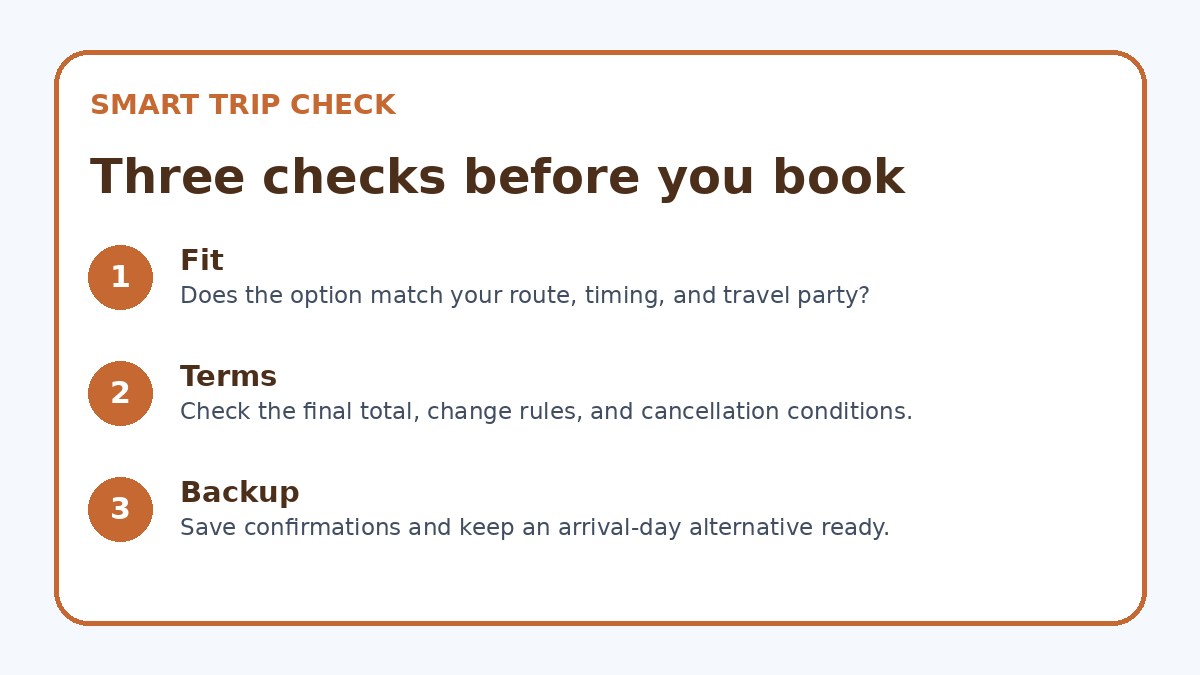
Before booking anything, compare door-to-door travel time, number of transfers, total walking distance with luggage, and the physical effort required to lift bags into trunks or onto trains. For private options, ask the operator about vehicle model and trunk dimensions, meeting point procedures, and any additional charges for oversized baggage. For public transit, map the route including station names, elevator locations, and the distance from final station to accommodation entrance.
When you’re ready to book, reserve early for private pickups during busy travel periods and double-check pickup instructions in writing. For transit, buy the correct fare and consider a reloadable fare card if you’ll use transit during your stay. Keep digital and printed copies of reservation confirmations and have a small, manageable bag with essentials in case baggage handling takes longer than expected. These small preparations minimize stress and keep you focused on arrival logistics rather than unexpected problems.
Frequently asked questions
How do I decide between a private transfer and public transit for a late-night arrival?
For late-night arrivals, prioritize safety, staff availability, and how easy it is to find an elevator or staffed help if needed. Private transfers offer a single, predictable pickup at curbside and reduce walking and carrying in quiet terminals; however, you should confirm the operator’s late-arrival procedures and contact options on their booking page. Public transit may have limited service late at night and fewer station staff to assist with luggage, so check night service schedules and station access before relying on transit.
Can I bring oversized sports equipment or musical instruments through public transit in Vancouver?
Oversized equipment can be transported on public transit in many cases, but practicality depends on size, how crowded vehicles are, and elevator access at stations. Before choosing transit, map the route and consider whether you can manage the item through station gates and onto a train or bus without blocking aisles. If the item is fragile or cumbersome, a private transfer reduces handling and minimizes the risk of damage. Always measure the item and, when in doubt, contact your chosen transit authority or a private carrier for guidance.
What should I verify on a provider's booking page before finalizing a private transfer?
On the provider’s booking page, check vehicle capacity details, explicit luggage allowances, pickup and wait-time procedures at the airport, cancellation and change policies, and whether additional fees apply for oversize items or late arrivals. Confirm how the driver will locate you at arrivals—meet-and-greet instructions differ—and whether child seats or accessibility equipment are available. If any detail is unclear, reach out to the operator directly and request written confirmation before you complete payment.
Final planning note
Choosing the right Vancouver airport transfer when you have extra luggage comes down to matching your baggage profile to how much lifting, walking, and coordination you’re willing to do. Private transfers reduce physical effort and simplify logistics for multiple or oversized bags, while public transit can work well for light packers staying near SkyTrain or bus hubs. Use the checks above: inventory your luggage, confirm vehicle or route specifics, verify pickup or station accessibility, and allow extra time. With those practical steps you can pick the option that minimizes stress and gets you to your Vancouver accommodation smoothly.
Continue planning
Check current options and final conditions
Use the provider page to confirm live availability, the final total, cancellation terms, and every condition that matters to your trip.
This evergreen planning guide was created with AI-assisted drafting and a structured quality review. It does not display live prices, schedules, availability, visa guidance, or provider rankings. Verify current details before booking. Some links are affiliate links; we may earn a commission at no additional cost to you.