If your family is moving between Tokyo and Osaka and wants to travel whole-family on the ground, start by choosing the travel style—bullet or regional trains, highway bus, or driving—then map how it fits into the rest of your multi-city itinerary. For many families the real decision isn’t a single leg but how each city-to-city transfer connects with accommodations, luggage, sightseeing windows, and nap schedules. This article gives an actionable route-forward: which factors matter most for families, how to compare options side-by-side, and a simple checklist to use when you book. I’ll also explain tradeoffs—time versus comfort, luggage handling versus convenience—and list the practical checks you must make on the provider’s booking page so nothing surprises you at departure.
See current options before you compare the details
Availability and final conditions change. Open Trip.com now or keep reading for the practical comparison.
Decide the family priorities that shape your transport choices
Begin by listing what matters most to your family on this route: travel time, comfort, ability to nap on board, tight luggage rules, cost sensitivity, and desire to reduce transfers. For families with small children, minimizing station changes and avoiding crowded transfer corridors can be worth a small premium. Older kids may tolerate longer travel in exchange for lower cost. Make note of mobility needs, stroller requirements, or the need to carry child seats—these details will eliminate some options up front and help focus comparisons between trains, buses, and private transfers.
Also think about the trip rhythm beyond the single leg. Are you connecting to a day of sightseeing on arrival, or is your first activity a late check-in? Timing a travel leg so the family arrives with time to settle reduces stress. If you plan multiple city hops after Osaka, consistency in luggage handling—such as packing a small overnight bag—can keep transfers smoother. Write down the ideal departure window, maximum acceptable travel time, and any unavoidable constraints before you check schedules.
Trains: how to compare speed, seating, and station logistics
When comparing train options for Tokyo to Osaka transport, look beyond advertised travel time and examine seat types, reservation rules, and station access. For families, reserved seats that allow a contiguous block of seats or family compartments improve comfort. Check whether carriages have accessible restrooms, space for strollers, and luggage racks that can store multiple bags. Also consider platform layouts at major stations—some require long walks and escalator trips, which matters when you’re juggling children and luggage.
Verify reservation and refund policies on the provider’s booking page before you pay. Many trains require seat reservations for the whole family to guarantee adjacent seating; others allow open seating but can become crowded on peak travel days. If you’re connecting from a hotel or another city, measure transfer time requirements to ensure you can make the departure comfortably. If using rail passes or multi-leg discounts, confirm which services are covered and whether reservations are still needed.
| Approach | Best for | Tradeoff to check |
|---|---|---|
| Reserved train seats | Families wanting predictable seating and shorter travel times | May require advanced reservations and station transfers; check luggage limits and boarding walks |
| Highway or overnight bus | Cost-conscious families and those using travel time as sleep time | Slower and less private; onboard facilities and stops vary widely |
| Self-drive rental car | Families with lots of gear or multi-stop rural itineraries | Adds driving stress, parking costs, and rental return logistics in cities |
| Private door-to-door transfer | Groups wanting convenience and minimal transfers | Higher cost and requires booking the correct vehicle size and child restraints |
Ready to check the option that fits your plan?
Use your exact dates and traveler details so the provider page can show the current total and conditions.
Buses and overnight travel: saving money versus convenience tradeoffs
Highway buses often present the lowest-cost ground option and can include overnight services that double as a night’s lodging. For families, assess seat pitch, the presence of onboard toilets, and how many stops the bus makes. Frequent stops increase the chance of restless children but provide bathroom breaks. Consider whether the bus company enforces strict carry-on limits—some ticket types restrict large suitcases—and whether seat recline is adequate for napping children. Chains of local transport to and from bus terminals should also be part of your plan.
A clear tradeoff is that buses may be slower and less private than trains or driving. They may also drop you at terminals that require additional transit to reach your accommodation. Before booking, confirm bag policies and any rules about child seats on the provider’s booking page. If the bus fits your schedule, pack quiet activities, snacks, and layers for varied cabin temperatures. For overnight journeys, weigh the disruption of sleeping on a bus versus arriving earlier and enjoying a full day in the destination.
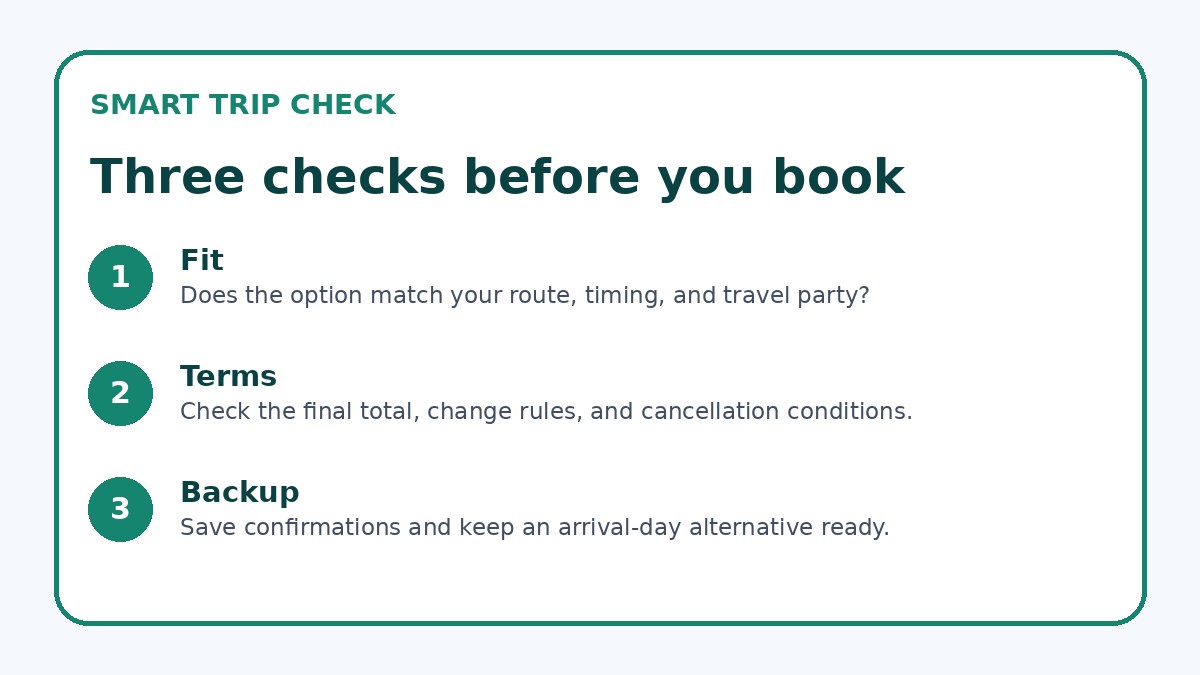
Before you book
- Confirm seat reservation rules, seat assignment options, and whether family seats or adjacent bookings are available on the booking page.
- Measure walking and transfer distances at origin and destination stations and map hotel check-in logistics against arrival times.
- Verify luggage allowances and any size or bag count limits for your chosen train, bus, or rental car provider.
- Check child-seat, stroller, and accessibility policies for trains, buses, and rental vehicles and arrange any required equipment in advance.
- Plan at least one backup transfer option (alternate train time, bus, or private car) in case a leg is missed or delayed.
- If driving or using a private transfer, confirm parking availability, toll expectations, and whether the vehicle fits your luggage and passengers.
Driving or private transfer: control and complexity for family groups
Driving gives families maximum control over departure times, stops, and luggage; it’s attractive when traveling with a lot of gear, strollers, or specific dietary needs. Plan realistic driving legs and include buffer time for rest stops, meals, and emergencies. Multi-city itineraries that include rural stops or side trips to places with limited public transport often favor driving. However, consider the stress of urban driving in Tokyo or Osaka, parking availability at hotels, and the extra time needed to return a rental car at the end of the trip if you’re not keeping it for the whole route.
If you prefer not to drive, private transfers offer door-to-door service without the rental logistics, but they cost more and require advanced booking. When comparing private options, verify vehicle size and child restraint availability on the provider’s pages. For self-drive, confirm rental-company rules about cross-prefecture travel and additional driver policies. Include contingency plans like nearby train alternatives if driving becomes impractical because of weather, fatigue, or unexpected city traffic.
Frequently asked questions
How do I decide whether to take a train or bus between Tokyo and Osaka with kids?
Start with your family’s tolerance for travel time versus cost and the need for predictable seating. If minimizing travel time and maximizing on-board comfort are priorities, focus on trains that allow reserved seats and family seating arrangements. If budget is the primary concern and your children can sleep on the move, buses—including overnight services—may be acceptable. Compare departure and arrival locations, platform or terminal access, and luggage rules on the provider’s booking pages before deciding. Also think about how the travel leg fits into your day of activities at each city.
What should I check about luggage and strollers when planning a multi-city ground trip?
Different transport modes have varying luggage allowances and storage setups. For trains, look for luggage racks and carriage restrictions; for buses, check underfloor container limits and carry-on rules. If you’ll be driving, ensure the vehicle trunk has enough capacity and reserve a larger car if needed. Confirm whether strollers can be folded and stowed on trains and buses, and whether assistance is available at stations. Always verify these details on the provider’s final booking page so you know what to bring and how to pack for smoother transfers.
How do I build travel legs around hotel check-in and a child’s nap schedule?
Map arrival times against hotel check-in windows and your child’s typical nap period. If a leg arrives well before check-in, plan a buffer for luggage drop-off or select a late departure so children can nap en route and arrive ready to explore. For longer journeys, choose direct services where possible to avoid extra transfers that disturb routines. When booking, confirm hotel early luggage-hold policies and transport arrival times on the provider page; having a nearby park or quiet cafe listed in advance gives you options if arrival or nap schedules shift.
Final planning note
Building a Tokyo to Osaka transport plan for a family is about matching travel mode to family needs: choose trains for speed and predictable seating, buses for cost-conscious overnight travel, or driving for maximum control. Whichever approach you favor, compare seat layouts, baggage rules, transfer walking distances, and child-equipment policies before you book. Keep at least one backup option on hand and align travel legs with hotel check-in and children’s routines to reduce stress. Verify the exact terms, reservation rules, and equipment availability on each provider’s booking page—Trip.com can be used to compare current schedules and availability, but always confirm details with the transport operator before finalizing plans.
Continue planning
Check current options and final conditions
Use the provider page to confirm live availability, the final total, cancellation terms, and every condition that matters to your trip.
This evergreen planning guide was created with AI-assisted drafting and a structured quality review. It does not display live prices, schedules, availability, visa guidance, or provider rankings. Verify current details before booking. Some links are affiliate links; we may earn a commission at no additional cost to you.