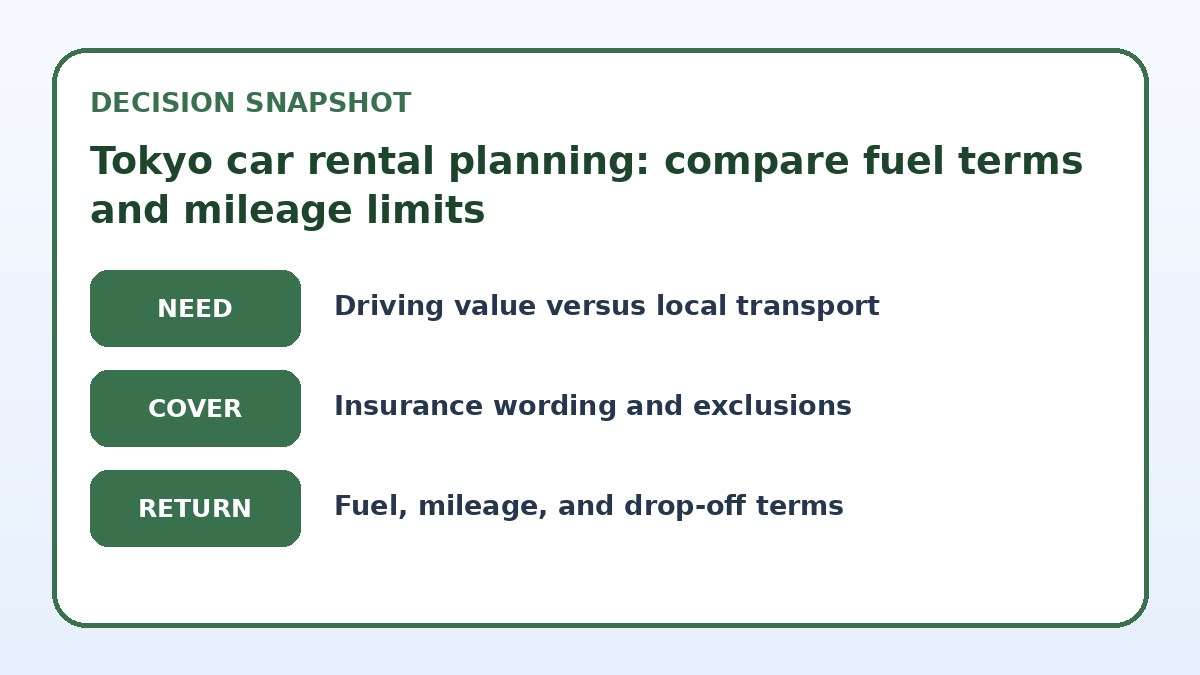
If you’re traveling to Tokyo with extra luggage, decide first whether renting a car genuinely improves your trip. For most central Tokyo stays, driving adds hassle — parking, tolls, narrow streets, and odd-hour fuel rules — and public transit remains faster and more predictable. But if your plan includes suburban day trips, multi-destination hotel-to-hotel moves, or oversized gear that doesn’t fit trains, a rental can make sense. Before booking, focus on two rental contract items that change cost and convenience: fuel policy (how fuel is billed at pickup and return) and mileage allowance (daily or total kilometer caps and per-kilometer surcharges). Also check insurance wording that covers third-party damage and baggage, pickup/return location rules, and the process for extra luggage: roof boxes, trunk size limits, and whether the rental includes roof-rack fitting. These points determine whether bringing extra bags means a smooth drive or a cascade of fees and delays.
Route value: when extra luggage justifies driving
Start by mapping exactly where your luggage needs to go and how often. If your Tokyo trip stays within central wards and you can use luggage delivery services (takuhaibin) or station lockers for short stints, driving rarely saves time. On the other hand, if you’re moving between multiple suburban bases—say a family staying near Tokyo Disneyland, then heading to the outskirts for hiking—or carrying bulky sports equipment, a car can cut repeated transfers and the physical strain of dragging bags across stations, stairs, and crowded trains.
Also weigh door-to-door value against predictable congestion and parking constraints. Some outlying destinations have minimal public transit; a car gives you schedule freedom and simplifies remote departures. But account for time lost finding parking, paying tolls, and fuel stops. Compare total door-to-door journey time with transit alternatives and include the time and cost of transferring oversized luggage on trains, taxis, or delivery services to decide whether the rental truly improves your plan.
Decide whether driving earns its place
| Mobility strategy | Best for | Cost or friction to check |
|---|---|---|
| Rent a car for the whole trip | Extended suburban travel with repeated luggage transfers and strict schedules. | Higher parking, toll, fuel and potential mileage fees; more planning for insurance and pickups. |
| Short-term rental only for specific legs | A day or two of heavy hauling or rural day trips where public transit is sparse. | You pay extra pickup/return logistics and might face refueling rules or mileage caps for brief hires. |
| Public transit + luggage forwarding | Urban stays with minimal door-to-door baggage moves and intercity train travel. | Less flexibility; relies on correct timing for luggage delivery and station locker availability. |
| Taxis/transfers for heavy loads | Short hops to/from airports or hotels where convenience outweighs marginal cost. | Can be expensive for long distances and subject to vehicle size limits for oversized items. |
Check live rental choices only after the route test
Use the exact driver, dates, pickup point, and return plan to compare current conditions.
Insurance wording: what to read closely
Insurance descriptions can look comprehensive at first glance but hide exclusions impacting luggage. Look beyond phrases like “collision damage waiver” and seek explicit wording about baggage coverage — whether the policy covers items in the passenger cabin, the trunk, or external carriers such as roof boxes. Confirm limits per item and whether coverage applies to theft, accidental damage, or only third-party liability. If your gear is high-value (cameras, musical instruments, sports equipment), consider supplementary travel insurance that specifically lists such items or buy extra coverage through the rental provider if available.
Also read the deductible and the process for filing claims in Japan: which documents are needed, the local repair shop rules, and whether the rental company requires a police report for theft. Some standard policies exclude damage caused by improperly secured external loads or roof-mounted carriers, which is critical when transporting extra luggage. When in doubt, ask for the exact clause on baggage and read the final booking page to see the precise insurance terms and any optional waivers offered.
Compare the full rental conditions
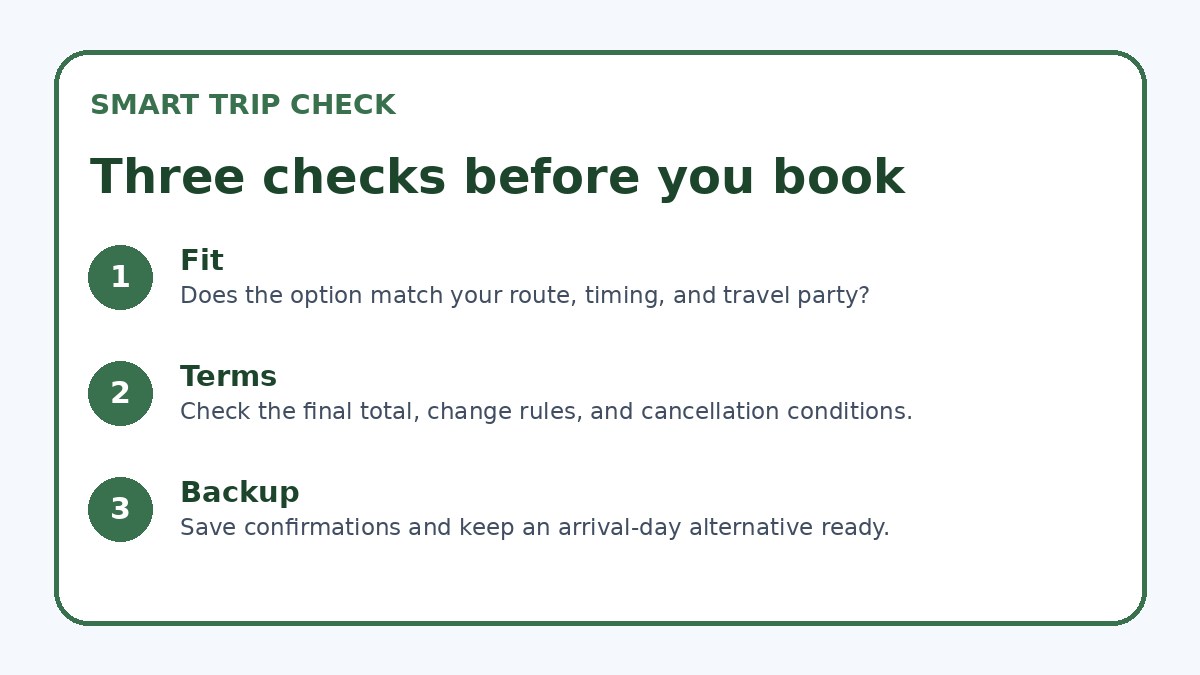
Confirm insurance wording, exclusions, deposit, fuel, mileage, and return terms on the final page.
Pickup and return friction: logistics that add cost
Where you pick up and return the car affects how easy traveling with extra luggage will be. Airport pickups can seem convenient for travelers arriving with many bags, but check where the rental desk and shuttle actually meet you, whether long-term airport parking is used, and whether the supplier charges extra for airport location services. City-center offices may be closer to hotels but could involve narrow streets that make loading bulky items difficult. Verify whether the supplier offers curbside assistance or luggage loading help at each location.
Read the rental firm’s return procedure carefully. Some require returning fuel to a specific level or risk refueling charges billed at inflated rates; others count the moment the vehicle is back on the lot, not when you finish unloading. Hourly return windows and after-hours drop-off processes can create rushes when you’re handling heavy luggage. On the provider’s final booking page, confirm pickup and return addresses, after-hours drop-off steps, fuel return rules, and any explicit instructions about loading aids or roof-rack installation.
Car rental terms to verify
- Read the fuel policy on the rental page and confirm whether you must return a full tank, pay a pre-purchase option, or face refuelling charges.
- Check the mileage allowance (daily and total), plus the per-kilometer fee for overages that could apply with longer suburban legs.
- Ask the provider whether baggage inside the vehicle, stored in the trunk, or carried on roof racks is covered by insurance and for any value limits.
- Verify pickup and return addresses, after-hours drop-off instructions, and whether staff assistance is available for loading heavy luggage.
- Confirm roof-rack or roof-box compatibility, installation policy, and any extra rental fees or liability for roof-mounted loads.
- Compare toll and parking payment procedures and whether the rental company provides an ETC card or charges administrative fees for toll reimbursements.
Non-driving fallback: realistic alternatives in Tokyo
If you decide not to drive, Tokyo offers practical alternatives for extra luggage. Station lockers and luggage forwarding (takuhaibin) are reliable ways to move bags between airport, hotels, and long-distance train stations without hauling them on public transit. For door-to-door convenience, taxis and app-based rides can handle multiple suitcases for short hops; for longer distances consider booking a private airport transfer that specifies luggage allowances upfront. Compare total costs and convenience against a rental — especially if your planned drives are short or infrequent.
Make a layered plan combining modes: use luggage forwarding for long-haul transfers, taxis for station-to-hotel drops, and regional car hires only where necessary. When checking options on a booking page (car rental or a transfer), verify baggage limits, extra-fee triggers for oversized items, and whether staff must assist with loading. Trip.com can be one place to compare current availability, but always confirm final baggage and mileage terms on the provider’s official page before confirming.
Car Rental & Road Trip questions travelers ask
Will I be charged extra if I return the car with a different fuel level than at pickup?
That depends on the rental’s fuel policy. Many contracts require returning the tank to the same level you received; others sell a full tank upfront or allow you to return empty and bill at a set rate. On the final booking page, look for exact wording: whether the supplier charges a refill fee, a per-liter rate, or administrative processing. If they charge for refuelling, check whether that rate is calculated at local pump prices or a higher service rate—this is where fees often become notable.
How do mileage limits work and how will they affect trips outside central Tokyo?
Mileage rules are usually expressed as a daily allowance or a total-kilometer cap for the rental period; exceeding those limits triggers a per-kilometer surcharge. For out-of-city drives, estimate your daily route distance and multiply by the rental days to see if you’ll exceed the allowance. On the provider’s booking page, confirm the exact allowance, whether a grace distance applies, and the overage charge per kilometer, since these numbers directly affect whether a long day trip becomes costly.
Is my luggage automatically covered by the rental insurance in Japan?
Not necessarily. Standard collision or liability coverage often focuses on vehicle damage and third-party claims; baggage coverage can be limited or excluded. Check the insurance section of the rental contract for explicit baggage wording, per-item maximums, and theft exclusions, especially for items stored externally or on roof racks. If the rental insurer’s baggage coverage is insufficient, consider buying additional coverage through the rental firm or a separate travel insurer and save a copy of any policy wording shown on the final booking page.
Final decision note
For travelers with extra luggage, the most practical first step is deciding whether driving delivers meaningful gains versus using Tokyo’s alternatives. If your plan includes multiple suburban stops, bulky gear, or remote departures, a rental can simplify logistics — but only if you verify fuel policy, mileage caps, and baggage insurance before booking. If your trip stays largely in central Tokyo, combine luggage forwarding, taxis, and public transit to reduce cost and friction. Always read the final rental booking page: confirm fuel-return rules, mileage allowances and overage rates, exact insurance clauses for baggage, pickup/return addresses, and any extra fees for roof racks or airport services.
Continue planning
Check current options and final conditions
Use the provider page to confirm live availability, the final total, cancellation terms, and every condition that matters to your trip.
This evergreen planning guide was created with AI-assisted drafting and a structured quality review. It does not display live prices, schedules, availability, visa guidance, or provider rankings. Verify current details before booking. Some links are affiliate links; we may earn a commission at no additional cost to you.