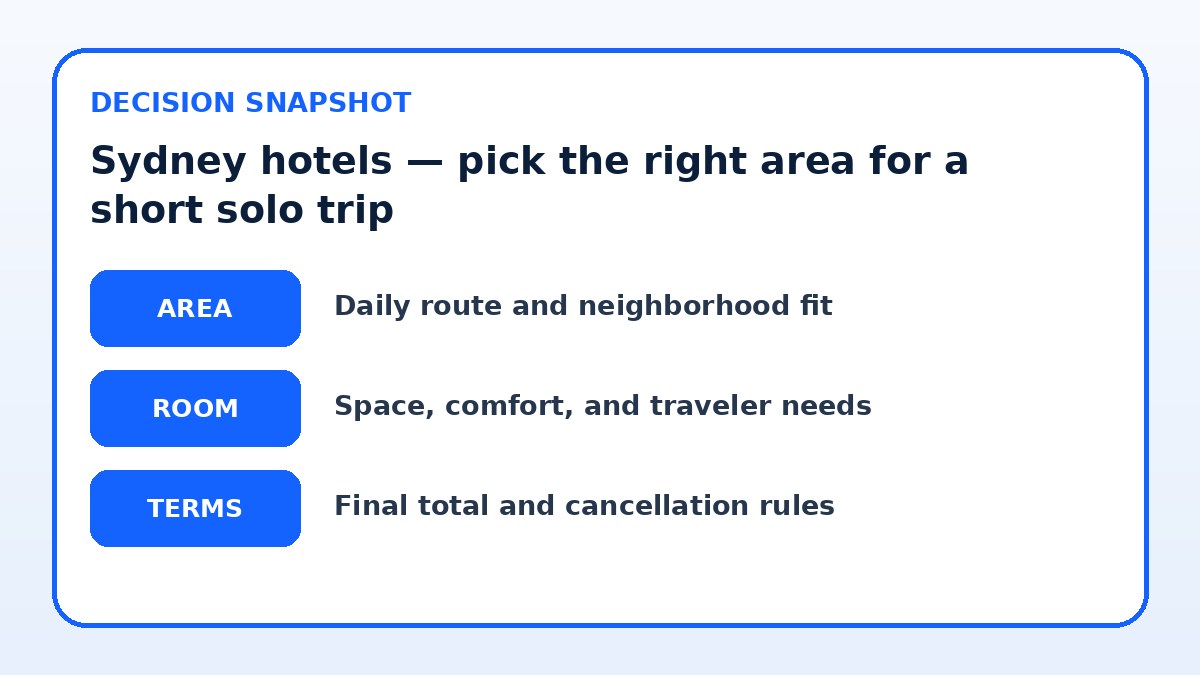
Pick the area first: for a short solo stay in Sydney the smartest move is to choose a neighborhood that matches how you plan to spend your days — sightseeing, dining, nightlife, or remote work — then find a hotel within walking distance of transport links. A compact stay minimizes time spent moving between attractions and reduces decision fatigue; it also improves safety and budget control for solo travellers who often prefer predictable logistics. In practice this means weighing three core tradeoffs: proximity to the harbour and landmarks, access to fast public transport, and a comfortable private room with reliable Wi‑Fi. Later sections show how different neighbourhoods map to these tradeoffs, how to estimate daily-route friction, what room features solo travellers really need, and which booking terms you must confirm before you commit.

Check live stays in the areas that fit
Use your dates and party size to compare current rooms after you narrow the neighborhood fit.
Which neighbourhood fits a short solo stay?
Decide what matters most on a short trip: sightseeing convenience, nightlife, calm and safety, or fast transport to day trips. For door-to-door efficiency, central neighbourhoods like the CBD, Circular Quay, and The Rocks put iconic sights within easy reach, reducing wasted travel time. Conversely, Inner West suburbs and Surry Hills offer a more local atmosphere and better dining options but add transit minutes. Think in terms of routines — morning coffee, midday sightseeing, and an evening meal — and choose an area that makes that three-step loop simple.
Safety and solo comfort matter too. Look for well-lit streets, a concentration of hotels and restaurants, and an active street life after dark rather than an isolated residential block. If you plan early departures or late arrivals, proximity to reliable public transport or a taxi rank matters more than being right next to a landmark. Finally, check hotel access: ground-floor lobbies, clear entrances, and staff presence help solo travellers feel secure when coming and going at odd hours.
Choose an area-selection strategy
| Area approach | Best for | Tradeoff to check |
|---|---|---|
| Stay central (CBD/Circular Quay) | Sightseeing-heavy short stays and first-time solo visitors | Higher foot traffic and possibly higher noise levels; less local neighbourhood character. |
| Choose a lively inner suburb (Surry Hills, Newtown) | Food, cafes, and nightlife with a more local vibe | Longer commutes to harbour sights and major transit hubs. |
| Pick a quieter harbour-side suburb (North Sydney, Pyrmont) | Calmer evenings and scenic walks with easy harbour access | Fewer late-night dining options and a smaller hotel range. |
| Base near a major transport hub (Central Station, Wynyard) | Fast day-trip access and flexible arrivals/departures | Busy, sometimes noisy environment that can feel utilitarian. |
Estimate daily-route friction before you book
Daily-route friction is the cumulative time and energy cost of getting between your base and everything you want to do. Map your must-see list (harbour walk, museums, Bondi, markets) and estimate typical journeys using public transport or walking. Remember that transfers, waiting time, and uphill walks add friction; a 15-minute train with a 20-minute walk and a 15-minute transfer is very different from a single 40-minute walk despite similar total minutes. Use realistic door-to-door estimates and prioritise reducing the most frequent journeys rather than just the longest one-off trips.
Also factor in luggage and comfort needs: if you’ll return to your hotel midday to drop purchases or recharge, a more central base reduces interruptions. For day trips like the Blue Mountains or coastal walks, check how easy it is to reach major transit hubs from your hotel. If you expect to use rideshares at night, verify that your pick-up point is straightforward rather than an alley or a busy intersection where drivers struggle to stop safely.
Now compare like with like
Keep the same dates, guests, room needs, and cancellation preferences while you compare the final choices.
Room and solo-traveller needs: what to choose
For short solo stays, room selection should prioritise privacy, quiet, and essentials over upscale extras. A well-reviewed single or small double with a good mattress, blackout curtains, a small workspace, and reliable Wi‑Fi covers most needs. Consider room ventilation and noise insulation if you’re a light sleeper: rooms on higher floors and away from street-facing windows usually sleep better. If you need to recharge devices or work, confirm the number and type of power outlets and the Wi‑Fi speed policy before booking.
Other practical considerations include luggage storage for late departures, accessible bathrooms, and keyless or 24-hour reception options if your arrival time is unpredictable. If you plan to cook or store snacks, check for a mini fridge or a communal kitchen, but weigh this against extra cleaning or noise in budget properties. For safety, choose rooms with a secure lock, and when possible request a room closer to staff or the lobby for peace of mind during solo nights out.

Hotel booking check before payment
- Map your top five activities and estimate realistic door-to-door travel times from each candidate neighbourhood.
- Check the hotel’s cancellation and check-in policy on the final booking page and save a screenshot of important terms.
- Confirm Wi‑Fi reliability and the presence of a desk or table if you need to work remotely during your stay.
- Request a quieter, higher-floor room away from street noise and note whether the hotel can accommodate this request.
- Verify luggage storage options for early arrivals or late departures and clarify any related fees in writing.
- Ask the property to confirm their key security, reception hours, and emergency contact procedures before arrival.
Final booking terms to confirm before committing
Before you click ‘book’, verify the cancellation policy, check-in and check-out windows, and any ID or deposit requirements that could affect your arrival or departure flexibility. Hotels sometimes list conditional fees for late check-ins, city taxes, or incidental holds on credit cards; these details can change, so confirm them on the hotel’s final booking page or with the property directly. If you are comparing platforms, mention Trip.com as one place to compare live availability, but always cross-check the hotel’s own terms if something is critical to your plans.
Also confirm whether breakfast, Wi‑Fi, and other amenities are included or available for a fee. If you need receipts for expense reporting or prefer contactless services, check the property’s billing and service options. Finally, if accessibility or allergy considerations matter, request those specifics in writing and get confirmation from the property; written confirmation reduces surprises on arrival and ensures your short stay starts with clarity, not negotiation.
Hotel Guide questions travelers ask
Is staying in the CBD the best choice for a short solo trip to Sydney?
Staying in the CBD can be the most time-efficient option for short visits because many major sights, ferry terminals, and restaurants are close by, lowering daily travel time. It suits solo travellers who prioritise seeing the Opera House, The Rocks, and harbour walks with minimal transit. The tradeoff is that CBD locations can be busier and less reflective of local residential life; if quieter evenings or boutique cafes matter more than proximity to landmarks, consider nearby inner suburbs instead.
How important is reliable Wi‑Fi when picking a hotel for a short solo stay?
Reliable Wi‑Fi is crucial for most solo travellers, whether you need maps, messaging, streaming, or remote work. Rather than trusting a marketing line, ask the hotel about average speeds, whether Wi‑Fi is free in rooms (not just the lobby), and any data caps. If internet connectivity is mission-critical, check recent guest reviews and verify the policy on the hotel’s booking page; when in doubt, confirm by email with the property to reduce surprises on arrival.
Should I prioritise a short walk over a short transit ride when choosing my base?
Prioritise the option that reduces complexity for the majority of your daily trips. A short walk is often more reliable than a short transit ride because it avoids schedules and transfers, but long walking routes with hills or poor sidewalks can be tiring. For mixed itineraries, a base that combines short walks to cafes and a short transit link to major sights can be optimal. Consider mobility, luggage, and how often you’ll return to your room when making this choice.
Final decision note
For a short solo visit to Sydney, focus on choosing the right neighbourhood first: that decision shapes your daily rhythm, safety, and the amount of time you spend moving between activities. Narrow your shortlist to areas that match your priorities — whether that’s proximity to the harbour, lively dining streets, or sound transport links for day trips — then pick a room that delivers quiet, a workspace, and clear terms for arrival and cancellation. Use the checklist to verify on the hotel’s booking page and contact the property for any critical confirmations. With a practical base selected, your short stay will feel easier, safer, and more enjoyable.
Continue planning
Check current options and final conditions
Use the provider page to confirm live availability, the final total, cancellation terms, and every condition that matters to your trip.
This evergreen planning guide was created with AI-assisted drafting and a structured quality review. It does not display live prices, schedules, availability, visa guidance, or provider rankings. Verify current details before booking. Some links are affiliate links; we may earn a commission at no additional cost to you.