If you travel to Singapore for work, price alerts can save time and money — but they also tempt rushed bookings that conflict with tight schedules and company policies. The practical approach is to treat alerts as information, not a trigger to buy. Set tailored alerts (specific routes, preferred cabin or class, hotel room types and refundable rates), define a decision checklist tied to your employer’s travel policy, and use a short cooling period before confirming any purchase. That way you capture good opportunities while keeping approvals, expense rules, and itinerary stability intact. Below are concrete rules for setting alerts, comparing options, and deciding exactly when to hit “book,” plus tradeoffs you should expect when balancing flexibility, price, and convenience.
See current options before you compare the details
Availability and final conditions change. Open Trip.com now or keep reading for the practical comparison.
Set alerts that reflect business needs, not wishful savings
Generic alerts flood inboxes with options that don’t match a business traveler’s constraints. Start by narrowing what you monitor: specific departure and arrival airports (for Singapore consider the most practical airport for your meetings), precise dates or acceptable date ranges, cabin class, and any required connections or minimum layover time. For hotels, monitor only the room types your company allows and filter for refundable or guaranteed rates if your policy requires flexibility. This reduces psychological pressure from irrelevant “deals” and keeps the alerts actionable for real work travel.
Next, limit alert frequency and set price-change thresholds so minor fluctuations don’t trigger attention. For example, choose daily summaries or only notify when a fare drops by a percentage you define. Use separate alerts for speculative, future trips and immediate, approval-ready travel. Mark alerts clearly (e.g., “Speculative” vs “Bookable with approval”) so your inbox and decision-making process reflect whether an alert is a heads-up or a booking candidate.
Decision rules: when a price alert becomes a booking candidate
Translate alerts into consistent decision rules tied to company policy and personal risk tolerance. A simple three-step rule works well: 1) Confirm the price meets your alert threshold, 2) Verify availability of the required refundable or changeable fare or room type, and 3) Obtain any required manager or travel-authority approval. Add a cooling period — for example, wait 12–48 hours — to prevent emotional purchases after a sudden drop. This sets a rational boundary between spotting a good price and making a considered, policy-compliant reservation.
When you evaluate a candidate, check ancillary costs and how they affect total trip expense: baggage, seat selection, corporate surcharge, and hotel taxes or mandatory service fees. Verify these on the provider’s final booking page before approving. If your employer has a preferred booking channel or negotiated rates, always compare the alert offer to those options; the lowest public price may not align with corporate agreements or loyalty benefits you can redeem for upgrades or refunds.
| Approach | Best for | Tradeoff to check |
|---|---|---|
| Immediate booking on a sharp alert | Travelers with fixed schedules and pre-approved budgets | May lock you into a nonrefundable rate or overlook corporate-negotiated fares |
| Cooling-period approval workflow | Travelers who need manager sign-off or want time to compare | You can lose a transient low fare or room if the market moves quickly |
| Monitor-only speculative alerts | Frequent travelers scouting long-term price trends | Requires discipline; good prices may pass before you decide to act |
| Set alerts for refundable or flexible rates only | Travelers with changing itineraries or strict company policies | Flexible fares and rooms usually cost more up front than nonrefundable options |
Ready to check the option that fits your plan?
Use your exact dates and traveler details so the provider page can show the current total and conditions.
Comparing direct and connecting flights, and hotel flexibility
For business travelers, travel time and reliability often outweigh marginal savings. When an alert shows a cheaper connecting itinerary, compare total door-to-door time, number and length of connections, and the impact of schedule changes on meetings. If direct flights are available, factor in their schedule alignment and the productivity cost of longer connections. Don’t assume a cheaper connecting ticket is truly cheaper if it risks missing meetings or requires additional accommodation due to overnight layovers.
For hotels, treat flexibility as part of the price. A nonrefundable rate can appear attractive on an alert but may cost more if plans change. Compare the refundable rate’s premium against the probability and potential cost of a cancelled or changed night. If your meetings are fixed and confirmed, a nonrefundable rate may be acceptable; if schedules remain fluid, prioritize flexible rates or loyalty-program bookings that offer free changes or late cancellations.
Before you book
- Set alerts only for specific dates, airports, cabin class, and room types that match company policy.
- Require a documented approval step or cooling period before converting an alert into a confirmed booking.
- Compare the alert price to corporate-negotiated rates and loyalty-program benefits before purchase.
- Open the provider’s final booking page and verify fare class, baggage allowances, change and refund rules, and total price.
- Estimate door-to-door time for flight options and weigh schedule risk against any fare savings from connections.
- Save screenshots or emails of fare and cancellation terms used to justify the booking in case of policy review.
Practical tools and verification steps before checkout
Use multiple tools in concert: a fare/room alert service, your company’s booking platform, and a secondary comparison check to confirm total cost. Trip.com can be one place to compare current availability, but always cross-check the exact fare class, baggage allowance, change and refund rules, and any corporate rate eligibility on the provider’s final booking page. Save screenshots or confirmation emails that show refund and change conditions in case policies differ once you complete a booking.
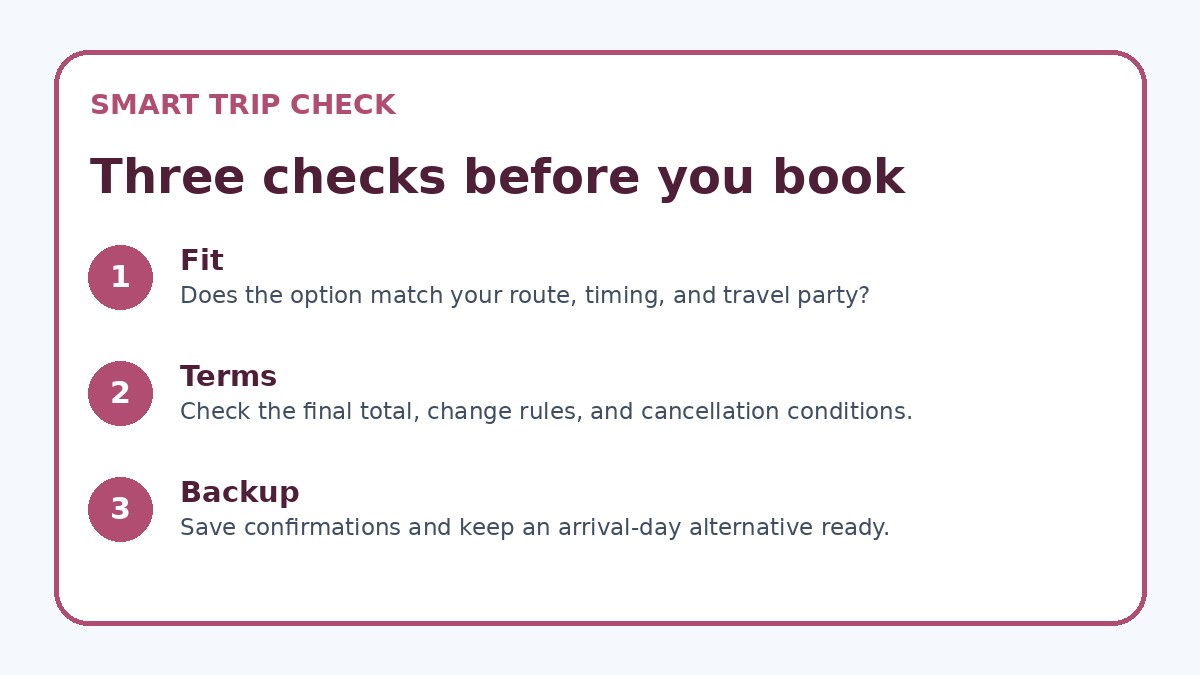
Before completing a purchase, run a final checklist: does the itinerary match meeting times, is the booking refundable or changeable per company rules, do loyalty benefits apply, and who must approve the charge? If approvals are required, forward the alert details and a clear recommendation (book now / wait / alternate option) to the approver. This step avoids last-minute surprises and ensures expense reports and company audits reconcile the alert-based decision with internal policy.
Frequently asked questions
How do I balance price alerts with a strict corporate travel policy?
Start by translating your corporate travel rules into alert filters: permitted cabin classes, approved hotels, refundable vs nonrefundable rates, and allowable booking windows. Use those filters so alerts only surface options you can actually book. When an alert appears, follow your company approval process and attach relevant screenshots or comparison notes. If the alert shows a lower public fare than your corporate channel, verify whether your company can match it and whether booking outside contracted channels affects reimbursement or duty of care.
What if a cheap alert conflicts with meeting times or an important connection?
Treat schedule alignment as a monetary factor. Calculate the total impact: extra travel time, potential missed meeting costs, and any probability of delays. If a cheaper itinerary introduces a risky connection, quantify the downside — lost meeting value, rescheduling costs, or additional accommodation — and compare that to the savings. Often the rational choice favors a slightly higher, more reliable itinerary to protect business outcomes and minimize day-of-travel stress.
Can alerts be used to find upgrades or loyalty advantages for business trips?
Yes — set alerts for fare classes that earn the elite credit or the room types that qualify for loyalty benefits. Monitor when award-eligible fares or refundable rates dip and compare whether redeeming points or upgrading at booking provides better value given your travel frequency. Always confirm earning and upgrade eligibility on the carrier’s or hotel’s final booking page, because alerts sometimes show aggregated prices that don’t clearly reflect the specific fare code or rate rules tied to loyalty benefits.
Final planning note
Price alerts are valuable tools for business travelers to Singapore when used with discipline. Treat alerts as signals to investigate, not automatic booking triggers: narrow alerts to what your company allows, require approval or a short cooling period, and verify fare rules, baggage, and refund policies on the provider’s final booking page. Compare total travel time and the cost of schedule risk against raw savings, and prefer refundable or corporate-channel options when flexibility is essential. With clear rules and a simple checklist, you’ll keep costs down without sacrificing compliance or the reliability your meetings require.
Continue planning
Check current options and final conditions
Use the provider page to confirm live availability, the final total, cancellation terms, and every condition that matters to your trip.
This evergreen planning guide was created with AI-assisted drafting and a structured quality review. It does not display live prices, schedules, availability, visa guidance, or provider rankings. Verify current details before booking. Some links are affiliate links; we may earn a commission at no additional cost to you.