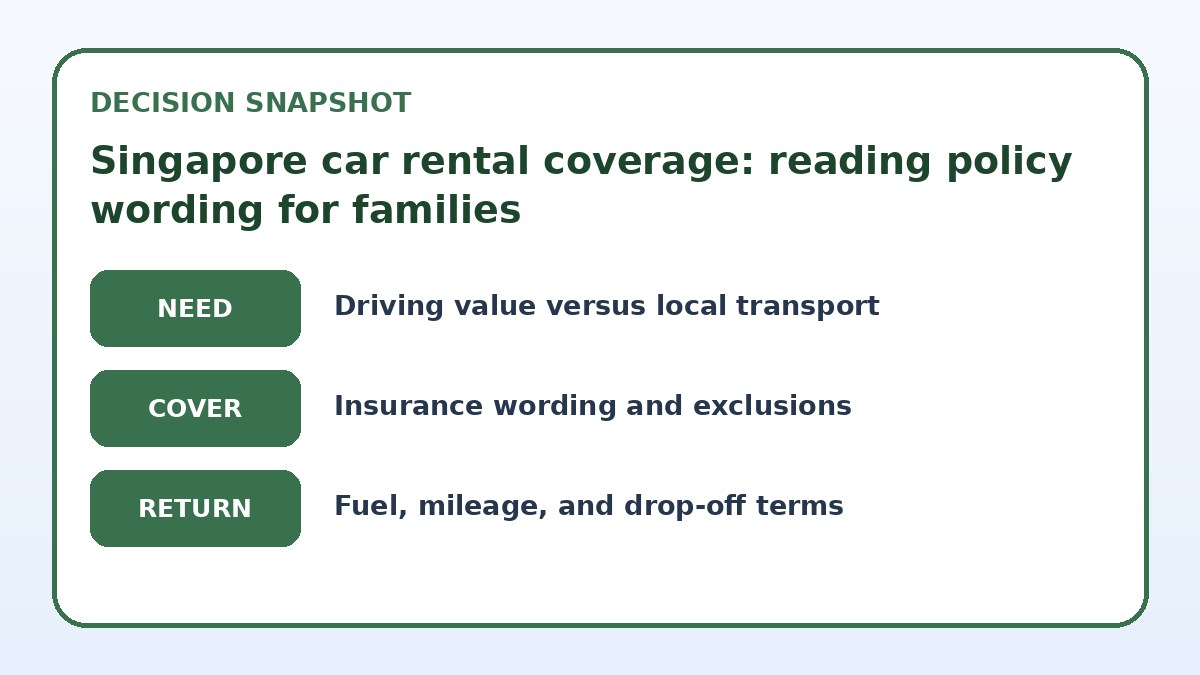
If you're booking a Singapore car rental for a family trip, start by reading the insurance wording so you know exactly what is covered and what will cost extra. Key terms to find immediately are Collision Damage Waiver (CDW) or Loss Damage Waiver (LDW), Third-Party Liability, Super Collision Damage Waiver (SCDW) or excess reduction, and any named exclusions such as drivers under a certain age, off-road use, or use outside of Singapore. Know the excess amount — the portion you must pay after a claim — and whether the rental company offers an excess reduction product or permitted third-party insurance. If you plan to add a child seat, extra drivers, or cross into Malaysia, check how those items are handled in the policy wording. Start with these checks on the booking page, then read the full terms and the insurer’s policy document before you accept or sign anything at pickup.
See current options before you compare the details
Availability and final conditions change. Open Trip.com now or keep reading for the practical comparison.
How common policy terms affect families
Rental providers and insurers use a small set of phrases that determine who is protected and when. Collision Damage Waiver (CDW) and Loss Damage Waiver (LDW) usually limit your financial exposure for damage to the rental car, but they don’t always remove the entire excess. Super CDW or zero-excess products are often sold separately to reduce the excess further. Third-party liability covers damage or injury to others and is critical for families; ensure the wording states the limit per incident and whether legal costs are included. An option labelled "insurance" on the booking page may be a modest supplement rather than full coverage — check the policy document for precise limits.
For families, look for wording on additional drivers and child safety equipment. A policy that permits multiple named drivers at no extra cost is useful when parents plan to share driving duties. Child seats are sometimes treated as accessories rather than covered items; damage or loss of a baby seat may not be included unless specified. Also search for conditions about airport pickups, ferry crossings, and cross-border travel: some policies exclude use outside Singapore unless you buy specific cross-border cover. These details determine whether buying the rental firm’s add-on is worth it or whether independent travel insurance plus a basic rental policy is a better choice.
Understanding excess, liability, and third-party wording
Excess — also called a deductible — is the amount you must pay when you make a claim. Policies differ: some set a fixed monetary excess, others use a sliding scale or different amounts for theft versus collision. Importantly, read whether the excess is payable immediately at the counter, taken as a hold on your card, or payable only if there is a claim. Equally important is whether an excess reduction product or refundable deposit replaces the hold with a smaller charge. Wording often hides whether add-ons fully eliminate the excess or simply cap it; check exact phrasing.
Third-party liability covers damage and injury you cause to others. The policy wording should state limits per claim and whether there’s an aggregate annual cap. For family trips, higher liability limits reduce risk — small children increase the potential for expensive medical claims. If the rental’s included liability seems low or vague, look for named supplemental liability insurance or compare prices for standalone third-party liability policies. When comparing, confirm whether legal defense costs are included or billed separately, and whether the policy applies only in Singapore or extends to neighboring regions if you plan a short cross-border drive.
| Approach | Best for | Tradeoff to check |
|---|---|---|
| Basic included insurance | Short city trips with low-risk driving | Lower cost but higher excess and narrower liability limits |
| Rental company excess reduction (SCDW) | Families wanting lower financial exposure at pickup | Higher daily cost; check whether it fully removes the excess |
| Third-party liability top-up | Families needing stronger protection against third-party claims | Adds cost but fills gaps in liability limits and legal defense |
| Independent travel insurance with rental cover | Comprehensive family protection including personal injury and luggage | May duplicate rental cover; verify the insurer’s rental-car wording |
Ready to check the option that fits your plan?
Use your exact dates and traveler details so the provider page can show the current total and conditions.
Common exclusions families often miss
Exclusions are where surprises happen. Typical exclusions include driving while intoxicated, using the vehicle for hire or ride-sharing, unauthorised drivers, driving on unpaved roads, and participating in competitions. Families should also note exclusions for drivers under a certain age — many rental contracts charge an additional young-driver fee or exclude drivers under 21 or 25. If you plan to tow a trailer, use roof racks, or carry special equipment, check the wording: most standard policies exclude damage from improper loading or aftermarket fittings.
Theft and personal items are often limited too. Policies may require specific security measures — for example, locking the car and not leaving valuables in view — and will deny claims if negligence is shown. For child-related items, loss or damage to portable child seats or booster cushions might not be covered unless the rental firm explicitly includes them. Always read the event list that triggers denial of cover, and ask the rental agent to point out any clauses about baby equipment, strollers, or car seats before you sign the contract.
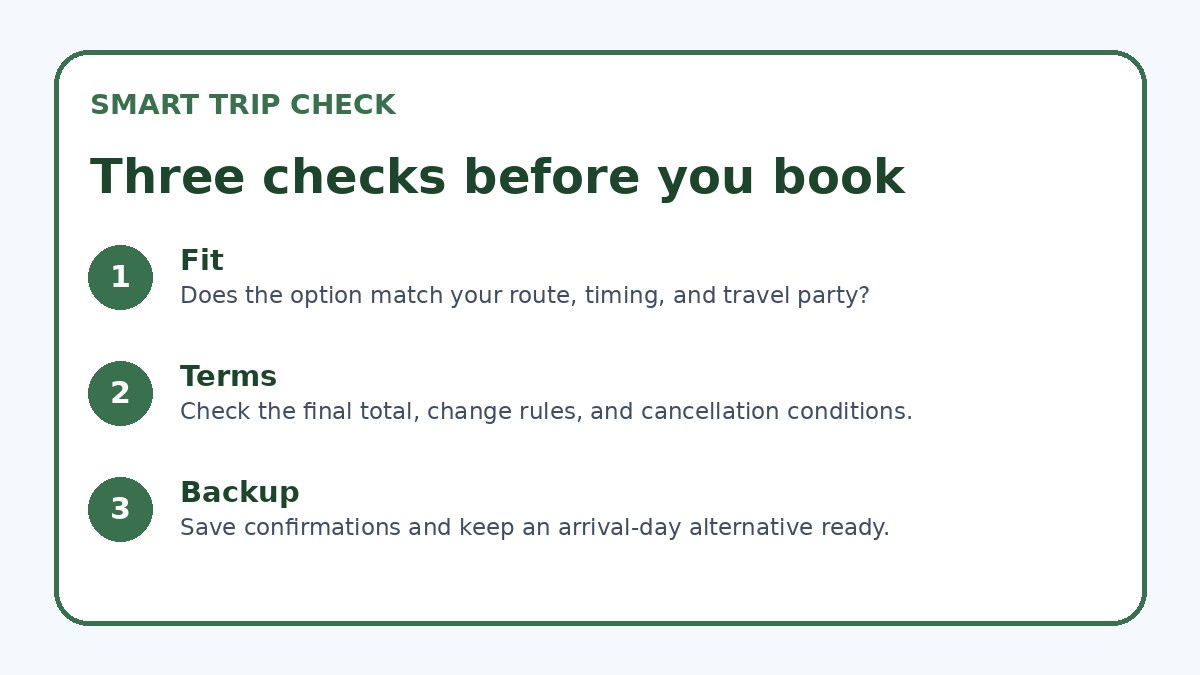
Before you book
- Download and save the rental provider’s full insurance policy and confirm the insurer name and policy number before booking.
- Identify the excess amount and whether optional excess reduction actually lowers your out-of-pocket payout or only reimburses afterward.
- Confirm each driver’s eligibility in the wording: age limits, license types accepted, and whether additional drivers are free or charged.
- Search the policy for territorial limits and exclusions related to crossing into Malaysia or driving on non-paved surfaces.
- Ask the counter agent to point out any handwritten clauses and get a copy of the signed rental agreement and add-on receipts.
- Compare the rental’s liability limits with any separate travel insurance policy and confirm which policy is primary for claims.
What to verify on the booking page and at pickup
On the booking page, locate the insurance or protection section and download any linked policy documents. Verify the excess amount, whether an excess reduction is optional and what it actually does, the named drivers included, and the territorial limits. If the site offers optional protections, click through to their full terms and identify whether they are insurance policies or simply waivers administered by the rental company; the wording will say whether a third-party insurer underwrites the product. If using a comparison site like Trip.com, use it to locate current availability but always confirm the insurer name and policy number on the provider’s final booking page.
At pickup, have all drivers present with their licenses and the card used for booking. Ask the agent to highlight any handwritten or counter-only exclusions and request a copy of the signed rental agreement and the insurer’s policy schedule. If the agent claims coverage verbally (for example, "this will be covered"), ask them to show the clause in the written policy; verbal assurances are not legally reliable. If you buy extra cover at the desk, get a receipt showing the product name and policy reference, then review the insurer’s contact details in case you must file a claim after returning home.
Frequently asked questions
Is the rental company’s excess reduction the same as full insurance?
Not always. Rental company excess reduction products lower or cap the excess you pay if the car is damaged, but they are often not full insurance policies. Some products are waivers administered by the rental company rather than underwritten by an independent insurer; others are fully insured. Read the wording to confirm whether the product eliminates the excess, reduces it to a specific amount, or reimburses you after you pay the full amount. Also check exclusions — many reductions don’t cover tyre, windscreen, or undercarriage damage unless explicitly stated.
Can my family’s travel insurance replace rental insurance wording requirements?
Sometimes travel insurance provides rental-car excess coverage, but the policy wording is crucial. If your travel insurer states it covers rental excess, verify that it applies in Singapore, names the correct vehicle types, includes all drivers, and covers the full excess amount the rental firm requires. Some travel insurers only reimburse after you pay the rental company, and others exclude certain damage types. Keep the rental agreement and the insurer’s policy schedule handy; the rental company may still require you to pay the excess at pickup regardless of your travel insurance.
What should I do if the insurance wording is unclear at pickup?
If wording is unclear, ask the agent to show the exact clause in the written policy or ask for a copy of the insurer’s policy schedule. Do not sign until you understand who is liable for damage and whether any verbal promises are in writing. If the agent cannot produce clear wording, consider taking photos of the contract pages and asking for time to review before accepting optional products. If necessary, ask for a manager or contact the insurer directly using contact details on the policy document before agreeing to extra coverage.
Final planning note
Families planning a Singapore car rental should make insurance wording the foundation of their booking decision. Focus first on excess amounts, third-party liability limits, driver eligibility, and exclusions that affect family equipment or cross-border travel. Use the booking page to download full policy documents and verify insurer names, then confirm all details at pickup in writing. Balancing cost and protection means deciding whether the rental company’s excess reduction, a third-party liability top-up, or your travel insurance best covers your needs. Read the clauses, ask for written confirmation of verbal statements, and keep a checklist and copies of documents to avoid surprises during or after your trip.
Continue planning
Check current options and final conditions
Use the provider page to confirm live availability, the final total, cancellation terms, and every condition that matters to your trip.
This evergreen planning guide was created with AI-assisted drafting and a structured quality review. It does not display live prices, schedules, availability, visa guidance, or provider rankings. Verify current details before booking. Some links are affiliate links; we may earn a commission at no additional cost to you.