If you’re traveling solo to Seoul, the quickest practical answer is: pick the option that matches how much time, bandwidth and risk you’re willing to manage. A package (flight + hotel, sometimes with transfers or tours) is usually simpler and saves time planning; separate bookings give more control over exact hotels, flight times, and local experiences. Your decision should hinge on three things: how much flexibility you need, whether you prioritize convenience over customization, and how comfortable you are troubleshooting changes on your own. Below I walk through the tradeoffs, show when a package often makes sense, and list concrete checks to make on final booking pages so you aren’t surprised by rules, refund conditions, or transfer arrangements.
See current options before you compare the details
Availability and final conditions change. Open Trip.com now or keep reading for the practical comparison.
When a package suits solo travelers
A package often suits the solo traveler focused on efficiency and low planning overhead. If you have limited vacation days, want a straightforward airport transfer, or prefer a bundled itinerary that includes a guided city tour or entrance passes, a package reduces the number of vendors you must coordinate. Packages can also be helpful if you want an easier claims path when something goes wrong, because the package provider acts as a single point of contact instead of you juggling multiple suppliers.
That convenience comes from standardization: a package usually locks in a set of hotels, pick-up times, and included services. For many solo travelers, this creates predictability on arrival and reduces decision fatigue for the first 24–48 hours. Before you buy, confirm exactly which services are included, whether airport transfers are private or shared, and what the supplier’s policy is for missed connections or itinerary changes so you’re not surprised at the provider’s final booking page.
When booking components separately is better
Booking flights, hotels and activities separately gives you granular control: choose flight times that match your sleep schedule, stay in a neighborhood that fits your vibe, and add boutique experiences that packages may exclude. This path benefits solo travelers who enjoy curating their trip, want to avoid over-touristed itinerary elements, or plan to mix long stints of independent exploration with a few prebooked activities.
Separate bookings also make it easier to chase deals on specific parts of the trip—upgrading a hotel for a special night without changing your flight, or reserving a domestic train or low-cost carrier independently. But that flexibility means you’re the coordinator if a flight is delayed or an attraction closes; always verify cancellation, change fees, and transfer logistics on each provider’s final booking page to understand your potential costs and options.
| Approach | Best for | Tradeoff to check |
|---|---|---|
| Package deal (flight + hotel bundle) | Travelers prioritizing ease, fewer vendor contacts, and simple airport transfer options. | Less control over exact hotels, flight times, and flexibility; check included services and change policies closely. |
| Separate bookings (DIY flights and hotels) | Solo travelers who want customized neighborhoods, specific flight times, or to mix budget and boutique stays. | More planning and vendor management; responsibility for missed connections and handling separate refund rules. |
| Package with add-ons (tours or passes included) | Those who want a curated first-day experience and a few prearranged activities to reduce planning stress. | Preselected tours may not match your pace; confirm timing, group sizes, and cancellation terms before purchase. |
| Hybrid approach (core package + independent extras) | Travelers who want convenience for logistics but control for neighborhood stays or special experiences. | Requires careful deadline and transfer coordination; verify who handles problems for each booked element. |
Ready to check the option that fits your plan?
Use your exact dates and traveler details so the provider page can show the current total and conditions.
Key tradeoffs: cost, convenience, and control
Cost comparisons between packages and separate bookings depend on timing, market supply, and how much you value convenience. Packages sometimes simplify the math by showing a single bundled price, but that price can include markups or service fees. Conversely, DIY bookings may look cheaper at first but add complexity—nonrefundable fares, different cancellation rules, and timing mismatches that cost you time or require paid transfers if connections don’t align.
Control is the other major axis. If having a specific neighborhood, hotel style, or meal preference matters, separate bookings let you tailor every choice. By contrast, a package trades some control for simplicity: fewer vendors, fewer decisions, and potentially a single customer service channel. When comparing both approaches, list must-haves (neighborhood, arrival time, mobility needs) and red lines (nonrefundable full-trip fares, no airport pickup) so you can quantify which model better fits your tolerance for tradeoffs.
Before you book
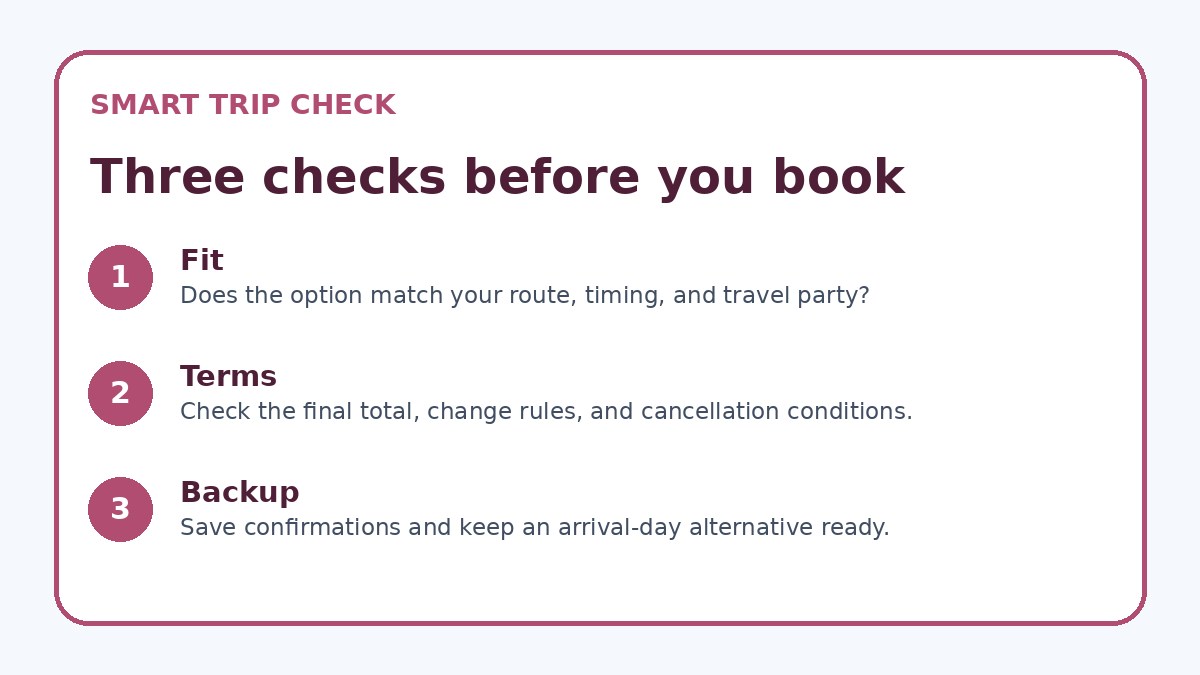
- Confirm exactly which items are included in the package price (transfers, taxes, meals, entrance fees) on the final booking page.
- Compare flight arrival times to hotel check-in and plan for late arrivals or overnight stays if timing is tight.
- Read change and cancellation policies for each booked component and note the steps and timelines for refunds or rebooking.
- Check single-room supplements and bed-type options when booking hotels, and confirm whether breakfast is included.
- Estimate transport between arrival point and accommodation for both package transfers and independent options.
- Save contact details for every vendor (airline, hotel, tour operator) and photograph confirmation pages for quick reference.
How to compare options and what to verify
When evaluating Seoul travel deals, always compare apples to apples. For a package, identify which components are actually included—are airport transfers, taxes, city taxes, or entry fees covered? For separate bookings, add the expected cost of transfers, luggage storage, and a buffer for schedule misalignments. Check exactly what counts as an adult single supplement, whether a single room has a surcharge, and whether seat selection or baggage is included on flights. Verify all of this on the supplier’s final booking page so you know the complete total and conditions before paying.
Also confirm flexibility: how many free date changes or cancellations are permitted, what fees apply, and how refunds are handled. If your itinerary includes connecting trains or domestic flights inside Korea, compare direct and connecting options and factor in minimum connection times and extra transfer costs. If you plan to use public transit extensively, check card options and whether packaged transport passes are transferable or refundable. For quick price checks and availability, you can view Trip.com among other platforms—but always treat their listings as a starting point and confirm details with the provider before booking.
Frequently asked questions
Can a package deal include airport pickup and Seoul city tours for solo travelers?
Some packages advertise airport pickup and included tours, but offerings vary widely by provider. Always check the fine print on the booking page to see whether transfers are private or shared, whether tours are group or private, and what times they operate. If a package includes a day tour, verify start location, duration, and what is excluded—meals or entrance fees, for example—so you can decide if the included activities match your energy levels and independent exploration plans.
How do I manage risk of missed connections if I book flights and hotels separately?
When managing separate bookings, build buffer time between international arrivals and any onward transport or commitments. Look for flight options with later arrivals or same-day change flexibility, and consider booking hotels with flexible check-in or free cancellation up to a sensible deadline. If you have tight connections, consider a refundable transfer service or a package that includes guaranteed transfers; verify the provider’s policy for missed connections and what they will or won’t cover before relying on that protection.
Are bundled transport passes or attraction passes worth adding to a Seoul package?
Bundled passes can save time and simplify planning, but their value depends on your pace and interests. If you plan concentrated sightseeing using included attractions, a pass can reduce queuing and paperwork. If you prefer wandering neighborhoods, trying multiple restaurants, or visiting niche museums, a pass may include items you won’t use. Always list the specific attractions, check transferability or refund rules, and compare the pass inclusions with the independent ticket prices before adding it to a package.
Final planning note
For solo travelers to Seoul, the right choice between package and separate bookings depends on how much planning you want to do and how much control you want over every detail. Choose a package if you value convenience, a single point of contact, and fewer decisions on arrival. Opt for separate bookings if you want to pick exact neighborhoods, flight times, or boutique experiences, and are comfortable managing vendor interactions. A hybrid approach often delivers the best balance: secure core logistics like flights and an initial transfer, then DIY the local stays and activities you care about. Always verify inclusions, cancellation rules, and transfer types on final booking pages before paying.
Continue planning
Check current options and final conditions
Use the provider page to confirm live availability, the final total, cancellation terms, and every condition that matters to your trip.
This evergreen planning guide was created with AI-assisted drafting and a structured quality review. It does not display live prices, schedules, availability, visa guidance, or provider rankings. Verify current details before booking. Some links are affiliate links; we may earn a commission at no additional cost to you.